table of contents
Weekends and holidays expose weak spots fast. One missed alarm, one empty post, or one delayed escalation can turn into a real problem before Monday morning.
A good security coverage model gives you a clear answer to a simple question: who is watching, who is backing them up, and what happens when someone is out? The best plans balance risk, cost, compliance, fairness, and service continuity.
Start with the risk, not the roster
Before you assign names to shifts, map the work that must stay covered. Physical patrols, SOC triage, access control, visitor checks, executive support, and incident response may all need different rules on a Saturday than they do on a Tuesday.
Then rank each task by what happens if it slips. A late badge review may be annoying. A missed intrusion alert may be a reportable event. That difference matters because it tells you where to spend labor and where you can use lighter coverage.
It also helps to separate “open for business” from “fully staffed.” Many teams run lean on weekends, but the building, systems, and contracts still need watchful hands. A remote office may only need one on-call analyst. A data center or retail site usually needs more.
If a client promise, regulatory rule, or internal policy sets a response time, build around that first. A weekend plan that ignores those rules is only a guess.
A simple way to start is to write down four items for each weekend or holiday shift:
- The task that must happen
- The latest acceptable response time
- The minimum skill needed
- The person who can step in if the primary is unavailable
That list keeps the plan grounded in operations, not habit.
Calculate the minimum coverage you can defend
Once you know the work, turn it into numbers. The cleanest formula is:
Minimum coverage = required posts + break relief + supervisor coverage + backup capacity
That backup capacity is what keeps one sick day from breaking the whole schedule. It may be an on-call manager, a shared analyst, or a floater who can cover both an alert queue and a site walk.
Use workload data when you have it. If weekend incident volume averages 60% of weekday volume, that does not mean you can cut staff by 40%. Response time, not ticket count, usually sets the floor.
A small example helps. Say a site needs one guard at reception, one person for camera monitoring, and one supervisor on call. On weekdays, you may add a roaming patrol. On weekends, you may drop the patrol but keep the three core roles. That is a smaller roster, but not a smaller risk profile.
If each of two core posts needs 15 minutes of overlap at shift change, that overlap must be staffed too. In other words, the schedule needs paid handoff time, not just clean eight-hour blocks.
If one missed post can create a compliance issue, it belongs in the minimum, not in the “nice to have” column.

Design shift rotations and backups that people can live with
A good schedule is readable at a glance. Every shift needs a primary owner, a backup, and a clear escalation path. Without that, people spend their weekend guessing who answers first.
Use a simple template like this:
| Time period | Primary | Backup | On-call | Notes |
|---|---|---|---|---|
| Saturday day | Guard lead | Analyst | Manager | Normal volume |
| Saturday night | Analyst | Guard lead | Manager | Faster escalation |
| Holiday | Lead on duty | Floater | Director | Critical issues only |
Keep the template short. If the schedule takes a page and a half to explain, it will fail when someone is off sick. The best models are simple enough for a new manager to read in one minute.
The rotation also needs fairness rules. Rotate prime holidays across the team, allow volunteers to swap within a fixed window, and set one person as the last line of backup. That protects service and keeps resentment from building.
If your weekend plan keeps failing because senior security roles or on-call positions are hard to fill, Book a Discovery Call with Bud Consulting to map the model against real hiring capacity.
Make PTO and holiday pay part of the model
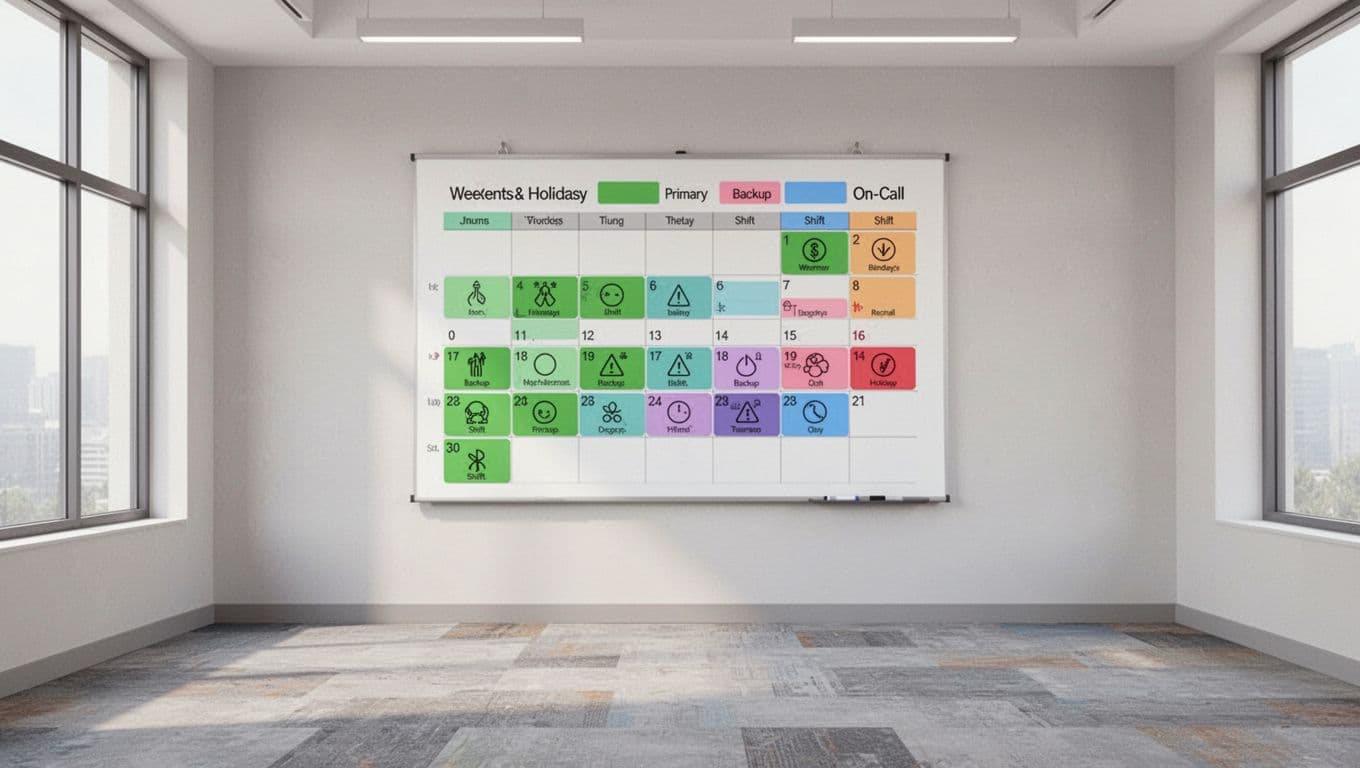
Coverage gets messy when PTO rules and holiday pay sit outside the staffing plan. If people can’t tell how holidays are assigned, every schedule becomes a negotiation.
Set the rules before the season starts. Publish the holiday calendar early, define who gets first choice, and explain how comp time or holiday pay works. If a holiday lands on a weekend, name the rule before PTO requests open. When people understand the tradeoffs, they are far more likely to accept an off-hour shift.
A practical policy usually includes:
- A rotating holiday order so the same people do not carry every major date
- A deadline for PTO requests before schedules lock
- A voluntary sign-up pool for lower-volume weekends
- A cap on consecutive weekends worked
- A recovery day after heavy holiday or overnight coverage
Burnout often starts with small exceptions. One extra weekend here, one late handoff there, and the schedule starts to feel unfair. Track those exceptions and fix the pattern, not just the single problem.
After each holiday period, run a short review. Ask what was covered cleanly, where the handoff slowed down, and whether the staffing model still matched the workload. Include HR in the review if wage rules, comp time, or contract terms changed the schedule. A 15-minute review can save hours of cleanup later.
Conclusion
A weekend or holiday coverage plan works when it treats risk, people, and cost as one problem. If you know the minimum coverage, the backup path, and the fairness rules, the schedule stops feeling improvised.
That is the real goal of a security coverage model. It should hold up when someone calls in sick, when a holiday lands on a busy weekend, and when the team needs a break. When the model is clear, service stays steady and burnout drops.