table of contents
A 100 percent training completion rate can sit beside a preventable breach. That’s the problem with many dashboards, they reward activity, not safer choices.
Leaders need security culture metrics that show whether people spot threats, report fast, follow controls, and learn after mistakes. The goal is simple, reduce risk in ways the business can see. Start by separating signals from noise.
Vanity metrics make dashboards look better than culture
Completion rates, quiz scores, and raw phishing click rates are easy to collect. They also make weak stand-ins for culture. A high completion rate only shows people opened training. A single click rate only shows what happened in one campaign, with one lure, on one day.
Recent 2026 industry reporting suggests human error still contributes to roughly 95% of breaches, while phishing and fraud concerns keep rising. That gap matters. Security Magazine’s take on culture metrics makes the same point. Dashboards can distract when they reward neat percentages over behavior under pressure.
This quick comparison helps frame the difference:
| Vanity metric | Better signal |
|---|---|
| Training completion | Secure behavior adoption |
| Quiz pass rate | Repeat error rate |
| Single click rate | Click, report, and recovery trend |
| Policy attestation | Policy use and exception handling |
A better test is simple: would this metric change a manager’s next action? If not, it’s probably vanity. Boards don’t need more green boxes. They need evidence that risky patterns are shrinking.
Track what people do under pressure, not what they click in a learning portal.
The behaviors that reveal real security culture
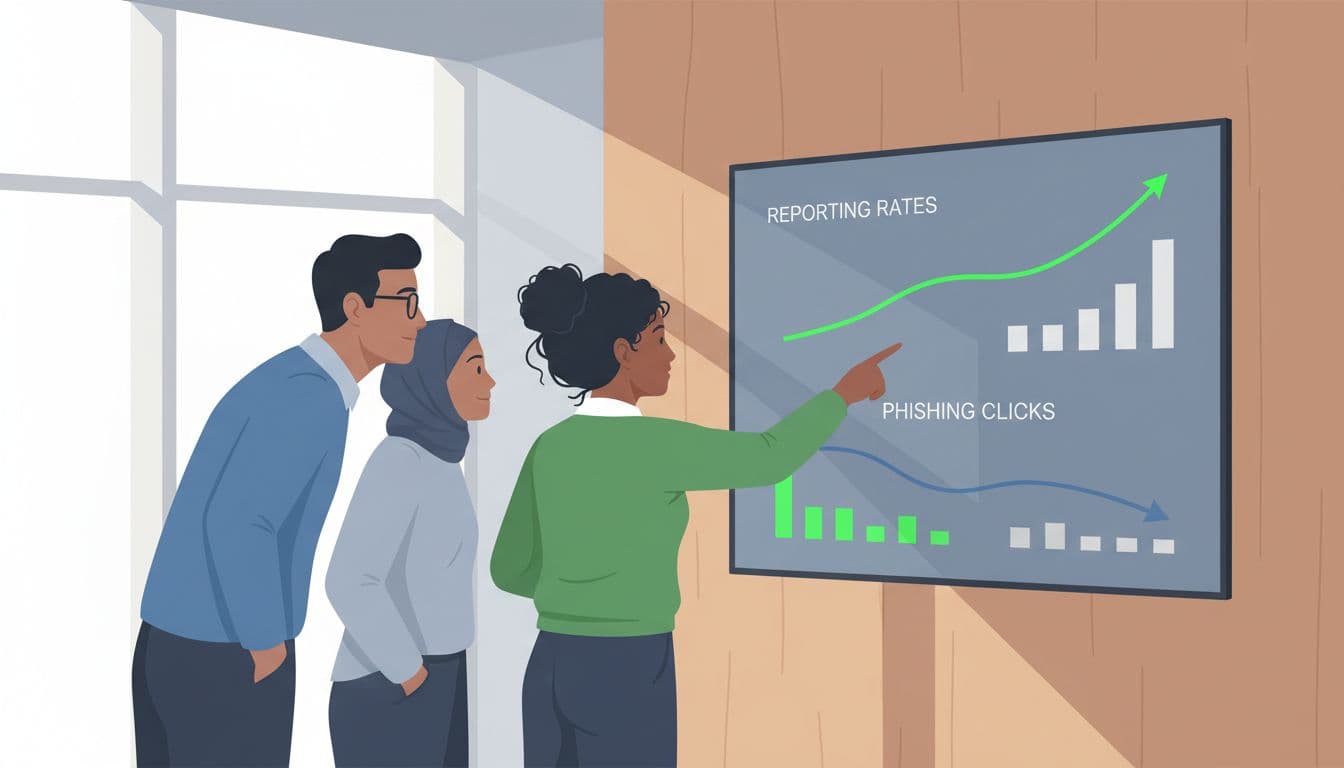
Real change shows up in behavior, especially when work gets busy. Start with reporting rates. If suspicious email reporting rises and time-to-report falls, employees are noticing and acting sooner. That gives the SOC more time, which lowers exposure.
Next, watch policy adoption in daily work. Are teams using approved file-sharing tools? Are privileged users following MFA steps without workarounds? Are exception requests going down, or at least getting better documented and shorter-lived? Those patterns tell you much more than an annual attestation ever will.
Then look at manager reinforcement. Managers shape habits faster than posters do. Track whether leaders discuss secure behavior in team meetings, coach after near misses, and close the loop on incident learnings. A rapid evidence review on cybersecurity culture and behaviour supports measuring culture and behavior together, because beliefs mean little if actions don’t change.
Finally, trend metrics by role, business unit, and risk level. One phishing click rate in isolation says very little. A combined trend of click rate, report rate, repeat mistakes, and time-to-report says far more. That’s how you measure phishing resilience without fooling yourself.
A simple framework for a security culture scorecard
To turn scattered measures into a scorecard, keep it simple. Most teams need 8 to 12 metrics, not 40. Mix leading indicators, like reporting and manager coaching, with lagging indicators, like repeat incidents or fraud loss.
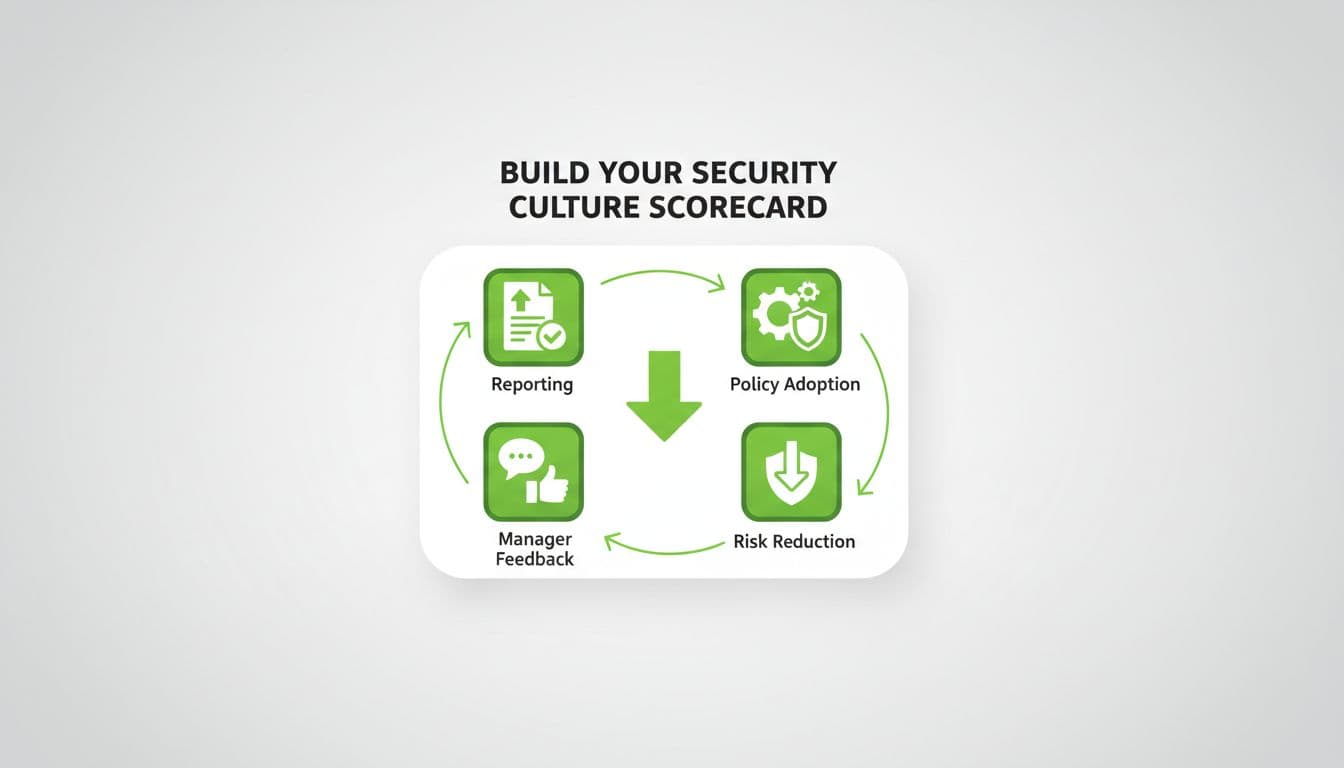
Use this five-step build:
- Pick target behaviors: Focus on actions tied to risk, such as reporting suspicious messages, using approved tools, following access rules, and escalating exceptions.
- Map each behavior to evidence: Pull data from mail reporting tools, ticketing, IAM logs, exception registers, policy platforms, and incident reviews.
- Set baselines and trends: Measure monthly or quarterly by team, then compare movement over time, not one-off spikes.
- Score behavior and outcome together: Give weight to improved reporting, faster containment, lower repeat errors, and stronger policy adoption. Reduce scores for recurring bypasses or long-lived exceptions.
- Review with managers: Culture changes inside teams. If leaders aren’t reinforcing it, the scorecard won’t move.
A scorecard also needs context. For example, sales may travel more, finance may see more payment fraud, and developers may face more access and secrets risks. Keep the framework consistent, but tune the targets by role. If you want a maturity reference, the SANS Security Awareness & Culture Maturity Model is a useful starting point.
Translate culture metrics into business outcomes
Security culture metrics matter when they explain risk and cost. Tie them to fraud loss, account compromise rates, audit findings, policy exception volume, and incident dwell time.
For example, if suspicious email reports rise while malicious inbox dwell time falls, the culture program is helping operations. If manager reinforcement improves and privileged access exceptions fall, you have a control story, not a training story. That makes budget conversations easier, because the link to lower loss is clearer.
A good scorecard also helps leaders choose where to act. One team may need manager coaching. Another may need process fixes because staff keep requesting workarounds. The point isn’t to grade people. It’s to remove the conditions that lead to unsafe choices.
A full training roster won’t stop a breach. Security culture metrics earn their place when they show safer behavior, stronger follow-through, and lower exposure over time.
Take one step this week, audit your dashboard and remove one vanity metric. If a number doesn’t change a decision, it shouldn’t lead the meeting.