table of contents
Promotion criteria for security engineers fall apart when they read like opinions. One manager wants incident leadership, another values threat modeling, and a third looks for mentoring, but never says how much is enough.
Clear security engineer promotion criteria fix that. They give engineers a target, and they give reviewers the same yardstick.
The best version is plain, fair, and measurable. It says what changes at the next level, what evidence counts, and what doesn’t.
Define the next level before you write the bar
Start with the next level, not the current title. A promotion should reflect broader scope, more autonomy, and harder judgment, not just more years on the job.
If your company has a ladder, use the next-level description as the base. Then cut vague words that can mean anything. “Strong communication” and “good collaboration” only help if you say what those look like in security work.
For example, a senior security engineer might be expected to lead threat models for risky systems, review architectures before launch, and push teams toward safer defaults. That is clearer than “shows senior-level thinking.”
GitLab’s promotion document style guide is a useful reference because it keeps the writing tight and evidence-based. Reviewers shouldn’t need to guess what a phrase means.
Promotion criteria should describe repeated work at the next level, not one lucky stretch.

Turn security work into evidence
A security engineer doesn’t get promoted for being broadly capable. The case gets stronger when the person shows repeatable impact in the work security teams actually do.
A useful rubric names the behavior, the context, and the result. That keeps the bar readable and makes it easier to apply across teams.
| Security area | Weak criterion | Strong criterion |
|---|---|---|
| Threat modeling | Participates in reviews | Leads threat modeling for high-risk services, names abuse paths, and gets design changes accepted |
| Detection and response | Helps during incidents | Owns triage on serious security events, coordinates engineers, and closes follow-up work |
| Secure architecture | Knows secure patterns | Shapes architecture decisions across teams and reduces risk before launch |
| Risk assessment | Sees risk | Ranks risk by business impact, explains tradeoffs, and secures decisions from stakeholders |
| Incident leadership | Stays calm in outages | Runs the security side of incidents and keeps response actions moving |
| Mentoring and influence | Is helpful to teammates | Coaches others, writes guidance, and changes how adjacent teams build |
The pattern is simple. Strong criteria name the behavior, the context, and the outcome. Weak criteria rely on labels that different managers will read in different ways.
A self-review also works better when the engineer can gather proof in one place. The promotion algorithm article shows a practical spreadsheet approach that helps map each criterion to evidence.
If two reviewers can read a criterion two different ways, the bar is too soft.
Scale the bar by scope, autonomy, and impact
Good criteria get sharper as the level rises. They don’t just ask for more output. They ask for broader ownership and better judgment.
At each level, ask four questions:
- Scope: How many systems, teams, or risk areas does the engineer influence?
- Autonomy: How much guidance do they need on normal work?
- Complexity: How messy are the problems and tradeoffs?
- Impact: Does the work change one team, a product area, or the security program?
At a mid level, the engineer solves well-defined problems and needs support on harder calls. At senior, they lead designs, make tradeoffs, and work across more than one team. At staff, they shape security direction, align partners, and change how other engineers build.
That is where influence across engineering matters. Security scales when people outside the security team adopt better patterns, better reviews, and better incident habits.
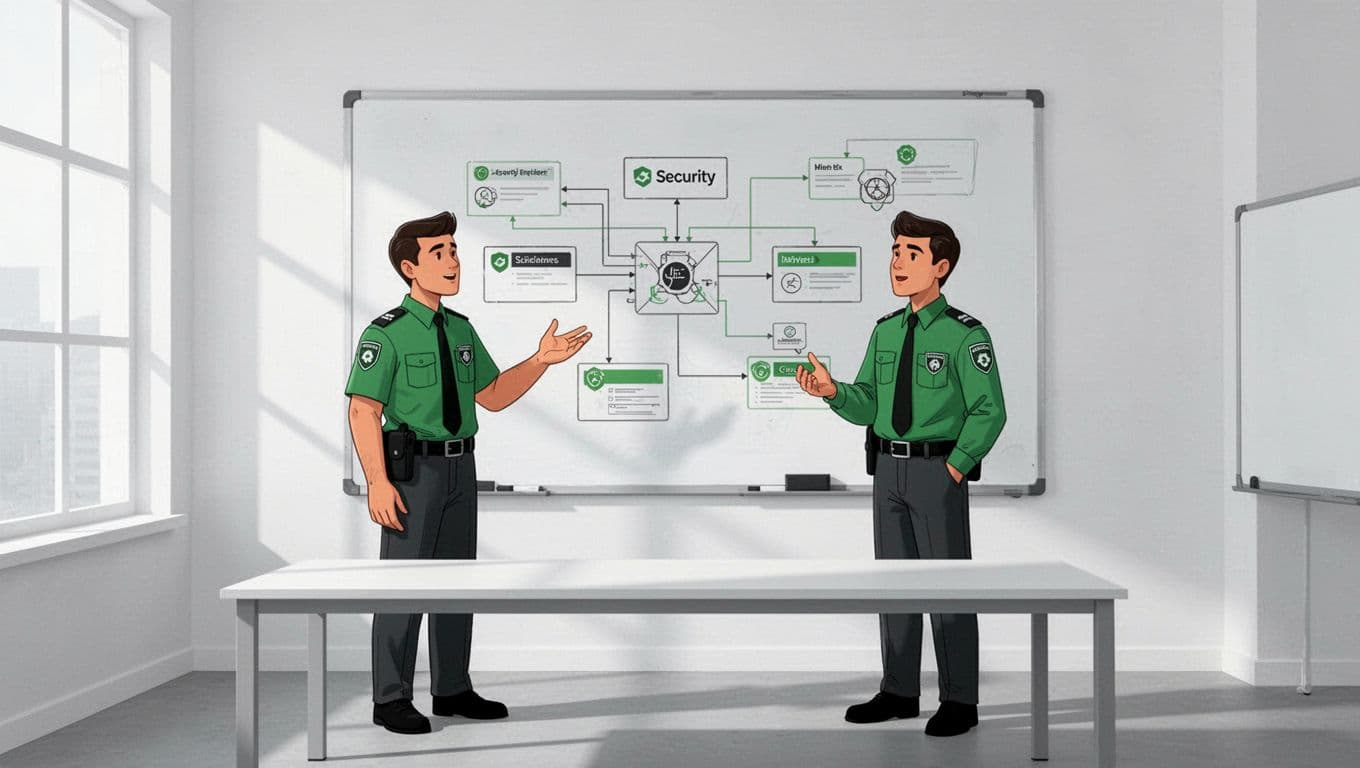
Mentoring belongs here too. A good criterion asks whether the engineer raises the team’s baseline, not whether they are easy to work with.
Separate performance from promotion readiness
Performance and promotion readiness are related, but they are not the same. Performance says the engineer is doing well in the current role. Readiness says they already do next-level work often enough that a promotion makes sense.
That difference matters. Someone can be reliable, collaborative, and effective without yet owning broader scope. Another engineer can have fewer visible wins, but already lead incidents, influence architecture, and move cross-team decisions forward.
Fair promotion criteria should reward repeated evidence, not a single heroic week. The promotion decisions guide is a useful reminder to keep evaluation consistent and to compare impact, not effort alone.
Use a template managers can reuse
A simple template keeps the process consistent across teams and reviewers. It also makes self-reviews easier, because the engineer knows what evidence to bring.
| Field | What to write |
|---|---|
| Level under review | Which level is the engineer already operating at? |
| Scope | What systems, teams, or risk areas are in play? |
| Security outcomes | Which outcomes matter, such as safer architecture, better detection, or faster response? |
| Evidence | What docs, outcomes, or peer feedback prove it? |
| Readiness bar | What must already be true for promotion? |
| Non-goals | What does not count on its own? |
For a senior security engineer, the evidence might include design reviews that changed architecture, incident notes that show calm leadership, and coaching that helped two engineers make better calls without hand-holding.
For clean promotion packets, GitLab’s promotion document style guide helps keep the write-up readable, and the promotion algorithm article offers a simple spreadsheet method for self-assessment.
If your team needs help building or revising a security ladder, Book a Discovery Call with Bud Consulting is a practical next step.
Common mistakes that weaken the ladder
The bar should stay consistent, but the examples can change by specialty. Appsec, detection engineering, IAM, and offensive security all do different work, so one generic list rarely fits.
A few mistakes show up again and again:
- Using vague words like “strategic” or “high impact” without examples.
- Writing criteria around heroics, late-night fixes, or being the person who gets called first.
- Using one generic security ladder for appsec, detection, IAM, and offensive security without adapting the evidence.
- Letting each manager apply a different bar.
If the same criterion produces different answers in different teams, it needs another edit.
Fair promotion criteria are specific enough to be checked and broad enough to work across the organization.
Conclusion
Clear promotion criteria give security engineers something better than vague praise. They show what next-level work looks like, and they make it easier for reviewers to apply the same standard.
When the bar is written well, the conversation moves away from personality and toward evidence. That is where fairness lives, and that is where security leaders get a ladder people can trust.
The best criteria make strong performance visible, and they make readiness hard to argue with.