table of contents
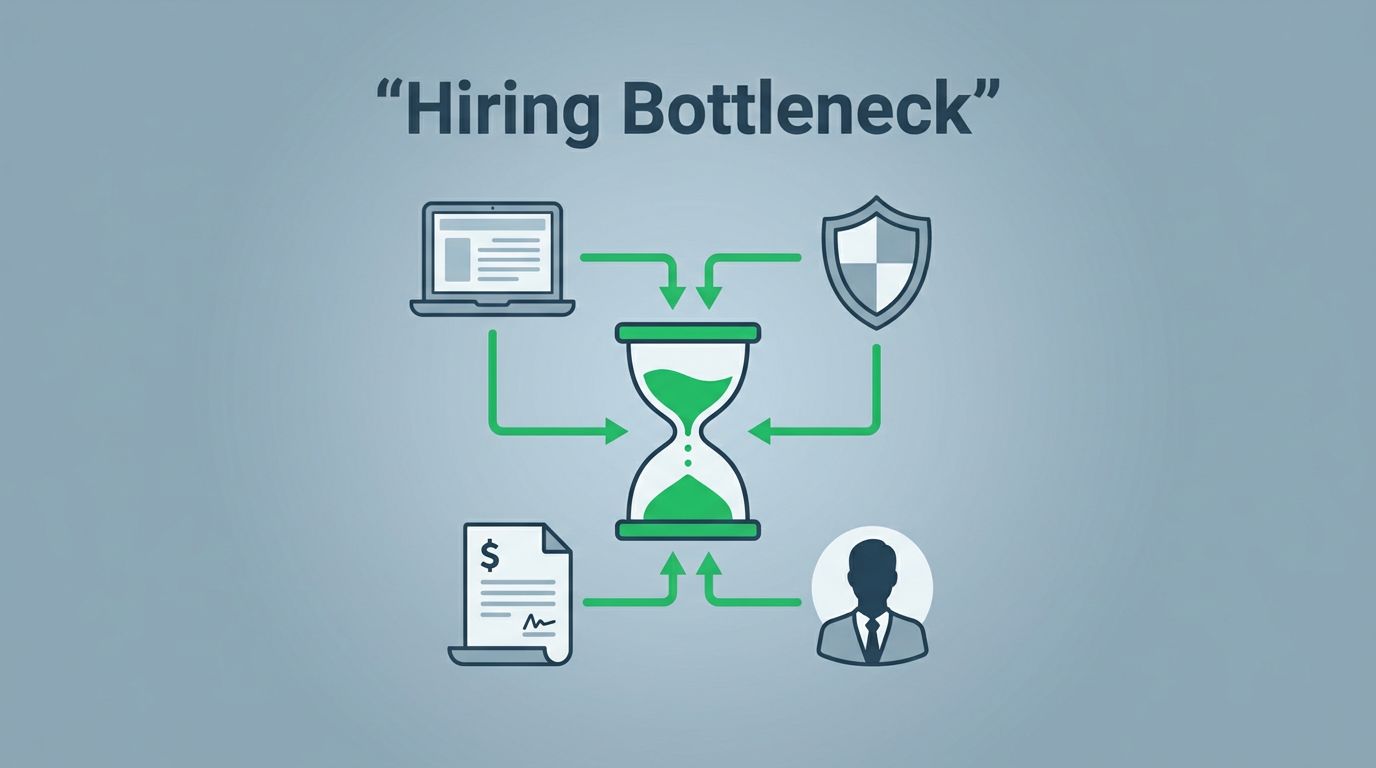
Security hiring often slows down long before a recruiter reaches out to candidates. The real drag usually sits in approvals, where requisitions wait for budget checks, role edits, and sign-off from too many hands.
That delay hurts more in security than in most functions. When a cloud security architect, IAM specialist, or CISO search stalls, risk keeps climbing while the seat stays empty. The fix is not more pressure on recruiting, it’s a better approval system.
Find where the requisition actually stalls
Most teams blame the hiring market first. That’s understandable, but it’s often wrong. A role can lose a week before sourcing even begins.
Start by mapping the full path from request to offer. Measure each handoff, including manager submission, security review, finance approval, HR review, and final sign-off. Then compare those steps to the total time-to-fill.
If one stage takes five days and the others take hours, you’ve found the bottleneck. For a useful split between time-to-hire and time-to-fill, see this guide on recruiting metrics. The distinction matters because a slow approval queue looks different from a slow interview process.
The biggest delay is often not sourcing. It’s the pause between “we need this role” and “we approved it.”
Security roles add extra friction because the stakes are higher. A CISO search may need board visibility. A DevSecOps hire may need budget tied to a platform roadmap. A role with clearance requirements can add even more delay, as security clearance hiring challenges show.
If you don’t measure the queue, you end up fixing the wrong problem.
Replace ad hoc approvals with pre-approved paths
The fastest teams don’t approve every security hire from scratch. They build paths in advance.
That means creating role families, salary bands, and approval tiers before the need becomes urgent. A senior AppSec leader should not go through the same path as an entry-level analyst. Nor should a replacement hire follow the same steps as a net-new leadership role.
A practical model looks like this:
- Pre-approved role families for common security jobs, such as cloud security, IAM/PAM, DevSecOps, and offensive security.
- Defined compensation bands that let managers launch searches without waiting for a new pay review.
- Risk-based approval tiers so only unusual roles need executive review.
- Standard intake templates that capture title, scope, location, reporting line, and why the role matters now.
This is where governance helps instead of slows you down. A well-run CISO search starts with role clarity, as explained in this CISO hiring guide. The same logic applies to every security role. If leaders agree on the shape of the job upfront, approvals move faster later.
Budget planning matters too. Tie each security headcount request to a known business driver, such as audit deadlines, cloud growth, incident response coverage, or product release risk. That makes the approval easier to defend, because it’s linked to work, not wishful thinking.
For niche or hard-to-clear roles, build a separate fast lane. If the job needs special vetting or a long compliance review, don’t bury it in the standard queue. Match the process to the risk.

Give security, finance, and talent one shared process
Security hiring approval bottlenecks often come from misaligned incentives. Security wants speed. Finance wants control. Talent wants a clean process. When those groups work in separate lanes, the requisition slows down.
The fix is a shared operating rhythm. Bring the three teams into one monthly workforce review, then use that meeting to settle the common questions before roles open. Which roles are pre-approved? Which need special review? Which salary bands are current? Who can sign off when the hiring manager is out?
The right workflow also assigns clear ownership. Security owns the scope of the role. Finance owns the budget guardrails. Talent owns the process and follow-up. Hiring managers own fast feedback. If one owner misses a deadline, the req should escalate automatically.

Use a simple service-level agreement for approvals. For example, a manager submits the request, finance reviews it the same day, and security leadership responds inside one business day. If that doesn’t happen, the request should move to a backup approver.
That kind of structure changes behavior fast. It also keeps the hiring manager accountable, which matters in security where hiring needs can’t drift for weeks.
Track the numbers that expose friction
You can’t fix what you don’t track. The best KPIs show where the process slows, not just whether a hire closed.

| KPI | What it shows | What to watch |
|---|---|---|
| Approval turnaround time | How long approvals take after a request is submitted | Long gaps after finance or leadership review |
| Requisition aging | How long a role stays open overall | Roles that sit far longer than similar jobs |
| Interview-to-offer velocity | How fast the team moves after interviews | Slow debriefs, delayed decisions, missed follow-ups |
| Offer acceptance rate | Whether the process and package stay competitive | Drops after long approvals or late offers |
Approval turnaround time is the clearest early warning. Requisition aging shows the larger trend. Interview-to-offer velocity tells you if the team can act while candidates are still warm. Offer acceptance rate shows whether the delay damaged interest.
For a deeper look at how recruiting metrics affect speed, use recruiting KPI benchmarks as a reference point. Then build your own internal targets around your hiring volume and role mix.
If your approval time is falling but offer acceptance is also dropping, the process may still be too slow. That’s why the full funnel matters.
Security hiring gets faster when approvals stop acting like a gate
The core issue is simple. Most security hiring bottlenecks are approval problems, not sourcing problems. Once you reduce handoffs, set pre-approved guardrails, and give each team a clear role, the whole process moves with less friction.
That’s how you shorten time-to-approve and time-to-fill without giving up control. If your process still depends on heroics, it’s time to redesign the system. If you need help tightening the workflow around senior security hiring, Book a Discovery Call with Bud Consulting.