table of contents
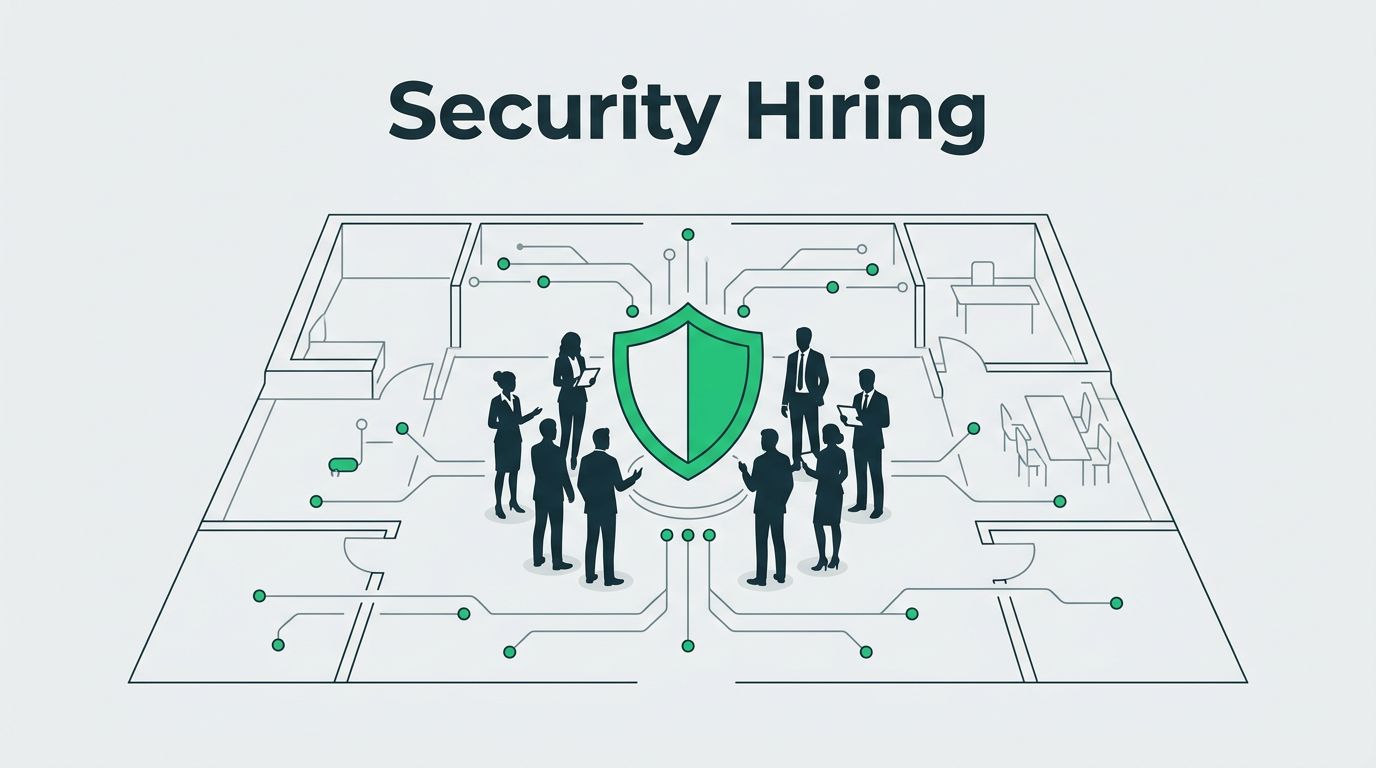
Your company hits 200 employees, and cyber threats keep climbing. Breaches cost mid-sized firms millions each year, yet many skip building a solid security team until it’s too late. You need protection that fits your budget and risks.
In 2026, hiring stays tough. Demand outpaces supply, with only 74% of U.S. cybersecurity jobs filled. Cloud shifts and compliance rules like SOC 2 push companies to act. This guide walks you through creating a security hiring plan that scales with your growth.
Start by matching hires to your real needs.
Assess Risks and Set Your Budget
Know your gaps before you post jobs. Run a quick risk assessment. List assets like customer data, cloud setups, and remote workers. Check recent incidents or audits.
Mid-sized companies often face phishing, misconfigurations, and vendor risks. Use free tools from NIST to score threats. Factor in regulations. If you handle payments or health data, compliance eats budget fast.
Budgets matter most. Aim for 8-12% of IT spend on security, or about $500K yearly for a 200-person firm. In 2026, tight post-cut wallets mean prioritize quick wins.
Decide internal versus outsource. Full teams cost more upfront. Managed services cover basics like monitoring.
Set hiring spend at 40-60% of that budget first year. Track ROI through reduced incidents.
Pick Key Roles and Weigh Tradeoffs
Choose roles that plug holes now. For 200 employees, start small. A security manager leads strategy. Security engineers build defenses. GRC leads handle compliance. Analysts monitor daily threats. vCISOs advise part-time.
Tradeoffs shape choices. Full-time engineers fix tools hands-on but demand $105K-$150K salaries. vCISOs offer expertise at $160K-$240K annually, often fractional.

vCISOs shine for strategy without full commitment. They spot blind spots and train staff. Engineers suit if you run complex clouds.
GRC roles grow fastest, paying $120K-$160K. They manage audits and risks. Analysts start at $85K-$115K for monitoring.
Compare in this table:
| Role | Salary Range (2026, Mid-Sized) | Best For |
|---|---|---|
| Security Manager | $150K-$220K | Leadership, oversight |
| Security Engineer | $105K-$150K | Tooling, cloud defense |
| GRC Lead | $120K-$160K | Compliance, vendor risk |
| Security Analyst | $85K-$115K | Threat monitoring |
| vCISO | $160K-$240K (fractional) | Strategy, quick expertise |
Pick based on risks. High compliance? GRC first. Cloud heavy? Engineer.
Sequence Your Hires Smartly
Don’t hire randomly. Order matters for momentum. Start with leadership to guide others.
First, security manager. They assess needs and own the plan. Next, engineer for core defenses. Then GRC lead for rules. Last, analyst for operations.

This sequence builds fast. Manager in 3 months, then one hire quarterly. Total team of 4 by year-end fits budgets.
Adjust for pace. If breaches hit, grab an analyst sooner. Outsource interim with vCISO.
Test skills in interviews. Use labs over resumes, as 2026 trends show.
Sample Security Org Structure
Keep it lean. One leader oversees three specialists.
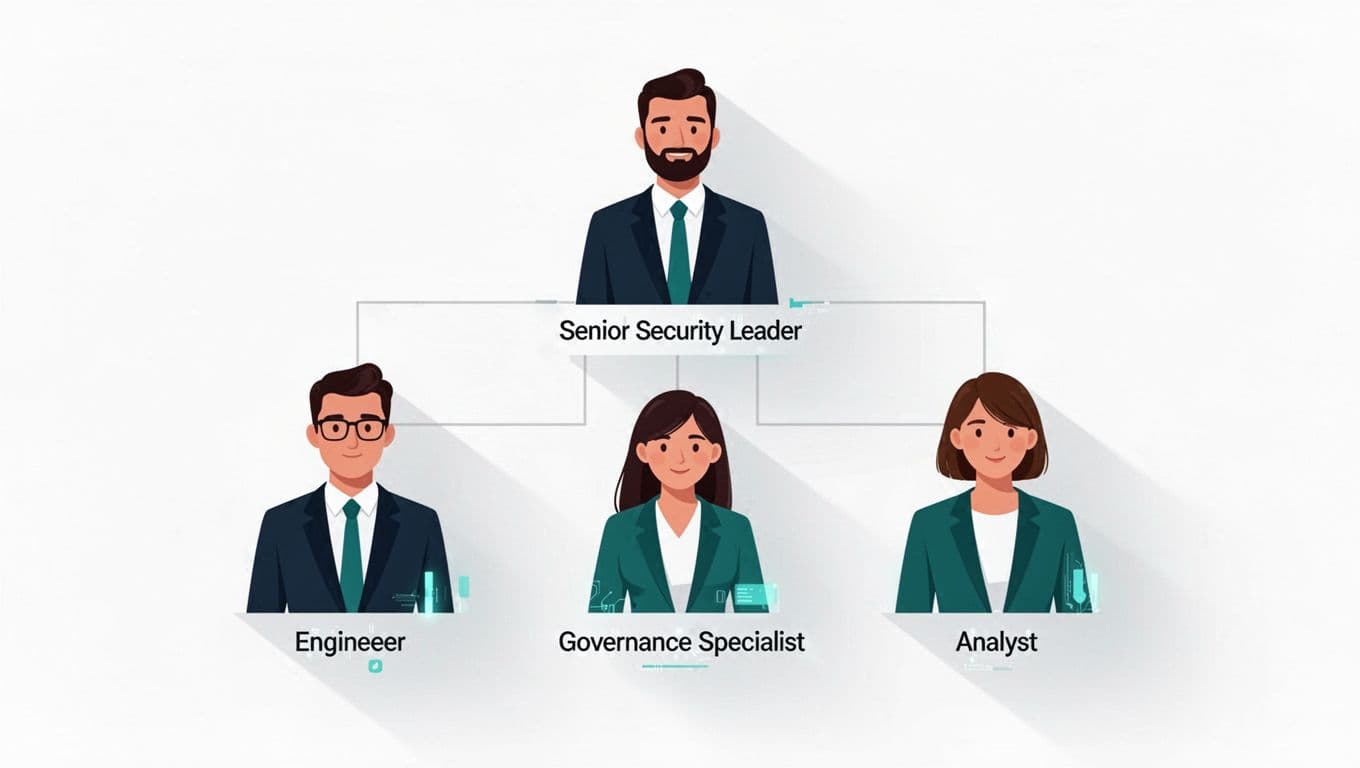
Security manager reports to you or IT head. They direct the engineer (tools), GRC specialist (compliance), and analyst (monitoring). This centralized setup ensures consistency, as Iceberg notes for mid-sized firms.
Scale later. Add responders at 300 employees. Ratios work: 1-2 security pros per 100 staff.
Outsourcing fills gaps. MSSPs handle scans.
Dodge Common Hiring Pitfalls
Mistakes sink plans. Vague job posts chase unicorns and scare talent. Define duties clearly.
Long processes lose candidates. Aim for 4-6 weeks.
Overfocus on degrees ignores skills. Test with scenarios.
Don’t treat security as pure IT. It touches all teams.
Cybersecurity District lists top errors like poor role definitions. Fix them for better fits.
Skip entry-level bets. Mid-career pros deliver now.
Your Security Hiring Checklist
Use this to build your plan:
- Score risks: High, medium, low?
- Budget check: Can you afford leader + two roles?
- Role pick: Manager first? vCISO bridge?
- Timeline: Q1 leader, Q2 engineer.
- Post smart: Skills tests, clear pay.
- Onboard fast: Train whole company.
Review quarterly. Adjust as threats shift.
Key Takeaways
A tight security hiring plan starts with risks and ends with a lean team. Sequence leader, then builders, then watchers. Weigh full-time costs against vCISO speed.
You now have the framework. Act before gaps widen.
Book a Discovery Call with Bud Consulting to vet talent fast. Your company stays safe.