table of contents
A deal can close in weeks, but the security debt can last for years. That happens when teams treat onboarding like a help desk ticket instead of a structured review.
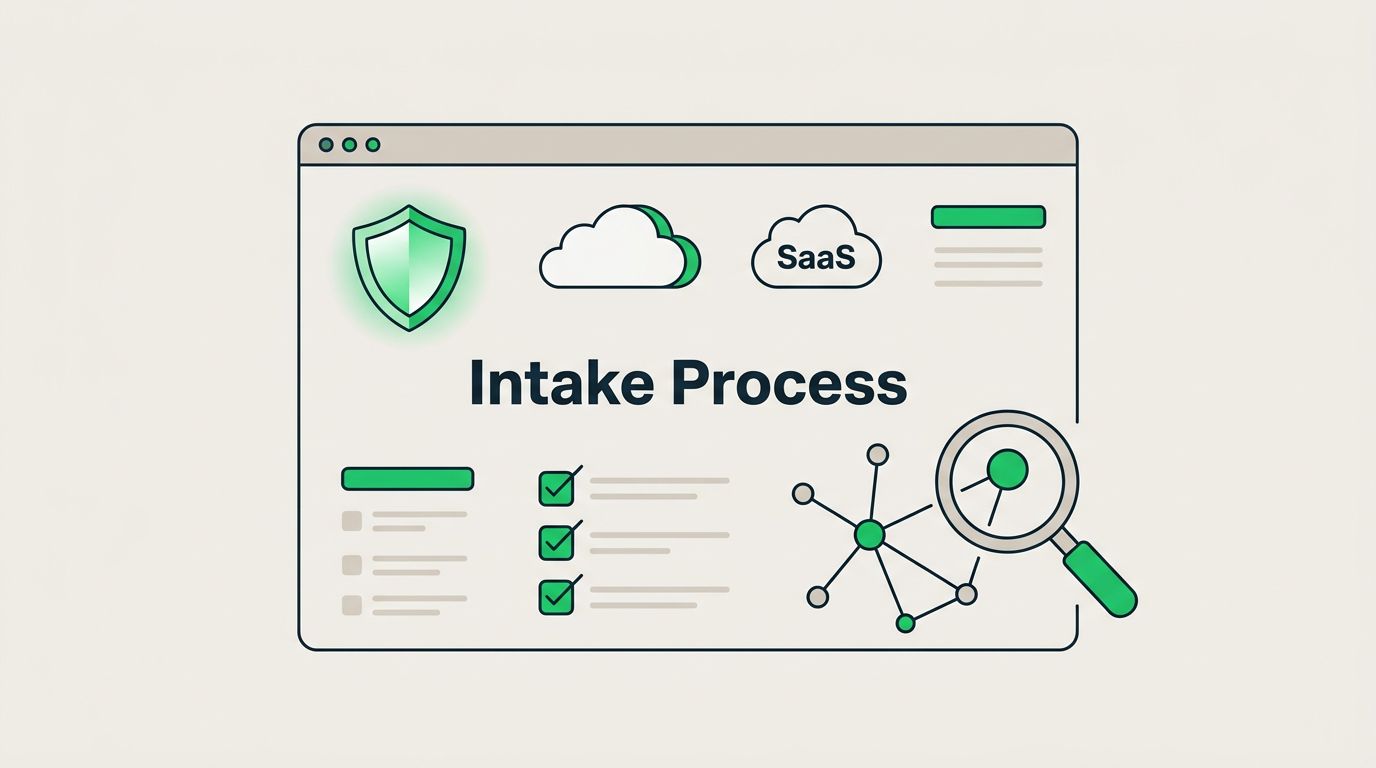
A strong security intake process gives you a repeatable way to spot risk, set Day 1 controls, and plan the first 90 days. It also helps you work faster across hybrid cloud, SaaS-heavy environments, and distributed teams without losing control.
Build the intake around facts, not assumptions
Start before close. By the time the legal papers are signed, you need a clear picture of the target’s identity stack, cloud footprint, SaaS sprawl, endpoint health, and incident history.
A practical M&A security assessment framework helps here because it keeps the review tied to real exposure, not just policy documents. That matters when the target has shadow IT, unmanaged laptops, or a mix of personal and corporate devices.
Use a short intake pack with a small set of sample questions:
- Which identities have admin rights, break-glass access, or shared credentials?
- Which systems store customer, employee, or regulated data?
- Which cloud accounts, SaaS apps, and third-party tools connect to corporate identity?
- Which controls must stay in place on Day 1 to avoid service disruption?
You do not need every answer before close. You do need enough detail to know where the sharp edges are. That means collecting evidence, not opinions, and asking for screenshots, exports, configs, and recent reports.

Draw a hard line between pre-close and post-close work
Pre-close work should answer one question: what would create immediate risk if the deal closed tomorrow? Post-close work should answer a different one: how do we bring the target onto a safer, shared baseline without breaking the business?
| Phase | Main question | Security output |
|---|---|---|
| Pre-close | What can hurt us right away? | Risk register, blockers, required controls |
| Day 1 | What must stay stable? | Access freeze, logging, comms plan, incident contacts |
| Days 30 to 90 | What can be fixed or standardized? | Remediation roadmap, asset inventory, control cleanup |
The first 100 days after an acquisition set the tone for the rest of integration. Security should move in that same rhythm.
Day 1 should preserve control, not chase perfection.
For Day 1 readiness, lock down the basics. Confirm who owns incident response, who can approve access, and how the acquired team reports a problem. Then verify MFA for privileged users, confirm log collection, and freeze risky changes until you understand the environment.
A simple 30/60/90 approach keeps the work moving:
- Day 1: Validate identity access, confirm emergency contacts, and protect critical systems from surprise changes.
- By Day 30: Complete asset discovery, identify exposed data paths, and map which SaaS tools depend on shared identity.
- By Day 60: Standardize endpoint management, centralize logging, and remove obvious shared admin accounts.
- By Day 90: Close or formally accept remaining risks, then hand steady-state ownership to the normal operating teams.
That order matters because integrations fail when teams try to fix everything at once.

Prioritize findings by business criticality and risk
Not every finding deserves the same attention. A low-severity issue on a noncritical wiki should not outrank a risky control gap in payroll, customer identity, or production cloud accounts.
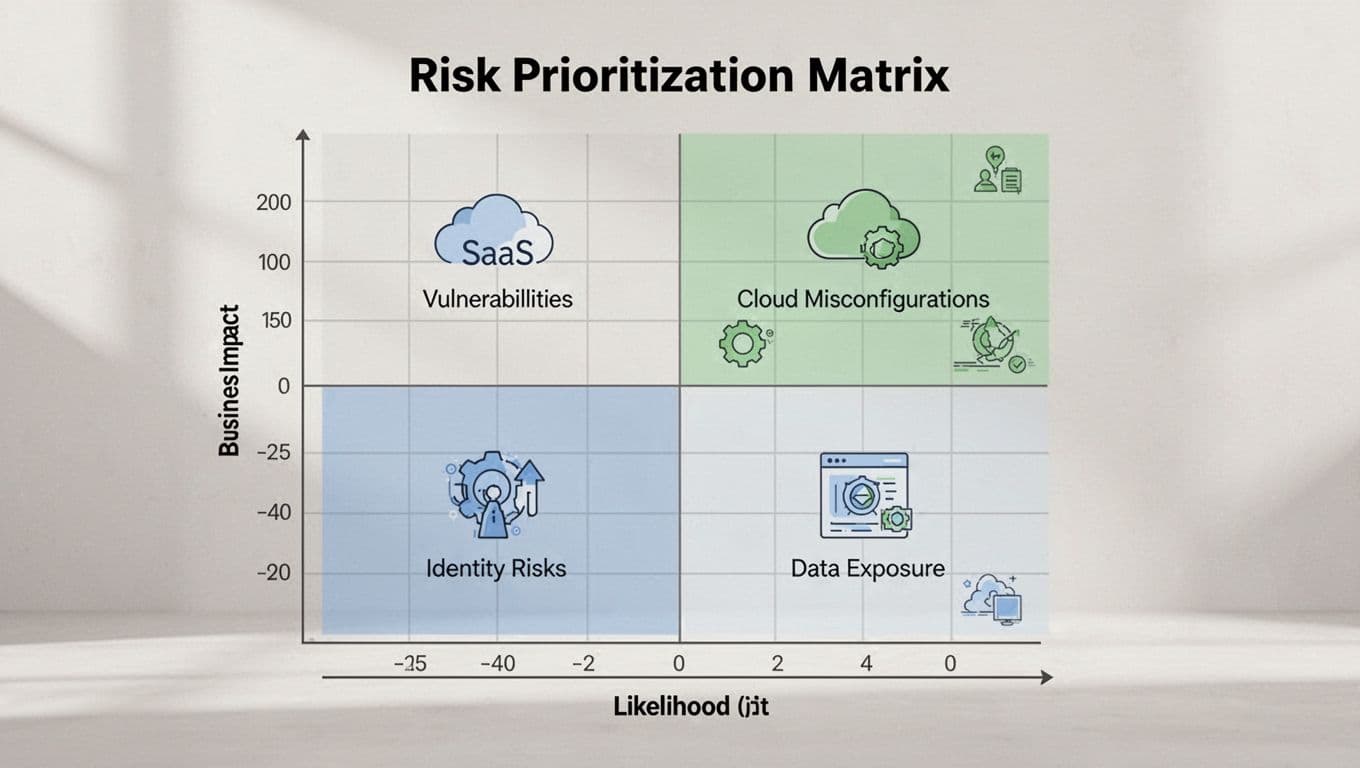
Use three inputs to rank each issue, business criticality, exploitability, and exposure. A vulnerable internet-facing SSO service with shared admin access should jump to the top. A missing policy update in an internal HR tool can wait.
A quick scorecard helps the team sort the noise from the real problems:
- High priority: customer-facing systems, identity gaps, exposed data, internet access, weak logging.
- Medium priority: internal apps with limited reach, incomplete asset inventories, stale local admin access.
- Lower priority: policy gaps, minor config drift, noncritical tooling with no sensitive data.
Hybrid cloud and SaaS-heavy targets often hide risk in the seams. One app may use a different identity provider. Another may store files outside the main tenant. Remote workers also add device and access drift, so endpoint posture belongs in the first review.
Run the intake with clear owners and measurable KPIs
A security intake process fails when nobody owns the next step. Put one person in charge of the intake, one person in charge of the target’s technical inputs, and one person in charge of risk decisions. In many deals, that means the CISO, the integration lead, and the key domain owners.
Weekly governance keeps the process honest. A short review with deal, IT, and security leaders works better than long status decks. Keep exceptions visible, record the risk owner, and set a due date for each open item.
A strong integration KPI framework makes the work measurable. Track a few numbers that tell you whether the target is becoming safer.
| KPI | Why it matters | Simple target |
|---|---|---|
| Percent of critical assets inventoried | Shows whether you know what you own | 95%+ by Day 30 |
| Percent of privileged users on MFA | Measures immediate identity control | 100% by Day 1 or soon after |
| High-risk findings older than 30 days | Shows remediation speed | Zero, or approved exceptions only |
| Percent of logs flowing to central monitoring | Shows visibility after close | 90%+ by Day 60 |
Common pitfalls show up fast. Teams often assume the acquired company is smaller, so the risk is smaller. They also delay SaaS discovery, skip endpoint checks for contractors, or leave local admins untouched because “the business needs speed.” Those shortcuts create longer cleanup work later.
If you need help building a repeatable model across deals, Book a Discovery Call with Bud Consulting.
Make the intake part of the deal process
The best security intake process starts before close, sets Day 1 guardrails, and keeps moving through the first 90 days. It does not treat every issue the same. It ranks findings by business impact, exposure, and speed of fix.
That discipline protects value when the acquired company brings in cloud sprawl, SaaS overlap, and a distributed workforce. It also gives leaders a clean view of what needs action now, what can wait, and what needs an exception.
When the process is repeatable, every acquisition gets clearer, faster, and safer.