table of contents
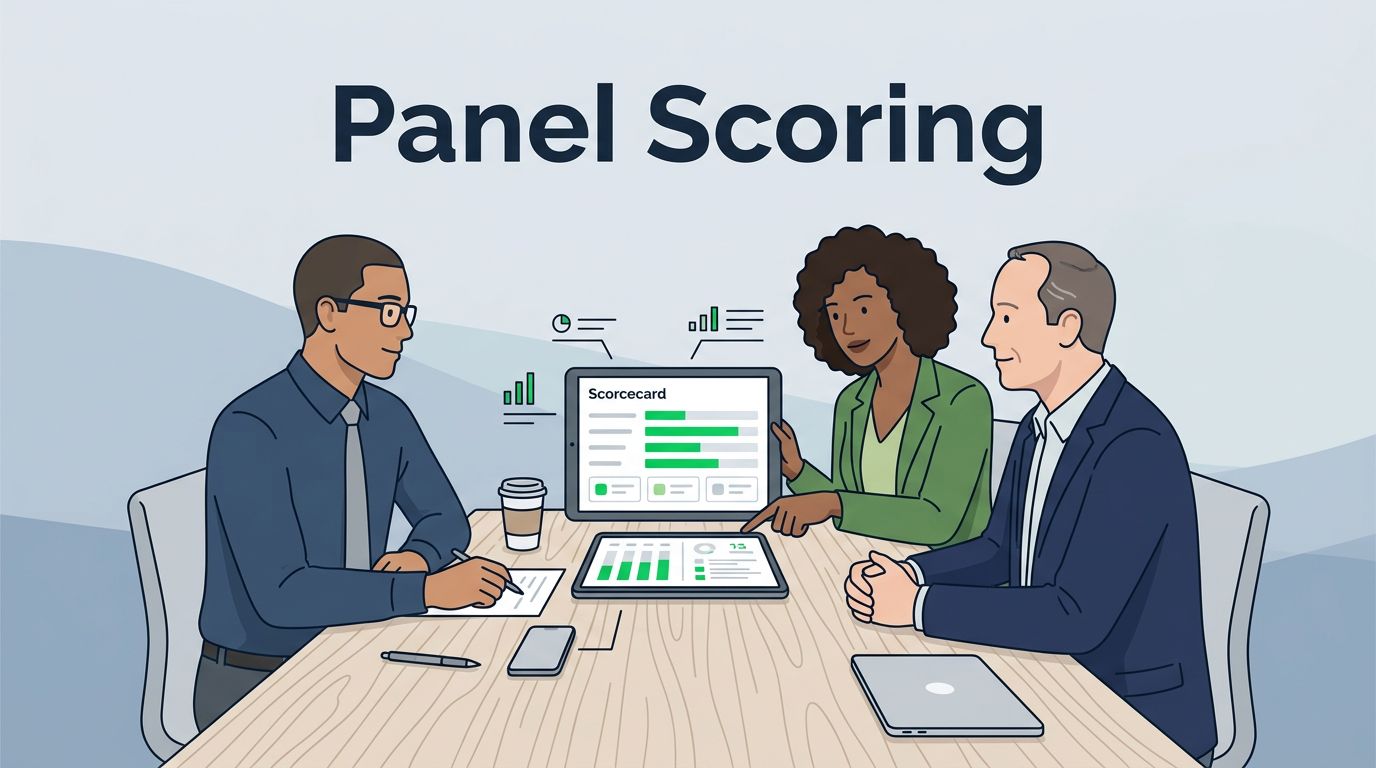
Security interviews go off track when each interviewer scores a different version of the role. One person wants deep cloud depth. Another wants communication. A third remembers a single strong answer and forgets everything else. A security interview panel only works when everyone judges the same evidence the same way.
That means the panel needs a shared job map, clear roles, and a scorecard that keeps opinions in check. With the right setup, you get cleaner decisions, fewer repeats, and a fairer process for candidates. The sections below show how to build that system.
Start with the role, not the room
Before you assign panelists, define the job in plain language. Write down the five or six things the person must do in the first six months, then turn each into a competency. A useful starting point is this cybersecurity candidate interview framework, which groups interviews around technical skill, judgment, and behavior.
For a security analyst, the core skills might be alert triage, log reading, and clear notes. For a security engineer, the list could include secure design, scripting, cloud controls, and trade-off thinking. Incident responders need containment judgment, calm communication, and coordination. Security leaders need risk framing, prioritization, influence, and hiring sense.
Do not write questions until you can answer a simple test: what does good evidence look like? If the candidate gives a strong answer, what would they say or do? That one sentence keeps the panel from drifting into vague impressions. It also makes later scoring easier, because every interviewer is measuring the same thing.
Assign panel roles that do not overlap
A strong panel has different jobs, not different opinions on the same question. Three or four panelists is usually enough. More than that slows the interview and makes candidates repeat themselves. A panel interview guide makes the same point and also recommends independent scoring before any group discussion.
Pick roles with clear boundaries.
- The hiring manager covers role priorities, day-one expectations, and team fit.
- A technical peer covers hands-on depth and problem solving.
- A cross-functional partner, such as IT, product, or operations, covers handoffs and communication.
- A recruiter or People Ops partner keeps time, captures notes, and watches the process for fairness.

Once those roles are clear, stop them from overlapping. If the technical peer owns incident triage, the hiring manager should not ask the same scenario with different words. If two panelists want to test the same skill, split the work. One asks about the first move. The other asks about trade-offs or escalation.
That division matters because duplicate questions waste time and distort scores. Candidates also notice when the room is testing them twice for the same thing.
Write questions once, then assign them with purpose
A structured question set keeps the panel honest. It also gives you a clean record when you compare candidates later. Structured behavioral interviews for security-critical roles are a useful model because they tie questions to evidence, not memory.
Use this simple process:
- Choose four to six competencies.
- Write one primary question for each competency.
- Add one backup probe for depth.
- Assign each question to one panelist.
- Remove any duplicate question before the interview starts.
Then make the rule clear: each panelist asks only their assigned questions, plus short follow-ups that seek evidence. No one should wing it with a new topic because a candidate said something interesting. That is how panels drift off course.
Behavioral questions work well when they stay specific. Ask for a recent example, then probe for action, result, and decision making. For a security analyst, that might be how they handled a noisy alert queue. For an incident responder, it might be how they chose containment steps under pressure. For a leader, it might be how they handled a risk decision that the business resisted.
Build a scorecard that makes the decision visible
A good scorecard is short, plain, and hard to interpret in two different ways. Give every interviewer the same scale, then define what each score means before the first candidate arrives.
| Competency | 1 | 3 | 5 |
|---|---|---|---|
| Technical depth | Misses core concepts or guesses | Explains fundamentals correctly | Explains trade-offs and edge cases |
| Judgment | Picks a risky or vague path | Chooses a safe, workable next step | Prioritizes well and explains why |
| Communication | Hard to follow or too broad | Clear and direct | Clear, concise, adapts to audience |
| Collaboration | Blames others or misses handoffs | Works with partners | Anticipates downstream needs |
Use the same scale for every candidate. A 3 means the person can do the job with normal support. A 5 means they bring strong evidence and can teach the team something useful. A 1 means the answer does not meet the bar.
If scores only make sense after discussion, the rubric is too loose.
That table is simple on purpose. It gives panelists a common language. It also helps you compare candidates without turning the debrief into a memory contest. For security leadership hires, swap “technical depth” for “risk framing” or “program ownership” if that fits the role better.
Calibrate the panel before the first interview
Calibration is where consistency gets real. Hold a short prep session before interviews begin, then walk through the scorecard with the panel. Review one or two sample answers and decide what a 1, 3, and 5 look like in practice. If two interviewers would score the same response very differently, refine the rubric before the panel starts.
A solid calibration meeting should cover four things, the must-have competencies, the question order, the evidence for each score, and the red flags that end the process early. Keep it practical. If a panelist cannot explain why a score changed, the score should not change.
During the interview, have each panelist score independently before any group talk. That keeps first impressions from spreading across the room. Then compare notes in the debrief, not during the interview. This keeps the decision easier to defend and easier to audit later.
Bias drops when the process gets boring in a good way. Everyone hears the same core questions. Everyone uses the same scale. Everyone writes evidence, not adjectives. If one panelist says “great culture fit” and another says “strong judgment,” push both people to name the behavior they saw.
Tune the panel for each security role
Different security roles need different weight in the panel. The structure stays the same, but the lens changes.
Security analyst hires
Focus on signal handling, written clarity, and speed. Give the candidate a noisy alert scenario and ask what they would check first. A strong analyst explains triage steps, asks smart questions, and writes notes that another person could use.
Security engineer hires
Weight design choices, cloud or network depth, and secure implementation. The best questions ask the candidate to compare two architectures or explain how they would add a control without breaking the system. A peer engineer should own this section, because vague panelists can miss weak answers.
Incident responder hires
Use scenarios that test containment, coordination, and pressure handling. Ask what they would do in the first 15 minutes, then ask how they would brief leadership. Good responders show order, calm, and clear escalation.
Security leadership hires
Spend less time on deep technical detail and more time on judgment. Ask how they set priorities, manage budgets, hire managers, and talk to the business about risk. Include at least one cross-functional interviewer, because leadership is about influence as much as expertise.
If you are building a panel for hard-to-fill roles or a new security team, Book a Discovery Call with Bud Consulting to shape the role map and scorecard before interviews begin.
Conclusion
A consistent security interview panel starts with a clear job map, not a bigger meeting. Once you assign distinct roles, align questions to competencies, and score with one rubric, the panel becomes much easier to trust.
Calibration is the final piece. It keeps panelists honest, reduces bias, and turns debate into evidence-based review. That matters most when you are hiring for roles where judgment, speed, and communication all carry risk.
The best panels do one thing well. They measure the same candidate the same way, every time.