table of contents
You’ve spotted a strong security candidate. Their resume shines with solid experience. But they haven’t touched your specific tools like Splunk or Palo Alto. Do you move on?
Vendor gaps happen often in cybersecurity hiring. Teams switch platforms fast, and top talent spreads across ecosystems. Security interview questions that probe transferable skills help you spot real ability. You uncover thinkers who adapt quick, no matter the vendor.
This guide gives you practical questions. It shows what to assess and strong responses. Plus, tips to tweak for roles like analyst or architect.
Why Focus on Transferable Skills in Security Interviews
Hiring freezes vendor lock-in risks. Candidates master concepts like threat modeling or zero trust. They apply them anywhere. Specific tool knowledge? That’s trainable.
Skills-first hiring builds resilient teams. A Dice.com article on 2026 cybersecurity trends notes managers prioritize real-world problem-solving over brand badges. Vendor gaps test adaptability.
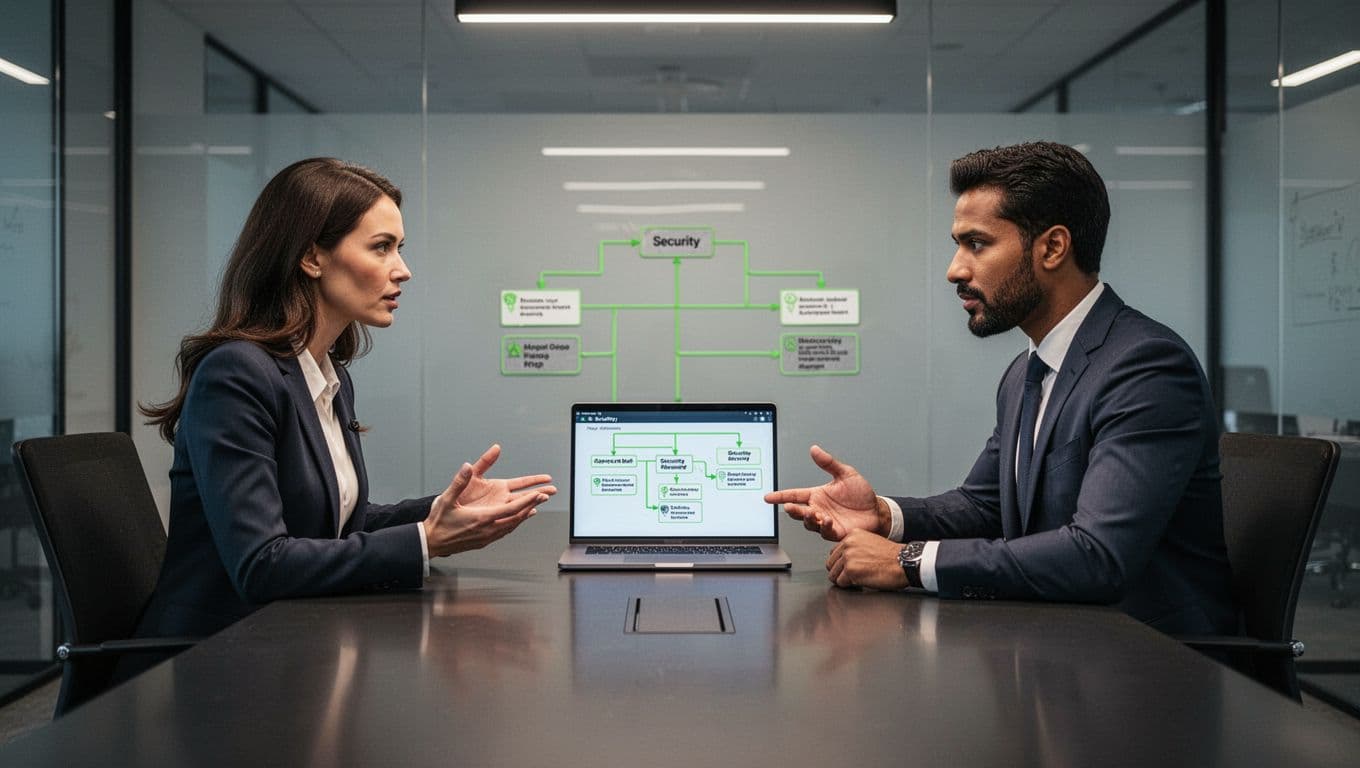
You probe how they handled incidents or tuned alerts. Strong answers reveal patterns. They tie back to principles, not buttons. This approach cuts bias toward familiar names.
In short, transferable skills predict on-the-job wins. They bridge gaps fast.
Core Security Interview Questions
Start with fundamentals. These security interview questions gauge grasp of protection, detection, and response. Candidates answer without naming your stack.
Question 1: Walk me through your process for prioritizing vulnerabilities.
You assess risk judgment and methodology. Look for CVSS scoring, exploitability, and business impact. A strong junior analyst says, “I score by CVSS base plus threat intel. Then factor asset value, like customer data first.” Seniors add context: “I weigh active exploits from sources like CISA and align with org risk appetite.”
Question 2: How do you detect lateral movement in a network?
This tests detection logic. Expect behavioral analytics or anomaly spotting. Good answers mention EDR signals like unusual logons or SMB shares. An engineer might detail: “I hunt for Pass-the-Hash via bloodhound graphs or monitor for RDP spikes outside hours.”
Question 3: Describe your incident response triage steps.
You check structured thinking. Triage covers contain, eradicate, recover. Strong replies outline playbooks with roles. Managers stress communication: “First, isolate via network seg. Then notify via IR plan. Finally, post-mortem for lessons.”
These questions reveal depth. Candidates draw from any toolset.
For more ideas, check Tier2Tek’s cybersecurity interview guide for managers. It echoes skills over certs.
Questions for Threat Hunting and Prevention
Shift to proactive skills. These security interview questions uncover hunting mindset and prevention strategies.
Question 4: How would you build a threat hunt hypothesis?
Assess curiosity and data skills. Juniors hypothesize from MITRE ATT&CK. Strong answer: “Start with logs for Cobalt Strike beacons, like DNS over HTTPS anomalies.” Architects tie to org threats: “Base on intel feeds, test for living-off-land tools.”
Question 5: Explain zero trust implementation basics.
You evaluate architecture sense. Look for identity, microseg, and least privilege. A solid reply: “Verify every access. Use MFA, seg networks, monitor always.” Engineers add: “Implement via service mesh or SASE proxies.”
Question 6: How do you secure cloud workloads without named services?
Test abstraction. Expect IAM, encryption, and scanning. Good response: “Enforce least priv via roles. Scan images pre-deploy. Use WAF for APIs.” This works for AWS, Azure, or GCP.
Answers show principles endure. Vendor specifics fade.
Adapting Questions by Role and Seniority
Tailor depth to fit. Analysts handle ops; architects design; managers lead.
For analysts, keep tactical. “How do you alert on phishing?” Assess daily triage.
Engineers go hands-on. “Tune a rule for SQLi evasion.” Probe config logic.

Architects strategize. “Design multi-cloud identity.” Check scalability.
Managers oversee. “How do you upskill a team on new threats?” Look for mentoring.
Scale by seniority. Juniors describe steps; seniors justify trade-offs. Adaface’s cyber security questions offer role tweaks like this.
This flexibility uncovers fit across levels.
Behavioral Questions to Spot Adaptors
Past actions predict future. Use these for soft skills.
Question 7: Tell me about adapting to a new security toolset.
You gauge learning curve. Strong story: “Switched from OSSEC to Elastic. Mapped rules in days, cut false positives 40% via tuning.”
Question 8: Describe a cross-team security win.
Tests collaboration. Replies highlight influence: “Worked with devs on SAST. Reduced vulns pre-prod by 60%.”
These reveal culture fit. Vendor gaps don’t block them.
Build Stronger Security Teams
Transferable skills trump vendor matches. You hire adapters who strengthen defenses quick. Questions here focus principles over pixels.
Skills-first wins in tight markets. Teams onboard faster and innovate.
Need help vetting senior talent? Book a Discovery Call with Bud Consulting. They close gaps for cloud architects and CISOs.
Your next hire waits beyond the resume mismatch. Ask smart security interview questions. Hire the capable.