table of contents
New technical hires bring fresh skills to your team. Yet they also introduce risks if security isn’t front and center from day one. A weak start can lead to breaches, like accidental data leaks or phishing falls.
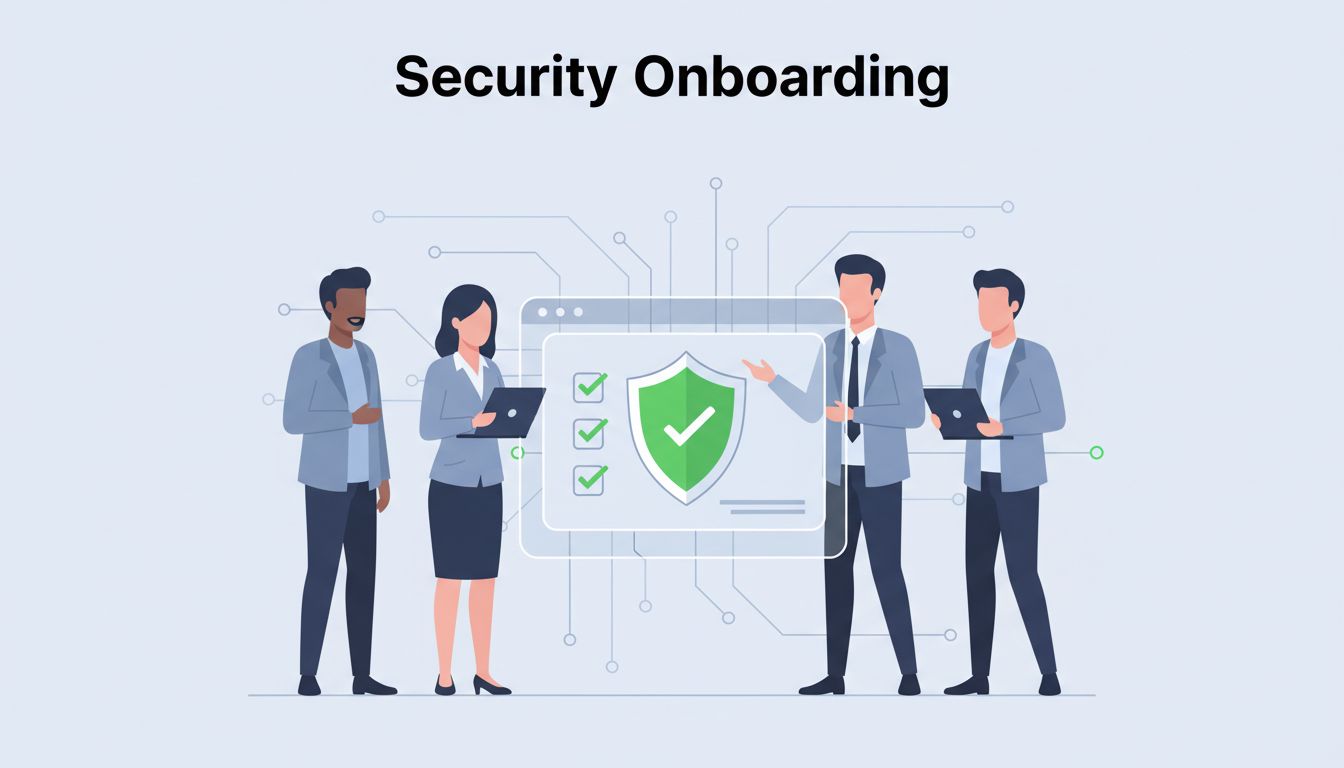
You need a security onboarding plan that builds habits fast. This framework fits engineers, admins, and security staff. It follows 2026 best practices so your team stays secure.
Let’s walk through a phased approach you can adapt right away.
Pre-Onboarding Security Checks
Start security before the hire signs on. Review their background with automated tools. Check public repos for leaked secrets or weak code patterns.
Assign a security buddy early. Share your policies via a secure portal. Require them to review key docs, like acceptable use and data classification.
For software engineers, flag if past work shows insecure dependencies. Cloud hires get a quick audit of their certs against your stack. Security roles face deeper vetting, including reference checks on incident handling.
This step sets expectations. It cuts Day 1 chaos because they arrive prepared. Most importantly, it spots issues before access begins.
Phased Security Onboarding Timeline
Break onboarding into clear phases. This timeline ensures steady progress without overload.
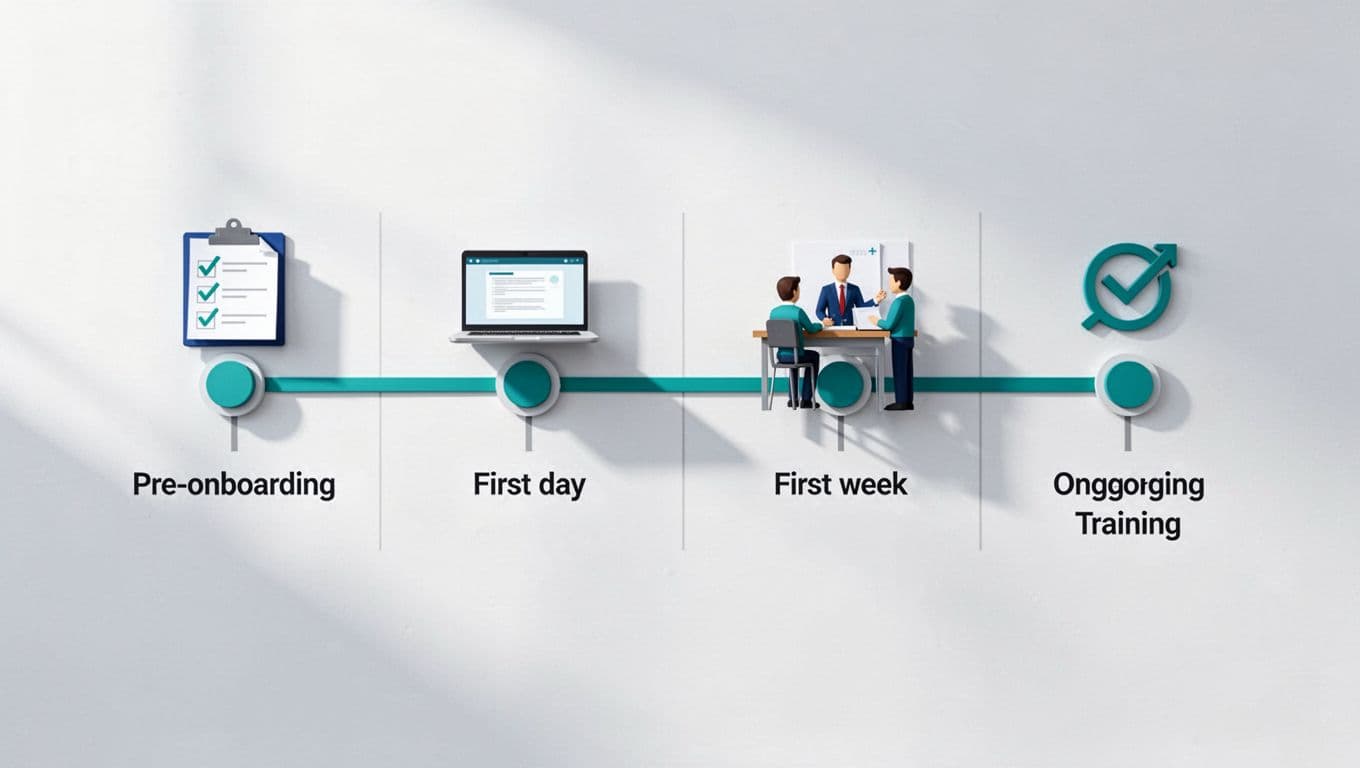
Here’s a simple table to map actions across phases:
| Phase | Key Actions | Owner | Timeline |
|---|---|---|---|
| Pre-Onboarding | Background scan, policy review | Security team | Before Day 1 |
| Day 1 | Device setup, MFA enrollment | IT/Security | First shift |
| First Week | Role training, access provisioning | Manager/Buddy | Days 2-5 |
| Ongoing | Simulations, audits, check-ins | All teams | Monthly |
Follow this, and hires ramp up securely. Adjust based on role, but keep phases fixed. As a result, compliance stays high from the start.
Day 1 Essentials
Day 1 focuses on basics. Issue a managed device with full disk encryption. Enroll in phishing-resistant MFA, like FIDO2 keys or passkeys.
Set least privilege access from the jump. Use just-in-time provisioning for tools. No broad admin rights.

Run a device trust check. Verify endpoint protection and zero-trust network access. Walk them through VPN setup and browser hardening.
Hold a 30-minute session on incident escalation. Teach them to report suspicious activity via Slack or your ticketing system. For example, flag odd logins right away.
These steps build trust fast. Hires feel supported, and your posture strengthens immediately.
Role-Specific Adjustments
Tailor the plan to fit roles. Software engineers need secure coding basics. Cloud admins focus on infrastructure controls. Security hires dive into ops.

Use this comparison for first-week training:
| Role | Focus Areas | Tools/Practices |
|---|---|---|
| Software Engineer | Secure coding, secrets management | SAST scans, GitHub secrets, no hardcodes |
| Cloud/Platform Admin | Least privilege IAM, device trust | IAM roles, endpoint attestation |
| Security Engineer | Incident response, AI tool policies | Playbooks, approved LLMs only |
Software engineers practice pulling secrets from vaults, not env vars. Cloud hires simulate privilege escalations. Security staff review your attack surface scans.
In addition, all learn AI usage rules. Ban unapproved models to avoid data exfil. This customization boosts retention because training feels relevant.
First Week Deep Dive
Week one ramps up access gradually. Provision repo and cloud console rights after quizzes. Run a phishing sim on Day 3.
Cover secrets management hands-on. Demo HashiCorp Vault or AWS Secrets Manager. Stress rotation and auditing.
Teach secure coding expectations. For engineers, integrate pre-commit hooks for vuln checks. Platform teams learn container scanning.
Hold daily 15-minute standups with the buddy. Review progress and answer questions. By Friday, they shadow a real task under supervision.
Meanwhile, log all actions for audits. This phase cements habits before solo work starts.
Ongoing Training and Metrics
Security doesn’t stop at week one. Schedule monthly phishing tests and quarterly tabletop exercises. Track metrics like MFA adoption and sim pass rates.
Use dashboards to monitor. Aim for 95% compliance on key controls. Low scores trigger retraining.
Review access every 90 days. Revoke unused perms. For high-risk roles, add peer code reviews.
This loop keeps skills sharp. Teams spot gaps early, so risks stay low.
A solid security onboarding plan pays off fast. New hires contribute securely from the start. Your culture strengthens as a result.
Adapt this framework today. If implementation feels tricky, Book a Discovery Call with Bud Consulting to get tailored advice.