table of contents
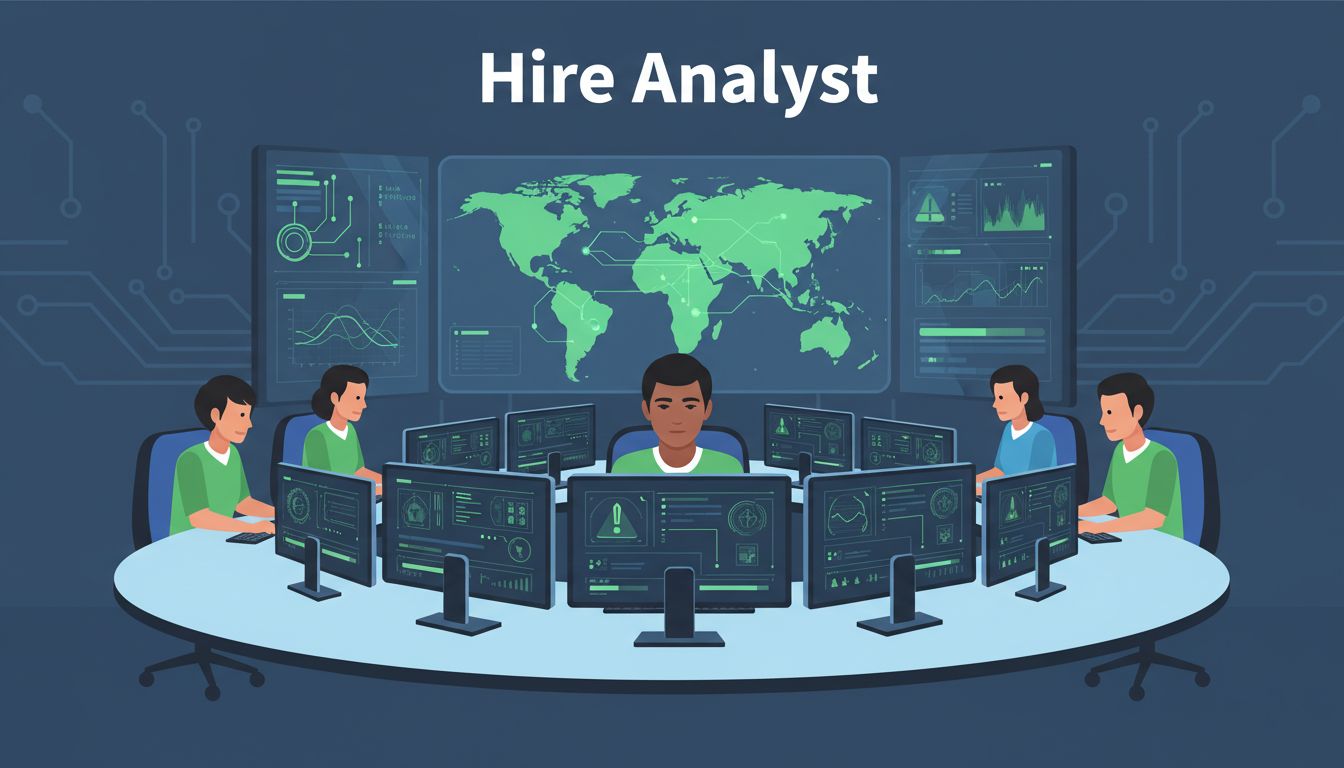
A growing SOC can go sideways fast if the first hire is wrong. One weak analyst can slow triage, miss patterns, and create more work for everyone else.
The best security operations analyst for your team is the one who matches your current stage, your alert volume, and your tools. That means you need a clear role, a clean screen, and an interview process that tests real work, not polished buzzwords.
Match the Hire to Your SOC’s Stage
Before you write the job post, look at where the SOC sits today. A team that still struggles with alert overload needs a different hire than a team that already tunes detections and hunts threats.
A SOC maturity model helps here because it shows what “good” looks like at each stage. For a young SOC, the analyst may spend most of the day on triage, ticketing, and escalation. For a more mature SOC, the same role may need stronger investigation skills and better judgment.
That matters in 2026 because AI tools now handle more routine enrichment and first-pass triage. Humans spend more time on context, exception handling, and incident decisions. So if your team still needs basic monitoring coverage, don’t hire for a fantasy future state.
If one hire needs to cover every gap, the role is too big.
A better move is to define the work you need done this quarter, then hire for that. If the role will grow later, say so in the plan, not the title.
Separate Core Skills from Nice-to-Haves
This is where many job searches go off track. Teams ask for a unicorn, then wonder why strong candidates pass.
In 2026, U.S. SOC analyst pay often runs from about $45,000 to $80,000 at entry level, $75,000 to $115,000 at mid-level, and $120,000 plus for senior work. That spread matters, because over-hiring for seniority can drain the budget for the next seat you really need.
Use this split to keep the role honest:
| Core skills for day one | Nice-to-haves for later |
|---|---|
| Alert triage and escalation | SOAR automation |
| Log reading across endpoint, email, and cloud tools | Threat hunting |
| Clear incident notes and handoffs | Detection engineering |
| Basic threat understanding | Scripting and custom queries |
| Calm judgment under pressure | Purple-team experience |
If a candidate lacks something in the left column, keep looking. If they lack items on the right, you can train that part.

A useful rule is simple, hire for repeatable judgment first. Tool depth matters, but tool worship doesn’t.
Write a Job Description That Filters Well
A strong job description should sound like a working brief, not a wish list. Start with the mission, then describe the shift model, alert load, tool stack, and who the analyst works with.
Review a security operations analyst job description and a SOC hiring handbook if you want a useful baseline. Then rewrite them around your own environment.
Include these details:
- The kinds of alerts the analyst will handle.
- The tools they will use most often.
- What “good” looks like in the first 90 days.
- Whether the role sits in Tier 1, Tier 2, or a mixed model.
Skip vague phrases like “security rockstar” or “fast learner.” They tell candidates nothing. Be direct about scope, hours, and escalation paths.
A good job ad also helps you avoid over-hiring. If the role mostly needs triage and clean documentation, do not write a senior threat hunter spec by accident.
Screen for Judgment, Not Resume Length
A long resume does not prove SOC readiness. Some candidates have broad cyber exposure but weak decision-making. Others have narrower experience and much stronger day-to-day instincts.
Start with a short screen that checks three things. First, ask how they handled a noisy alert queue. Second, ask how they decided what to escalate. Third, ask how they documented the case for the next analyst.
Certifications can help, but they should support evidence, not replace it. Current role-aligned options include Microsoft Certified: Security Operations Analyst Associate and EC-Council’s CSA certification. For newer Tier 1 training paths, INE’s eSOC certification is also worth a look.
Use a simple rule during screening, proof beats branding. A candidate who explains a real investigation well is often a better hire than someone with a long list of badges.
Structure Interviews Around Real SOC Work
Interviewing for a SOC role works best when you test the work itself. Skip brain teasers. Use scenarios that mirror the tickets, incidents, and handoffs they will face.

A solid interview loop can include a short recruiter screen, a technical review, and a live case discussion. In the case round, give them a phishing alert, an endpoint alert, or a suspicious login chain. Then ask what they would check first, what they would escalate, and what they would write in the ticket.
Listen for structure. Strong analysts explain why they made each choice. They also know when to ask for help.
If you need support building the scorecard or finding candidates who can really do the work, Book a Discovery Call with Bud Consulting.
Plan the First 90 Days
Good onboarding keeps a new analyst from guessing. Give them access, runbooks, alert examples, and a clear map of who owns what. Then shadow the first few shifts and review decisions in plain language.
Use a simple ramp:
- Days 1 to 30, learn tools, workflows, and escalation rules.
- Days 31 to 60, handle low-risk alerts with oversight.
- Days 61 to 90, manage more cases and show steady judgment.
This is also the right time to close any skill gaps. If the analyst needs a stronger base, role-aligned study paths can help. A focused certification plan can work well when it fits the tools and processes your SOC already uses.
A growing SOC does not win by hiring the biggest title. It wins by hiring the person who can handle the work today and grow with the team tomorrow.
The best security operations analyst hire fits your maturity level, not your wish list. When the role is clear, the screen is practical, and onboarding is tight, the hire starts adding value much faster.