table of contents
A lean SOC can’t carry a weak manager for long. When you hire a security operations manager, you’re choosing the person who controls priority, pace, and calm during incidents.
If the role is vague, the team gets noise instead of direction. If it is too broad, the manager spends the week putting out fires and never improves the queue.
The right hire creates order without bloating headcount. Start with the job your team actually needs, not the title you wish sounded bigger.
Define the role for the team you have
Start with ownership. In a lean SOC, the manager keeps alerts moving, coaches analysts, handles escalations, and keeps incident communication clear.
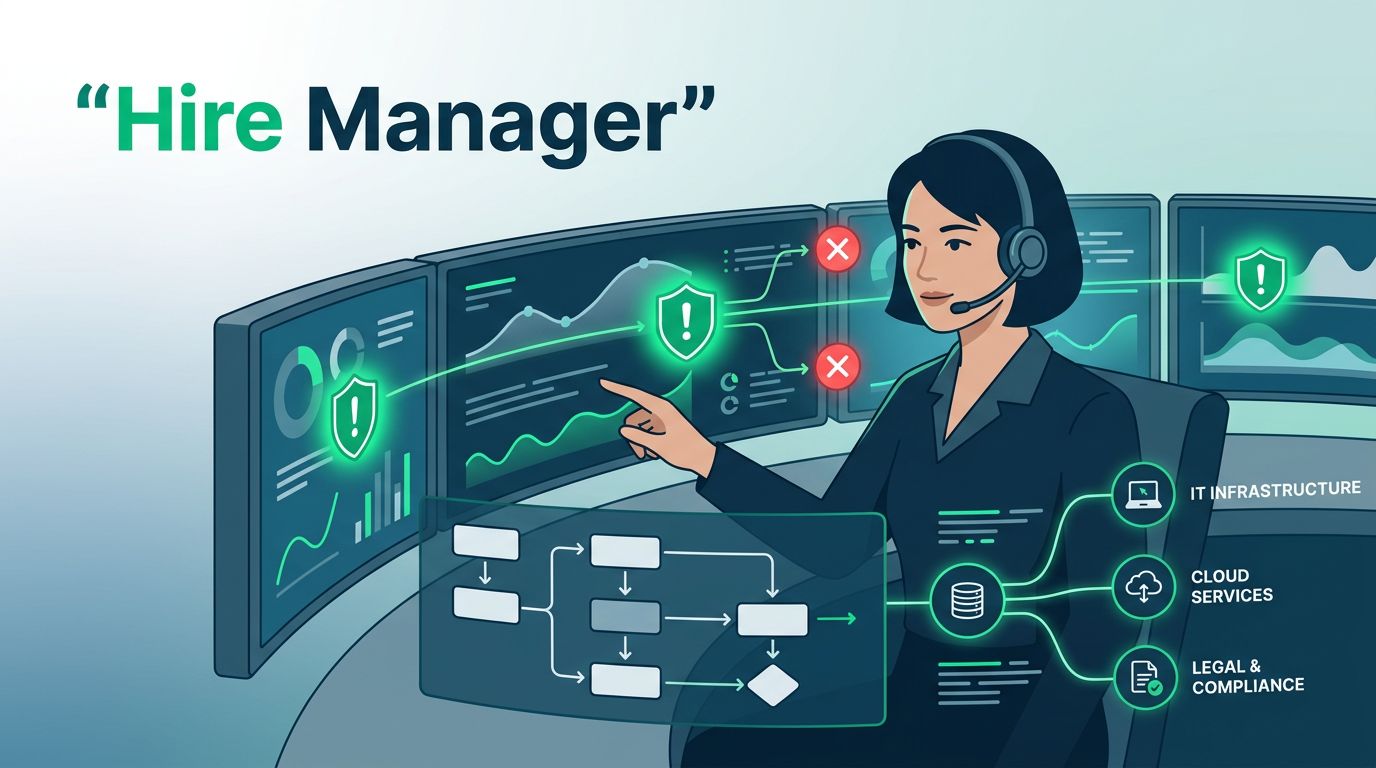
They should spend time on prioritization, not every single ticket. They also need to align with IT, cloud, identity, legal, and leadership when an event crosses team lines.
A useful baseline is the work described in SOC analyst roles and responsibilities, but the manager role adds ownership of process, people, and outcomes.

A lean SOC manager usually owns these areas:
- Set triage rules and escalation paths.
- Review incidents and close gaps in playbooks.
- Coach analysts and fill schedule gaps.
- Tune the SIEM, EDR, and case workflow with engineers.
- Brief leaders and vendors when the team needs help.
A lean SOC manager should remove friction faster than it creates it.
The reporting line matters too. A manager buried under IT support will fight for time. Put them close enough to security leadership to change process, but close enough to the team to know when alerts are noisy.
If the job description reads like a mix of analyst, engineer, and director, split the work before you post it. A manager who owns too much will miss the parts that matter most, especially alert quality, incident follow-through, and team health.
Must-have qualifications for lean SOC hiring
When you hire security operations manager, favor proof over polish. A candidate can sound confident and still struggle with queue pressure, shift handoffs, or cross-team conflict.
Use this simple filter when you review resumes and references.
| Area | What good looks like |
|---|---|
| SOC operations | Has run a live queue, improved triage, and made clear calls under pressure. |
| Incident response | Has led or co-led incidents, written leadership updates, and followed through after closure. |
| People management | Has coached weak performers, handled schedules, and kept morale steady. |
| Tooling | Knows where SIEM, SOAR, EDR, and case management help and where they create noise. |
| Metrics | Tracks MTTD, MTTR, backlog age, and false positives to guide changes. |
Certs like CISSP, GCIH, or GCIA can help, but they don’t replace operating judgment. The strongest candidates can explain a bad month, what changed, and how they fixed it.
Ask references what happened when pressure rose. Did the person calm the team, or did they pass the stress down the line? That answer tells you more than a polished resume.
A candidate with deep technical skill but weak people habits can still work out in a very hands-on role. A manager role is different. You need someone who can make decisions, coach others, and keep the SOC moving without constant escalation.
Interview questions that surface real experience
Before the panel, build a working session instead of a polished conversation. A good manager should talk through messy situations without hiding behind jargon.

A short scorecard helps keep the interview honest. Score each answer for judgment, communication, people leadership, tooling, and follow-through.
Use questions like these:
- “Tell me about the last time alerts piled up. What did you cut, and what did you keep?” Good answers name the triage rule, the tradeoff, and who they informed.
- “Describe an incident you led where leadership needed updates.” Listen for a clear timeline, ownership, and plain-language communication.
- “How do you know an analyst is ready for more responsibility?” Strong candidates talk about coaching methods, feedback loops, and measurable goals.
- “Which metric do you review every week, and what action follows if it slips?” Good answers connect numbers to behavior, not vanity reports.
- “What did you automate last quarter, and what did you leave manual?” You want judgment, not automation for its own sake.
- “How have you pushed back on a vendor or a noisy tool?” The best answer shows facts, escalation, and follow-through.
Ask for a real example of an escalation call, a post-incident review, and a short written update. A manager who can explain the same event to an analyst, an engineer, and a CISO is easier to trust.
A companion article on SOC analyst interview questions would fit well here, because a strong manager should also know how to hire the people around them.
Measure fit with metrics, tooling, and vendor work
The right person should make the SOC easier to run within a month or two. That usually shows up in better queue health, tighter handoffs, and cleaner incident notes.
For a broader team-building view, the SOC team best practices guide is a useful reference. It helps you compare the candidate’s approach with a standard SOC structure.
Track the metrics that show real work, not busy work. MTTD, MTTR, backlog age, false-positive rate, and incidents with named owners are the most useful starting points. If a candidate cannot explain how those numbers shape weekly decisions, they may be reporting activity instead of outcomes.
Tooling matters too. A strong manager knows how the SIEM, SOAR, EDR, ticketing system, and threat intel feeds fit together. They also know where the noise starts. That means they can decide what to tune, what to automate, and what to stop feeding with bad data.
Vendor management is part of the job in a small team. Ask how they run monthly reviews, handle SLA misses, and push back on poor alert quality. In a lean SOC, every bad integration steals time from a real incident.
Cross-functional leadership should come up in the interview as well. The manager will work with IT, cloud, identity, HR, legal, and sometimes finance. When a serious event hits, they become the translator between technical detail and business action.
A short written exercise can help here. Ask the candidate to turn a noisy incident into a one-page update for leadership. The best people keep it simple, accurate, and calm.
Common hiring mistakes when the SOC is small
Lean teams feel hiring mistakes faster than large ones. A weak manager shows up in missed escalations, frustrated analysts, and bad reporting.
Watch for these problems:
- Hiring the best hands-on analyst and expecting instant people leadership.
- Writing a broad job description that mixes manager, engineer, and on-call lead.
- Ignoring communication skill because the person is technical.
- Skipping scenario-based interviews and relying on resume claims.
- Forgetting schedule pain, burnout, and the need for steady coaching.
- Focusing on tools owned instead of decisions made.
Reference checks matter most when a candidate looks great on paper. Ask former peers how the person handled pressure, disagreement, and a rough week. Then ask former managers whether the candidate built trust or created extra work.
A trial project can help when the decision is close. Give the candidate a small incident summary, a vendor complaint, or a backlog problem, then ask for a plan. You will learn how they think, what they notice, and whether they can act without drama.
If you want help defining the scope before you post the role, Book a Discovery Call with Bud Consulting is a practical next step for teams that need a sharper hiring brief.
Conclusion
The best way to hire a security operations manager for a lean SOC is to test for judgment, not buzzwords. You want someone who can prioritize alerts, lead people, speak clearly in incidents, and improve the tools that drain time.
If the candidate can point to better metrics, calmer handoffs, and stronger communication, you’re close. If they only talk about titles or tools, keep looking.
A lean team needs a manager who makes the work lighter for everyone else. That is the hire that holds up when the queue gets noisy.