table of contents
A security program manager interview can look polished and still miss the real skill you need. The role lives in the space between teams, where priorities clash and decisions slow down.
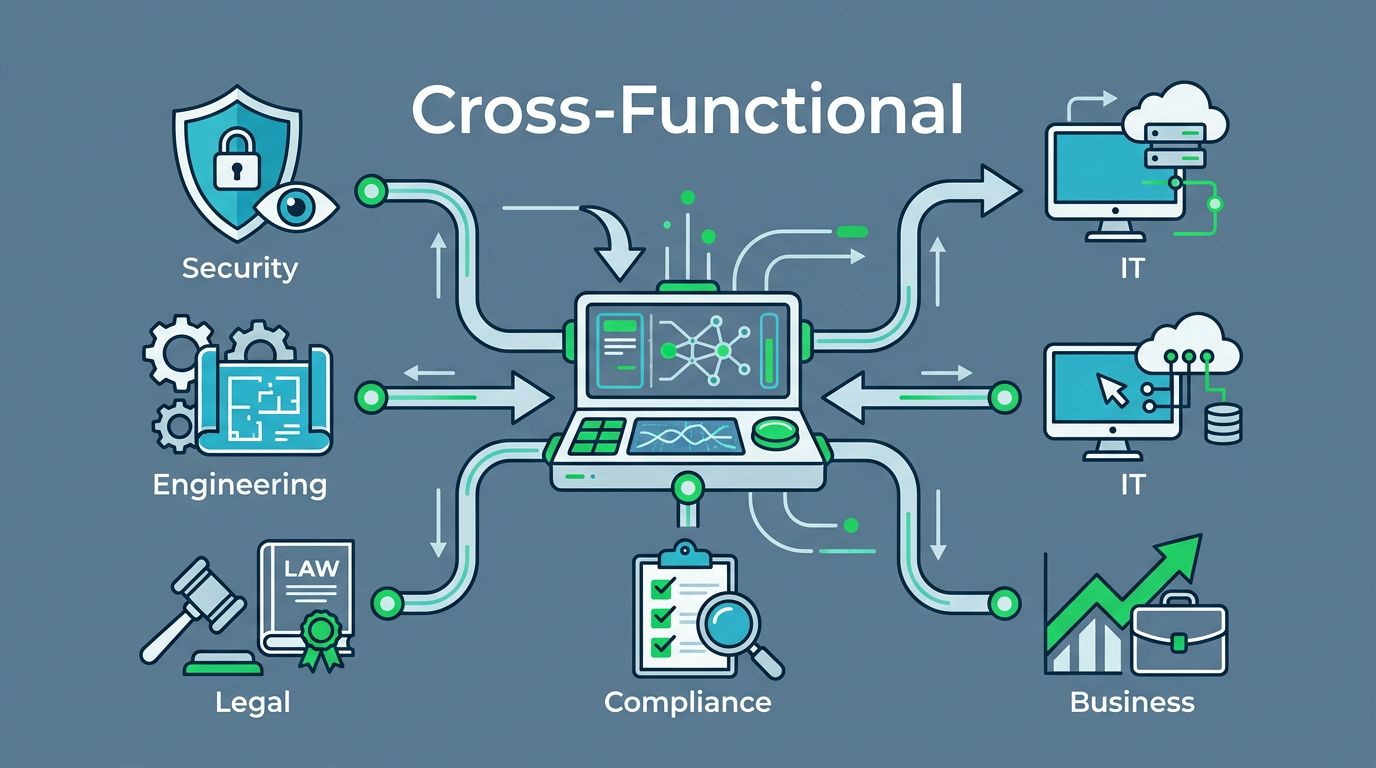
The best candidates keep programs moving across security, engineering, IT, legal, compliance, and business teams. They translate risk into plain language, then turn that into action.
This guide gives hiring teams a practical way to test cross-functional work in a security program manager interview. Use it to spot people who can align stakeholders, resolve conflict, and keep delivery on track.
What the role really needs beyond security knowledge
A strong security program manager is part translator, part traffic controller. They do not just track tasks, they make sure the right people make the right call at the right time.
That matters because most security delays come from disagreement, not from missing tools. In 2026, that can show up in AI feature reviews, cloud changes, vendor risk reviews, identity rollouts, or privacy questions. A good candidate knows how to move those issues forward without creating new friction.
Look for people who can explain who owns what, what decision is pending, and what happens if the team waits another week. That kind of clarity is often the difference between a program that stalls and one that ships.
Key skills to probe for cross-functional success

Stakeholder alignment
Strong candidates can name the stakeholders and explain what each one needed. They also show how they found common ground without flattening real differences.
Weak candidates talk about “the team” in broad terms. That usually hides the fact that they never got buy-in from the people who actually had to act.
Influence without authority
This skill shows up when the candidate moved work forward without owning the budget or the org chart. Listen for evidence, timing, and trust.
A good answer sounds like this: they used data, framed the issue in business terms, and chose the right moment to push. A weak answer leans on status, title, or vague persistence.
Conflict resolution
Security programs create tension. That is normal. What matters is whether the candidate can handle disagreement without making it personal.
Ask for a moment when legal said “no,” engineering pushed back, or a business leader wanted speed over control. Strong candidates explain how they reduced the tension, found the real concern, and kept the working relationship intact.
Program governance and execution
Governance is where many interviews go soft. Some candidates can talk about meetings, but not about the system behind them.
Look for a steady cadence, a decision log, clear owners, and visible follow-up. Strong answers show how the candidate kept everyone aligned after the meeting ended, not just during it.
If the answer has no stakeholders, no tradeoff, and no outcome, it doesn’t show program leadership.
Sample interview questions and strong vs weak answers
The best questions force the candidate to describe a real meeting, not a theory. A clear answer should name the people involved, the choice made, and the result.

| Interview question | Strong answer sounds like | Weak answer sounds like |
|---|---|---|
| Tell me about a time security, engineering, and legal disagreed on a control. | The candidate explains the issue, shows how each group weighed risk, and describes the final decision. | The answer stays vague, blames one team, or says everyone aligned without proof. |
| How do you keep a program moving when four teams own different pieces? | The candidate talks about cadence, owners, deadlines, and an escalation path. | The answer says they follow up often, but gives no system. |
| Describe a time you changed a stakeholder’s mind. | The candidate uses evidence, a pilot, or a phased rollout, then shares the outcome. | The answer relies on personality or authority. |
| When do you escalate risk, and when do you accept it? | The candidate explains thresholds, impact, and documented sign-off. | The answer depends on gut feel alone. |
A strong answer feels concrete. It includes names, dates, decisions, and follow-through. Weak answers stay at the level of general behavior.
A simple scoring rubric for the hiring team
Use the same scale for every interviewer. Otherwise, the loudest opinion wins.

| Score | What it means |
|---|---|
| 5 | Clear example, specific stakeholders, a real tradeoff, and a measurable result. |
| 4 | Strong example with only a few gaps in detail. |
| 3 | Some detail, but ownership or outcome is fuzzy. |
| 2 | Mostly theory, light on real evidence. |
| 1 | No useful example or clear decision path. |
Score four areas separately, stakeholder alignment, influence without authority, risk tradeoffs, and program execution. A candidate who scores 4 or 5 in three of those areas is usually ready for the role.
If your team wants help tightening the interview loop, Book a Discovery Call with Bud Consulting.
Hiring for the work between teams
A strong security program manager interview should reveal how a candidate works when no one owns the whole problem. That means asking for real examples, then checking whether the candidate can explain the decision and the follow-through.
Cross-functional security work runs on trust, timing, and clear ownership. When those three show up in the interview, you have a much better read on who can keep the program moving after the meeting ends.