table of contents
New security hires join your team full of potential. But without clear measures, you risk slow productivity or early exits. You need data to spot issues fast and adjust onboarding.
This guide shows you practical KPIs and frameworks. It focuses on outcomes like tool proficiency and alert accuracy. You’ll get tools to build confidence in every hire’s progress.
Why Focus on 90-Day Ramp-Up Metrics
Security roles demand quick adaptation. Threats don’t wait, so hires must triage alerts or update policies soon. Track ramp-up to ensure they contribute without overload.
Start with time to productivity. This counts days until a hire handles tasks independently. For SOC analysts, aim for 60 days. Compare against benchmarks; one study notes averages around 45 to 78 days across roles.
Separate onboarding metrics from ongoing performance. Onboarding checks basics like training completion. Long-term metrics cover sustained output, such as mean time to resolution. Mix them up, and you miss real gaps.
Use feedback loops. Weekly check-ins reveal blocks early. If access delays slow a hire, fix it before day 30. This builds trust and speeds results.
Key KPIs for Security Onboarding Success
Pick metrics tied to role needs. They must predict retention and output. Focus on five core ones.
Training completion rate tracks finished modules by day 30. Target 100%. Low rates signal confusion or poor materials.
Tool proficiency measures hands-on use. For example, logins to SIEM or EDR tools. New engineers should run 20 queries weekly by day 60.
Alert triage accuracy gauges correct classifications. Aim for 85% by day 90. Errors here waste team time.
Ticket throughput counts resolved incidents. Start small; a junior might close five per shift by month three.
Documentation quality scores clarity and completeness. Review samples monthly. Strong docs help the whole team.
These KPIs avoid vanity traps. Hours logged looks good but ignores quality. Chasing volume can lead to sloppy triage, so weight accuracy higher.
Sample Scorecards for Key Roles
Build scorecards in spreadsheets or dashboards. Assign weights to KPIs. Update weekly for visibility.
For a SOC analyst:
| KPI | Day 30 Target | Day 60 Target | Day 90 Target | Weight |
|---|---|---|---|---|
| Training Completion | 80% | 100% | 100% | 20% |
| Tool Proficiency | Basic Logins | 20 Queries | Full Use | 25% |
| Alert Accuracy | 70% | 80% | 85% | 30% |
| Tickets Closed | 10/Week | 20/Week | 30/Week | 25% |
Engineers get incident participation added. Architects focus on policy contributions.

Review totals in one-on-ones. A score under 70% prompts action, like extra shadowing.
Tailor by role. CISOs track stakeholder meetings. This keeps expectations clear.
Your 30-60-90 Day Measurement Framework
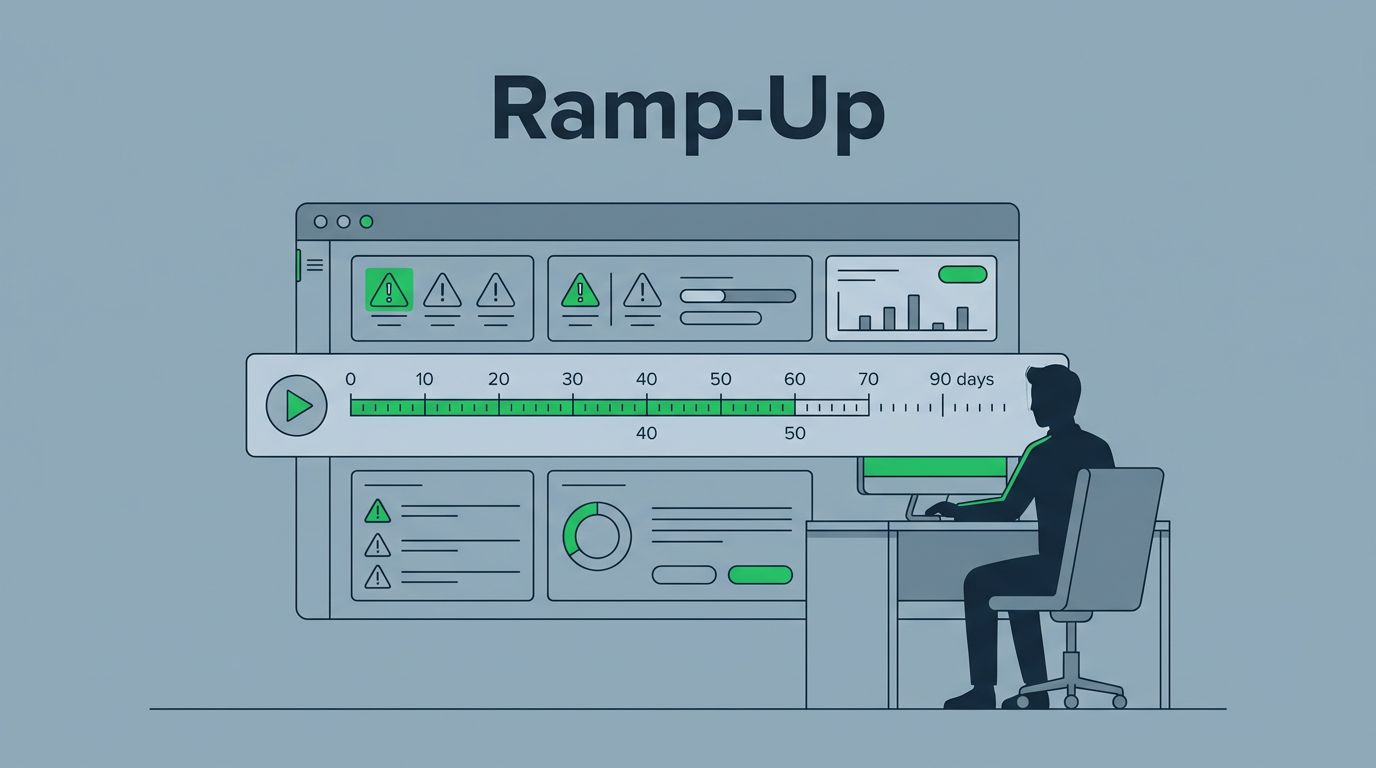
Break ramp-up into phases. Each has milestones and checks.
Days 1-30: Learn basics. Complete onboarding docs. Shadow shifts. Measure access grants (all by day 5) and first tool logins.
Days 31-60: Build skills. Handle supervised alerts. Close simple tickets. Check 75% training done and 70% triage accuracy.
Days 61-90: Gain independence. Own shifts. Contribute to runbooks. Hit 85% accuracy and full throughput.
For SOC roles, follow plans like this 30-60-90 outline for analysts. It maps training to tools.
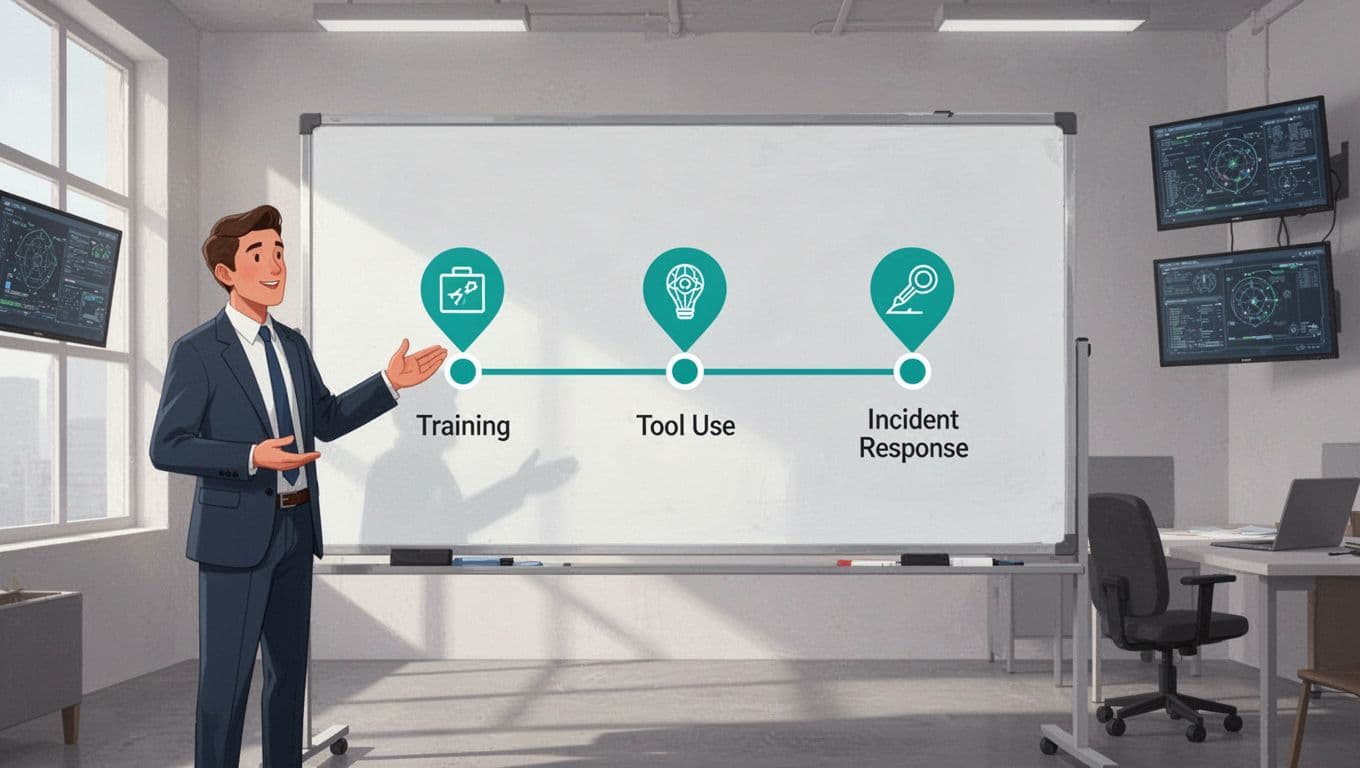
Track weekly. Adjust if a phase slips. This framework cuts average ramp-up by 20%.
Spot and Skip Vanity Metrics
Some numbers impress but mislead. Total alerts triaged rewards speed over smarts. It can push risky skips.
New hire surveys at day 90 feel good. But pair them with output data. One report flags them as incomplete alone.
Instead, use outcome-focused metrics. They link to business impact, like fewer escalations.
Watch for incentives. High throughput without accuracy breeds burnout. Balance keeps teams safe.
Quick Checklist for Managers
Use this daily. It flags issues fast.
Assign a buddy day one. Confirm tool access by day three.
Schedule shadows: two per week first month.
Review KPIs Fridays. Discuss blocks.
Run mock incidents biweekly.
Log contributions in shared docs.

Print it. Check off as you go. It takes five minutes but saves weeks.
If gaps persist, book a discovery call with Bud Consulting. We help refine processes.
Conclusion
Solid ramp-up tracking turns hires into assets fast. Use phased KPIs and scorecards to measure real progress.
You now have frameworks and warnings against fluff metrics. Apply them, and watch productivity rise.
Teams with data-driven onboarding retain 25% more talent at 90 days. Start measuring today.