table of contents
The fastest way to slow down niche hiring is to use the same source for every role. AppSec, cloud security, DFIR, IAM, and security leadership each pull from different talent pools, so the channel mix has to match the job.
LinkedIn still matters, but it can’t carry the load by itself. A strong security recruiting strategy blends outbound, inbound, referrals, talent communities, and specialist search so your pipeline doesn’t depend on one channel or one recruiter.
In 2026, that matters more than ever. Recent market data still shows cybersecurity roles filling more slowly than general IT, and that gap rewards teams that source with intent.
What a good source mix looks like for niche roles
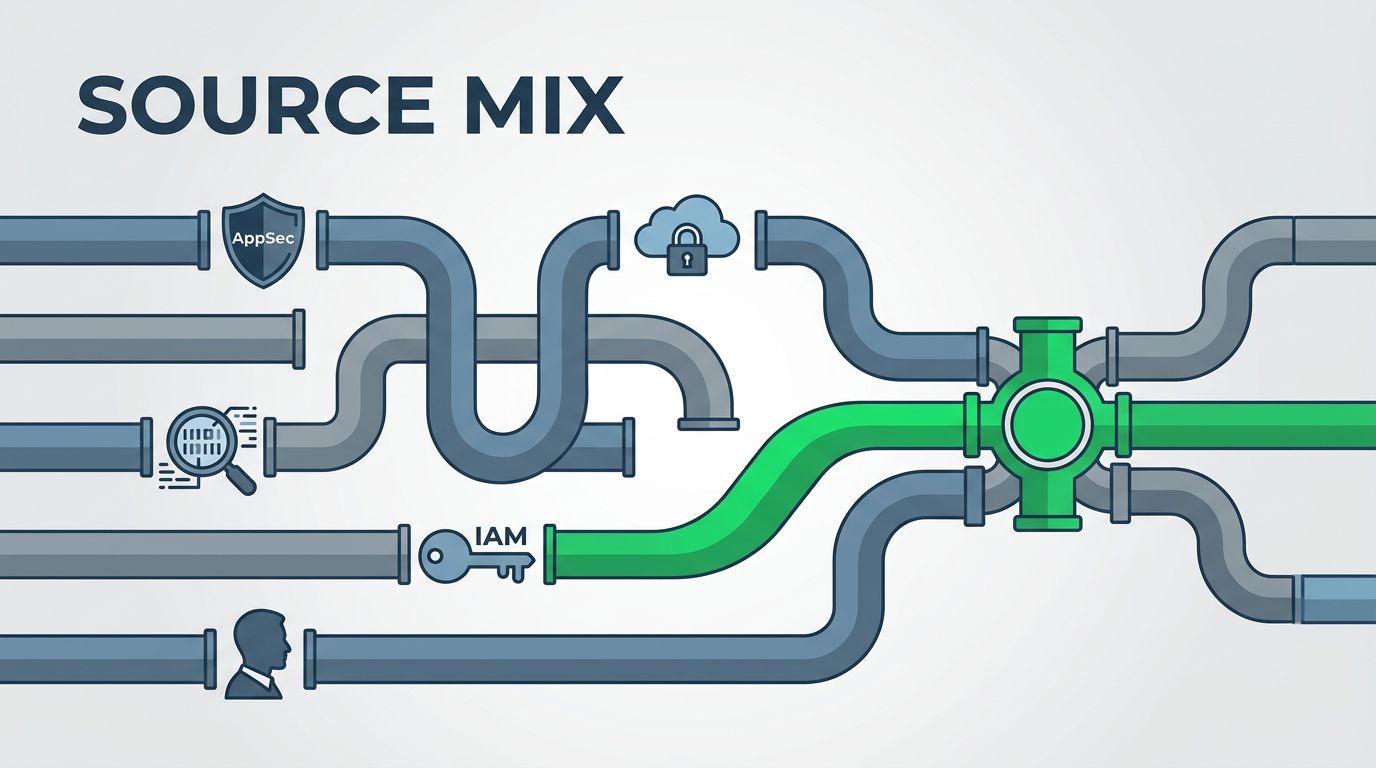
A source mix is the set of channels you use to find, warm, and close candidates. For niche security jobs, it should look like a portfolio, not a lottery ticket.
A useful mix spreads risk and gives you cleaner data. Outbound finds passive talent. Communities build trust. Referrals bring speed. Events create context. Specialist search fills gaps when the role is narrow or confidential.
Use the source mix to match the role, not the habit. If one channel feeds every hire, the process is probably too flat.
| Role family | Best sources | Why this mix works |
|---|---|---|
| AppSec and product security | Dev and security communities, GitHub, referrals, targeted outbound | Many strong candidates sit in engineering, not on the market |
| Cloud security and IAM | Cloud meetups, referrals, specialist search, targeted outbound | These candidates often move through infra, platform, or identity teams |
| DFIR and threat hunting | Practitioner communities, events, outbound, niche recruiters | Passive candidates dominate, so response rates are usually low |
| Security leadership | Executive referrals, specialist firms, private networks | Trust, discretion, and fit matter more than broad visibility |
If the ATS shows the same source for every hire, the data is hiding the real story.
The best source for a niche role is often the place where that talent already solves problems, not where it scrolls for jobs.
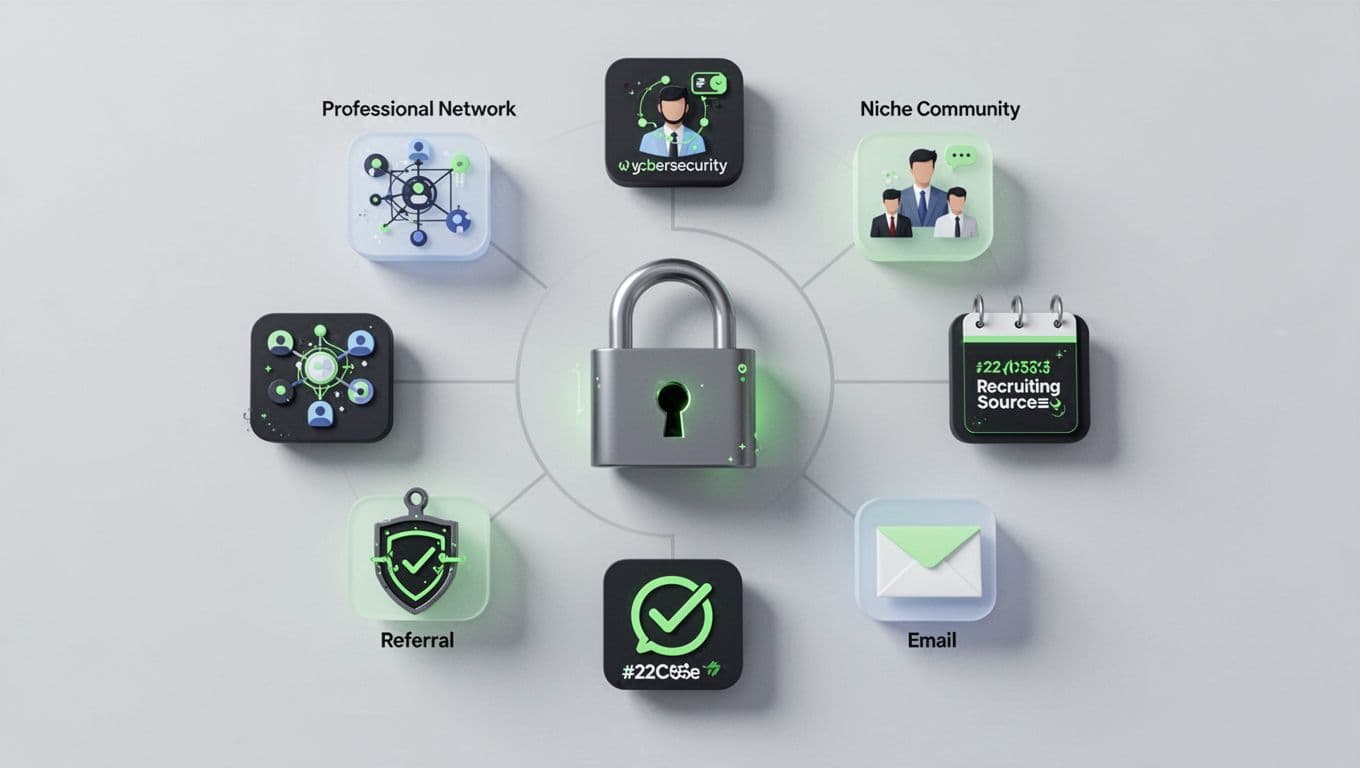
Match the channel to the role
AppSec and product security
AppSec and product security candidates often come from software engineering, platform engineering, or DevSecOps. They respond to proof, not hype. Pull from GitHub, bug bounty circles, internal referrals, and communities where developers share code and failure stories.
A vague job post won’t compete with a role that sounds like real engineering work. Strong candidates want to see access to code, design reviews, and product teams that care about risk.
Cloud security and IAM
Cloud security and IAM searches need sharper filters. Look for people who work across AWS, Azure, GCP, identity governance, PAM, and automation. Outbound works well here because many qualified candidates are already employed.
Referral programs help too, because peers know who can handle policy, architecture, and execution. For senior searches, a specialist partner can widen the pool without flooding the team with noise.
DFIR, threat hunting, and security leadership
DFIR and threat hunting candidates usually sit inside tight practitioner circles. Events, Discord or Slack groups, and post-incident communities often produce better conversations than job boards.
Security leadership is different, because discretion matters as much as reach. Referrals and executive networks work better than broad inbound, especially when the role touches board reporting or change management.
A recruiter who understands the role can shape the message before outreach starts. That kind of recruiter enablement saves time for everyone.
Measure the mix, not just the fill
Time-to-fill matters, but it only tells part of the story. A fast hire from the wrong source can cost more later.
Track quality-of-hire by source at 90 and 180 days. Also track source-specific response rate, interview-to-offer conversion, and retention after six months. If a channel fills quickly but misses on performance, it is a weak channel.
The cleanest teams tag every source at first touch and again at close. That way you can see if a candidate came from a community intro, an outbound message, or a referral. You can also compare cohorts, which gives a better read than one-off wins.
Before you trust a channel, ask whether it creates durable hires. Time-to-fill shows speed, but quality-of-hire shows fit.
| Metric | What it tells you |
|---|---|
| Time-to-fill by source | Which channels move fast |
| Quality-of-hire by source | Which channels produce durable hires |
| Offer acceptance by source | Which channels build trust |
| Retention at 90 and 180 days | Which hires hold up after onboarding |
| Slate diversity by source | Whether the funnel is too narrow |
If a source looks fast and weak, cut back. If it looks slow and strong, keep investing.

Build a source mix that doesn’t depend on LinkedIn alone
LinkedIn is useful for verification and direct outreach, but it should not be the whole plan. If you use it as the only pipe, you get the same people everyone else sees.
A better model uses each channel for a clear job. Use inbound for visibility. Use outbound for scarce roles. Use referrals for trust. Use communities for long-term reach. Use specialist search when the role is confidential or the market is tight.
- Outbound works best for AppSec, cloud security, and DFIR when the talent is passive.
- Inbound helps more for security leadership, GRC, and roles with strong brand pull.
- Communities work well when you want warmer responses and better context.
- Referrals matter most when trust and speed are both important.
Events also do work that inbound never can. Conferences, niche meetups, and talent communities let candidates meet the team before the requisition opens. For many teams, WiCyS 2026 annual conference is a strong example of how a community event can support hiring and retention at the same time.
When the role is especially hard to fill, a specialist firm can help. A recent 2026 cybersecurity recruiter roundup shows how focused partners position themselves around security talent. That matters when you need AppSec, cloud security, or DFIR talent in a short window.
If you want to tighten your own mix, Book a Discovery Call with Bud Consulting and map the channels before the search starts.

A source mix that matches the role, not the habit
The best source mix is specific to the role, the market, and the level of trust needed. AppSec and cloud security lean on technical communities and outbound. DFIR and threat hunting need specialist reach. Security leadership needs privacy, referrals, and careful positioning.
The teams that win treat source mix like a living system. They measure quality-of-hire by source, keep LinkedIn in its lane, and keep building talent communities before the need gets urgent. That is how security recruiting gets more predictable, even when the market doesn’t.