table of contents
Losing a top SOC analyst mid-incident response cycle hurts. You know the drill: rare cybersecurity talent walks out the door, leaving gaps in your defenses. Security retention interviews fix that by spotting issues early.
These chats differ from exit interviews, which come too late, or performance reviews, which focus on output. Instead, they uncover what’s keeping your security engineers, threat hunters, and cloud specialists engaged. You act before burnout hits.
Ready to hold your first one? Start with the risks unique to security teams.
Spot Common Retention Risks in Your Team
Security roles grind hard. SOC analysts stare at alerts all shift. Incident responders drop everything for pagers at 2 a.m. Burnout tops the list.
Recent data shows only 34% of pros plan to stay put. Compensation lags behind demands, yet even small raises boost satisfaction. On-call loads spike fatigue; tool overload frustrates threat hunters buried in dashboards.
Cloud security specialists often lack clear paths up. AppSec leaders feel tool fatigue from constant switches. No executive backing leaves teams isolated.

Watch for signs. A security engineer skips team lunches. Your incident responder snaps during standups. These signal deeper woes like unclear growth or ignored feedback.
Address them now. For instance, rotate on-call shifts fairly. Benchmark pay against market rates. In short, know your team’s pain points first. That sets up strong interviews.
Why Security Retention Interviews Beat Reactive Fixes
Exit interviews explain past choices. Performance reviews judge work. Security retention interviews predict and prevent flight.
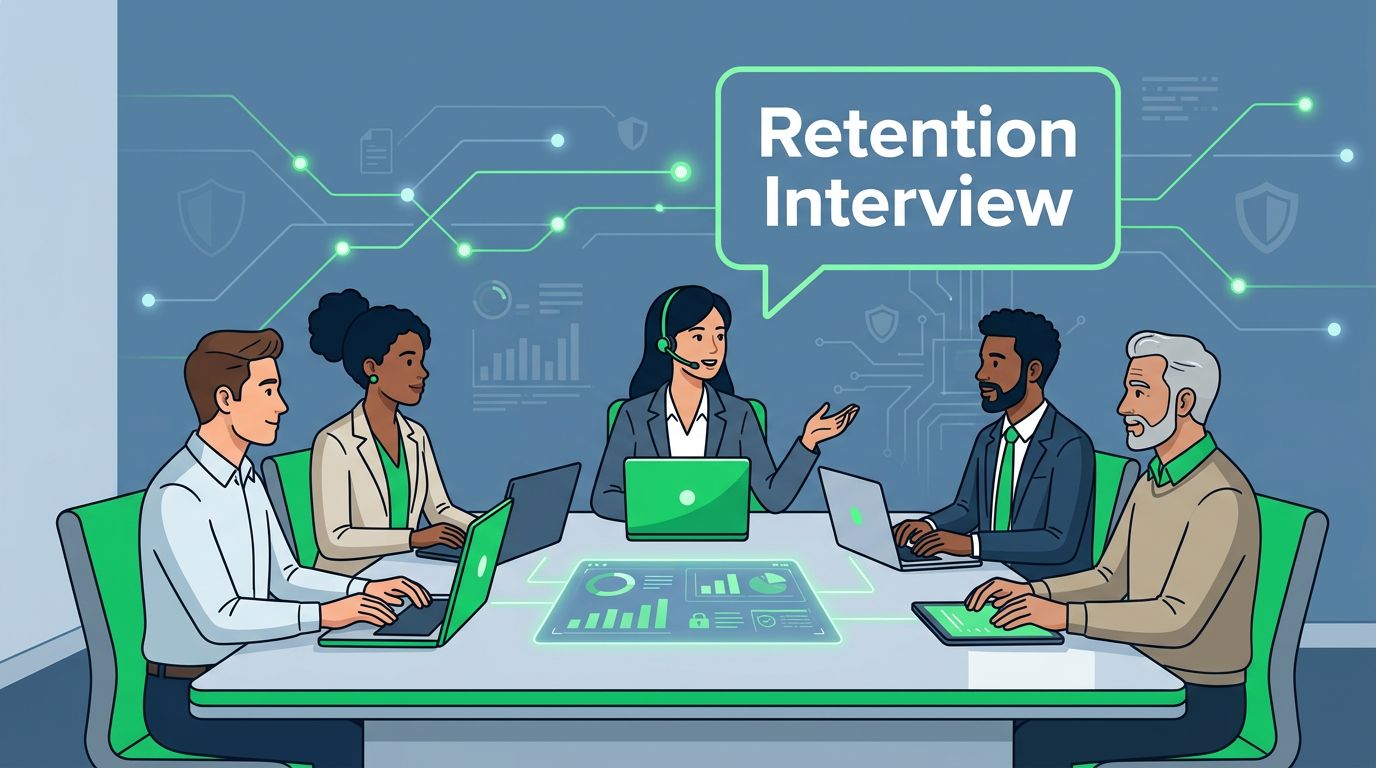
You talk one-on-one with high performers. Ask about satisfaction. Listen for fixes. Then follow through. This proactive step retains rare talent like IAM experts or DevSecOps leads.
Studies back it. Organizations using stay interviews cut turnover 30%. Security teams need this most. Talent shortages rage on.
Consider a cloud architect eyeing competitors. They stay if you clarify promotion tracks. Or a SOC analyst sticks around after you ease pager duty.
Schedule quarterly. Target stars first: those handling breaches or hunting threats. Managers lead these, not HR. That builds trust.
Results compound. Teams feel heard. Leaders spot trends, like widespread tool gripes. Fix them across the board.
Conducting Your First Retention Interview
Pick a quiet spot. Coffee helps. Keep it 30 minutes. Start casual: “How’s the week treating you?”
Build rapport. Share your goal: help them thrive here. Assure confidentiality. Then dive in.

Use open questions. “What do you enjoy most in your role?” “What frustrates you lately?” Probe burnout: “How’s on-call impacting your rest?” Career: “Where do you see yourself in a year?”
Listen more than talk. Nod. Paraphrase: “Sounds like fewer tools would help focus.” Take notes. Avoid defending.
End positive. “Thanks for the insights. I’ll follow up soon.” Send summary notes after. Act fast on easy wins, like training access.
Managers, practice active listening. Resist interrupting. Your tone matters; stay curious, not interrogative.
Tailored Questions for Cybersecurity Roles
Customize by role. SOC analysts need burnout checks. “Does alert volume overwhelm you?” Threat hunters want challenge: “Do hunts feel impactful?”
For cloud specialists: “What blocks your architecture work?” AppSec leaders: “How can we cut tool switches?” General: “What’s your ideal growth path?”
Here’s a starter set:
- What keeps you here daily?
- What one change would make your job better?
- How supported do you feel from execs?
- Rate work-life balance 1-10. Why that number?
- Any compensation thoughts?
Pull from stay interview best practices. Adapt to security pains.
After, categorize feedback. Quick fixes first: adjust shifts. Bigger ones: pitch execs for budget.
Your Retention Interview Checklist
Make it repeatable. Follow this framework every time.

Prepare: Review their wins. Pick 5-7 questions. Book private time.
Ask: Use open-ended ones. Cover joy, pain, future.
Listen: 80% silence. Note specifics. No fixes mid-chat.
Act: Email recap in 48 hours. Assign owners. Track progress monthly.
Use a shared tracker. Review team-wide quarterly. Tweak based on trends.
This checklist mirrors tips from NIST’s talent retention guide. Security leaders swear by it.
Turn Insights into Lasting Retention Wins
Feedback demands action. Log it centrally. Prioritize: burnout relief tops comp tweaks.
For on-call, automate alerts first. Cut tools via consolidation. Chart career ladders publicly.
Share wins team-wide: “We eased rotations based on your input.” That motivates.
Track metrics. Retention rates climb. Engagement scores rise. Rare talent stays.
Struggling to scale? Book a Discovery Call with Bud Consulting. They vet seniors like CISOs and threat experts.
Security retention interviews work because you act early. Your team notices. Talent sticks. Defenses strengthen. Start today.