table of contents
Your security team faces constant pressure. Threats change fast, tools multiply, and roles blur between SOC analysts, cloud experts, and leaders. You know skill gaps hurt response times and leave holes in defenses. A security skills matrix fixes that. It maps what your people can do, spots weak areas, and guides training.
This guide walks you through building one step by step. You’ll get a simple template, real examples, and tips to keep it useful. Security managers use this to align teams with risks, from phishing drills to IAM configs.
Start with the basics to make your matrix count.
What a Security Skills Matrix Does for Teams
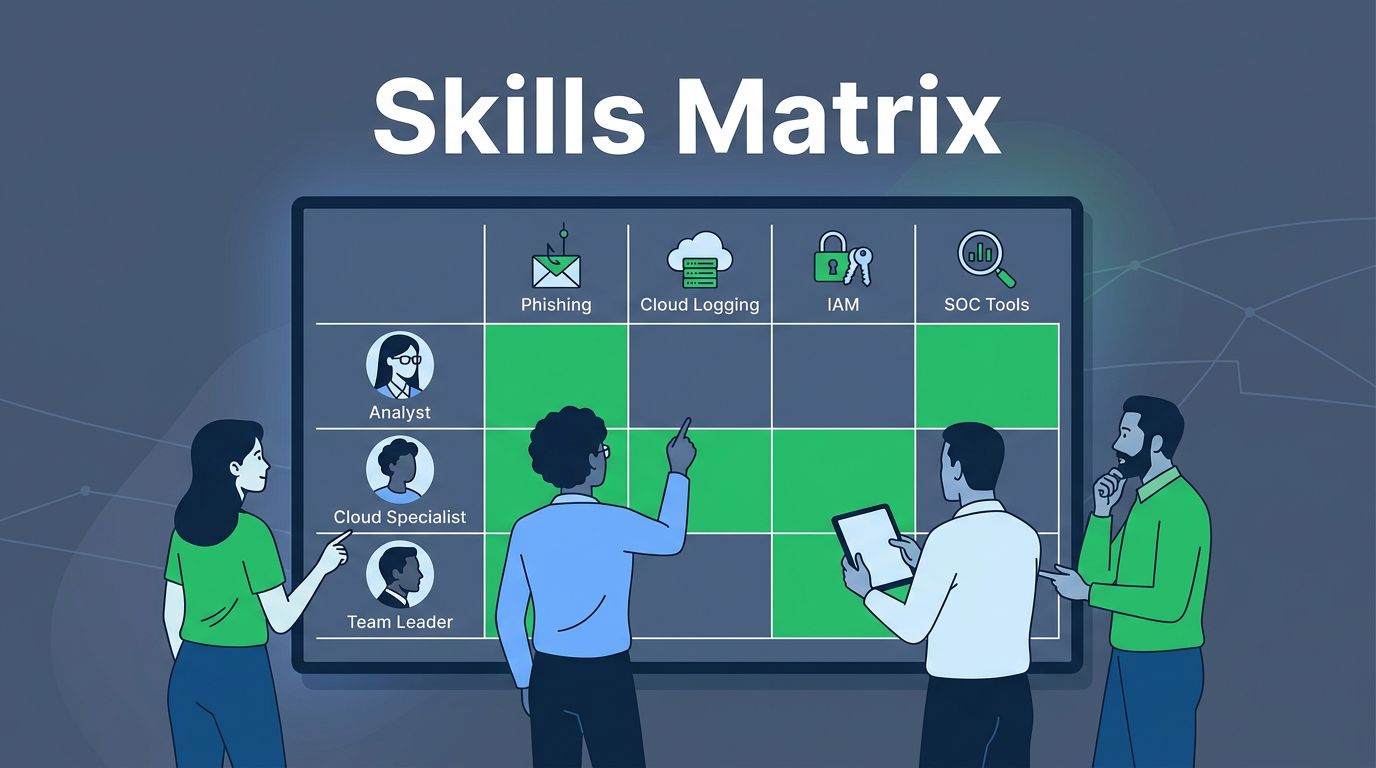
A security skills matrix is a grid. Rows list team members. Columns show key skills. Cells rate proficiency. Simple, right?
It reveals strengths and gaps at a glance. One SOC lead I know found half his team weak on cloud logging. They fixed it in weeks. No more blind spots during audits.
Teams without one guess at needs. Training budgets waste on nice-to-haves. Promotions go to the wrong people. Morale dips when juniors feel stuck.
Build yours to track technical chops like endpoint detection. Add soft skills too, because alerts mean nothing without clear reports to execs. For small teams, keep it to 10 skills. Larger groups can expand to 20.
Check cybersecurity skills matrix basics for quick starts like tying skills to NIST controls. That keeps auditors happy.
Your matrix becomes a living tool. Update it quarterly. Watch how it boosts retention and speeds hires.
Why Security Teams Need This Tool Now
Security ops move quick. Ransomware hits daily. Regulations demand proof of coverage. A skills matrix proves your team matches threats.
It helps with hiring. Post a job for “pen tester”? See if internals can fill it first. Save cash and time.
Training gets targeted. Spend on EDR mastery, not basics everyone knows. One firm cut churn 20% by matching tasks to strengths.
Leaders spot risks. Too many juniors on incident response? Train backups or hire seniors. Balance prevents burnout.
For CISOs, it shows board progress. “Here’s our phishing sim skill at 85%. Gaps closed last quarter.” Data beats stories.
Remote work scattered skills. Matrices bridge that. Everyone sees the big picture.
In short, it turns vague feelings into action plans. Your team performs better. Risks drop.
Pick the Right Skills to Track
Focus on what matters. List 10-15 skills per role. Balance categories: technical, analytical, process, communication, leadership.
Technical skills form the base. Include endpoint protection, cloud security (AWS, Azure), IAM setups, vulnerability scanning. Tools like Splunk or Wireshark fit here.
Analytical skills spot patterns. Threat hunting, log analysis, malware reverse engineering. These catch stealthy attacks.
Process skills keep ops smooth. Incident response playbooks, patch management, compliance audits (SOC 2, NIST).
Communication skills bridge teams. Report writing, briefing execs, collaborating with devs on DevSecOps.
Leadership skills scale impact. Mentoring juniors, vendor management, strategy alignment.
Tailor to your org. Startups stress cloud-native tools. Enterprises add GRC frameworks.
Here’s a sample for a mid-size SOC:
| Skill Category | Example Skills |
|---|---|
| Technical | EDR tools, Firewall rules, SIEM queries |
| Analytical | Threat intel review, Anomaly detection |
| Process | IR runbooks, Asset inventory |
| Communication | Alert summaries, Stakeholder updates |
| Leadership | Team training, Budget planning |
Validate with your crew. Ask analysts what they do daily. Managers add must-haves.
See skills matrix best practices for tips on 10-15 skills per team. It matches current needs to future hires.
This mix ensures well-rounded teams. No weak links.
Set Up Your Matrix Structure
Start with a spreadsheet. Google Sheets or Excel works fine. No fancy software needed yet.
Rows: Team members’ names. Columns: Skills from your list. Add a role column for context.
Rate on a 1-5 scale. Define each level clear.
- 1: Novice – Needs full guidance.
- 2: Basic – Handles routine tasks.
- 3: Competent – Independent on standards.
- 4: Advanced – Optimizes and troubleshoots.
- 5: Expert – Trains others, innovates.
Color code cells. Green for 4-5, yellow 2-3, red 1. Visual pop helps scans.
Add columns for “Interest Level” (high/medium/low) and “Next Steps” (training due, cert target).
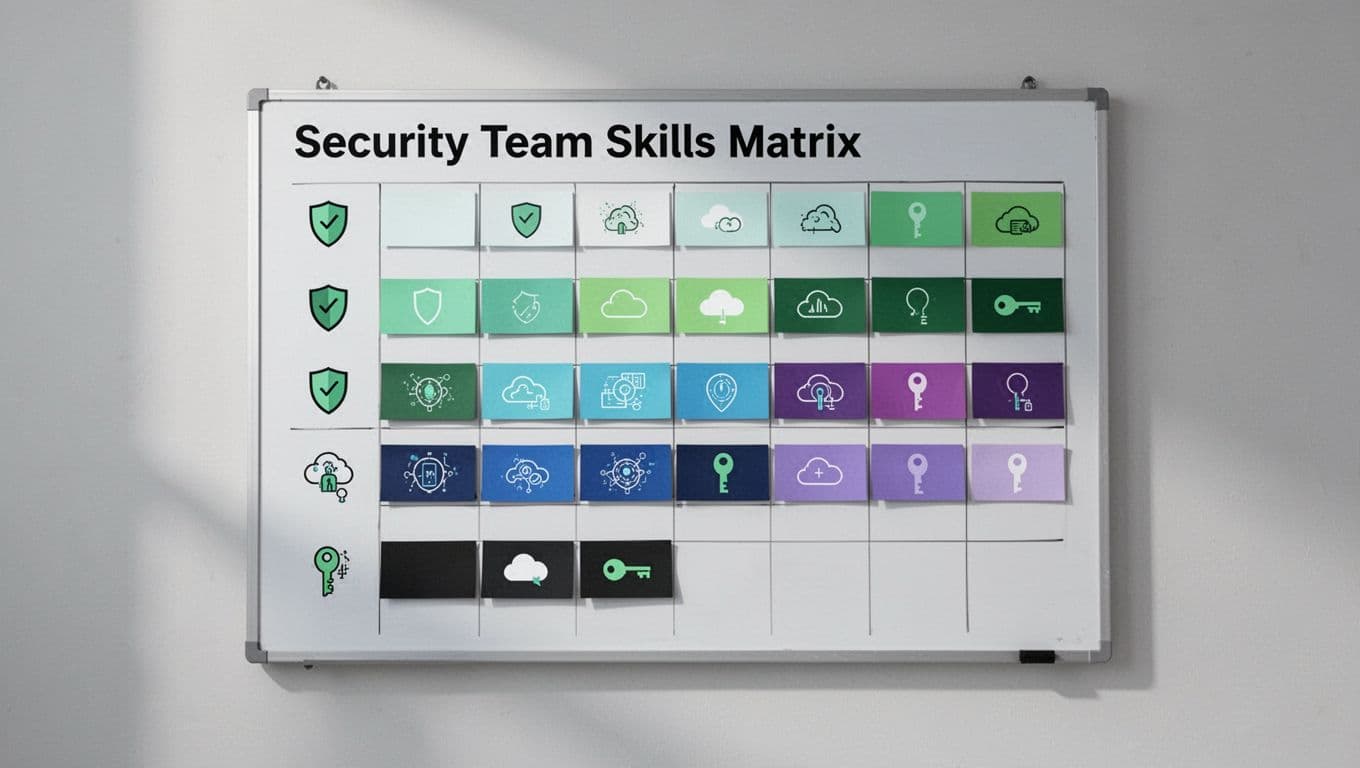
This setup shows gaps fast, like low IAM scores across juniors.
For a sample matrix:
| Team Member | Cloud Security | IAM | Threat Hunting | Report Writing | Mentoring |
|---|---|---|---|---|---|
| Alice | 4 | 3 | 2 | 5 | 4 |
| Bob | 2 | 1 | 4 | 3 | 2 |
| Carol | 5 | 4 | 3 | 2 | 5 |
Average rows for team view. Sum columns for coverage.
Try a skills matrix template guide to plot self vs. manager ratings. It cuts bias.
Keep it simple. One page per team. Print for meetings.
Collect Honest Skill Assessments
Get data right or quit. Use dual ratings: self-assess, then manager review.
Send a form. Link skills to tasks. “Rate your SIEM query speed.” Evidence helps.
Meet one-on-one. Discuss discrepancies. “You rate 2 on IR, but led last breach.” Calibrate.
For 10 people, it takes two hours. Do it yearly, refresh quarterly.
Tools like Google Forms feed Sheets auto. Or Microsoft Forms for Office fans.
Watch bias. Train managers on scales. Hold group sessions to align.
New hires? Rate on hire, track growth.
Employees buy in when they see use. Share wins: “Bob’s training closed our vuln scan gap.”
Data fuels decisions. Gaps become priorities.
Spot Gaps and Build Development Plans
Review the grid. Heat maps highlight issues. Red clusters scream “train now.”
Calculate team averages. Below 3? Urgent. Look per role too.
Prioritize by risk. Weak threat hunting? Top fix. Poor reports? Lower.
Pair plans to fixes:
- Assign mentors for basics.
- Schedule certs like CISSP or CCSP.
- Run sims for IR practice.
- Cross-train on weak spots.
Track in the matrix. Re-rate after training.
Budget smart. Free resources first: YouTube, NIST pubs. Then paid courses.
For leadership gaps, rotate duties. Let juniors brief.
Measure ROI. Faster MTTR post-training? Win.
This closes holes. Teams adapt to new threats like AI phishing.
Dodge These Common Pitfalls
Overcomplicate early. Stick to 12 skills. Add later.
Vague scales kill trust. “Good” means nothing. Use behavioral defs.
Forget updates. Threats shift; so do skills. Review every three months.
Ignore soft skills. Tech wizards flop without comms.
Bias creeps in. Self-rates inflate; managers deflate. Dual check fixes it.
Don’t silo it. Share with HR for hires, execs for reports.
Small teams skip? No. Even five people benefit.
One manager bloated to 50 skills. Chaos. Trim ruthless.
Stay evergreen. Swap columns as tools change, like SASE over VPNs.
Avoid these, and your matrix lasts.
Keep It Fresh Over Time
Quarterly reviews build habit. Tie to OKRs.
Automate where possible. Integrate with LMS for cert tracking.
Scale up. Multiple teams? Dashboards in Tableau.
Culture shift: Make growth normal. Celebrate closes.
Hiring? Match reqs to matrix. Fill gaps fast.
If talent hunts stall, Book a Discovery Call with Bud Consulting. They specialize in security roles.
Conclusion
A security skills matrix maps your team’s reality. It spots gaps in cloud IAM or IR playbooks, guides targeted training, and proves progress to bosses.
You now have the steps: pick skills, build the grid, assess, analyze, update. Start small, one team, iterate.
Stronger teams mean fewer breaches. Get yours live this week. Your defenses thank you.