table of contents
A security team can look busy and still miss the skills that matter most. That gap shows up in slower incident response, thin cloud coverage, and hiring plans that miss the mark.
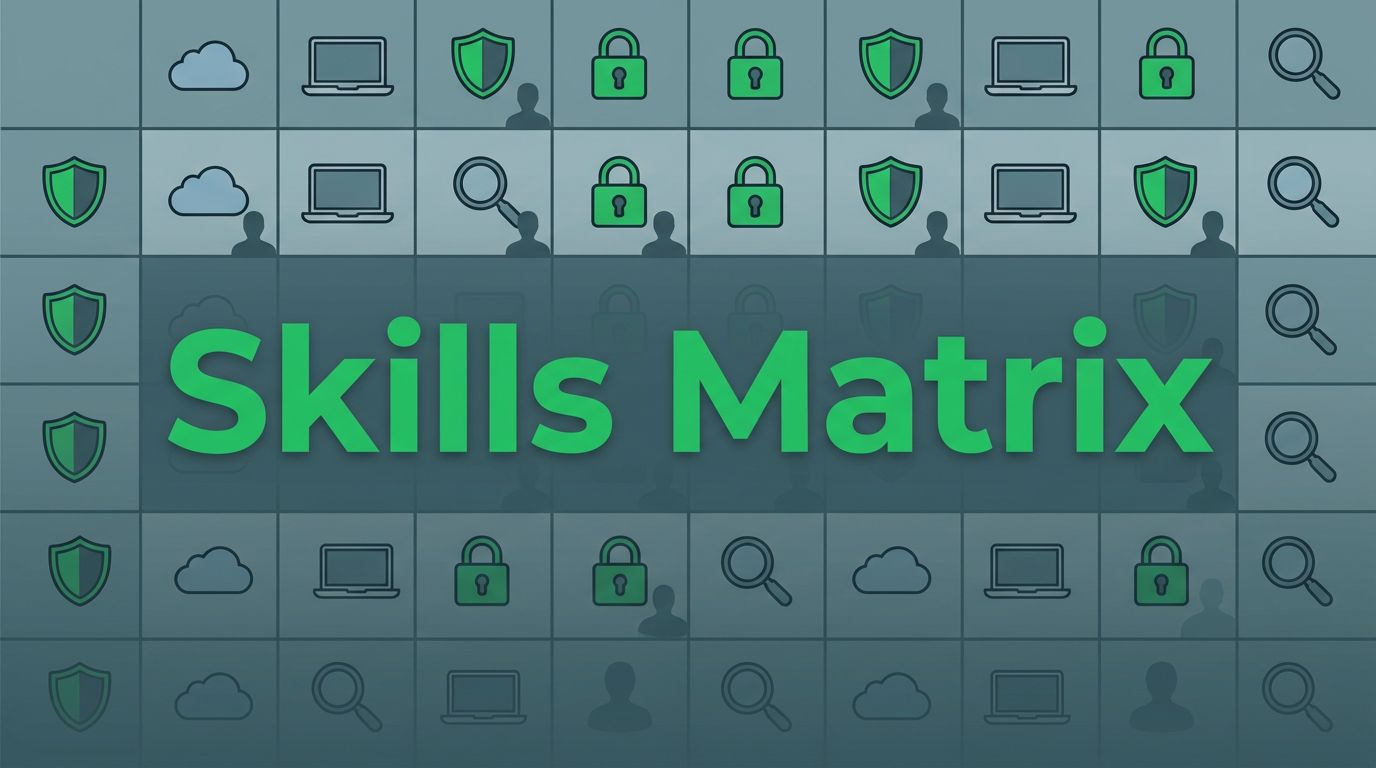
A security skills matrix gives you a clear view of role needs and current capability. It helps with workforce planning, role clarity, skills assessment, training roadmaps, and career progression, without turning people into a spreadsheet score.
The goal is simple. Map the work your security function must cover, then compare it with the skills your team actually has. From there, you can see where to train, where to hire, and where to grow future leaders.
Start with the decisions the matrix needs to support
Before you build anything, decide what the matrix must answer. For most teams, the real questions are about coverage, risk, and development, not data for its own sake.
If you need a common structure, the SFIA cybersecurity skills framework is a useful reference point. It helps teams describe levels in a consistent way.
A good matrix maps work, not ego. It should show what the role needs and what the person can do today.
Keep the matrix tied to a real business use. Maybe you need to staff a 24/7 SOC, build cloud defenses, or prepare for tighter audit demands. In 2026, that matters more than ever, because threat patterns keep shifting. For a useful view of that shift, see cybersecurity threats and skills in 2026.
Choose the skill categories that matter most
Start with the skills your team uses every week. Then add the ones that shape long-term risk. A short list works better than a giant one.
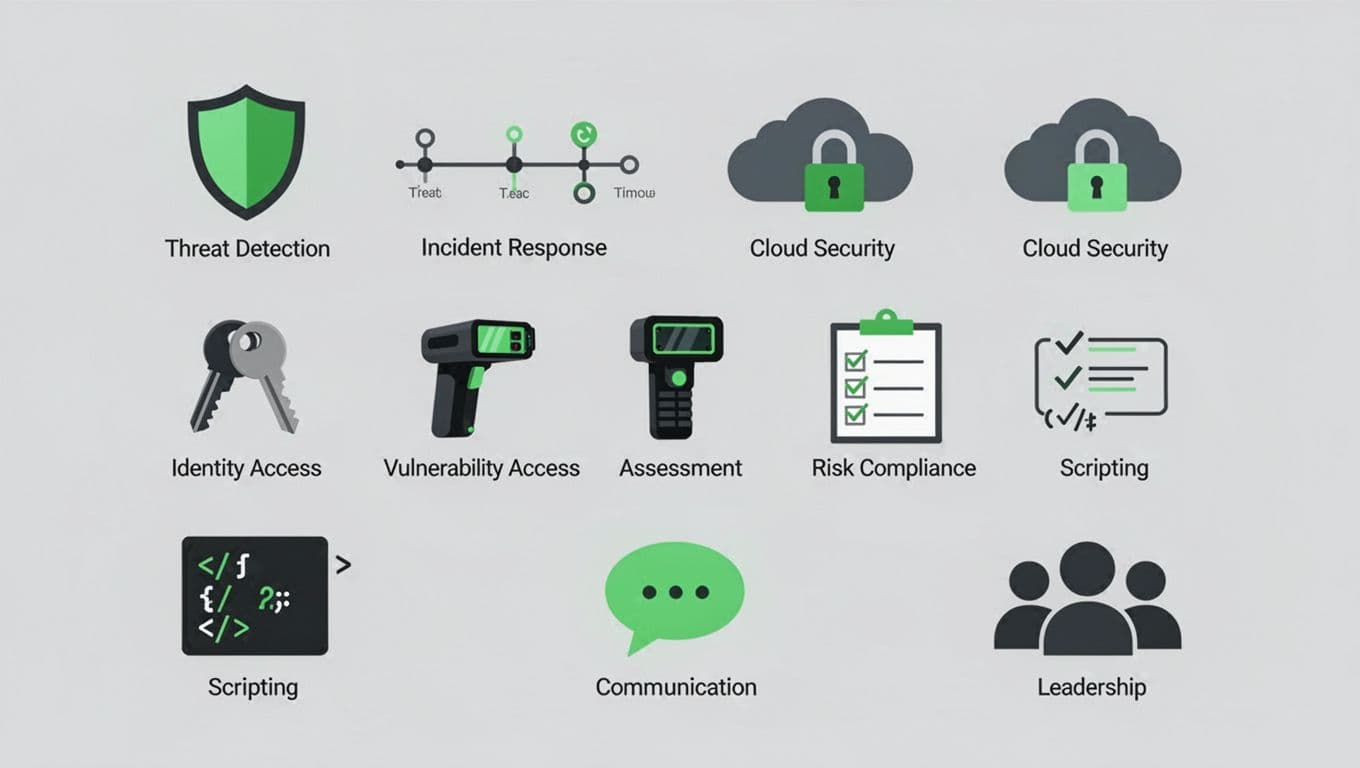
Use categories that reflect how security work gets done. Here’s a practical set to start with.
| Skill area | What to capture |
|---|---|
| Threat detection | SIEM use, alert triage, threat hunting, tuning |
| Incident response | Containment, escalation, forensics, communication |
| Cloud security | IAM, logging, posture management, cloud controls |
| IAM | Provisioning, access reviews, PAM, lifecycle control |
| Vulnerability management | Scanning, prioritization, remediation tracking |
| Risk and compliance | Control mapping, policy, audits, evidence gathering |
| Scripting and automation | Python, PowerShell, SOAR, repeatable tasks |
| Communication | Status updates, stakeholder briefings, handoffs |
| Leadership | Coaching, decision-making, planning, ownership |
If cloud is a major part of your environment, don’t treat it like one skill. It spans access, logging, response, and governance. A cloud security roadmap can help you break it into practical parts.
These categories cover both technical depth and team-wide capability. You can trim them for a small team or expand them for a large one.
Set the scale so role requirements and individual skills stay separate
This is where many matrices go wrong. They mix up what the role needs with what the person can do today.
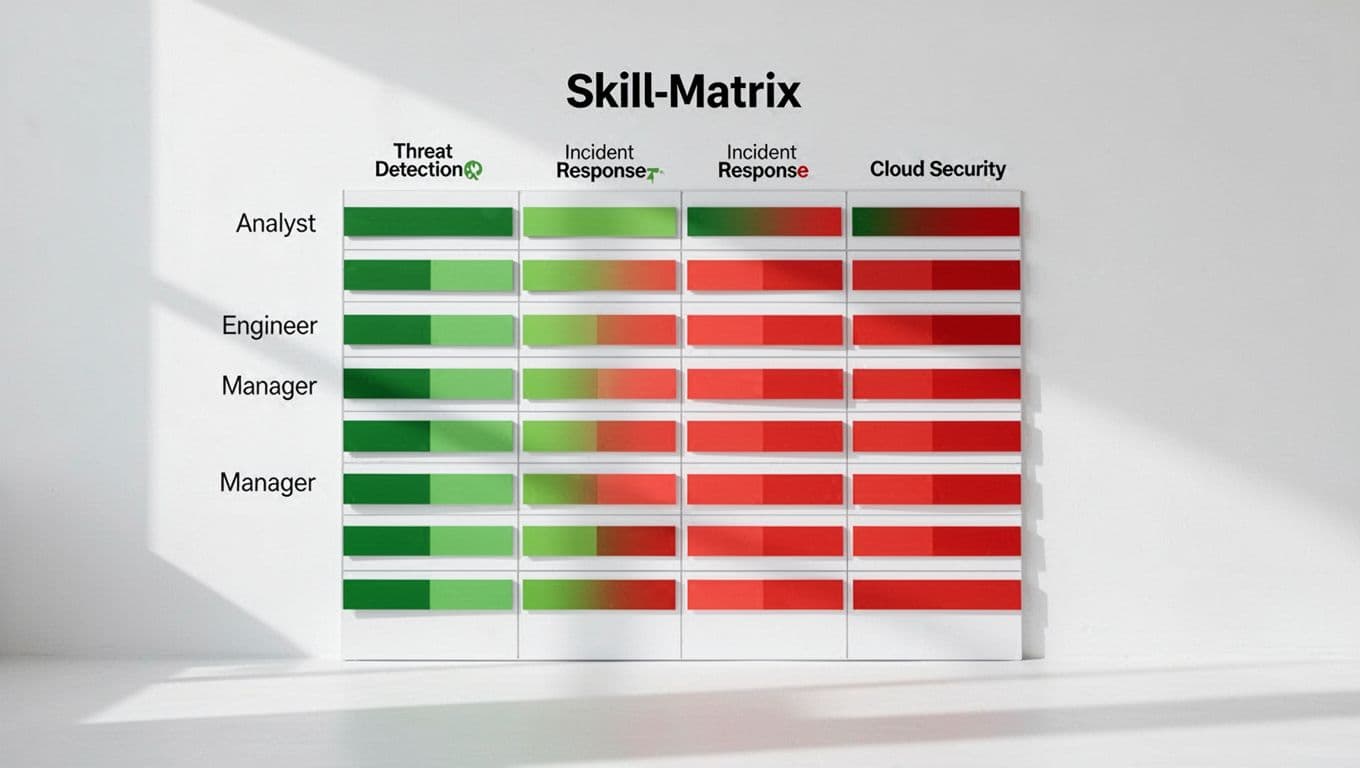
Keep two views in mind:
| Field | Role requirement | Individual proficiency |
|---|---|---|
| Purpose | What the job must cover | What the person can do now |
| Source | Risk profile, service model, team design | Self-review, manager review, evidence |
| Use | Hiring, backfill, promotion | Coaching, training, stretch work |
| Example | SOC L2 needs level 3 incident triage | Analyst is level 2 today |
A simple four-point scale works well for most teams. Level 1 can mean awareness. Level 2 means can do the task with help. Level 3 means works alone. Level 4 means teaches others and improves the process.
Validate each rating with more than one signal. Self-assessment gives you the starting point. Manager review adds context. Certifications help when they match the job. Hands-on labs show practical skill. Performance evidence proves the person can deliver.
Use the evidence that fits the role. A cloud engineer who completed a lab is one thing. A cloud security lead who handled a live incident is something else.
Turn the matrix into action
A matrix only matters if it drives decisions. Use it to compare required coverage against real headcount, then rank the gaps by business risk.
If one team is strong in threat detection but weak in IAM, that tells you where to focus first. If another has solid operators but no leaders, then the problem is succession, not only training.
That same view helps with career progression. Define what good looks like for the next step, then show people how to get there. For example, an analyst might move from alert triage to incident coordination, then into detection engineering or leadership.
It also sharpens hiring. Instead of writing vague job ads, you can name the exact skills you need. That matters when you’re hiring for hard-to-fill roles like cloud security architects, IAM/PAM specialists, DevSecOps leaders, or senior incident responders. If that’s the situation you’re facing, Book a Discovery Call with Bud Consulting to talk through the gap and the hiring path.
Make the matrix part of regular planning
The strongest matrices stay live. Review them after major incidents, cloud changes, re-orgs, or new compliance demands. Otherwise, they age fast and start to miss reality.
A good security skills matrix gives you more than a scorecard. It gives you a map for staffing, training, and growth, so your team can match the risk in front of it.
When the next gap appears, you’ll know whether to train, hire, or redesign the role. That clarity is the real value.