table of contents
A security workshop can fill a calendar and still change nothing. The difference is usually the security workshop format you choose, because the wrong format invites talk while the right one drives decisions.
If you want owners, deadlines, and follow-through, start with the problem you need solved, not the event label. Tabletop exercises, working sessions, hands-on labs, and awareness sessions all play different roles.
The best choice depends on what has to happen when the meeting ends.
Start with the decision you want from the room
Before you pick a format, name the outcome in plain words. Do you need a decision, a practice run, shared understanding, or a behavior change?
That answer should shape everything else. A session built for learning will disappoint if you need policy approval. A scenario drill will frustrate people if you need final wording on a control or process.
The clearest workshops start with one question: “What must be true when we leave?” If the answer is “the incident response owner is clear,” you need a different room than if the answer is “the team can test phishing triage under pressure.”
Also, match the audience to the outcome. Bring decision makers when you need approval. Bring operators when you need process fixes. Bring managers when you need support across teams.
A broad invite list often looks inclusive, but it usually slows the room down. Fewer people with the right authority will get you farther than a large group of observers.
If you need help matching the format to the problem and the people in the room, Book a Discovery Call with Bud Consulting.
Match the workshop format to the job at hand
Different formats create different kinds of pressure. Some force fast choices. Others expose weak steps. A few are best for behavior change.

| Workshop format | Works best when | Watch out for |
|---|---|---|
| Tabletop exercise | You need to test response choices, handoffs, and escalation paths | Letting it turn into a lecture |
| Hands-on lab | You want people to practice tools, scripts, or technical steps | Too many participants for one facilitator |
| Cross-functional working session | You need a decision on policy, process, or ownership | Weak prep and no decision maker |
| Awareness session with exercises | You want better judgment and shared language | Too much slide time, too little practice |
A tabletop exercise is strong when the goal is readiness. It helps people think through a breach, outage, or insider event without real-world pressure. A lab works better when the goal is skill. People can try the steps, make mistakes, and correct them.
Working sessions are best when the team needs one clear answer. They work well for access reviews, escalation paths, exception handling, and control ownership. Awareness sessions fit when you want people to spot risk earlier and talk about it with more confidence.
The key is to avoid mixing too many jobs into one format. If you try to teach, test, decide, and persuade in the same hour, the group leaves tired and unsure.
Build an agenda that ends with owners and dates
A strong agenda makes action visible. It also prevents the common trap where everyone agrees in principle, then nothing gets assigned.
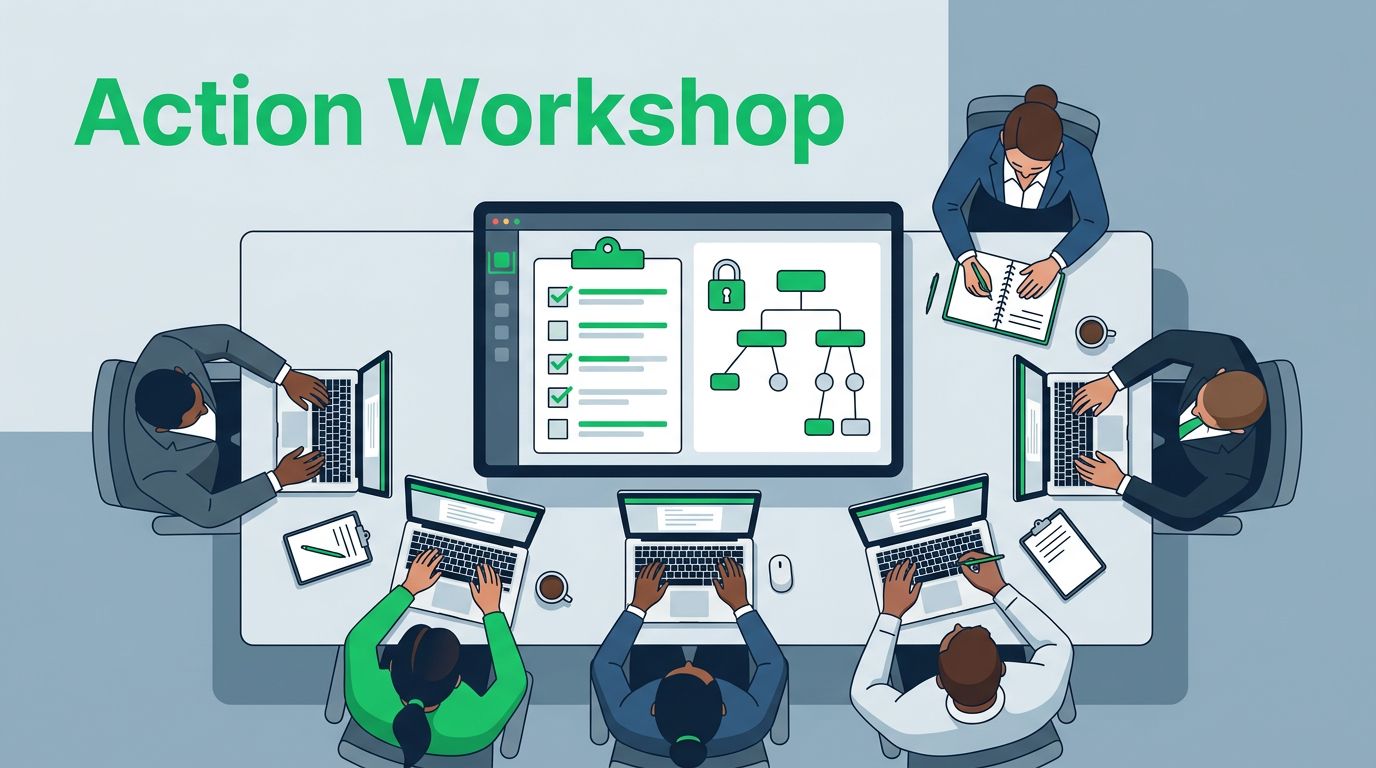
Start with a short pre-work note. Send it three to five days ahead. Keep it to one page if you can. Include the scenario, the current process, the decision needed, and the names of the people who should come ready to speak.
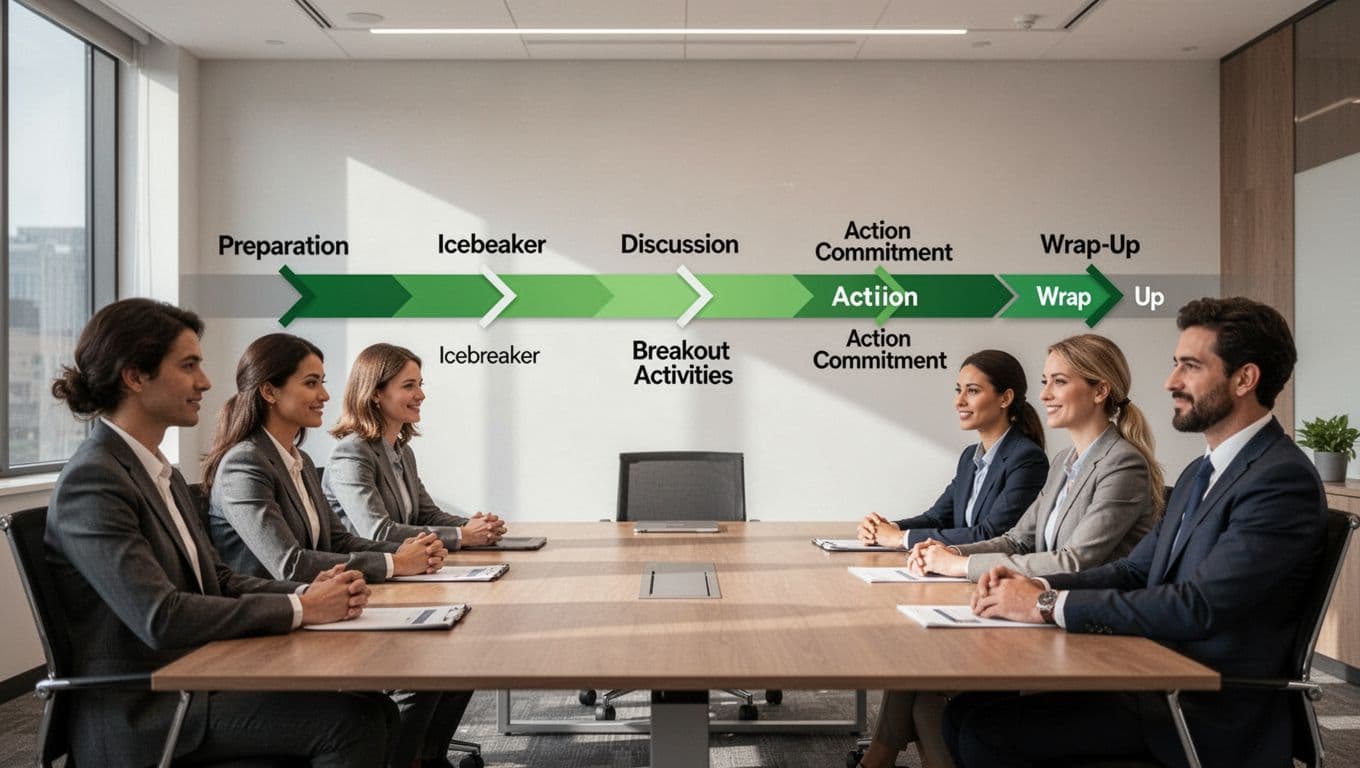
A useful agenda often looks like this:
- Pre-work recap: Confirm the facts and the decision in scope.
- Scenario or problem review: Put the issue in front of the room early.
- Breakout discussion: Let smaller groups solve specific parts.
- Decision capture: Record what the group agreed, while people are still in the room.
- Close with actions: Name the owner, due date, and next check-in.
Facilitation matters as much as the agenda. Keep the group moving. Stop side debates that pull the room off track. Ask for clear language when people get vague. Most importantly, write decisions live where everyone can see them.
If the last ten minutes feel rushed, the workshop was too long or too ambitious.
Avoid the mistakes that make workshops feel busy but go nowhere
Low engagement usually comes from avoidable errors. The most common one is overloading the room. Too many participants, too many teams, and too many topics all dilute action.
A few other mistakes show up often:
- No clear owner: The room agrees, but nobody is named to carry the work.
- Too much presentation time: People sit through slides instead of solving the problem.
- Weak scenario design: The exercise is so generic that nobody sees their real gaps.
- No decision authority: The people who can say yes or no are missing.
Another issue is vague language. Phrases like “we should look into this” sound harmless, but they hide the next step. Replace them with a named action and a date.
Also, keep the scenario close to reality. If your incident response team never handles the kind of event you are discussing, the workshop will feel theoretical. Real examples create better answers.
Track follow-through while the topic is still fresh
A workshop loses value fast if the follow-up lives in scattered notes. Use one shared action log with three fields, owner, due date, and status. Add a blocker field if the work depends on another team.

Send the log within 24 hours. Then schedule a short check-in before the workshop ends, even if it is only 15 minutes. That step keeps momentum alive.
A simple review rhythm works well:
- One week later, confirm what started.
- Two weeks later, ask what is blocked.
- At the next security meeting, review only the open actions.
When people know the work will be tracked, they assign better owners in the room. That alone improves the quality of the workshop.
A security workshop should end with motion, not applause. When the goal, the format, the people, and the follow-up line up, the room leaves with clarity.
Choose the format that fits the job, keep the agenda tight, and make ownership visible. That is how a workshop becomes a working session, and how security moves from discussion to action.