table of contents
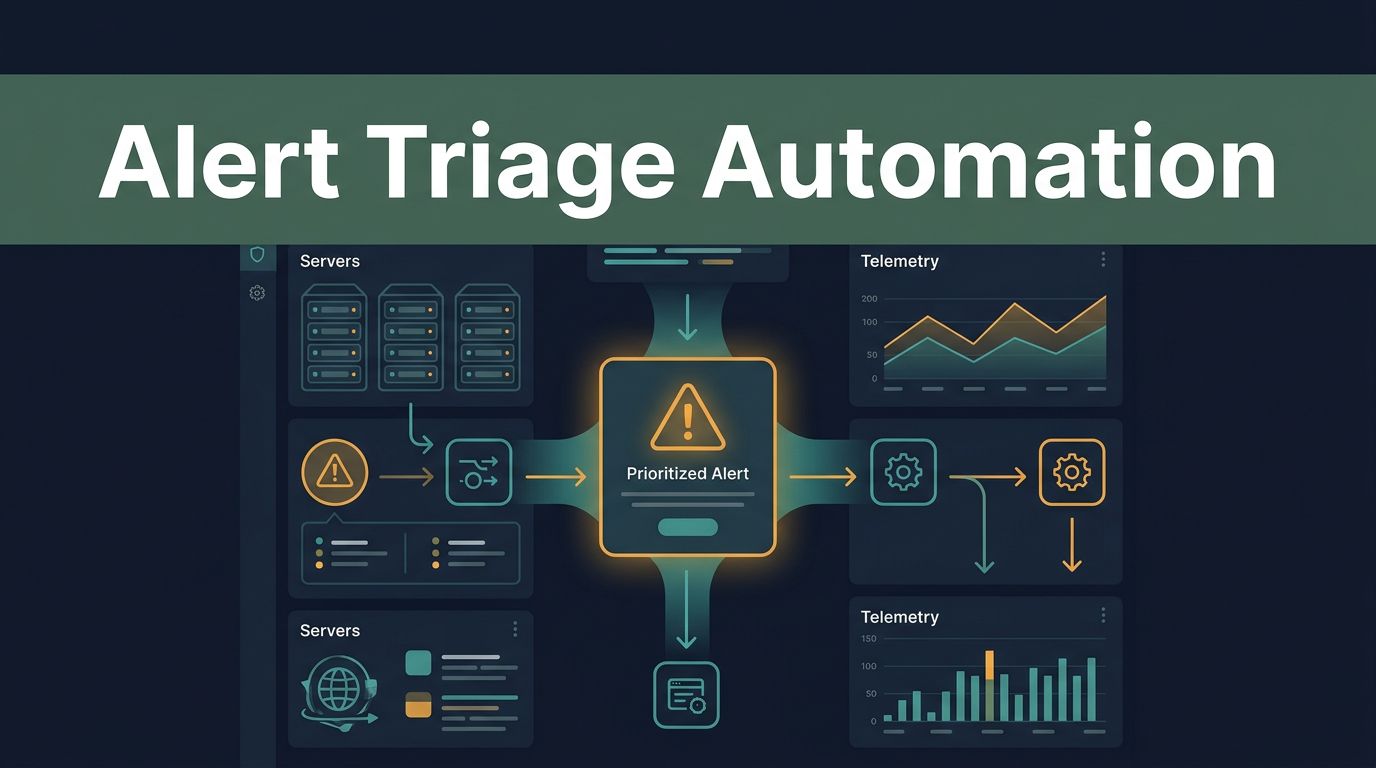
Security operations centers face a constant stream of alerts every single day. Analysts spend hours reviewing repetitive warnings instead of investigating actual threats. Implementing effective SOC alert triage automation changes this operational bottleneck. Security teams need structured rules to process incoming events instantly.
Manual alert handling fails when alert volume spikes beyond team capacity. Security analysts burn out from reviewing false positives for hours on end. Automation takes over the repetitive initial screening process. Security leaders must design deterministic rules to handle incoming alerts reliably.
Core Pillars of SOC Alert Triage Automation
Effective triage rules rely on specific data points extracted from security telemetry. Every incoming alert contains metadata that dictates its initial priority level. Detection engineers must define clear criteria based on severity, detection name, and event source. Clear criteria allow platforms to process alerts without human intervention. According to SOC Automation: Benefits, Tools, and Best Practices, automated playbooks instantly sort, classify, and prioritize alerts based on risk level and context.
Severity ratings indicate the potential business impact of a suspicious event. Low severity events often require simple logging or automated closure. High severity events demand immediate escalation to senior analysts. Detection names identify the exact signature or behavior that triggered the warning. Source systems provide essential context regarding asset criticality and network placement.
Rules evaluate these attributes against predefined thresholds before taking action. A rule checking for brute force logins requires a specific detection name and a high frequency source threshold. If the event matches all criteria, the automation engine tags the alert and moves it to the correct queue. Establishing these structural pillars eliminates guesswork and standardizes event handling across every shift.
Implementing Automated Enrichment and Routing
Detection rules alone are not enough to clear alerts safely. Enrichment adds vital contextual data before an analyst opens the ticket. Automated enrichment queries threat intelligence feeds, asset inventories, and user directories. Enrichment data reveals if an IP address belongs to a known malicious actor or an internal testing server. Additional lookups check active directory groups to determine if the affected user holds administrative privileges.
Routing logic uses enriched data to send alerts to the appropriate destination. Automated routing assigns tickets based on team specialization, geography, or shift schedules. Cloud security alerts go straight to the cloud infrastructure team. Endpoint malware alerts route to the endpoint detection and response team. Network intrusion warnings go to the perimeter defense unit.
Here is a sample rule condition in readable pseudocode:
rule_name: Suspicious External PowerShell Execution detection_name: PowerShell Download Cradle severity: High source: Endpoint EDR enrichment_check: IP_Reputation == Malicious AND User_Role != System Administrator action: Route to Tier 2 Incident Response AND Enrich with Threat Intel
This pseudocode demonstrates how multiple conditions combine to form a precise triage action. The rule checks the detection name, severity, and source, validates enrichment data, and assigns the ticket accordingly. Precise routing ensures that junior analysts do not waste time on advanced attacks meant for senior incident responders.
Distinguishing Containment from Analyst Review
Automation handles low-risk tasks efficiently, but active containment requires careful risk management. Automated containment actions isolate endpoints, disable compromised user accounts, or block malicious IP addresses at the firewall. These actions stop active attacks before human analysts can click a button. Swimlane outlines in The Importance of Implementing SOC Best Practices how strategic alignment helps teams apply automation safely.
Containment actions carry severe business risks if triggered incorrectly. Blocking a critical domain controller or isolating an executive laptop causes immediate operational disruption. Security teams must restrict automated containment to high-confidence detection scenarios. Low-confidence or ambiguous alerts require mandatory analyst review.
Analyst review steps involve manual verification within the security information and event management platform. Analysts examine process trees, network connections, and user intent. Once the analyst confirms a true positive, they authorize containment manually or trigger a semi-automated playbook. Balancing automated containment with mandatory human oversight protects business continuity while stopping genuine threats.
Measuring and Tuning Automation Effectiveness
Building rules is only the first step in maintaining a healthy security operations center. Security automation architects must measure rule performance continuously. Metrics like false positive rate, mean time to acknowledge, and automation coverage reveal operational efficiency. High false positive rates indicate overly broad detection logic that wastes analyst time and degrades trust in the system. Proper SOC alert triage automation reduces manual strain only when detection rules receive ongoing tuning.
Alert-routing blind spots occur when overly strict rules drop legitimate security events. Prophet Security shares actionable advice in Alert Tuning Best Practices for Security Operations on how to use data-driven methods to systematically improve detection logic. Regular tuning sessions help security engineers adjust severity thresholds and refine criteria.
Engineers must review unhandled alerts weekly to identify gaps in automation coverage. If analysts constantly reclassify a specific alert type, the triage rule needs updating. Continuous feedback loops ensure automation rules adapt to changing adversary techniques and internal infrastructure updates.
Building Robust Queue Assignment Workflows
Queue assignment determines how quickly an incident reaches the right investigator. Poor queue assignment leads to ticket hoarding, missed service level agreements, and delayed response times. Automated workflows assign queues based on asset ownership, vulnerability severity, and geographic region.
When an alert enters the system, the routing engine evaluates the detection name and source metadata. The engine checks the current shift schedule and assigns the ticket to an available analyst. High priority incidents bypass general queues and trigger direct paging alerts to on-call personnel. Shift handovers run smoothly when tickets are already enriched and categorized inside dedicated queues.
Effective queue management prevents bottlenecks during major security incidents. Security leaders should audit queue assignments regularly to balance workloads across different shifts. Balanced workloads reduce burnout and ensure consistent investigative quality across the entire team.
Conclusion
Security operations centers cannot scale by adding more human analysts alone. Alert volume grows every year, demanding smarter operational workflows and robust technical controls. Implementing precise triage rules and automated enrichment transforms raw data into actionable security insights.
Organizations ready to close technical skills gaps and optimize their security operations can Book A Call With Us to discuss tailored talent and advisory solutions. Taking these steps protects digital assets while keeping analysts focused on complex investigations.