table of contents
A single spoofed invoice can damage a trusted brand in minutes. A strong SPF DKIM DMARC audit closes that gap by checking who can send, how mail is signed, and what happens when messages fail.
If those three layers do not match, phishers can ride on your domain reputation. In 2026, that is a deliverability problem and a brand problem at the same time.
The fix is methodical. Start with the sender inventory, then inspect DNS, then read the reports that show what is really happening.
Build a complete domain inventory first
Start with every domain that can send on behalf of the brand. That includes the main corporate domain, regional domains, campaign domains, and any subdomain used for alerts or support.
Do not forget parked domains and lookalike domains. Attackers love weak or forgotten assets because no one watches them closely.
Pull in every third-party sender too. CRM platforms, newsletter tools, payroll systems, ticketing tools, cloud apps, and agencies all count if they use your domain.
A clean audit sheet should list the domain, the owner, the sending purpose, the platform, the SPF include or IP, the DKIM selector, and the DMARC policy. If you cannot name a sender, treat it as suspicious until proven otherwise.

Review SPF, DKIM, and DMARC in DNS
SPF, DKIM, and DMARC work best when each record has a clear job. For a syntax refresher, the SPF, DKIM, and DMARC best practices guide is a solid cross-check.
SPF: keep the sender list tight
SPF should contain one record per domain, and it should list only the systems that truly send mail. Long include chains, duplicate mechanisms, and old vendor entries create risk.
Watch the 10-DNS-lookup limit. A record can look fine on paper and still fail in the wild because nested includes push it over the edge. That is common with marketing stacks and MSP-managed domains.
Use dig or nslookup to inspect the TXT record directly, then compare it with your documentation. If the record authorizes a vendor that no longer sends mail, remove it.
DKIM: sign every platform that sends mail
DKIM proves the message has not been changed and helps DMARC pass alignment. Every legitimate sender should have its own selector and its own signing key.
Check third-party platforms first. Missing DKIM on a vendor platform is one of the fastest ways to break DMARC, especially when SPF fails after forwarding.
Use 2048-bit keys where the platform supports them, and rotate selectors on a schedule. That keeps old keys from living forever in DNS.
DMARC: turn policy into protection
DMARC ties everything together. It tells receivers what to do when SPF or DKIM fails and gives you reports on who is sending as your domain.
A record should start with v=DMARC1, then include a policy, usually p=none during monitoring, plus report addresses in rua and, if needed, ruf. For higher-risk brands, tighten alignment with adkim and aspf.
A valid SPF record is only half the job. DMARC cares about alignment, so the From domain must match a domain that passed authentication.
Trace real mail and find unauthorized senders
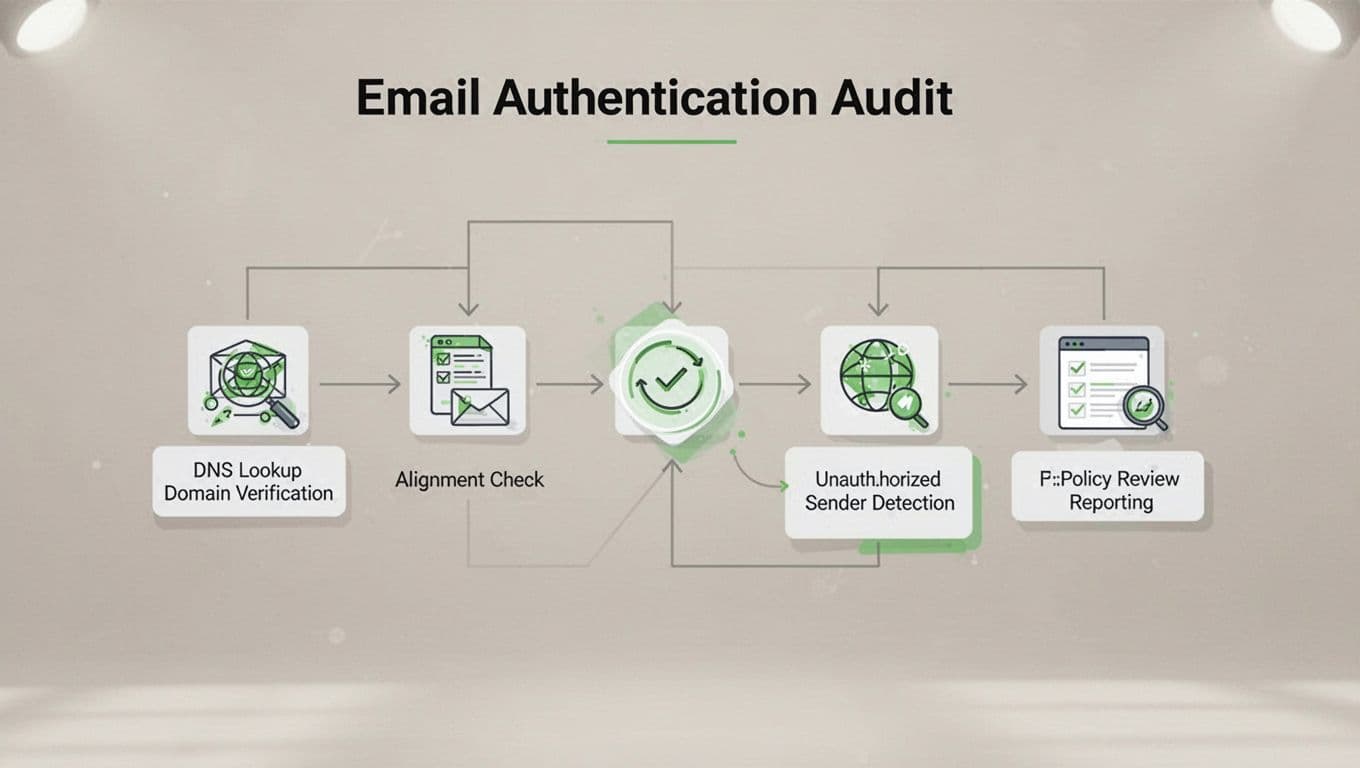
DNS records are only the starting point. The real audit happens in headers and reports.
- Send test mail from every platform that uses your domain.
- Open the full headers and read
Authentication-Results. - Compare the visible
Fromdomain, the SPF envelope domain, and the DKIMd=domain. - Flag any sender that passes authentication but fails alignment.
- Check whether every failure maps to a known business system.
This is where hidden senders usually appear. A product team may have spun up a tool without telling security. A regional agency may still be using an old mail path. Or a spoofing attempt may show up as a brand-new source in your reports.
A live checker can help with fast triage. Tools like Red Sift Investigate and DMARC tools and validators can catch obvious DNS issues, but your own headers and reports are the final proof.
Read DMARC reports like a fraud map
DMARC aggregate reports are messy, but they tell a clear story. Look for sending IPs, message counts, SPF and DKIM pass rates, and any source that does not belong.
Pay close attention to spikes. A small test sender that suddenly becomes a large source may point to a misrouted integration, not an attack. On the other hand, a new country, new ASN, or unknown vendor should get a fast review.
If you enable forensic reports, use them carefully. They can help with message-level failure data, but availability and privacy controls vary by receiver.
In 2026, leaving a brand domain on p=none for months is weak practice. Monitoring is useful, but it does not stop spoofing. Once the known mail streams pass cleanly, move to p=quarantine, then to p=reject.
If you want more background on the 2026 setup side, The complete guide to email authentication is a helpful companion.

Fix the highest-risk gaps first
If your domain set spans many teams, vendors, or inherited DNS zones, a second pair of eyes helps. Book a Discovery Call with Bud Consulting before you move to stricter enforcement.
| Priority | Fix | Why it matters |
|---|---|---|
| P1 | Remove unknown senders and old SPF includes | Closes spoofing paths and avoids SPF breakage |
| P2 | Add DKIM to every third-party platform | Keeps DMARC alignment intact |
| P3 | Cut SPF to one record and stay under 10 lookups | Prevents hidden DNS failures |
| P4 | Move DMARC from p=none to quarantine, then reject | Turns monitoring into real brand protection |
A short checklist keeps the work moving:
- Map every domain, subdomain, and third-party sender.
- Confirm SPF has one record and only active senders.
- Verify DKIM signing on every legitimate platform.
- Route DMARC reports to a monitored mailbox or parser.
- Review new senders and failed alignment every week.
Brand trust starts with mail you can prove
An SPF, DKIM, and DMARC audit is really a trust audit. When your inventory is complete, your DNS is clean, and your reports are reviewed, spoofers lose easy paths into your brand.
That reduces phishing risk, protects customers, and keeps legitimate mail from drifting into spam. The strongest setup is the one you can explain in one pass and defend in a report.