table of contents
Startups grow fast. You need security now, but budgets stay tight and processes don’t exist yet. One wrong hire wastes months; one breach costs everything.
In April 2026, AI threats and cloud setups demand quick action. Founders and CTOs scramble for talent that fits seed or Series B stages. This guide shares scrappy steps to hire right.
First, match hires to your real needs.
Know Your Security Needs First
Figure out what role solves your biggest pains. Don’t chase a full CISO. Pick from generalist, engineer, GRC specialist, product security pro, or vCISO.
A security generalist handles basics like endpoint protection and phishing training. They fit pre-seed teams. Expect them to juggle incident response with policy tweaks.
Security engineers build tools. They secure cloud-native stacks on AWS or GCP. In 2026, they focus on zero-trust and AI model defenses because threats evolve fast.
GRC hires manage compliance. They prep for SOC 2 or ISO 27001 audits. Startups need this for investor trust, but keep it lightweight.
Product security experts embed checks in code. They run threat modeling and fix API flaws alongside devs.
vCISOs work part-time. They guide strategy without full salary hits. Budgets force this choice; boards want outcomes over titles.

Check Y Combinator’s security startups list for role examples. Trends show cloud security leads, followed by AI protections.
Ask: Does your team lack cloud monitoring? Hire an engineer. Need audit prep? Go GRC. This keeps hires realistic.
Next, set up a simple process.
Build a Lightweight Hiring Process
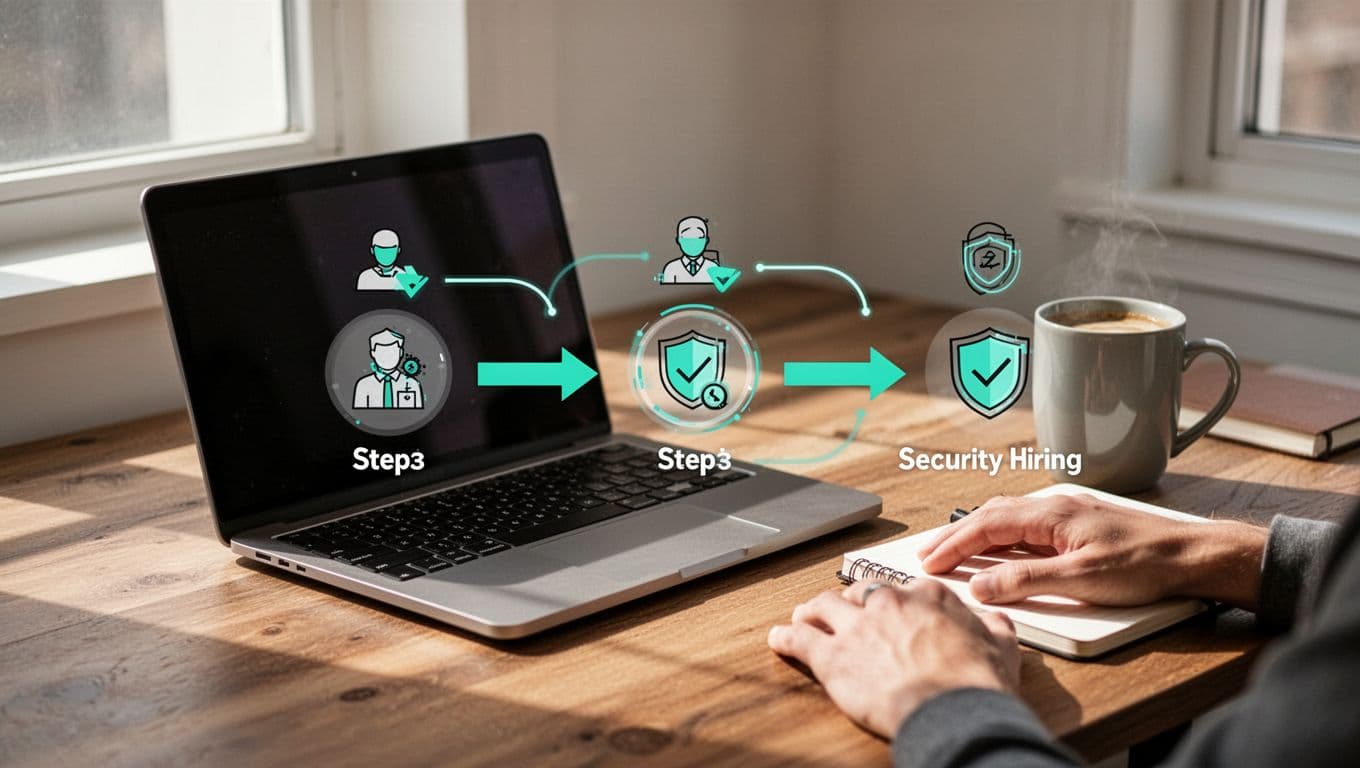
Skip enterprise recruiters. Use a three-step flow: source, screen, close.
Step 1: Source smart. Post on Wellfound’s security startups page or LinkedIn. Target 0-5 years experience for generalists. Mention AI security or cloud needs to attract fits.
Step 2: Screen with a scorecard. Rate candidates 1-5 on must-haves. For engineers: cloud certs, DevSecOps tools like SAST. Generalists: incident stories.
Here’s a basic scorecard template:
| Criterion | Weight | Notes Example |
|---|---|---|
| Cloud Experience | 30% | Built zero-trust on GCP? |
| AI Threat Knowledge | 25% | Handled prompt injection? |
| Startup Fit | 20% | Worked in small teams? |
| Communication | 15% | Explains risks simply? |
| Culture Add | 10% | Pairs well with engineers? |
Score over 80% to advance. This cuts bias.
Step 3: Offer fast. Equity tempts talent. Aim 0.5-2% for early hires.
Vanta’s first security hire guide offers job post templates. Adapt them. In tight budgets, vCISOs cost less; pair with engineer upskilling.
This process works without HR. It scales to Series B.
Craft Your Interview Signals
Interviews reveal fit. Use real tasks, not trivia.
For generalists, simulate incidents. “Walk us through a phishing response.” Good signals: They prioritize comms, then containment.
Engineers code live. Ask to secure a sample API. Watch for SAST integration or cloud IAM fixes. Red flags: Ignores engineer collaboration.
GRC candidates review mock vendor contracts. Strong ones spot NIST gaps fast.
Product security pros threat-model your app. They flag AI data leaks.
vCISOs pitch roadmaps. Probe: “How do you align security with sprints?”

Scorecard signals:
- Green: Shares startup breach stories; suggests cheap tools.
- Yellow: Enterprise focus only; overlooks budgets.
- Red: Can’t explain risks to non-techies.
Involve your lead engineer. They spot DevSecOps fits. Keep rounds to three: founder chat, tech deep-dive, team pair.
This spots scrappy thinkers.
Navigate Budgets and Pitfalls
Budgets hover at $150K-250K total comp for seed hires. Equity bridges gaps. Avoid overpaying generalists; they multitask.
Pitfalls: Hiring too senior too soon. They demand teams you lack. Or skipping references; always call past bosses.
2026 realities include AI attacks. Test candidates on model securing. Cloud-native means no on-prem experts.
Partner with engineering early. Security joins standups, not silos.
Top cybersecurity startups list shows equity-heavy offers work.
For stuck teams, Book a Discovery Call with Bud Consulting.
Startups thrive with targeted security hiring. Pick the right role, use simple processes, and watch signals.
You build defenses that scale. Breaches drop; investors notice. Act now while talent pools hold.