table of contents
You’ve bootstrapped your startup to seed funding. Users love your SaaS product. Then a phishing email slips through. Or a misconfigured cloud bucket exposes data. Suddenly, security isn’t optional. It demands attention now.
Early-stage teams face tight budgets and fast growth. You can’t copy Big Tech’s security org. Instead, pick a security team structure that fits your stage. This keeps risks low without burning cash. We’ll cover ownership basics, sample setups, hiring order, and pitfalls. Plus a framework to decide your next move.
Why Tailor Security to Your Startup Stage
Startups hit security needs at different points. Pre-seed? Focus on basics like MFA and access reviews. Series A? Add code scans as AI features roll out.
Cash matters most. A full-time CISO costs $250K plus equity. That’s 10% of your runway. Engineering handles most tasks at first. They rotate on-call for alerts. This saves hires while building skills.
Cloud and SaaS rule in 2026. AWS, GCP buckets leak often. AI products add risks like prompt injection. Compliance like SOC 2 pulls you in by Series A. Customers ask for it before deals close.
Tradeoffs show up quick. Outsource monitoring? It spots issues 24/7. But in-house knows your stack best. Many pair both. Engineering triages, then managed detection responds.
Expect lean setups. Top sources note small teams (1-3 people) or champions model. Check CyberReplay’s playbook for early-stage teams for MDR tips. It fits seed budgets.
Defining Security Ownership Early
Set roles before hires. Otherwise, everyone owns nothing. CTOs often start. They enforce policies like least privilege.
Draw lines. Engineering owns app sec, like SAST tools in CI/CD. IT handles endpoints and VPN. Compliance falls to ops or legal. Security coordinates.
In 2026, AI shifts this. Models train on customer data? Security reviews pipelines. But devs iterate fast. So embed checks, don’t gatekeep.
Start with a RACI chart. Who is Responsible, Accountable, Consulted, Informed? For incidents: Eng is R, Security A, CTO C.

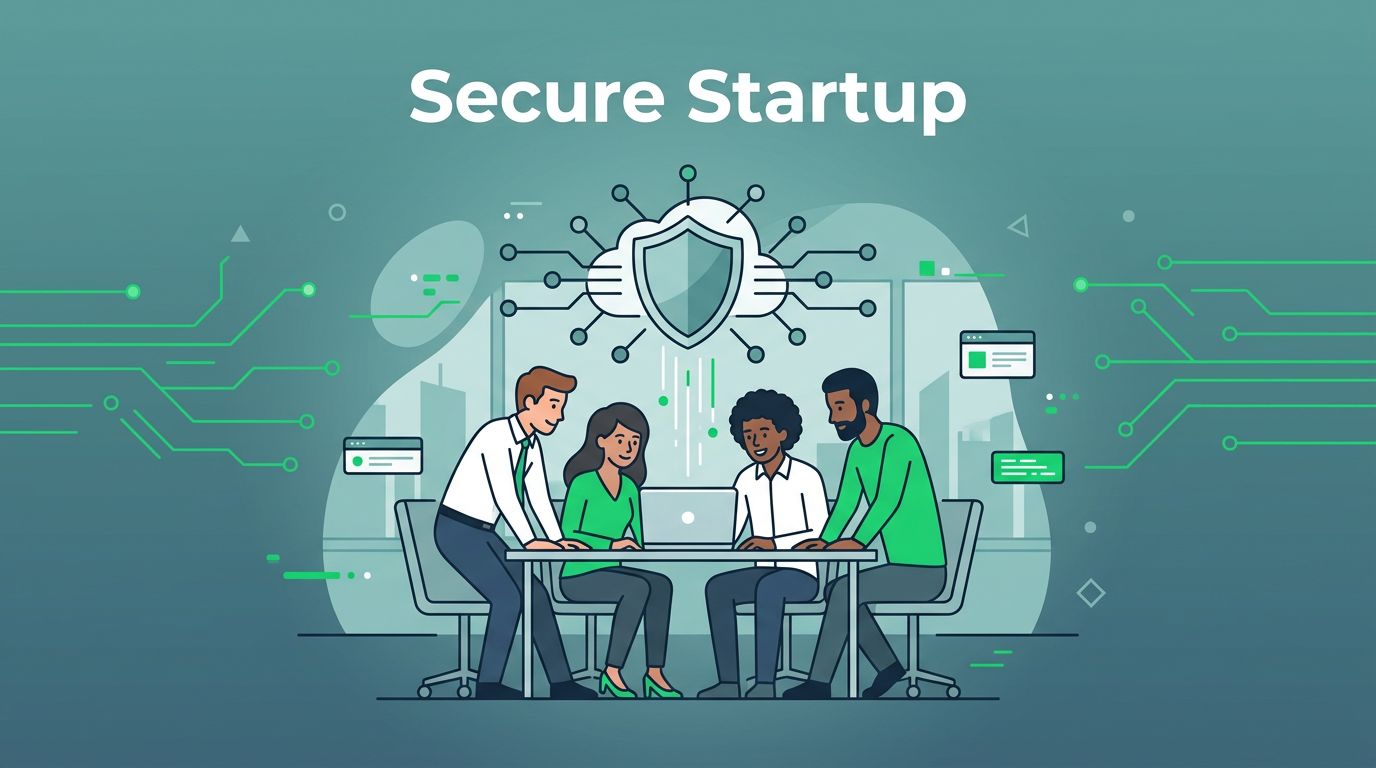
This image shows a typical early team huddle. They map ownership on a board. It builds buy-in.
Culture counts too. Pick security champions. One engineer per team learns vulns, runs scans. No extra headcount. Lorikeet Security details this model. Spotify scales it. You can too.
Sample Security Team Structures by Funding Stage
Match structure to stage. Here’s what works.
Pre-seed to Seed (0-1 dedicated headcount):
- No full team. CTO delegates.
- Eng rotates on-call. Tools: GitHub Advanced Security, Cloudflare.
- Outsource pentests yearly.
Series A (1 security hire):
- Hire a Security Engineer. They run scans, own IAM.
- Champions in eng teams.
- Budget: $150K salary.
Series B (2-3 people):
- Add AppSec focus. One for infra/cloud.
- Still lean. Use MSSPs for SOC.
| Stage | Headcount | Key Roles | Tools/Outsourcing | Monthly Cost Est. |
|---|---|---|---|---|
| Seed | 0 | CTO + Eng on-call | GitHub, Cloudflare, MDR | $5K (MDR) |
| Series A | 1 | Sec Engineer | Snyk, Wiz, Pentest | $15K (tools + test) |
| Series B | 2-3 | Engineer + Analyst | All above + Splunk | $30K |
This table compares options. Takeaway: Scale with revenue. At Series A, in-house pays off after 6 months.
See Teleport’s guide on startup security teams for role picks. It stresses needs over titles.
Hiring Sequence: Who First and Why
Don’t grab a VP early. They overbuild. Start junior, grow them.
- Security Engineer (Months 1-3 post-need). Hands-on with scans, configs. Needs cloud exp (AWS certs).
- Incident Response focus next. Or analyst for alerts.
- Leadership at Series B. Director owns strategy.
Sequence matches risks. IAM first because creds steal accounts. Then app sec for code flaws. AI? Hire for data lineage.
Screen for startup fit. They debug fast, wear hats. Ask: “Walk me through a cloud breach you fixed.”
Equity binds them. 0.5-1% vests over 4 years.
Common trap: Senior too soon. A CISO wants enterprise tools. Your stack is MVP. They quit fast.
Setting Boundaries with Eng, IT, and Compliance
Blur lines early, chaos follows.
Engineering owns dev-time sec. Shift-left: PR checks, secrets scan.
IT manages laptops, SaaS access. They patch, enforce MFA.
Compliance? Ops tracks audits. Security supplies evidence. Don’t merge; SOC 2 needs independence.
Example: Fintech startup. Eng fixes vulns. Security reviews architecture. IT locks down Zoom. Clear handoffs cut tickets 40%.
AI products complicate. Eng builds models. Security tests jailbreaks. Joint reviews weekly.
Use SLAs. Eng fixes high vulns in 7 days. Document in Notion.
Pitfalls, Tradeoffs, and Your Decision Framework
Mistakes kill momentum. Hiring senior early wastes 20% runway. Over-tooling: 10 scanners, zero fixes.
Another: Ignoring culture. Sec blocks deploys? Teams bypass.
Tradeoffs: In-house vs outsource. Internal knows code. External scales alerts.
Use this framework:
- Assess stage/revenue. Under $5M ARR? Champions + MDR.
- List top 3 risks. IAM? Hire engineer.
- Budget check. Can you afford $150K + 20% tools?
- Test pilot. 3-month contractor.
- Review quarterly. Add headcount if breaches rise.
Apply it now. Jot risks, pick structure.
Key Takeaways for Your Security Team
Early startups thrive with lean security. Start with ownership, hire in sequence, set boundaries. Avoid senior bloat.
Tailor to your stage. Use champions, outsource smartly. In 2026, cloud AI demands it.
Ready to build right? Book a Discovery Call with Bud Consulting. They’ll match your gaps.
Your structure sets the pace. Get it fit, grow secure.