table of contents
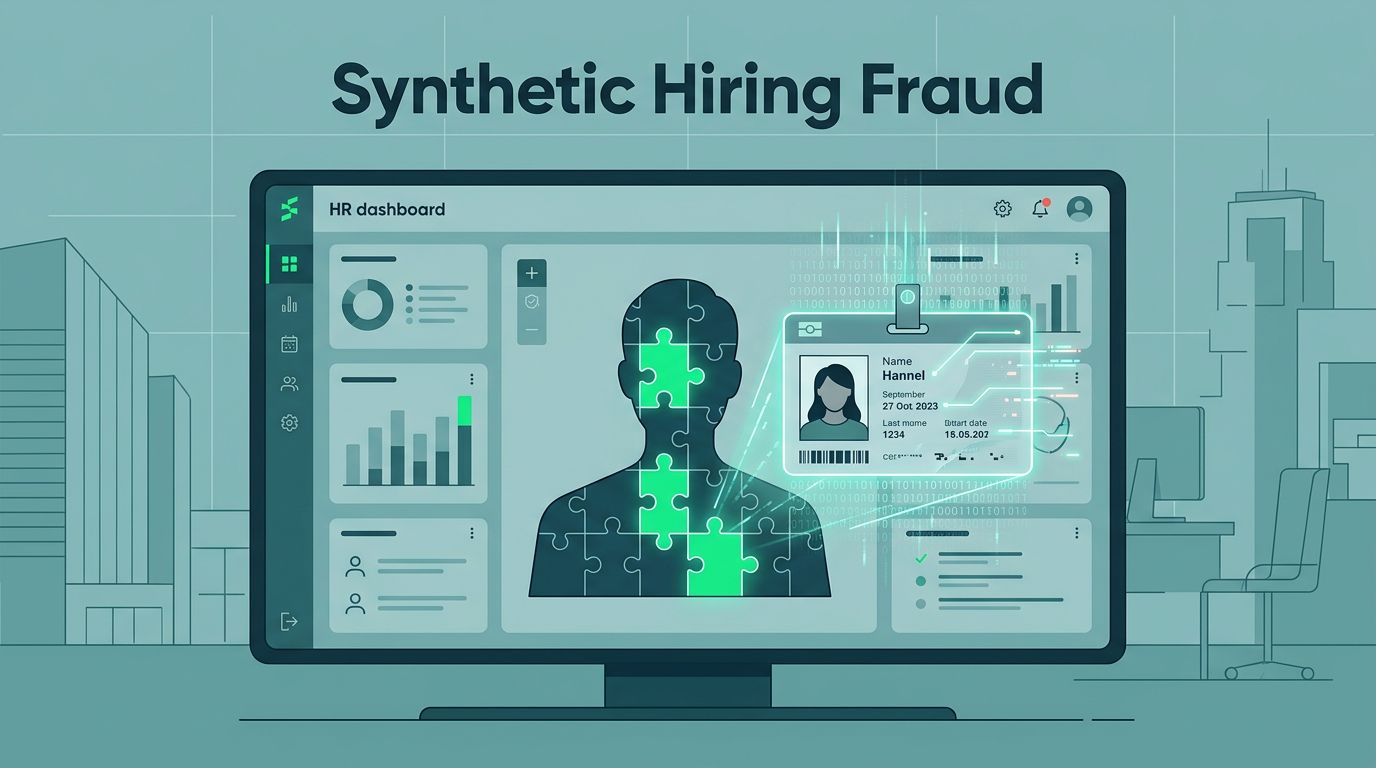
A polished resume can hide a person who never existed. In 2026, synthetic identity hiring fraud is a real hiring risk, especially when interviews, onboarding, and document checks happen online.
HR teams now face fake profiles, AI-made interview video, and stolen records blended into one believable candidate. The answer is a stronger process that checks identity early, not after the offer goes out.
Why synthetic identity fraud is different from other hiring fraud
Synthetic identity fraud uses a mix of real and fake details to build a person who looks legitimate. That makes it different from ordinary resume fraud, where a real candidate exaggerates experience, and different again from stolen identity impersonation, where someone uses another person’s real identity.
That matters because each type needs a different response. A background check may catch a bad job title, but it may miss a person who never truly existed as a full identity. For a broader view of how this works in hiring, see GCheck’s overview of synthetic identity fraud in hiring.
| Fraud type | What it looks like | What HR should test |
|---|---|---|
| Resume fraud | Real person, inflated skills or dates | Employment history, references, work samples |
| Stolen identity impersonation | Real person using someone else’s identity | Government ID, live match, duplicate record checks |
| Synthetic identity fraud | Blended or fabricated identity with no real owner | ID proof, liveness checks, cross-system consistency |
A background check can confirm a record. It can’t always confirm the person behind it is real.
The rise of fake employees is now part of mainstream security talk. Microsoft’s 2026 note on fake employees and deepfake hiring shows how fast this issue has moved from edge case to routine concern.
Red flags that show up before onboarding

Synthetic identities often look clean on paper. The clues usually appear in small mismatches that add up over time.
Watch for these patterns:
- Identity details that shift. The name, address, phone, or photo may not stay consistent across systems.
- Interview behavior that feels staged. The candidate may pause before simple questions, or audio may lag in a way that hides a proxy.
- Too-perfect job history. A short, neat timeline with no gaps can be a sign of fabricated data.
- Reference paths that seem off. Personal email addresses, generic company contacts, or references who avoid direct calls are warning signs.
- Document reuse across applicants. The same image quality, layout, or metadata can appear in more than one file.
Deepfake and AI-generated content make these signs harder to spot. Recent 2026 guidance from Metaview on deepfake interviews shows how often recruiters now face synthetic voices, faces, and scripted answers during remote screens.
A single red flag does not prove fraud. Still, two or three together should slow the process. That pause is cheaper than a bad hire.
Build an identity check into remote hiring
Remote hiring needs a verification step that happens before trust builds. The goal is simple, confirm the person matches the documents, then confirm the person stays consistent across the process.
A useful workflow looks like this:
- Verify identity early. Ask for a government ID before final interviews, not after the offer.
- Compare live and document images. Use a live video check or approved identity tool that tests liveness, not a still photo.
- Cross-check contact paths. Confirm phone numbers, email domains, and reference details through separate channels.
- Review role risk before advancing. Sensitive roles in cloud, IAM, finance, or security need deeper checks than low-risk roles.
- Escalate mismatches fast. If details drift, stop the process until a human reviews the case.
For teams hiring into security-heavy roles, a Book a Discovery Call with Bud Consulting can help align hiring controls with the level of access a role will have.
AI impersonation gets easier when hiring moves fast. Therefore, the best defense is not more friction everywhere. It is sharper checks at the points where fraud is most likely to hide.
Set policy rules before the next opening goes live
Strong process beats one-off judgment calls. HR should define the rules in advance, then use them the same way across teams.
A practical policy set includes:
- Identity verification before final rounds for remote candidates.
- A second review for any mismatch between application data and interview data.
- Document retention rules that fit company policy and local law.
- Clear escalation paths for suspicious profiles, duplicate identities, or proxy interviews.
- Manager training on fraud signals, so hiring managers know when to pause.
Compliance matters here. Recordings, biometric checks, and document storage may trigger local privacy rules, so legal review is smart before rollout. A 2026 guide from DISA on AI hiring fraud detection is a useful reference point for teams building these controls.
A short checklist HR teams can use now
Use this as a quick operational check:
- Ask every finalist for identity proof before the last interview.
- Compare the ID photo to the live interview face.
- Watch for audio delay, camera changes, or coached answers.
- Verify employment history through independent contact paths.
- Review outliers for high-risk roles before the offer stage.
- Log every suspicious case and the reason it was flagged.
That checklist works best when it becomes routine. If it only appears after a suspicious candidate shows up, it is already too late.
Synthetic identity hiring fraud thrives when HR treats identity as an afterthought. The fix is plain, verify the person before you judge the résumé, and use deeper checks when the role carries more risk. In a year filled with AI-generated faces, voices, and profiles, identity-first hiring is the safer default.