table of contents
Technical hiring often feels like a guessing game. You conduct back-to-back interviews, yet comparing candidates remains difficult because everyone measures performance through a different lens. Without a shared framework, your team relies on gut feelings rather than objective data. This inconsistency hurts your hiring quality and slows down growth.
A technical assessment rubric is the solution to this common problem. By defining clear expectations for every skill and competency you require, you create a neutral ground for evaluation. This approach forces interviewers to look at evidence rather than personality traits or superficial similarities. It turns your hiring process into a professional, repeatable system that scales with your company.
The Foundation of Consistent Technical Hiring
When your team evaluates technical talent, you need more than a list of questions. You need a guide that defines what success looks like at various proficiency levels. A well-designed rubric removes the ambiguity from hiring decisions. If you want to dive deeper into how these structures function in practice, this guide on interview scorecards vs. rubrics clarifies how to tie your assessments directly to evaluation structures.

Consistency begins with clear definitions. You should outline specific dimensions for each role, such as system design, coding proficiency, or communication style. When every interviewer uses the same metric, you stop guessing and start comparing apples to apples. This level of clarity helps design an exceptional rubric for on-site interviews because it forces stakeholders to align on priorities before the first candidate even walks through the door.
Essential Components of a Scoring Guide
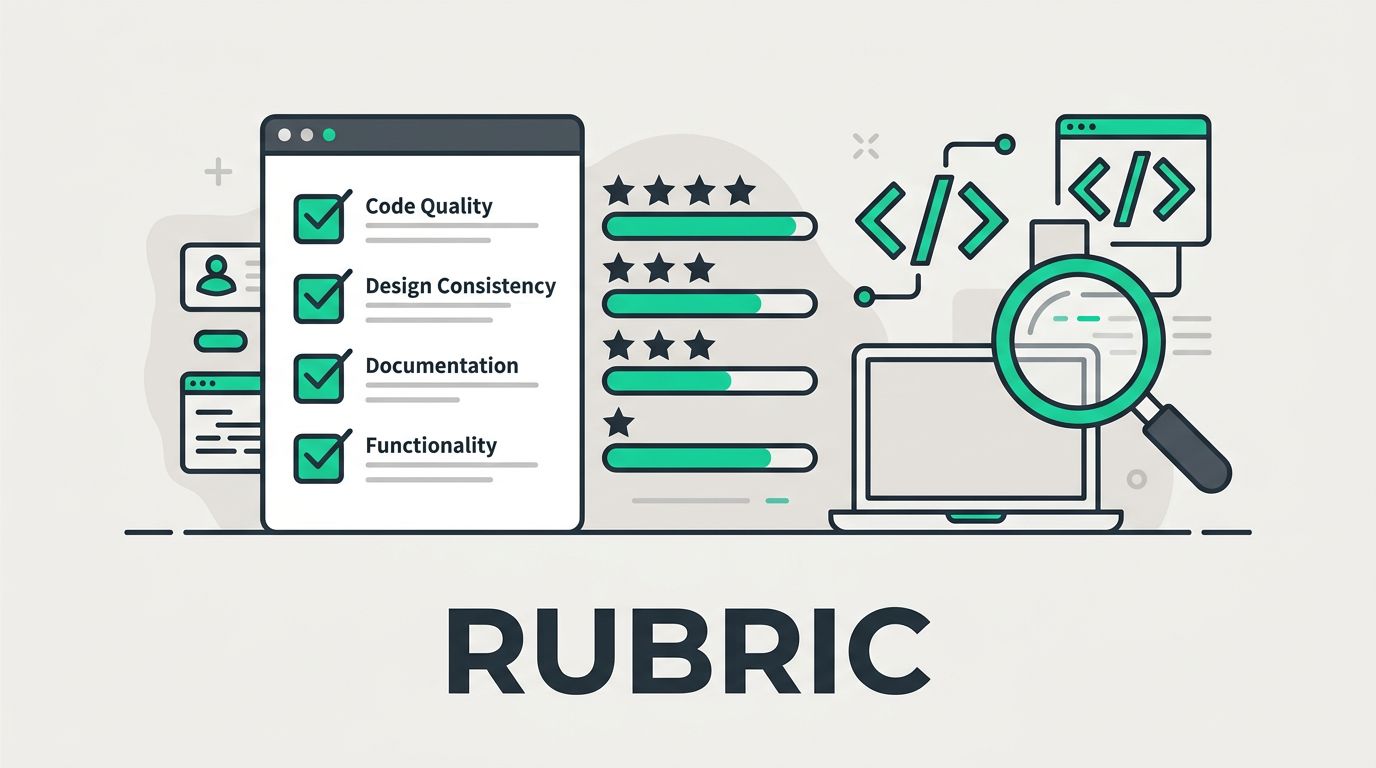
A robust rubric goes beyond simple pass or fail checkboxes. It breaks down each core competency into descriptive levels of performance. For example, you might use a four-point scale ranging from “Emerging” to “Advanced.” By documenting exactly what constitutes a high-level response, you provide interviewers with a anchor point for their feedback.
Consider these key dimensions for a standard technical rubric:
- Problem-solving approach: Does the candidate identify edge cases early, or do they jump straight to coding?
- Technical depth: Can they explain the trade-offs behind their chosen architecture or language features?
- Communication clarity: Do they articulate their thought process effectively while working through a challenge?
- Cultural alignment: Do they exhibit the collaborative behaviors required for your specific engineering team?
Every dimension should include a brief summary of expectations. This helps interviewers avoid bias and keeps the focus on the actual work. If you are struggling to define these standards for your current technical roles, you can Book a Discovery Call with Bud Consulting for assistance in mapping out your hiring criteria.
Ensuring Fairness Through Calibration
Even with a detailed guide, human interpretation remains a factor. Calibration sessions are your best tool for managing this. After an interview, or periodically as a team, you should review feedback together to ensure everyone interprets the rubric the same way. When two interviewers assign different scores to the same performance, it’s a sign that your rubric needs more specific definitions.
These discussions serve as a training mechanism for new interviewers. They learn how to spot evidence and how to differentiate between a “good” and an “exceptional” answer. Over time, your team becomes more calibrated, leading to faster and more defensible hiring decisions. Fairness is not just a moral goal; it is a business imperative that prevents top-tier talent from slipping through the cracks due to inconsistent evaluation standards.
Documenting Evidence-Based Feedback
A rubric is only useful if it leads to high-quality notes. You must train your interviewers to record concrete evidence that backs up their ratings. A score of “three out of four” means nothing to the hiring manager if there is no narrative to support it. The goal is to provide a summary that justifies the final decision based on the rubric dimensions.
Your documentation should focus on what the candidate did, not how you felt about it. Instead of writing “they seemed confident,” a better note is “the candidate accurately identified the concurrency issues in the provided code snippet and proposed a thread-safe solution.” This level of detail makes it easier for the entire panel to make a final decision during the hiring debrief. Detailed rubrics explain why each question is asked and offer a framework for documenting these specific observations during the interview itself.
Refining Your Process Over Time
Your rubric should never be a static document. Treat it as a living resource that adapts to the changing demands of your engineering team. If you find that a specific competency dimension consistently yields ambiguous results, refine the definitions or update the examples of “exceeds expectations” performance.
Regularly audit your hiring data to see if your top performers correlate with high scores across specific rubric areas. This validates your assessment model and helps you understand what truly drives success in your organization. If you aren’t tracking how your assessment scores correlate with long-term employee performance, you are missing an opportunity to improve the quality of your future hires.
Putting It Into Practice
If you want to move away from subjective hiring, start small. Take one role and draft a pilot rubric with your lead engineers. Test it for a few weeks, gather feedback from your interviewers, and adjust as necessary. This iterative approach builds buy-in from your team because they see the immediate benefits in their own daily work.
Standardization feels like an extra step, but it actually saves time by preventing repetitive debates during the hiring process. When everyone operates from a single source of truth, you stop spending hours justifying decisions and start filling critical roles faster. Focus on the evidence, keep the scale simple, and prioritize team-wide alignment. Your hiring process will improve, and your team will spend less time guessing and more time building.
Final Thoughts on Scaling Hiring Quality
The most effective technical teams are those that can identify, assess, and hire talent with precision. A structured rubric is more than a administrative task; it is the backbone of a high-performing recruitment strategy. By removing the guesswork, you create an environment where the best candidates rise to the top.
Focus on creating simple, clear, and actionable criteria that your team can apply without hesitation. When you align your assessment process with the actual requirements of the role, your hiring will become a competitive advantage. Start by defining what success looks like in your most critical technical positions. From there, use your rubric as a constant guide to maintain quality as you grow your team.