table of contents
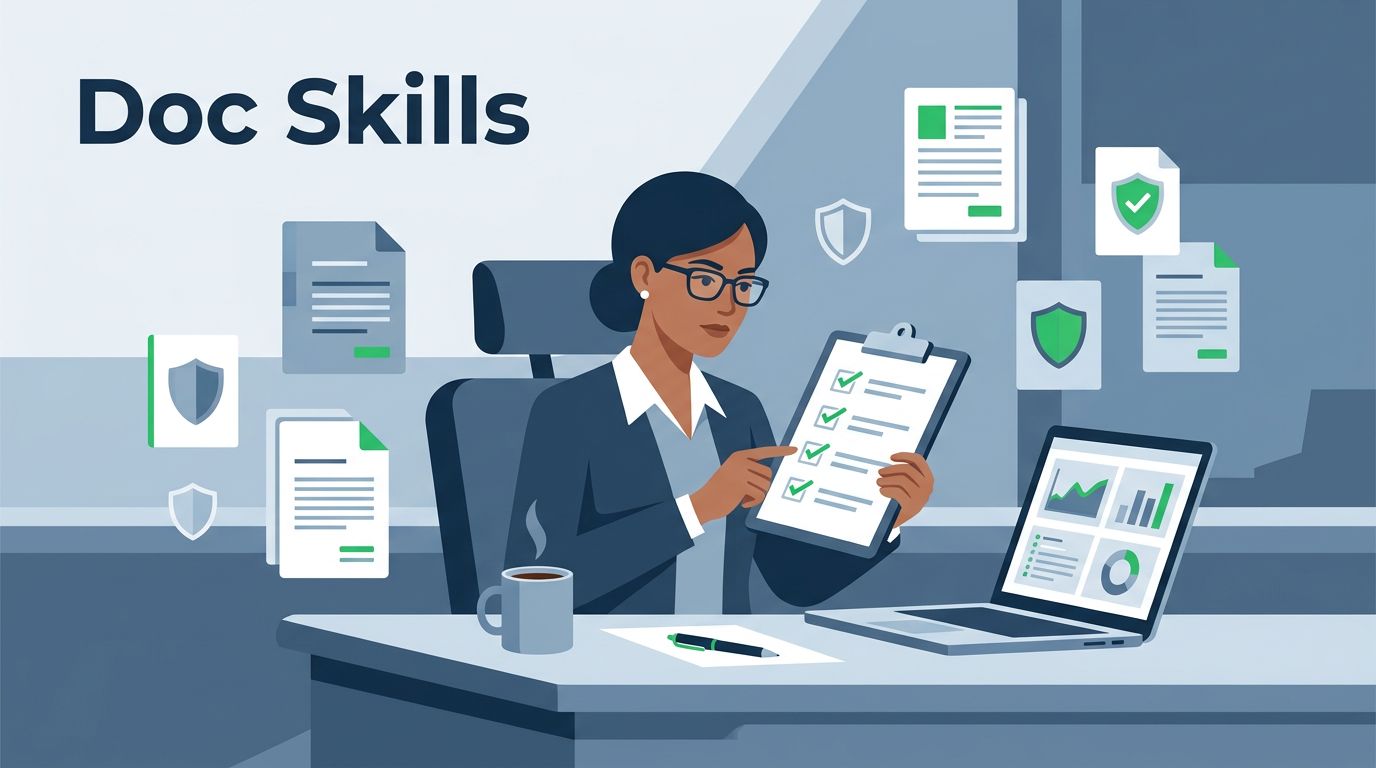
Hiring top security talent means more than checking technical chops. You need candidates who can write clear docs that save time during audits or handoffs. Poor security documentation skills lead to confusion in incidents or compliance checks.
Teams waste hours deciphering vague notes. Good docs, however, speed up responses and reduce errors. This guide shows you practical ways to test those skills.
Start by understanding what sets strong writers apart. Then use targeted questions and tasks to find the right fit.
Why Security Documentation Skills Drive Team Success
Security pros spend half their time explaining findings to non-tech folks. Docs support audits, incident response, and knowledge transfers. Without them, small issues balloon.
Consider compliance needs like SOC 2 or NIST frameworks. Clear reports prove controls work. Vague ones trigger findings or fines.
Audience matters too. Engineers want technical depth; executives need summaries. Strong candidates tailor content accordingly.
In handoffs, precise steps prevent repeated work. One study from NIST highlights how poor docs hinder hiring success overall. Check NIST’s guide on writing cybersecurity hiring rubrics for more on rubrics.
Focus on accuracy first. Then aim for brevity. Useful docs solve problems fast.
Spot Good vs. Poor Documentation at a Glance
Review resumes or past work samples early. Look for structure and clarity. Good examples use headings, bullets, and visuals.
Poor docs ramble with jargon or walls of text. They skip context or bury key facts.

Here’s a quick example from incident reports. Poor version: “Server hacked bad, logs show bad stuff, fix it somehow.” It lacks timeline, impact, or steps.
Good version:
- Timeline: Alert at 14:32 UTC.
- Impact: 500 users affected; no data loss.
- Root cause: Weak password on admin account.
- Remediation: Reset creds; enabled MFA.
This format aids quick scans during crises. Test candidates by asking them to critique samples. Strong ones spot gaps instantly.
Ask These Interview Questions to Test Writing Ability
Probe deeper in interviews. Use behavioral questions tied to real scenarios.
Start with: “Walk me through your last incident report. What made it effective?” Listen for audience focus and structure mentions.
Follow up: “How do you handle docs for execs versus devs?” Good answers stress summaries with appendices.
Try: “Describe a time docs helped during an audit.” They should highlight concise evidence that passed reviews.
For technical depth: “Outline steps to document a phishing response.” Expect who, what, when, why coverage.
Keep reports factual and skimmable. As TechTarget notes on cybersecurity incident reports, answer basics first.
Record responses. Note if they organize thoughts logically. This predicts doc quality.
Design Take-Home and Live Assessments
Move to hands-on tests. Assign a 2-4 hour take-home: “Document a mock vulnerability scan.”
Provide sample data like Nmap output. Ask for a report with findings, risks, and fixes. Set audience as a compliance team.
Live option: During a call, give a scenario verbally. Have them draft notes in real-time via shared doc.
Assessment checklist:
- Accurate facts? (No assumptions.)
- Concise? (Under 2 pages.)
- Structured? (Headings, bullets.)
- Actionable? (Clear next steps.)
Score on a 1-5 scale per item. Total over 80% passes.
See Graylog’s best practices for IT security incident reports for report templates.
These tasks reveal true skills. They mimic daily work without overwhelming candidates.

Build a Simple Scoring Rubric for Consistency
Standardize reviews with a rubric. Your team scores independently, then discusses.
| Criterion | Poor (1-2) | Good (3-4) | Excellent (5) |
|---|---|---|---|
| Accuracy | Errors or omissions | Mostly correct | Precise, sourced facts |
| Clarity | Jargon-heavy, confusing | Readable, logical flow | Skimmable for all levels |
| Conciseness | Rambling, redundant | Direct, no fluff | Every word counts |
| Audience Fit | Generic | Tailored somewhat | Perfect match |
| Usefulness | Lacks actions | Basic steps | Enables quick response |
This table keeps feedback objective. Average scores guide decisions.
Tweak weights based on role. For IR leads, boost usefulness.
Put It All Together in Your Hiring Process
Combine these steps for reliable hires. Screen with samples, question in interviews, test hands-on, then score.
Strong security documentation skills prevent future headaches. They build teams that communicate effectively.
If gaps persist in your process, book a discovery call with Bud Consulting. Get tailored advice on vetting senior talent.