table of contents
Your SOC handles alerts all day. Yet attackers slip through in cloud setups. In April 2026, identity theft drives 80% of breaches, and AI tools let hackers move in under 30 minutes. You need someone who hunts threats before they strike.
A true threat hunter spots hidden risks. They turn raw data into fixes. This guide shows you how to find that fit for your team.
Why Add a Threat Hunter to Your Mature SOC Now
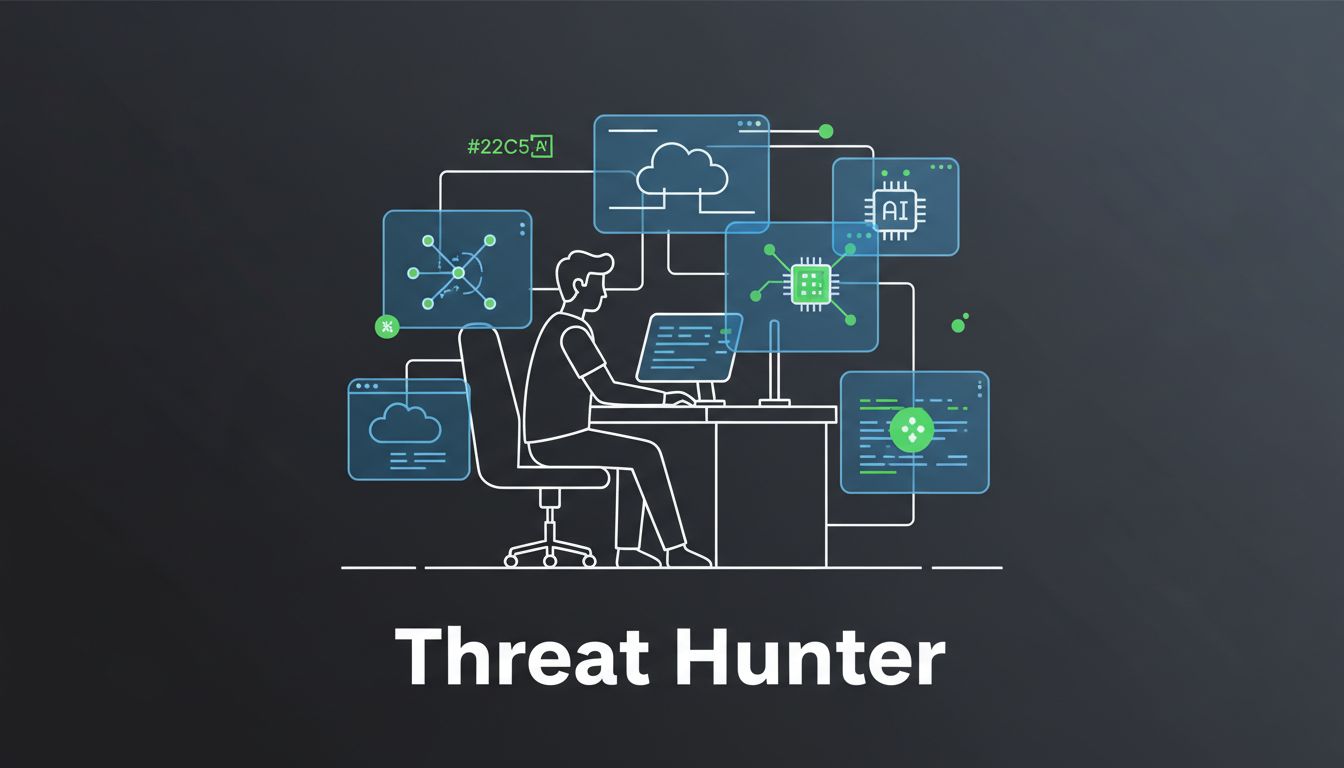
Mature SOCs triage alerts fast. Still, reactive work misses stealthy foes. Threat hunters assume breaches exist. They search proactively across your stack.
Consider 2026 realities. Cloud-first environments spread data wide. Attackers grab identities first, then pivot quietly. AI speeds their phishing and evasion. Hunters counter this by chasing anomalies in EDR, SIEM, network logs, and cloud trails.
SOC analysts react to pings. Hunters build hypotheses. For example, they ask if dormant accounts show odd logins. Analysts lack this forward mindset. A Medium post on SOC roles nails the gap: hunters drive new detections, not just close tickets.
Hire one to shrink dwell times. They collaborate with IR on outbreaks and detection engineers on rules. Result? Fewer surprises.
Key Skills and Experience to Prioritize
Look for hands-on proof first. Candidates must excel at hypothesis-driven hunts. They start with a theory, like “attackers live off the land in our AWS buckets.” Then they query telemetry to prove or bust it.
ATT&CK fluency stands out. Top hunters map findings to tactics. They spot TA0001 initial access in real logs. Check their portfolio for hunts tied to matrix techniques. A 2026 guide on ATT&CK training stresses this for cloud threats.
Demand telemetry chops across tools. They pivot from EDR alerts to SIEM correlations, network flows, and cloud APIs. Scripting helps here. Python or Spark scripts pull and analyze petabytes fast.
Communication seals it. Hunters brief execs without jargon. They convert hunts into detections. Did their last role add 20 rules from hunts? Probe that.
In short, skip resumes without live hunt write-ups.

Build a Targeted Threat Hunter Scorecard
Score candidates objectively. Weight skills by your needs. Cloud-heavy SOCs bump identity hunting higher.
Create a simple table. Rate on a 1-5 scale. Total scores guide decisions.
| Skill Area | Weight | Candidate Score | Notes Example |
|---|---|---|---|
| Hypothesis-Driven Hunts | 25% | Led 10 hunts turning into detections | |
| ATT&CK Mapping | 20% | Mapped 50% of hunts to TTPs | |
| Telemetry Analysis (EDR/SIEM/Cloud) | 20% | Built cross-tool queries | |
| Scripting Proficiency | 15% | Python for log parsing | |
| Detection Conversion | 10% | 15 rules from hunts | |
| Communication/Collab | 10% | Briefed CISO quarterly |
This setup spots stars. A 4+ average means interview. Adjust weights for identity focus or AI evasion hunts.
TechRepublic offers a full hiring kit with similar tools. Use it as a base.

Craft Interview Questions That Reveal Real Hunters
Ask behavioral probes. “Walk us through a hunt hypothesis you built.” Good answers detail the why, data sources, and outcome.
Test ATT&CK depth. “How would you hunt for persistence via cloud service accounts?” Listen for TA0003 ties and multi-tool pivots.
Gauge scripting. “Script a query to flag anomalous API calls in Azure logs.” They should outline joins across identity and activity logs.
Distinguish hunters from analysts. “Describe turning a hunt into a SIEM rule.” Analysts stop at reports; hunters automate.
For 2026 threats, add: “How do you hunt AI-phished credentials in a cloud breach?” Expect talk of behavioral baselines.
A strong candidate shares failures too. They learned from false positives.

Onboard for Cross-Functional Impact
Pair your new hunter with detection engineers early. They feed TTPs into rules. Link them to IR for post-breach hunts and purple teams for validation.
Set quarterly goals: five hunts, three new detections. Track via shared dashboards.
Foster culture. Hunters thrive in data-rich SOCs. Give access to all telemetry.
Secure Your SOC Edge Today
Threat hunter hiring pays off fast. Prioritize hypothesis skills, ATT&CK mastery, and detection handoffs. Use scorecards and sharp questions to pick winners.
Your mature SOC gains proactive power. Attackers in cloud identities or AI tricks won’t hide long.
Ready to fill this role? Book a Discovery Call with Bud Consulting. They source pros who deliver.