table of contents
Developers often see security as an afterthought. It slows down sprints and feels disconnected from daily code. You know the drill: bugs slip into production, and then panic sets in.
Threat modeling workshops fix that. They bring teams together to spot risks early, in a way that fits your workflow. You’ll turn vague worries into clear tasks that reduce breaches and speed up secure releases.
This guide walks you through building workshops that stick. Start with basics, then craft agendas and outputs that link straight to your SDLC.
Why Run Threat Modeling Workshops Now
Teams build faster than ever. CI/CD pipelines push code to cloud containers daily. AI apps add new attack surfaces like model poisoning. Yet security lags.
Workshops make threat modeling collaborative. Developers own risks instead of security dictating rules. This cuts rework by 30% or more, based on real DevSecOps shifts.
Picture a sprint where threats become stories. No more surprises in prod. Workshops build that habit.
They fit modern stacks too. Model data flows in Kubernetes or serverless. Discuss API keys in GitHub Actions. Results feed automated scans.
One team cut vulnerabilities 40% after weekly sessions. Yours can too. Focus on high-impact threats first.
Link outputs to planning. Security stops being a checkbox. It becomes part of how you ship.
Pick a Threat Modeling Framework That Fits
Start simple. Not every method suits developers. Pick one that matches your app’s complexity.
STRIDE works best for most. It covers six threats: spoofing, tampering, repudiation, information disclosure, denial of service, elevation of privilege.

For spoofing, ask: Can attackers fake users? Example: weak JWT validation in a microservice.
Tampering hits data integrity. Think altered payloads in transit to your database.
Repudiation means no logs prove actions. Check audit trails in your cloud logs.
Information disclosure leaks sensitive data. Exposed S3 buckets top this list.
Denial of service crashes services. Resource exhaustion in containers counts.
Elevation of privilege lets low users go admin. IDOR bugs enable it.
See STRIDE examples for developers for more.
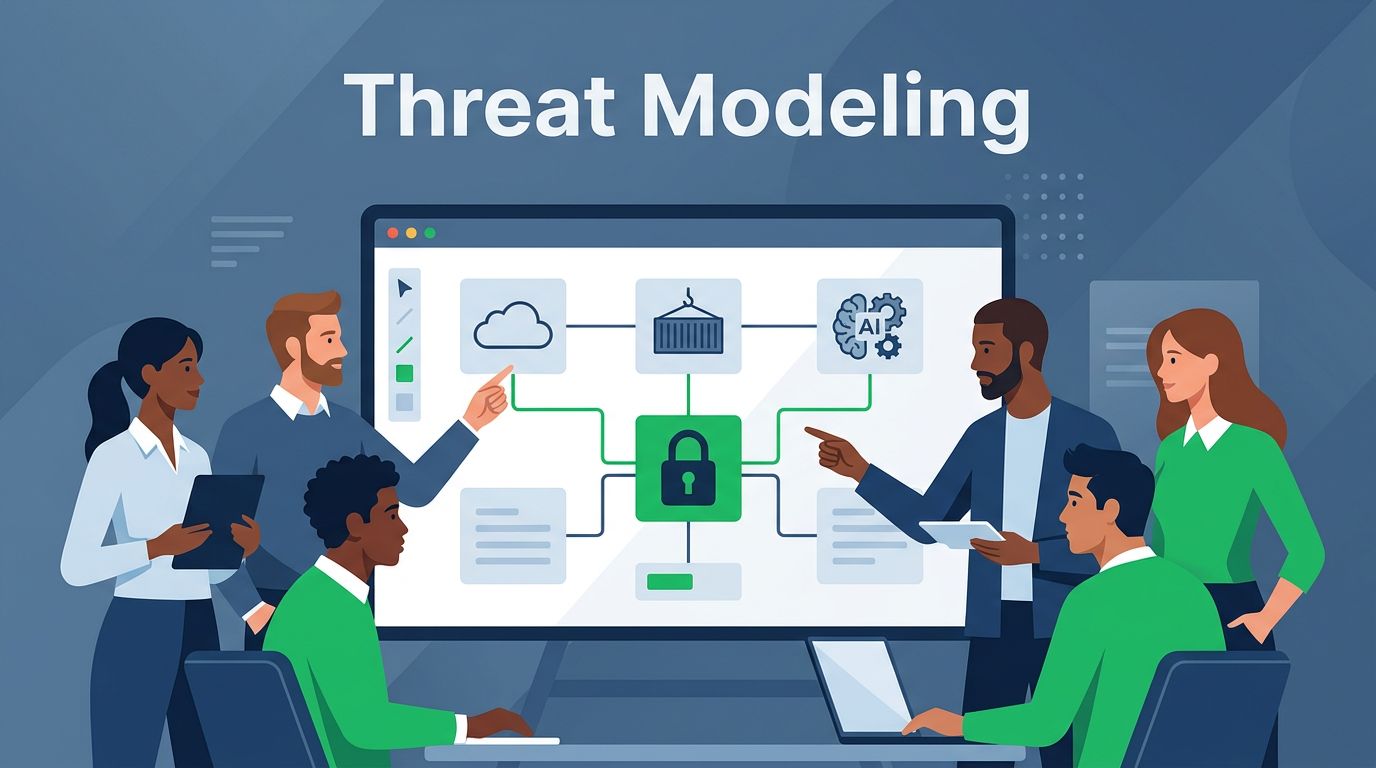
Use data flow diagrams first. Sketch components: user, API, database, external services. Mark trust boundaries.
For AI apps, add model endpoints. Threats like prompt injection fit STRIDE.
Keep it lightweight. Skip heavy tools at first. Whiteboards rule.
Assemble Your Workshop Team
Right people make or break sessions. Include 4-8 folks max.
Developers lead. They know the code. Add one security engineer for guidance.
Product managers set scope. Ops cover deployment risks.
Engineering managers timebox and assign follow-ups.
Roles matter:
- Scribe: Notes threats and mitigations.
- Facilitator: Keeps flow, asks probing questions.
- Domain expert: Explains architecture quirks.
For cloud apps, pull in infra leads. They spot pipeline secrets issues.
Mix levels. Juniors learn fast. Seniors share war stories.
Remote? Use Miro or Lucidchart. Share screens.
Test the mix in a pilot. Adjust based on energy.
Design Your Workshop Agenda
Agendas keep things tight. Aim for 60-90 minutes to fit sprints.
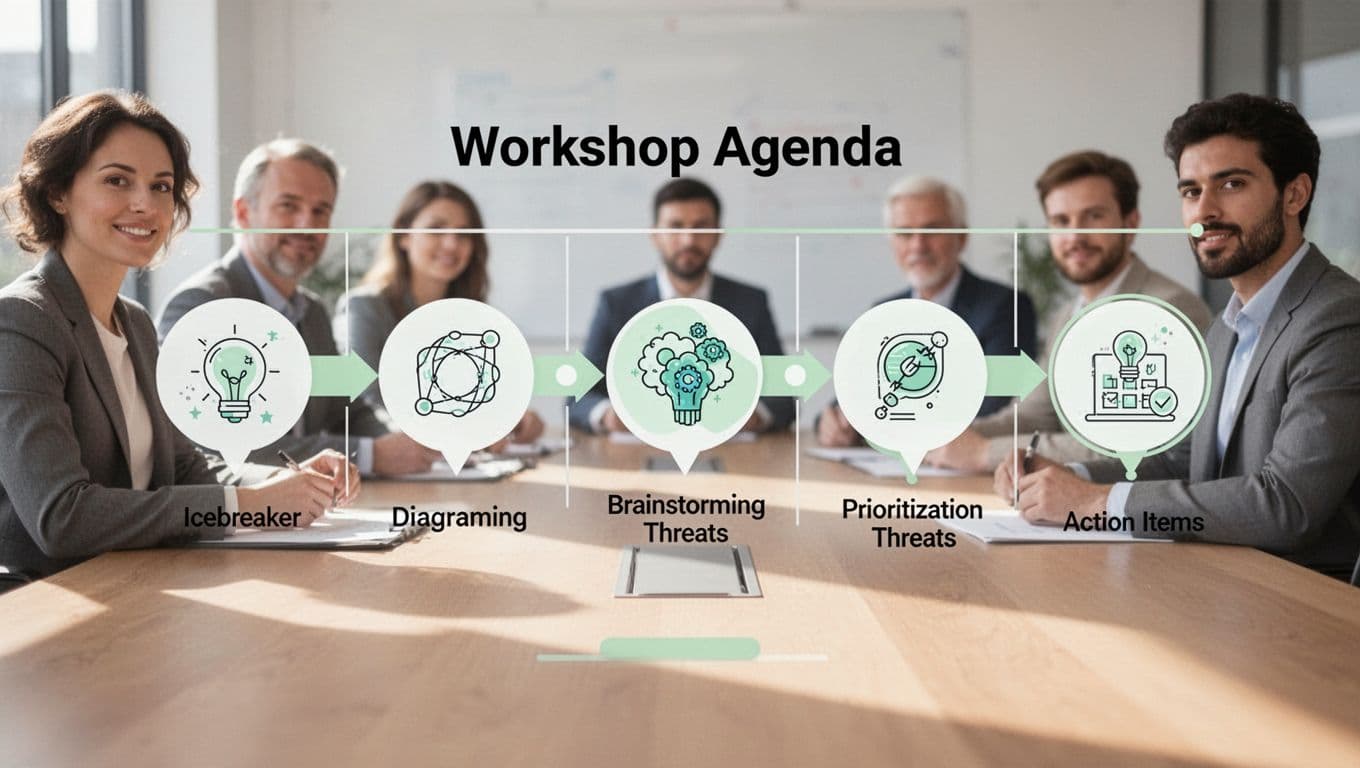
Here’s a sample 75-minute agenda for a new feature:
- Icebreaker (5 min): Quick round: “What’s one security headache you’ve hit?”
- Scope and Diagram (15 min): Draw DFD. Confirm boundaries.
- Brainstorm Threats (25 min): Apply STRIDE per flow.
- Prioritize (15 min): Score by likelihood and impact. Use 1-5 scale.
- Mitigations and Actions (10 min): Assign owners, due dates.
- Review (5 min): Vote on top risks.
Scale for full apps. Break into components.
Whiteboard prompts help:
- “What data moves where?”
- “Who accesses what?”
- “STRIDE per arrow: threats?”
For CI/CD, model pipelines. CI/CD threat matrix inspires.
Repeat biweekly. New stories trigger them.
Prep materials: Printed DFDs, timers, markers.
Facilitate Sessions That Spark Ideas
Energy drives output. Start with why: “This prevents prod fires.”
Use timers. 2 minutes per threat category.
Prompt devs: “Pretend you’re the attacker. What breaks first?”
Break silos. Rotate speakers.
Handle stuck spots. Share examples: “Like Log4Shell, but for your auth flow.”

Incorporate tools. Live draw in Draw.io.
For containers, discuss sidecar proxies. Cloud? IAM roles.
AI features? Prompt jailbreaks.
Pause for laughs. Security war stories bond teams.
End positive. Celebrate quick wins.
Watch for dominators. Pull in quiet voices.
Record for absentees. Share clips.
Practice facilitation. Co-run first ones.
Capture Actionable Outputs
Outputs must tie to work. No vague lists.
Use templates:
| Threat | Description | Likelihood | Impact | Mitigation | Owner | Sprint |
|---|---|---|---|---|---|---|
| Spoofing | Weak API key check | 4 | 5 | Add JWT validation | Alice | Next |
| DoS | No rate limits | 3 | 4 | Implement per IP | Bob | Current |
Prioritize top 5. Rest park for later.
Simple workflow to reuse:
- Diagram app flows.
- STRIDE each element.
- DREAD score: Damage, Reproducibility, Exploitability, Affected users, Discoverability.
- Mitigate top risks.
- Automate checks in pipeline.
Export to Jira. Tag as “security-story”.
For cloud, add infra-as-code reviews.
See practical threat modeling workshop for templates.
Version control models. Git them with code.
Link Workshops to Sprints and Pipelines
Workshops fail without follow-through. Feed outputs to backlog.
Turn threats into tickets: “As a user, so that auth holds, add MFA.”
Estimate effort. 1-3 points for fixes.
Block merges if unaddressed.
In CI/CD, gate deploys. Snyk or Trivy scans validate mitigations.

For containers, model registries. Scan images pre-push.
AI apps? Lint prompts in PRs.
Track velocity. Fewer vulns over time.
Engineering managers review in retros.
Automate where possible. Tools like OWASP Threat Dragon export to tickets.
Track Impact and Refine
Measure what matters. Pre-workshop: Vuln count from scans.
Post: Track fixed threats.
Survey: “Did this change your code habits?” Aim for 80% yes.
Bug rates drop? Good sign.
Quarterly audit models. Update for changes.
Scale up. Train facilitators.
Common pitfalls: Scope creep. Fix with strict timers.
Low buy-in. Tie to OKRs.
Canadian Centre’s course offers metrics ideas.
Iterate agendas. Shorten if needed.
Key Takeaways
Threat modeling workshops shift security left. They make devs partners in risk hunts.
Build them around STRIDE, tight agendas, and sprint links. Outputs reduce breaches and boost speed.
Start small. Run one this sprint. Watch risks shrink.
Your team ships secure code faster. That’s the win.
Book a Discovery Call with Bud Consulting to tailor this for your org.