table of contents
A breach rarely starts with a dramatic headline. It starts with unclear ownership, missed reviews, and security work that keeps getting pushed aside.
That gap hurts SMBs and mid-market firms the most. Recent 2026 surveys still show that many SMBs faced at least one cyber attack in the past year, and phishing and weak controls remain common entry points. A virtual CISO consultant gives you senior security leadership without adding a full-time executive to payroll.
Instead of buying more tools and hoping for the best, you get someone who turns risk into a plan. That matters when the board wants answers, customers want proof, and auditors want evidence.
What a retained virtual CISO consultant actually owns
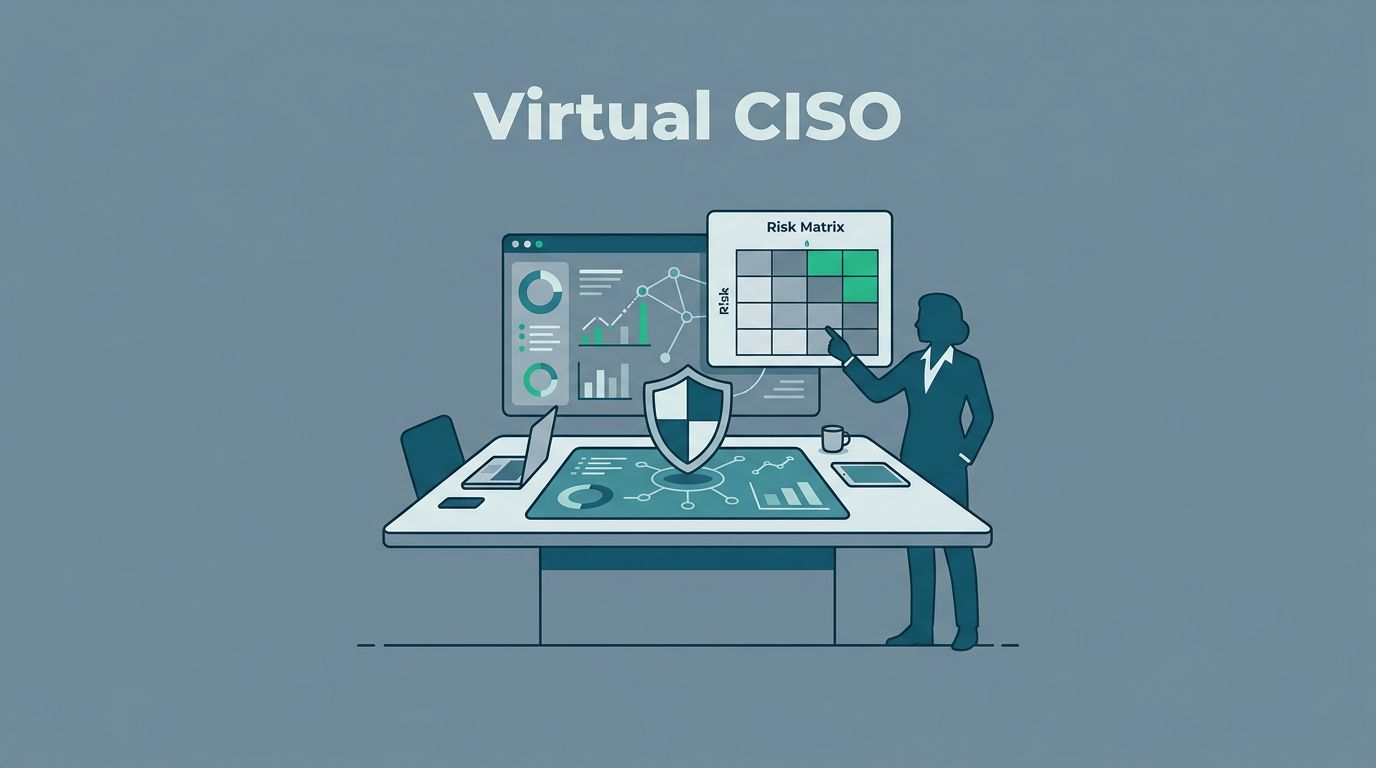
A retained virtual CISO is not a part-time technician. The role is closer to a security quarterback.
The consultant sets priorities, tracks risk, and keeps leaders focused on the issues that matter most. They build the risk register, shape policies, review vendors, and guide incident response. They also translate technical issues into business language, which helps when the CEO or CFO needs a fast decision.
The best engagements touch the frameworks buyers and auditors already trust. That usually means NIST CSF 2.0, ISO 27001, SOC 2, HIPAA, and PCI DSS. If you have public-company exposure, SEC reporting expectations belong in the conversation too.
The work usually centers on four areas:
- Clear ownership for cyber risk.
- Better planning for incidents and recovery.
- Practical support for compliance evidence.
- Board-ready reporting that leaders can use.
The goal is not more noise. It’s cleaner decisions and better proof.
If you want a deeper look at how this ties to audits and certifications, see how a vCISO helps meet compliance. That view is useful when you need structure, not guesswork.
Why retention beats one-off projects
One-time help can fix a gap. It rarely builds a program.
That’s the main reason retention works better. A retained consultant remembers the last audit, the last vendor issue, and the last incident drill. They see patterns that a short project often misses. As a result, the security roadmap stays steady instead of restarting every quarter.
Retention also makes budget planning easier. You can match support to the business cycle. Maybe you need more help before SOC 2, an insurance renewal, or a merger. Then you need less after the heavy lift is done. That flexibility helps smaller teams protect cash flow.
Here’s a quick comparison:
| Model | Best for | Main tradeoff |
|---|---|---|
| Retained virtual CISO | Ongoing leadership and compliance support | Not a full-time employee |
| Full-time CISO | Larger firms with broad risk and regulatory load | Highest cost |
| Project-only advisor | One audit or gap fix | Limited continuity |
Recent 2026 market data still shows SMBs face frequent attacks, so stop-start security advice can get expensive fast. A retained model keeps the plan alive between audits, incidents, and board meetings.

How to choose the right consultant
Not every consultant fits every company. Some are strong on compliance. Others are better at incident planning or board communication.
Start with the basics. Ask how they work with your IT lead, MSP, or internal security staff. Then ask what they have done for companies your size, in your industry, and under your audit pressure. A good retained vCISO should explain how they map controls to NIST CSF 2.0 and how they adapt that work for ISO 27001, SOC 2, HIPAA, or PCI DSS.
Use these questions to compare providers:
- Can they show a sample board report?
- Do they build a real risk register?
- How often do they meet with leadership?
- Will they help during incidents, not just audits?
- Can they explain tradeoffs in plain language?
Also ask how they handle vendor risk and third-party reviews. NIST CSF 2.0 gives more attention to governance and suppliers, so this should not be an afterthought. If a provider cannot explain their reporting cadence or their escalation path, keep looking.
For a broader look at retained vCISO services, compare scope, cadence, and the amount of board-facing work they include. Those details matter more than a flashy pitch.
Where a retained virtual CISO is the right fit
A retained virtual CISO is a strong fit when you need leadership, but not a full-time executive. That often includes fast-growing SaaS firms, healthcare groups, financial services teams, and manufacturers with customer security reviews.
It also fits companies preparing for a SOC 2 report, an ISO 27001 program, HIPAA pressure, or PCI DSS scope changes. If an acquisition is near, the need gets sharper. So does the need for clean evidence when cyber insurance or investor due diligence comes up.
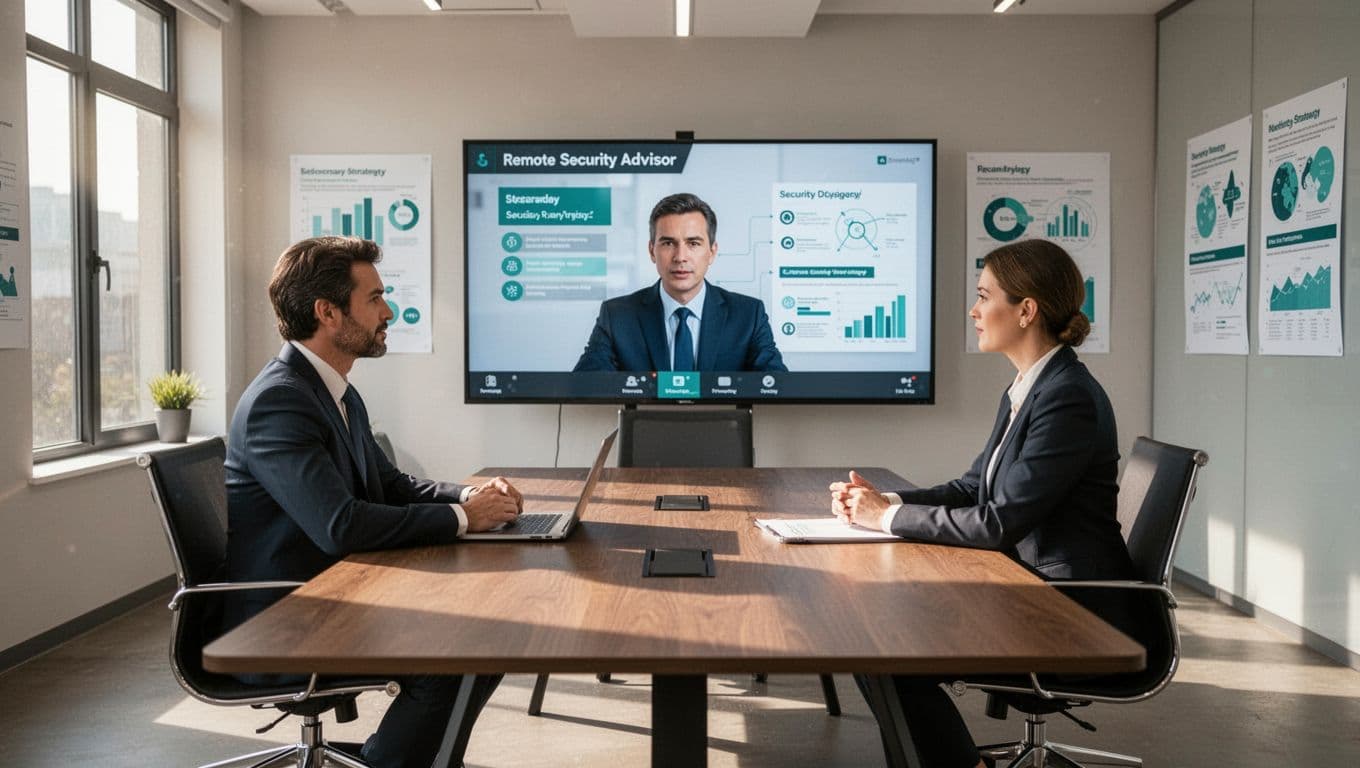
The best sign you need retention is simple. Security tasks keep landing on people who already have another job. When that happens, the work gets delayed, and the business absorbs the risk.
If that sounds familiar, Book a Discovery Call with Bud Consulting. A short conversation can show whether you need ongoing advisory help, a hiring path, or both.
A smarter way to keep security moving
A retained virtual CISO consultant gives you ownership, continuity, and clearer reporting. That matters more than a long list of tools or a stack of one-off fixes.
The real value is steady leadership that helps the business stay audit-ready, incident-ready, and easier to explain to the board. Security needs an owner, not a scramble.