table of contents
Picture this. Your top engineer takes unexpected leave right before a major deadline. Work piles up fast. You scramble to keep projects on track without burning out your team.
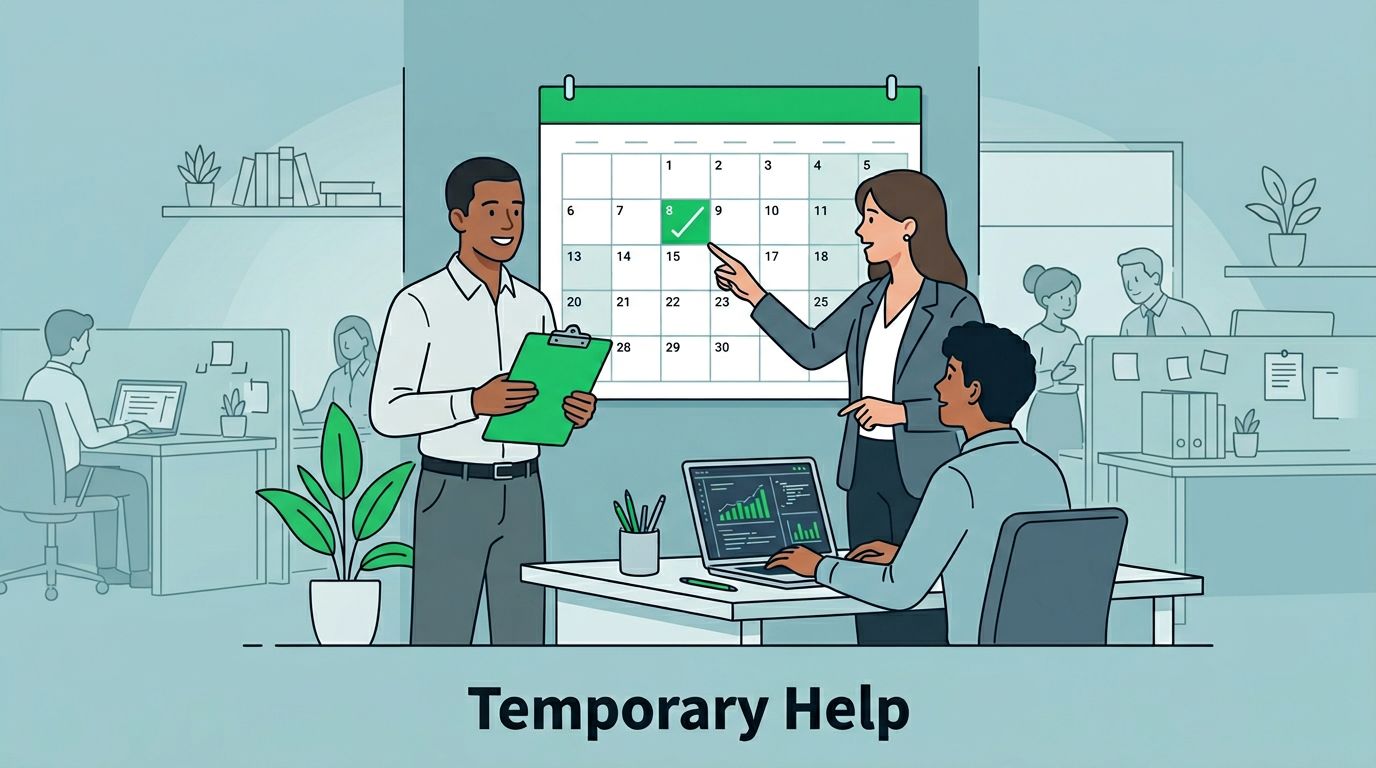
That’s where temporary staff come in. They fill gaps quickly so you stay productive. This guide shows business owners and HR leaders exactly when to hire temps. It covers real scenarios and practical steps to make it work.
Spot the Signs Your Team Needs Temporary Help
Sudden changes hit every business. Seasonal demand spikes sales but strains your crew. Retail stores hire temps for holiday rushes. They handle extra shifts without long-term commitments.
Employee absences create holes too. Maternity leave or illness pulls key players away. You cover those spots fast. Otherwise, output drops and stress builds.
Special projects demand unique skills. Launching a new app needs developers now. Temps bring expertise for short bursts. They finish the job then move on.
Workload surges catch you off guard. A big client order arrives early. Your current staff can’t scale up alone. Temps absorb the pressure. They keep deadlines met.
These moments signal it’s time. Delaying hires permanent fixes later. Act soon to maintain flow.
Why Temporary Staff Save Time and Money
Flexibility tops the list. Temps fit exact needs. Hire for weeks or months only. Scale up during peaks. Scale down when calm returns.
Costs stay low. No benefits or training investments up front. Pay hourly rates that match output. Avoid overstaffing traps. Full-time hires commit you long-term. Temps let you test waters first.
Speed matters most. Find qualified people in days. Agencies match skills fast. Skip months of postings and interviews. Your operations run smooth.
Risk drops too. Background checks come standard with pros. Poor fits cost less to replace. Try someone out. Keep them if they shine. Send them back otherwise.
In short, temps boost efficiency. They handle variability without overhead.

Photo by Vitaly Gariev
How to Hire Temporary Staff Without the Hassle
Start with clear needs. List skills, duration, and hours. Know your budget too. Vague requests waste time.
Choose reliable sources. Staffing agencies specialize in matches. They vet candidates upfront. For tech roles like cybersecurity engineers, firms like Bud Consulting source experts fast.
Post jobs on targeted sites. Indeed or LinkedIn work well. Highlight short-term perks. Quick starts attract the right crowd.
Interview smart. Focus on experience and fit. Ask about past temp gigs. Check references always.
Onboard simply. Share policies and tools day one. Set goals upfront. This builds quick productivity.
Contracts protect everyone. Spell out terms, pay, and end dates. Use simple agreements. Avoid disputes later.
Follow these steps. You fill roles in under a week.
Manage Temporary Staff for Top Results
Set expectations early. Daily check-ins keep them aligned. Praise good work. It motivates them.
Integrate them fully. Assign mentors from your team. They learn culture fast. Productivity rises as a result.
Track performance. Weekly reviews spot issues. Adjust as needed. Most temps thrive with feedback.
Extend if they excel. Top performers become full-time assets. Flexibility works both ways.
Offboard smoothly. Thank them properly. References build goodwill. You might need them again.
Good management turns temps into wins. Your business stays agile.
Avoid These Temp Hiring Pitfalls
Rushing without planning backfires. Define roles first. Otherwise, mismatches happen.
Overlook compliance. Temps need proper classification. Taxes and laws apply. Consult HR experts.
Ignore culture fit. Skills matter, but attitude counts. Clashes slow teams.
Skip evaluations. Review every hire. Learn what works next time.
Steer clear. Smart choices pay off big.
Temporary staff solve real problems. They offer flexibility, speed, and savings when demand shifts or gaps appear. Use them for seasons, leaves, projects, or spikes.
Next time pressure builds, hire temps. Book a Discovery Call with Bud Consulting to source vetted pros fast. How will you handle your next crunch?