table of contents
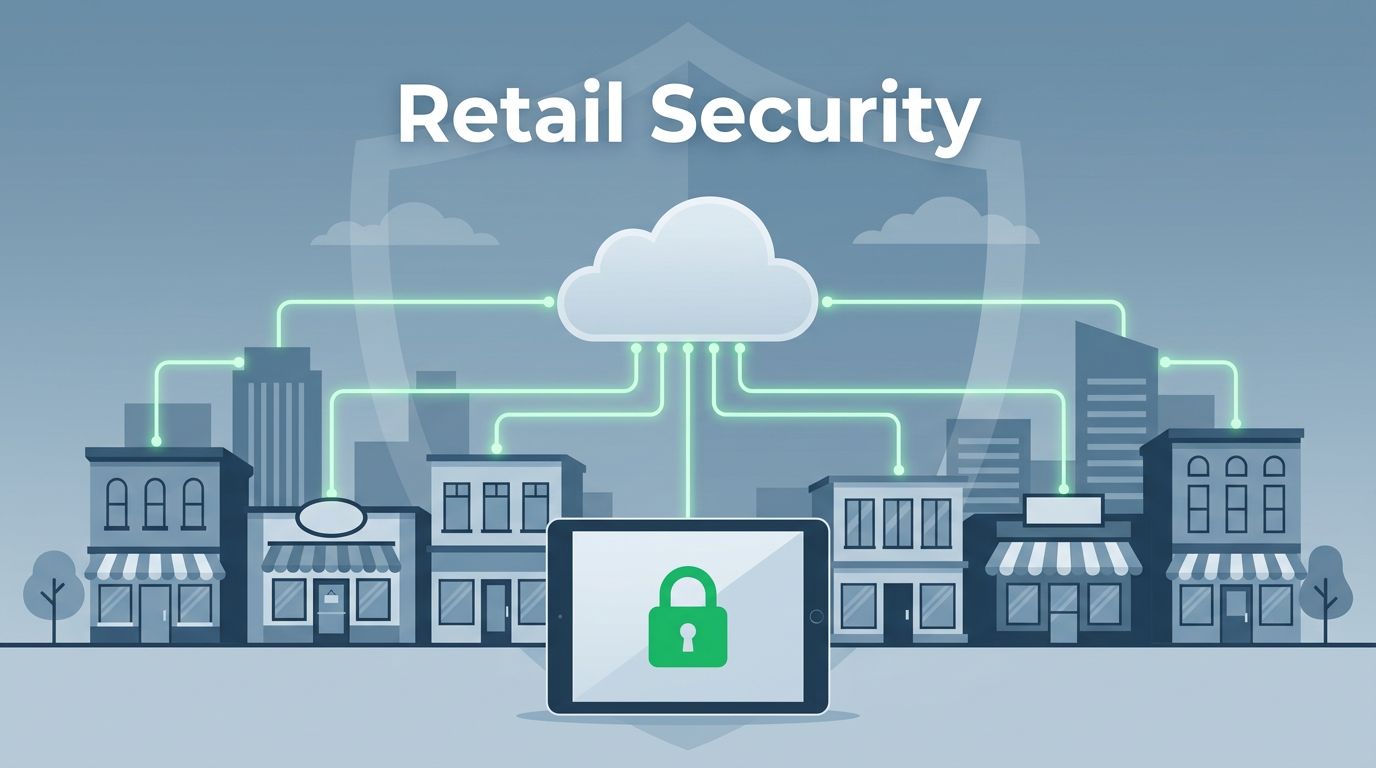
Retail networks face attacks that hit hard and fast. Hackers target stores because they hold customer payment data, inventory details, and sales records. One breach can shut down operations across hundreds of locations. In 2026, ransomware groups like ShinyHunters hit Zara and 7-Eleven through cloud vendors, stealing records and demanding payouts.
You manage distributed networks with stores, warehouses, and headquarters. Threats come from phishing emails in 65% of cases and stolen credentials in 55%. Traditional defenses fall short against these speeds. This guide gives you a phased roadmap to build retail network security that scales.
Start by assessing your setup. Then follow quick wins, mid-term shifts, and long-term resilience. You’ll align with NIST CSF 2.0 and PCI DSS 4.0 while handling IoT devices and cloud growth.
Assess Your Current Retail Network Security Posture
Begin with a full audit. Map every connection in your enterprise. Stores link to warehouses via SD-WAN. Corporate HQ pulls data from cloud apps. Guest Wi-Fi sits next to POS systems. Flat networks let threats spread.
Use tools like network scanners to spot open ports and unpatched devices. Check for VLAN gaps that expose payment flows. In retail, 40% of attacks hit POS terminals. Run vulnerability scans on firewalls and VPNs, where exploits rose 247% last year.
NIST CSF 2.0 stresses asset management under ID.AM-03. Document internal networks and segment them by risk. For example, isolate cardholder data environments per PCI DSS 4.0.
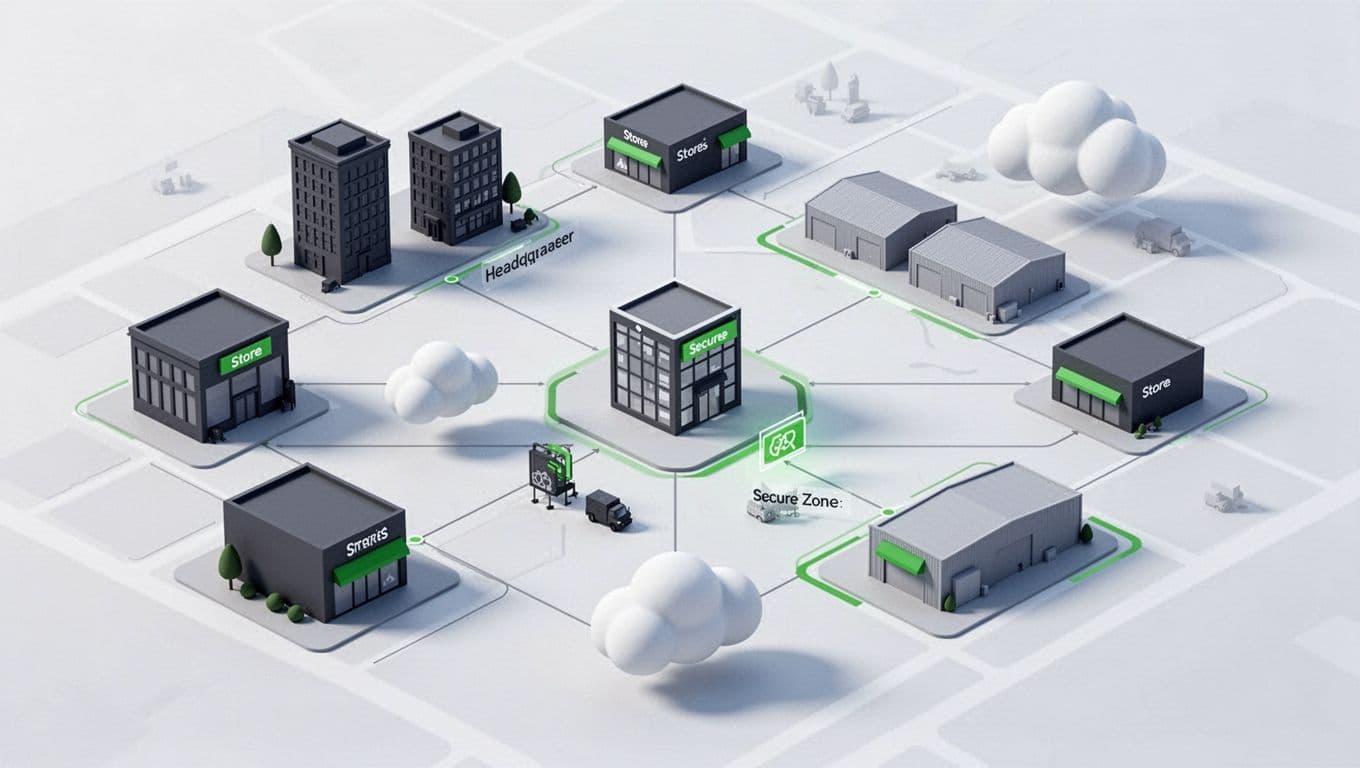
This map shows your typical setup. Red zones mark weak links; green highlights secure segments. Score your posture on a 1-10 scale. Low scores mean prioritize segmentation now.
Hire external pentesters for blind spots. Review logs for unusual traffic. Third-party vendors caused Marks & Spencer’s £300 million outage. Demand their attestations.
After assessment, prioritize gaps. Focus on high-impact fixes first. This baseline guides your roadmap.
Key Threats Facing Retail Networks Today
Attacks speed up in 2026. Hackers use automated tools to probe firewalls in minutes. Retail saw eCrime intrusions jump 41% by mid-2025.
Ransomware dominates. Groups lock files and steal data for double extortion. Zara lost customer records via a cloud analytics link. 7-Eleven suffered through Salesforce. Stores pay fast because downtime kills sales.
Phishing starts 65% of breaches. Employees click links on shared Wi-Fi. Stolen credentials enable lateral moves. Third parties account for 60% of entry points.
IoT adds risks. Cameras and sensors often run old firmware. A hacked shelf scanner jumps to POS. OT systems in warehouses control lifts and freezers.
Cloud sprawl exposes APIs. SaaS apps lack consistent controls. Distributed setups amplify this.
For deeper retail threat details, check CrowdStrike’s guide to modern cyber defense. It covers AI-native protection across endpoints and identities.
Counter these with visibility. Monitor east-west traffic between stores. Use behavioral analytics to flag anomalies. Preparation beats reaction every time.
Your Phased Retail Network Security Roadmap
Roadmaps work best in phases. Quick wins stop bleeds now. Mid-term builds controls. Long-term scales resilience. Tie each to business outcomes like uptime and compliance.
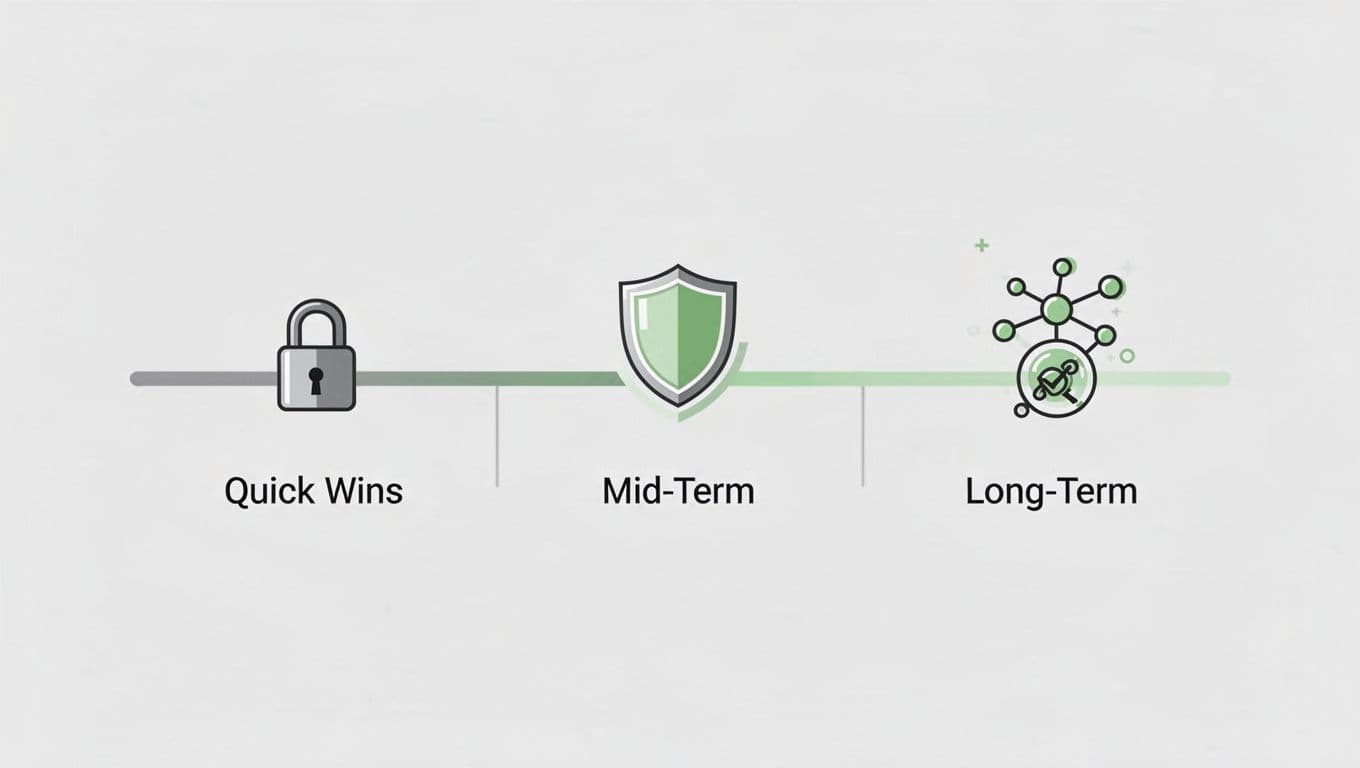
This timeline outlines the flow. Green icons mark progress.
Quick Wins: Stop Threats in Weeks
Patch everything. Update firewalls and VPNs first. Enable MFA across all access, per PCI DSS 4.0 requirement 8.
Segment networks. Use VLANs to split guest Wi-Fi from POS. Block east-west by default. This limits spread if a camera falls.
Add endpoint detection. Deploy EDR on store devices. It catches malware before encryption.
Train staff on phishing. Run simulations weekly. Costs drop 44% with awareness.
Measure success by reduced alerts. Expect 20-30% fewer incidents in month one.
Mid-Term: Layer Defenses in 3-6 Months
Shift to zero trust. Verify every session. Integrate SASE for store-to-cloud.
Deploy NDR for traffic analysis. Spot command-and-control in warehouse flows.
Audit APIs. Scan SaaS for shadow exposure.
Budget 10-15% of IT spend here. ROI shows in faster MTTR.
Long-Term: Automate and Scale Beyond a Year
Build XDR platforms. Unify endpoints, networks, and identities.
Adopt cloud-managed networking. Use SSE for consistent policy.
Align with NIST CSF 2.0 Govern function. Review quarterly.
Test ransomware recovery. Simulate attacks yearly.
This phases deliver compounding gains. Track with KPIs like segment compliance rates.
Securing OT and IoT Devices in Stores
Stores run on IoT. Sensors track shelves. Cameras watch aisles. POS handles payments. These connect via Wi-Fi or Ethernet.
Legacy protocols lack encryption. A breach jumps segments. PCI DSS 4.0 demands isolation.
Start with inventory. Tag every device by function. Assign to VLANs: OT separate from IT.
Use micro-segmentation. Firewalls enforce default-deny between POS and sensors.
For strategies on IoT security in retail stores, CSL details VLANs and VPNs for PCI compliance.
Secure hubs like this centralize control. Green glow shows protected flows.
Patch OT quarterly. Use air-gapped updates if needed. Monitor with dedicated tools.
Scale to warehouses. Secure conveyor PLCs the same way. Test failover to avoid downtime.
Expect 50% risk drop. Compliance audits pass easier.
Mid-Term Strategies: Implementing Zero Trust and SASE
Zero trust verifies users, devices, apps, and networks continuously. No implicit trust.
In retail, apply it store-wide. Corporate verifies branch access. Guests get ephemeral sessions.
SASE converges networking and security. Cloud-delivered SD-WAN, FWaaS, ZTNA. Retail adoption hits 18% market share because it handles omnichannel.
Start with SD-WAN pilots in 10 stores. Inspect traffic at edge. SSE protects SaaS.
SASE rollout faces visibility gaps in 67% of firms. Pick managed services for 24/7 ops.

Zero trust looks like this shield. Checks block unauthorized paths.
Per NIST CSF 2.0 PR.AC-01, segment to trust boundaries. PCI DSS 4.0 strengthens this for payments.
Train teams on policy enforcement. Measure by denied access rates.
Integrating XDR, NDR, and Identity-First Security
Unify tools. XDR correlates endpoint, network, cloud signals. NDR watches flows for stealthy moves.
Identity-first starts with who. MFA everywhere. Passwordless where possible.
In retail, tie to Active Directory. Enforce least privilege for store managers.
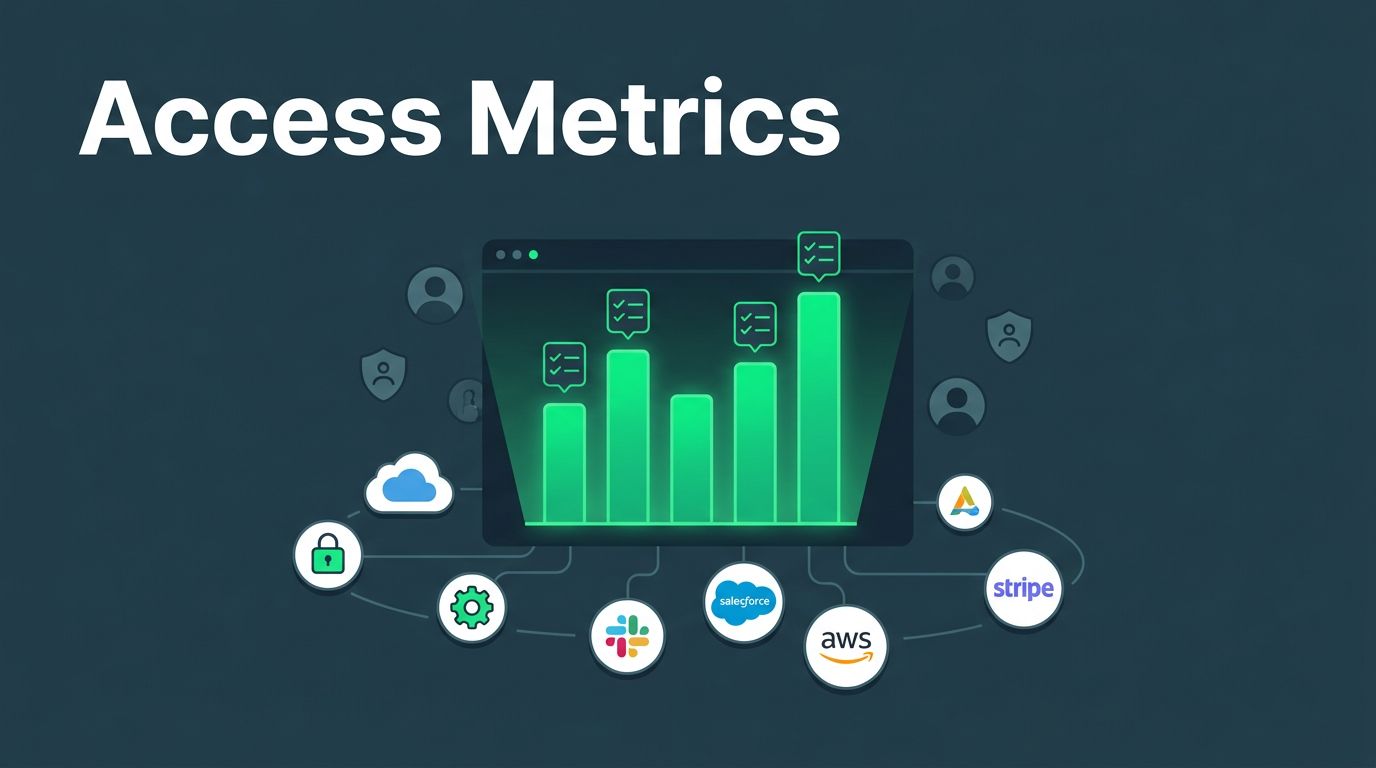
Dashboards show threats across domains. AI flags ransomware beacons.
Platforms like this block in real time. Green marks stopped attacks.
For POS hardening, see Ardham’s guide on securing payments. It covers segmentation.
Ransomware resilience needs backups off-net. Test restores monthly.
Aligning with NIST CSF 2.0 and PCI DSS 4.0
NIST CSF 2.0 adds Govern. Map retail risks to functions. PR.IR protects networks from unauthorized access.
PCI DSS 4.0 phases in by 2025. MFA for all CDE access. Script inventory for payment pages.
Use Cisco’s PCI 4.0 retail prep for network designs.
Retail fits NIST via quick-start guides for SMBs scaling up. Annual reviews build maturity.
Auditors check segmentation evidence. Central logs prove controls.
Conclusion
Strong retail network security starts with assessment and phases through quick fixes to unified platforms. You cut ransomware risks and meet PCI standards.
Zero trust and SASE handle distributed scale. XDR spots threats early.
Act now. Your network secures revenue and trust. Book a Discovery Call with Bud Consulting to map your gaps.
Retail leaders who roadmap ahead stay open when others lock down.