table of contents
Bug bounty programs flood teams with reports. In May 2026, AI agents from researchers crank up the volume. Security teams triage endlessly, but fixes stall because engineering lacks context.
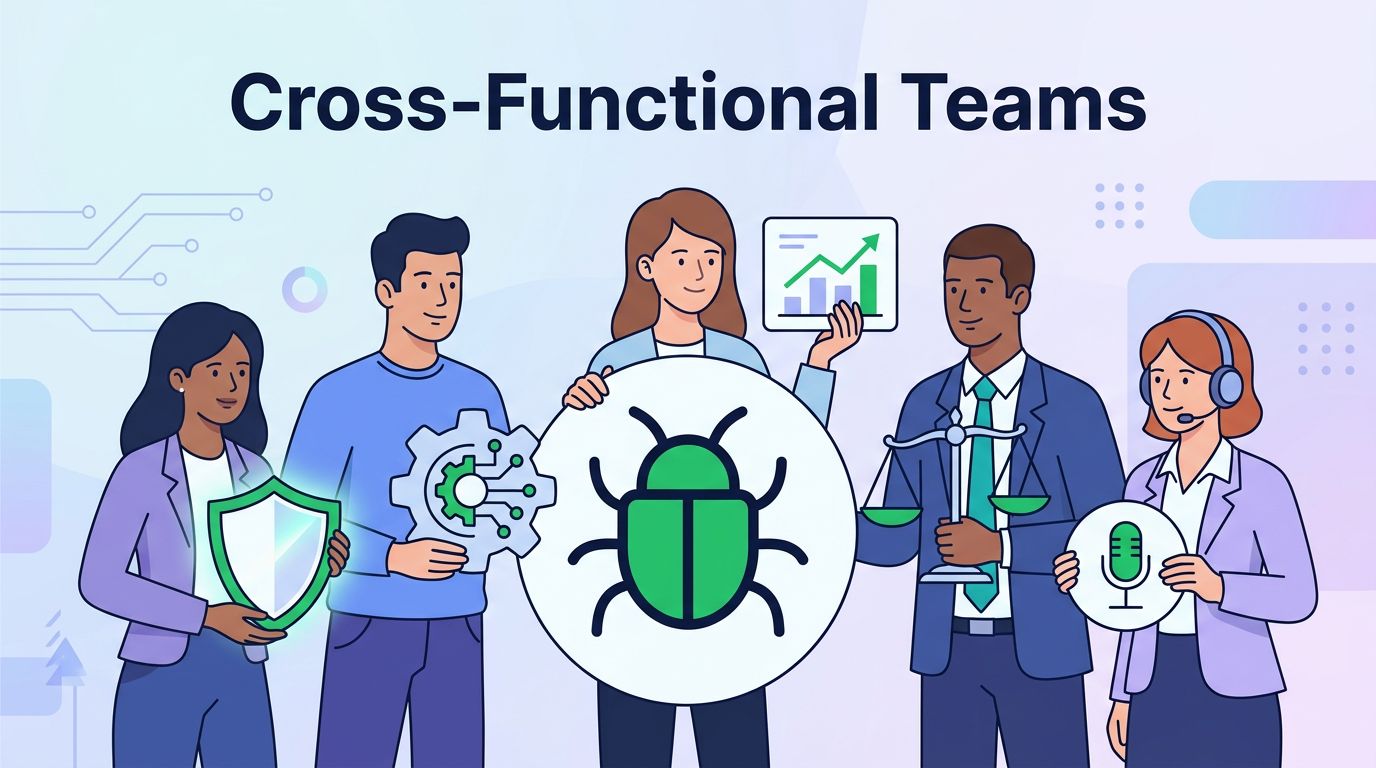
You run a program. Delays frustrate hunters. Payouts drag. Bugs linger. A cross-functional bug bounty team fixes this. It pulls in security, engineering, product, legal, and customer support.
This guide shows you how to build one. Start with roles. Pick your model. Set paths and metrics. Scale with real examples.
Why Cross-Functional Teams Beat Siloed Ones
Solo security handles reports alone. They validate bugs. But without engineering input, fixes take weeks. Product ignores impact. Legal flags issues late.
Cross-functional teams share the load. Security triages. Engineers validate. Product ranks risks. Legal clears payouts. Customer support talks to users.
Consider AI-driven reports in 2026. Platforms like HackerOne see broken access control up 36%. Prompt injections spike 540%. One team can’t keep up.
A diverse group spots patterns faster. They align on priorities. Reports drop from hundreds to actionable dozens.
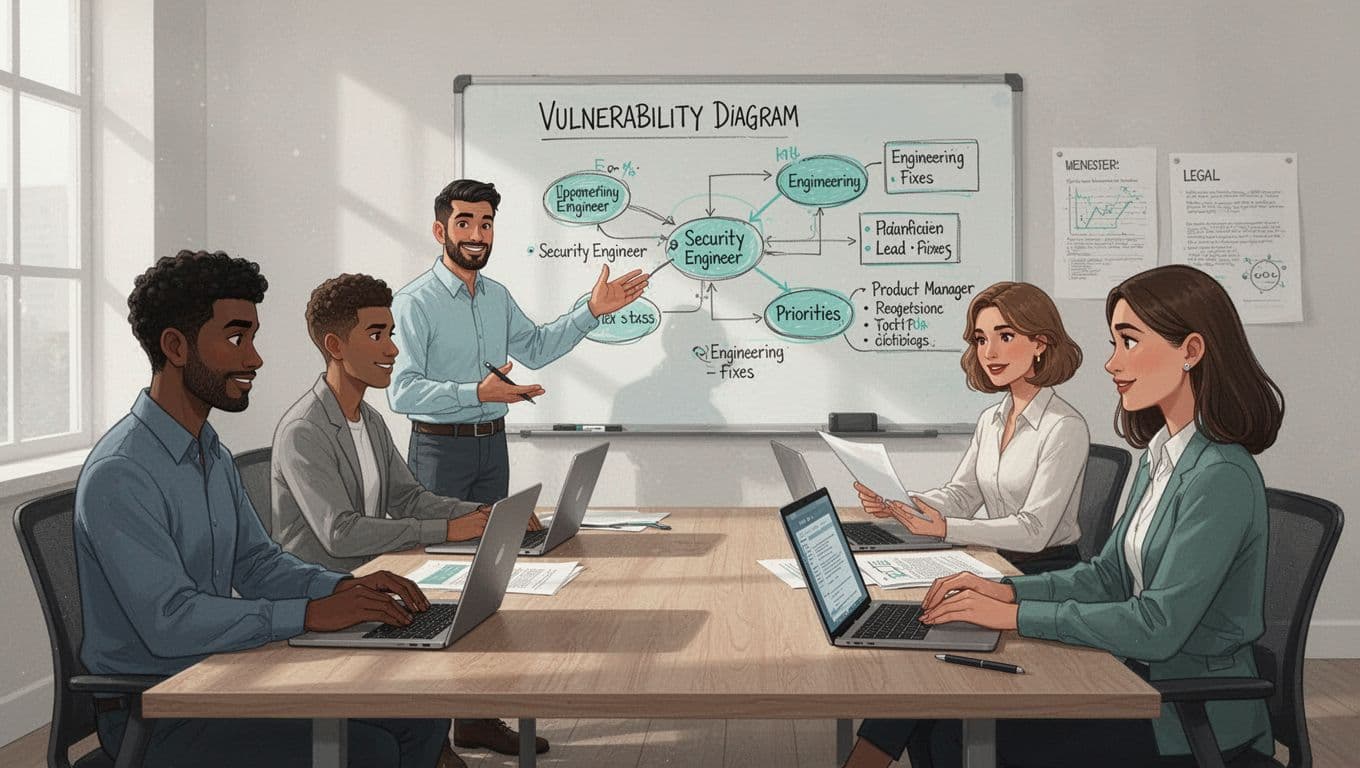
This setup cuts resolution time. Teams at companies using HackerOne’s Program Maturity Framework report 40% faster fixes. They build trust with hunters too.
Start small. Invite one rep from each group weekly. Discuss top reports. Watch backlogs shrink.
Define Roles and Responsibilities
Clear roles prevent chaos. Assign duties upfront. Security owns triage. Others support.
Security engineers lead. They check reproducibility. Rate severity with CVSS. Duplicate old finds.
Engineering validates. They run code reviews. Estimate fix time. Push patches.
Product managers prioritize. They score business risk. Low-impact XSS? Defer it. Account takeover? Urgent.
Legal reviews scope. They check safe harbor. Approve disclosures.
Customer support fields questions. They update hunters. Log user impacts.
Here’s a sample structure for a mid-size firm:
| Role | Key Duties | Tools Used |
|---|---|---|
| Security Lead | Triage, validate severity | Jira, Slack, Burp Suite |
| Engineering Rep | Reproduce, fix bugs | GitHub, internal repos |
| Product Owner | Risk scoring, scoping | Notion, product backlog |
| Legal Advisor | Policy check, payouts | DocuSign, compliance docs |
| Support Liaison | Hunter comms, feedback | Zendesk, email templates |
This table keeps everyone accountable. Review it quarterly.
For private programs, add a program manager. They invite top hunters. Track invites.
Public programs need more triage power. Hire two security folks.
Examples from 2026 show this works. Valtik Studios outlines minimum staffing: one dedicated engineer per 50 reports weekly. Scale up for Web3, where payouts hit millions.
Document roles in a shared playbook. Train new joins. Roles evolve, but baselines stay.
Pick Your Operating Model: Private, Public, or Hybrid
Your model shapes the team. Private invites select hunters. Low volume, high quality.
Public opens to all. More reports, broader coverage. Hybrids mix both.
Private suits startups. Test processes. Invite 20 trusted researchers. Focus on APIs or mobile.
Public fits mature teams. Handle noise. Web3 programs like Uniswap offer $15M caps. They thrive on volume.
| Model | Volume | Team Needs | Best For |
|---|---|---|---|
| Private | 10-50/mo | 2-3 security | Controlled testing, new programs |
| Public | 100+/mo | 5+ full-time | High coverage, scale |
| Hybrid | 50-200/mo | 4 security + manager | Gradual growth |
Private cuts noise. Bugcrowd notes private programs control access. Start here. Go public after six months.
Hybrids invite stars, open rest. Google uses this. Balance cost and finds.
Assess your readiness. Can engineering fix 20 criticals monthly? No? Stay private.
In 2026, AI floods public boards. Private teams focus on chains AI misses, like auth flows.
Choose based on assets. Cloud-heavy? Private for misconfigs. Web apps? Public for XSS.
Establish Escalation Paths
Reports hit. Who acts first? Define paths. Avoid stalls.
Standard flow: Hunter submits. Security triages in 48 hours. Escalate to engineering if valid.
Critical bugs go straight to on-call. P1 hits product and legal same day.
Use SLAs. Triage: 3 days. Validate: 5 days. Fix: 30 days.

This path ensures flow. Intigriti stresses pre-launch planning.
Steps:
- Acknowledge report in 24 hours.
- Security triages: dupes out, valid in.
- Engineering validates: repro steps.
- Product prioritizes: business impact.
- Legal clears: no liability.
- Pay bounty. Close loop.
For cross-function, use Slack channels. #bug-triage pings all. Weekly standups review escals.
Handle spikes. AI reports doubled triage time. Rotate duties. Outsource overflow to HackerOne Triage.
Test paths with mocks. Run drills. Fix gaps before launch.
Foster Collaboration Tools and Habits
Teams fail on comms. Build habits early.
Daily standups: 15 minutes. What reports? Blockers?
Shared dashboards: Jira boards track status. Everyone sees.
Async updates: Slack threads per report. Tag roles.
Train together. Joint workshops on CVSS scoring.
Engineering chases features. Pull them in with metrics: bugs block releases.
Product owns roadmaps. Show bounty bugs as risks.
Legal fears disclosures. Share safe harbor wins.
In 2026, Sherlock’s staking cuts junk 80%. Still, collaborate on quality.
Use HackerOne’s Field Manual for playbooks.
Offsites build rapport. Hackathons mix teams.
Measure collab: survey Net Promoter Scores quarterly.
Implement Tools and Processes That Scale
Tools glue teams. Pick integrated stacks.
Triage: HackerOne or Bugcrowd platforms. Auto-dupe check.
Tracking: Jira or Linear. Custom fields for severity, assignee.
Comms: Slack bots notify escals.
Validation: Shared Burp flows. Repro videos.
Payouts: Automated via platform. Legal approval gates.
For scale, Inspectiv’s dashboard unifies views.
Processes:
- Weekly triage sprints.
- Monthly retros: what slowed?
- Scope reviews: add assets quarterly.
AI tools help. Use for initial scans, humans validate.
Budget: $50K/year for mid-team. Platforms 20%, tools 10%, bounties rest.
Hire gaps. Bud Consulting places AppSec talent fast. Book a Discovery Call with Bud Consulting to fill roles.
Audit yearly. Adapt to trends like API vulns up 10%.
Measure Success with Key Metrics
Track or fail. Dashboards show health.
Key metrics:
- Reports triaged: Aim 95% in 3 days.
- Median fix time: Under 30 days.
- Bounty ROI: Finds per dollar.
- Hunter retention: Repeat submitters.

Positive trends? Green accents motivate.
Benchmark: Top programs pay $162M in Web3. Focus quality.
Survey teams: Burnout low? Collab high?
Adjust quarterly. High dupes? Tighten scope.
Success: Fewer prod escapes. Faster releases.
Conclusion
Cross-functional bug bounty teams turn chaos into wins. Define roles. Set paths. Measure results.
You cut times 40%. Hunters return. Risks drop.
Build now. AI noise grows. Your team stands out.
Start with one meeting. Scale from there. Secure your edge.