table of contents
Mid-sized firms face tough choices with cybersecurity budgets. Threats like ransomware hit hard, yet funds stay limited. You juggle compliance, cloud risks, and board demands while proving every dollar counts.
In 2026, most mid-sized companies spend 10 to 12 percent of IT budgets on security. That’s $1,200 to $2,500 per employee yearly. These numbers set a baseline, but smart allocation makes the real difference.
This guide breaks down models that work. You’ll see benchmarks, tradeoffs, and trends to build a defensible plan.
Benchmarks for Mid-Sized Security Spending
Mid-sized firms typically run 100 to 1,000 employees. Their IT budgets hover around $1 million to $10 million. Security takes 10 to 12 percent of that pot.
Regulated sectors like healthcare or finance push to 15 to 18 percent. Why? Stricter rules demand more audits and controls. Low-risk industries stick closer to 7 percent.
Per-employee spending guides quicker math. A 200-person firm aims for $240,000 to $500,000 total. This covers tools, staff, and services without waste.
Budgets grew in 2026. About 66 percent of firms increased spending. Over 25 percent boosted by 25 percent or more. Ransomware costs and AI threats drive this shift.
Check the 2026 Cybersecurity Budget Playbook from UnderDefense for detailed per-employee ranges. It matches real mid-market data.
Focus on your risk profile first. High cloud use or third-party vendors? Allocate more to monitoring. Stable operations? Prioritize training and backups.
These benchmarks help justify asks to CFOs. They show you’re in line with peers, not overspending.
Factors That Shape Allocation Decisions
Several forces pull your budget in different directions. Business priorities top the list. Does revenue rely on uptime? Then resilience gets funds first.
Compliance needs follow close. HIPAA or PCI-DSS rules force audit spending. Cyber insurance now demands proof of controls like MFA and EDR.
Board accountability ramps up pressure. Directors must oversee risks. They want metrics on ROI and breach costs.
AI threats add urgency. Attackers use it for faster phishing and evasion. Mid-sized firms see 29 percent worry over ransomware and privacy breaches.

Your team weighs these daily. They balance headcount against outsourced help. Internal hires build knowledge but cost salaries plus overhead. Services deliver 24/7 coverage cheaper upfront.
Limited resources force tradeoffs. Skip training? Phishing succeeds. Skimp on tools? Detection lags.
Start with a risk assessment. Rank threats by likelihood and impact. This sets priorities. For example, SaaS exposure tops lists for many firms.
Document decisions. Boards and insurers expect evidence. Use simple spreadsheets to track choices and outcomes.
Proven Models for Budget Allocation
Several frameworks guide smart splits. The Gordon-Loeb model stands out. It caps security at 37 percent of expected losses. Beyond that, costs exceed benefits.
Apply it like this. Estimate breach probability and loss value. Focus spends on high-vulnerability areas. Read more on the Gordon-Loeb model steps.
Risk-based allocation fits mid-sized needs. Score assets by data sensitivity. Allocate more to crown jewels like customer databases.
Percentage-of-IT works as a baseline. Take 10 percent of total IT. Split by category: 40 percent tools, 25 percent people.
Hybrid OPEX-CAPEX blends both. Buy core tools outright. Subscribe to evolving services like MDR.
For growing SaaS firms, one example from peers: With $500,000 IT budget, assign $75,000 to tools, $50,000 to managed services. See HackrTech’s planning guide for similar breakdowns.
Test models annually. Threats change. So should your splits.
Sample Budget Breakdowns for Real Firms
Real allocations vary by size and sector. A 100-employee firm with $150,000 security budget might split like this.
| Category | Amount | Percentage |
|---|---|---|
| Technology and Tools | $45,000-$75,000 | 30-50% |
| Staff and Training | $37,500 | 25% |
| Managed Services | $28,500-$31,500 | 19-21% |
| On-Premise Products | $22,500-$28,500 | 15-19% |
This table shows common ranges. Tech dominates because tools scale well. Staff builds long-term skills.
Scale up to 500 employees. Budget hits $600,000 to $1.25 million. Add resilience like immutable backups.
Healthcare example: Bump compliance to 15 percent. Finance leans heavy on IAM tools.
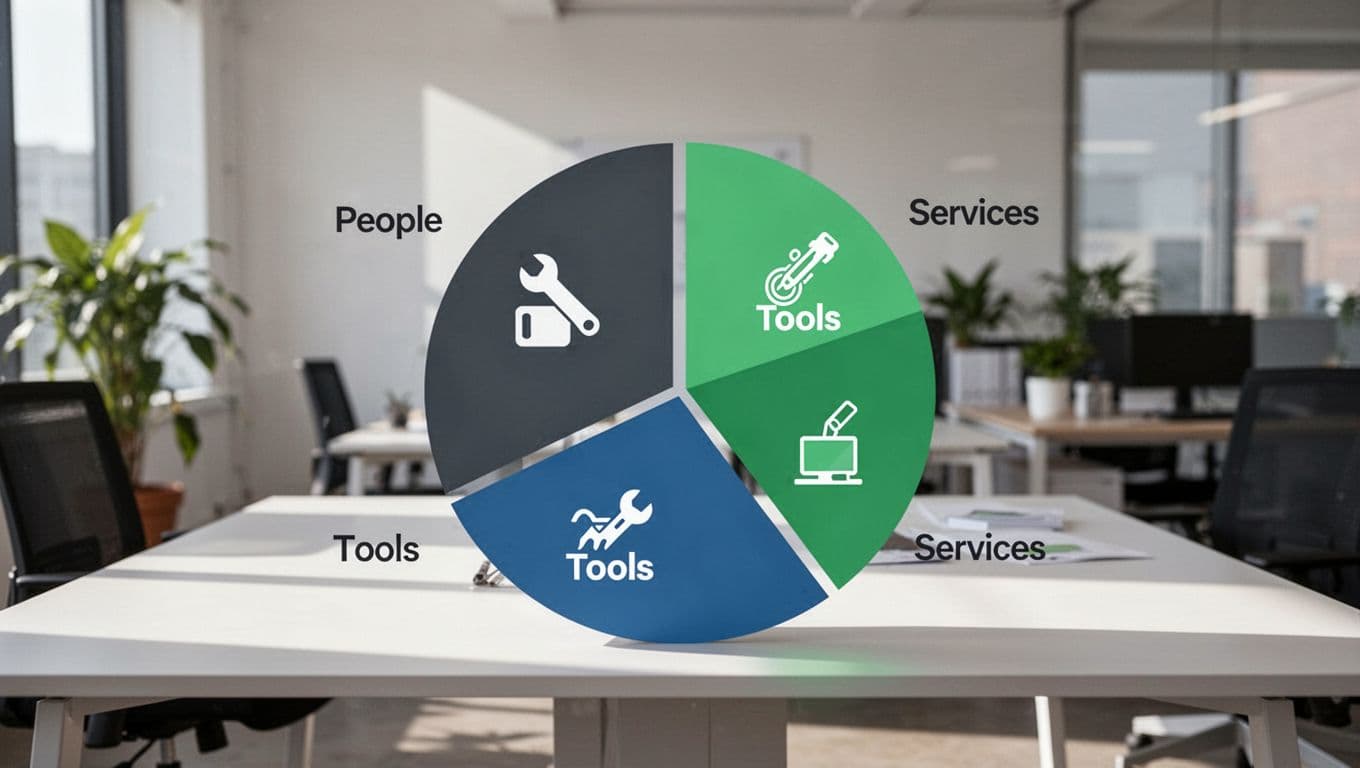
Visuals like this pie chart clarify discussions. Use them in board meetings.
Tailor to your firm. High growth? Favor services for flexibility. Stable ops? Invest in people.
Track outcomes. Did tools catch threats? Adjust next year.
2026 Trends Reshaping Security Budgets
AI-driven ransomware tops worries. Groups automate 90 percent of intrusions. Mid-market firms block only 41 percent of attacks.
Cloud and SaaS exposure grows. Forty-four percent of crises tie to cloud. Insurers demand vendor reviews and data encryption.
Cyber insurance sets hard bars. Carriers require MFA, EDR, encrypted backups, and tested IR plans. Miss one? Face denials or hikes.

This image captures cloud risks over urban ops. Secure elements stand out.
Boards demand accountability. Seventy-three percent of firms fail initial insurance checks. Leaders must fund fixes.
RaaS platforms lower attacker bars. Data extortion skips encryption. Budget for AI defenses like behavioral analytics.
Seventy percent of firms spend over 10 percent on AI tools. Fraud prevention leads at 57 percent.
Shift budgets accordingly. Cut legacy on-prem. Boost cloud security and MDR.
Tradeoffs in Headcount, Tools, and Services
Choose hires or vendors? Internal teams know your setup best. They cost 25 to 35 percent of budget in salaries.
Managed services fill gaps. MDR runs 40 to 45 percent for many. It’s cheaper than a full SOC.
Tools scale but overlap wastes cash. Consolidate EDR and firewalls. Aim for 30 to 50 percent here.
Tradeoff example: Skip a junior analyst. Buy MDR instead. Gain 24/7 eyes without payroll.
Compliance pulls funds. Audits eat 10 to 15 percent. Resilience like backups gets 5 to 10 percent.
High-growth SMB: $200,000 to $300,000 total. Lean on OPEX services.
Healthcare: Add $50,000 for audits. Retail eyes digital transformation at $250,000 to $400,000.
| Scenario | Headcount | Tools | Services | Compliance |
|---|---|---|---|---|
| Lean SMB | 20% | 40% | 30% | 10% |
| Regulated Firm | 25% | 30% | 20% | 25% |
| Cloud-Heavy | 15% | 45% | 30% | 10% |
This comparison highlights shifts. Pick based on needs.
Balance prevents gaps. Over-tool without people? Alerts pile up unanswered.
Measuring ROI in Security Spends
ROI proves value to CFOs. Track metrics like mean time to detect. Aim under 24 hours.
Breach avoidance saves millions. Average ransomware payout nears $2 million for mid-sized.
Cost-benefit analysis helps. Tools prevent losses 10 times their price.
Use frameworks like Gordon-Loeb for math. Expected loss minus spend equals net gain.
Annual reviews tie spend to outcomes. Caught phishing? Training worked.
Insurers love metrics. Show EDR blocks. Lower premiums follow.
AI tools shine here. Predictive analytics flags risks early. Fifty-six percent of firms use them.
Document wins. Breaches avoided equal dollars saved.
Conclusion
Mid-sized firms thrive with 10 to 12 percent IT allocation to security. Focus on risk-based splits that cover AI threats, cloud gaps, and insurance must-haves.
Tradeoffs matter. Blend people, tools, and services for coverage without bloat. Use benchmarks and models to defend choices.
Boards and CFOs back plans with clear ROI. Start your assessment today. Need help aligning talent or exposure management? Book a Discovery Call with Bud Consulting.
Your budget builds resilience. Get it right now.