table of contents
SaaS companies face breaches that cost millions. You know the stakes. A single API flaw or misconfiguration can expose customer data and tank trust.
Your engineering team builds fast. Security often lags. That’s where a product security manager steps in. They bridge product development and security risks right from the start.
This guide walks you through hiring one. You’ll get practical steps tailored for SaaS growth.
Table of Contents
- Why SaaS Teams Need Product Security Managers
- Understanding the Product Security Manager Role
- Key Skills and Qualifications
- Crafting the Job Description
- Where to Find Top Candidates
- Mastering the Interview Process
- Onboarding for Quick Impact
- Conclusion
- Frequently Asked Questions
Why SaaS Teams Need Product Security Managers
SaaS products grow complex. You juggle multi-tenant architectures, APIs, and third-party integrations. Attackers target these weak spots.
Data shows identity chaos leads risks. Users, bots, and OAuth apps multiply. Many firms track only a fraction. AI tools add more blind spots as employees plug them in without checks.

Consider supply chain attacks. One vendor flaw ripples through your stack. Or data exfiltration from oversharing in apps. These hit from inside, not just perimeters.
A product security manager fixes this. They embed checks early. Threat modeling spots issues before code ships. Vulnerability scans run in CI/CD. They work with AppSec but own product risks.
In 2026, regulations tighten. Think GDPR fines or SOC 2 audits. Without this role, you react to breaches. With it, you prevent them. Teams scale securely as you add features.
Your CISO handles enterprise-wide threats. VPs focus on roadmaps. This manager aligns both. They make secure paths the default for devs.
Bud Consulting sees this gap often. SaaS founders hire us because generalists can’t keep up. Result? Faster growth without fear.
Understanding the Product Security Manager Role
This role sits between product, engineering, and security. They ensure your SaaS app stays secure by design.
Expect them to lead threat modeling sessions. They map assets, threats, and mitigations with dev teams. Shift-left practices mean reviews happen pre-commit.
Daily work includes vulnerability triage. They prioritize based on exploitability, not just CVSS scores. Remediation ties to sprints.
They collaborate on secure defaults. Multi-tenancy needs isolation. APIs demand auth layers. The manager pushes these in PRDs.
See a real example at Databricks’ senior product security manager posting. It stresses embedding security in platforms like compute and Kubernetes.

For SaaS, they handle scaling pains. As users hit thousands, risks compound. They build frameworks for guardrails. Partner with red teams to validate.
Unlike AppSec engineers, they think product-first. They influence roadmaps. Secure choices boost velocity, not slow it.
Reports to CISO or VP Eng. Manages a small team or IC at first. In mature orgs, they own program metrics.
Key Skills and Qualifications
Look for hands-on security experience first. 5-10 years in AppSec or product security suits most SaaS needs.
Threat modeling tops the list. They must guide sessions using STRIDE or PASTA. Know SaaS specifics like tenant isolation.
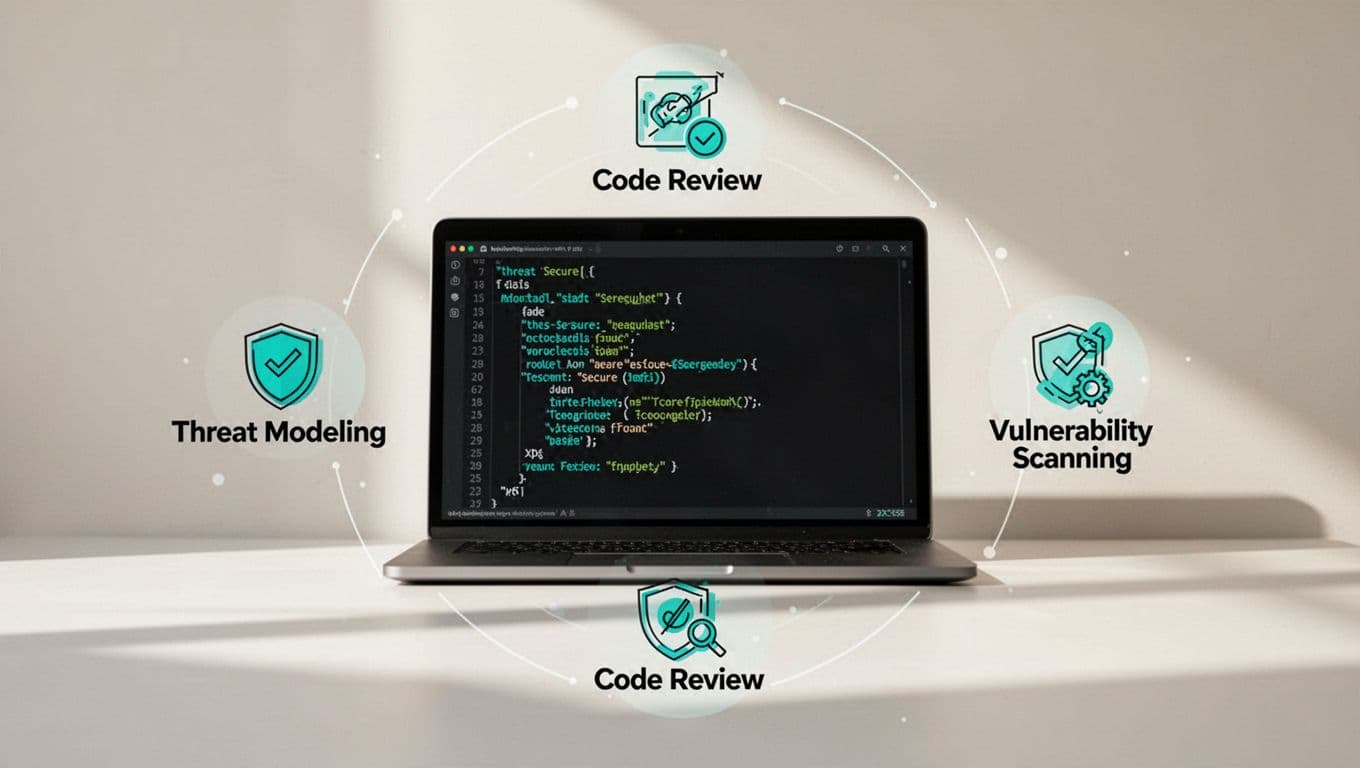
Code review skills matter. They spot OWASP Top 10 issues. Tools like Semgrep or CodeQL fit their workflow.
Vulnerability management follows. They triage with tools like DefectDojo. Integrate scans into GitHub Actions.
Cloud knowledge is key. AWS, GCP, or Azure multi-tenancy. IAM, encryption at rest, and API gateways.
Soft skills seal it. They influence without authority. Devs listen because they speak product language.
| Skill Category | Must-Haves | Nice-to-Haves |
|---|---|---|
| Technical | Threat modeling, vuln triage, secure coding | AI/LLM security, Kubernetes hardening |
| Tools | SAST/DAST scanners, Jira, GitLab | Custom automation scripts |
| SaaS-Specific | Multi-tenancy, OAuth, API auth | Compliance (SOC 2, ISO 27001) |
| Soft Skills | Cross-team collaboration, roadmap influence | Team leadership experience |
This table sums core needs. Check Yardstick’s example job desc for more on engineering ties.
Prioritize SaaS background. Generalists struggle with velocity demands.
Crafting the Job Description
Start with your pain points. List challenges like API sprawl or AI integrations.
Title it “Product Security Manager” clearly. Avoid vague “Security Engineer.”
Lead with impact. “Join us to secure a platform serving 10M users. Lead threat modeling that ships secure code first time.”
Responsibilities section uses bullets sparingly. Focus on outcomes.
- Drive shift-left security with product teams.
- Triage vulns and track remediation SLAs.
- Build secure-by-default frameworks.
Requirements stay realistic. “5+ years in product security. SaaS experience required.”
Salary? Mid-series B: $180K-$250K base, plus equity. Adjust for stage.

End with culture fit. “We value velocity and collaboration.”
Post on LinkedIn, Indeed. Tailor for ATS.
Test it. Run by your eng leads. Does it attract right profiles?
Where to Find Top Candidates
Specialists hide in plain sight. Start with LinkedIn searches: “product security manager” AND SaaS.
Target companies like Snowflake, Stripe, or Databricks. Their teams know scaling pains.

Conferences work well. Black Hat, AppSec Cali. Network there.
Job boards: BuiltIn, Dice for security roles. See this DigitalOcean posting for inspiration.
Communities shine. Reddit’s r/netsec, OWASP Slack. Post feelers.
Recruiters specialize here. Bud Consulting fills these fast. We tap off-market talent.
Referrals beat all. Ask your CISO network.
Aim for 20-30 sourced per week. Track in a sheet.
Mastering the Interview Process
Screen resumes first. Reject no SaaS or threat modeling experience.
Phone screen: 15 mins. Ask “Walk me through a threat model you led.”
Take-home? Light. Model a simple SaaS API threat.
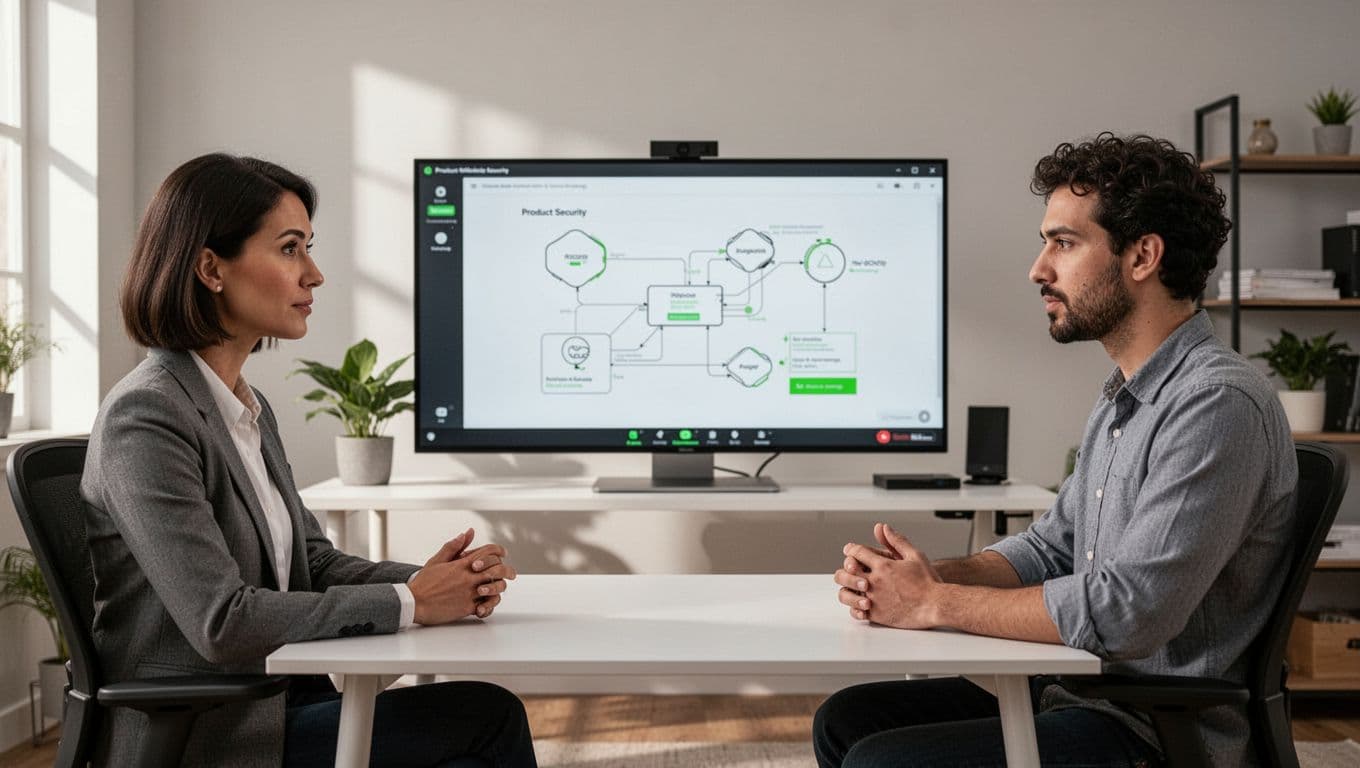
Loop interviews: 4-5 rounds.
- CTO/VP Eng: Culture and vision fit.
- Product lead: Roadmap alignment.
- AppSec peer: Technical deep dive.
- Live threat model: 1-hour session on your product.
- Refs: Past impact.
Questions draw from this interview pack.
- How do you intake requests for dozens of squads?
- Describe scaling vuln triage.
Score on rubric. 70% technical, 30% soft.
Offer fast. Top talent moves quick.
Onboarding for Quick Impact
Day one: Access and intros. Pair with a dev buddy.
Week one: Shadow sprints. Map current risks.
Month one: First threat model. Set KPIs like 90% shift-left coverage.
Tools setup: Scanners, Jira boards.
Measure wins. Vuln backlog drops? Good sign.
Scale later. Hire under them as team grows.
Feed success stories back. Builds buy-in.
Conclusion
Hiring a product security manager protects your SaaS core. They turn risks into strengths through early integration and smart collaboration.
You’ve got the blueprint now. Act on it to stay ahead.
Book a Discovery Call with Bud Consulting if sourcing stalls.
Frequently Asked Questions
What’s the average salary for a product security manager in SaaS?
Ranges $180K-$280K base. Equity pushes total comp to $300K+. Series A pays less; scale-ups more.
Do they need to code daily?
No. They review and guide. Past engineering helps but isn’t required.
How long to hire one?
4-8 weeks with good sourcing. Networks speed it.
Can a generalist fill this role?
Rarely. SaaS specifics demand experience. Train later.
What metrics show success?
Vuln remediation under 30 days. 80% code covered by scans. Zero P1s in prod.
(Word count: 2487)