table of contents
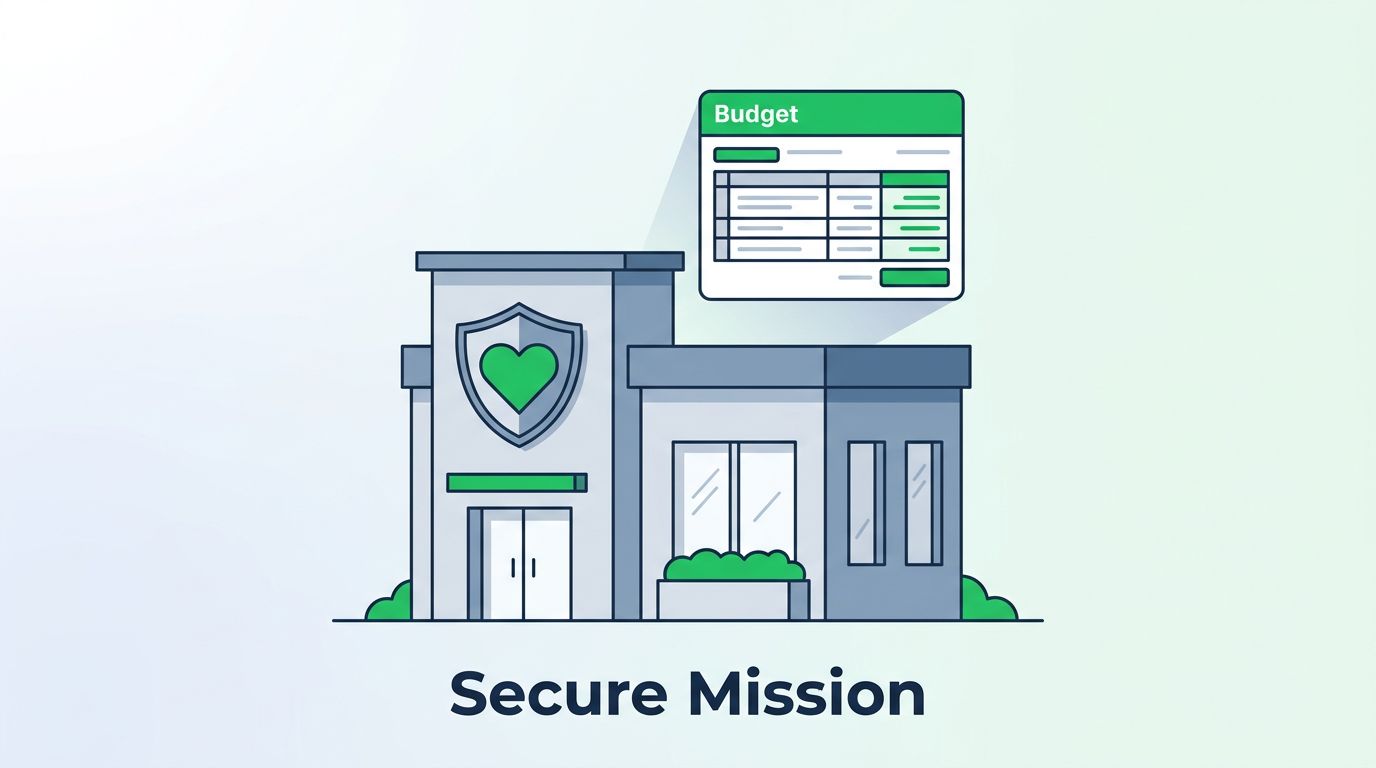
You operate on tight margins where every dollar counts toward your mission. Cybersecurity often feels like a luxury you cannot afford, but reality proves otherwise. Cyber threats in 2026 are common, targeted, and capable of halting your operations overnight. Ransomware, business email compromise, and data theft threaten the trust you build with your donors and the safety of your beneficiaries. Managing these risks requires a deliberate approach to your nonprofit security budget that moves past reactive spending toward intentional investment.
Creating a budget for security is not about matching the spending of massive corporations. It is about identifying your highest risks and addressing them with the tools and resources you already have or can easily acquire. By focusing on essential controls and clear priorities, you can protect your organization without breaking your financial foundation. This guide outlines how to build a security budget that works for your specific constraints, team size, and operational needs.
Building a Practical Security Budget
Your security budget should function as a living document that aligns with your organization’s risk profile. Start by assessing your current technology footprint, which includes the cloud platforms you use, your remote work arrangements, and the sensitive data you store. Many organizations find that they are already paying for security features they haven’t activated yet. Microsoft 365, Google Workspace, and other SaaS providers include robust identity management and encryption tools at no extra cost.

Begin by reviewing your existing contracts to identify unused security licenses. Next, look at your operating budget and aim for a baseline of 6 to 7 percent for technology and security, as noted in recent industry guidance on how much nonprofits should spend on cybersecurity. This percentage serves as a starting point, not a hard rule. Small organizations with fewer than 20 staff might spend less by leveraging volunteer expertise and free resources, while larger organizations require more robust managed services.
Do not try to solve every problem at once. If your budget is limited, focus on the “big three” risks: identity theft, phishing, and data loss. Multi-factor authentication is almost always free to enable and provides the highest return on investment. If you need help prioritizing these steps or want to identify specific talent gaps in your team, you can Book a Discovery Call with Bud Consulting to get an objective assessment of your current posture.
Prioritizing Essential Budget Categories
Once you set a baseline, you must categorize your spending to ensure resources go to the most critical areas. A balanced security plan includes prevention, detection, and recovery. While software licenses often eat up the largest portion of the budget, they are only effective if configured correctly and supported by your team.

Use this framework to allocate your funds effectively:
- Identity and Access Management: Prioritize tools that protect your user accounts. This includes single sign-on solutions and phishing-resistant authentication methods.
- Security Awareness Training: People are your first line of defense. Invest in recurring training modules that teach staff and volunteers how to spot AI-generated scams and sophisticated phishing attempts.
- Backup and Recovery: If you cannot recover your data, your operations end. Budget for immutable backups that hackers cannot delete or encrypt. Test your recovery process at least twice a year to verify that it actually works.
- Endpoint Protection: Secure every laptop and mobile device that accesses your data. This is critical for remote and hybrid teams who connect from outside the office network.
Keep your procurement process transparent by documenting why each item is essential. When presenting to the board, focus on how these expenses directly protect donor information and program continuity rather than using technical jargon. If you are struggling with limited resources, research free tools and real budgets that provide basic protection without high subscription costs.
Managing Vendor Risk and Data Protection
Nonprofits often rely on third-party software for donor management, accounting, and email marketing. Every vendor is a potential gateway for an attacker. If a fundraising platform is breached, your donor list could be compromised. You must treat vendor risk as a core part of your budget and security strategy.

When vetting vendors, ask for their security documentation or a SOC 2 report. If they cannot provide basic security details, they are too risky to handle sensitive donor data. Centralize your vendor list and assign a lead person to review their security status annually. As noted in expert guides on nonprofit security, the combination of valuable donor information and weak policies makes nonprofits a high-value target for criminals.
Budgeting for this oversight takes time rather than cash. Ensure your staff includes security questions in every new vendor contract. If you use free or low-cost tools, check if they offer enterprise-grade security features for nonprofits. Many technology companies provide discounted or free versions of their premium security products to verified charitable organizations. Always audit these settings during your annual budget review to ensure they remain configured correctly.
Investing in People and Culture
A budget filled with fancy software cannot stop a staff member from inadvertently sharing a password or falling for a sophisticated social-engineering scam. Your most valuable security asset is your people. Building a strong security culture costs very little but pays significant dividends.

Start by fostering an environment where reporting a mistake is rewarded, not punished. If someone clicks a phishing link, they should feel comfortable telling IT immediately. Quick reporting often prevents a breach from escalating into a full-scale ransom event. You can integrate security topics into regular team meetings by spending five minutes on a “security tip of the month.” This normalizes the conversation and makes cybersecurity feel like a shared responsibility.
Consider the role of volunteers and remote contractors in your security planning. These individuals often use personal devices, which introduces significant risk to your environment. Develop a simple, written policy that outlines expectations for device security, such as requiring screen locks and software updates. By providing clear guidance, you reduce the burden on your core IT team while making your organization more secure.
Responding to Emerging Threats in 2026
The threat environment changes quickly. AI-powered phishing and deepfake-based scams are now mainstream. Attackers use these tools to impersonate board members or donors, creating high-pressure situations for your finance staff. Your budget must reflect these emerging realities by prioritizing response readiness alongside prevention.
Allocate a portion of your budget for cyber insurance premiums. These policies often provide access to breach coaches and legal support, which can be lifesavers during a crisis. Review your policy carefully to understand what it covers, especially regarding ransomware payments and data recovery expenses. Do not assume your general liability insurance covers a major cyber event.
Finally, establish a clear incident response plan. You do not need to hire expensive consultants to write a document that defines who calls whom when a suspicious email arrives. Keep it simple: identify the internal contacts for an emergency, designate a backup for critical systems, and define your communication plan for donors if data is stolen. Practicing this plan through a tabletop exercise once a year will reveal gaps in your budget and preparedness.
Sustaining Your Security Commitment
Maintaining your focus on security over several years is a challenge for any mission-driven team. Security is not a one-time project; it is a permanent operational requirement. Avoid the trap of investing in tools and then ignoring them. Schedule a quarterly review of your security posture to see if your controls are still effective.
Encourage your board of directors to see security as a foundational element of your fiscal health. Just as you report on program outcomes and financial audits, include a brief security report in your board materials. This keeps the topic visible and ensures that you continue to have the mandate for your security spending. If you find your team lacks the technical depth to manage these responsibilities, explore partnerships with specialized firms to fill those gaps.
Your organization protects people, values, and important information. By building a thoughtful, pragmatic security budget, you demonstrate respect for your donors and commitment to your beneficiaries. The work you do matters, and protecting your systems is a direct way to ensure that you can continue to carry out your mission for years to come.