table of contents
In security hiring, one slow loop can lose a strong candidate. That matters even more now, because recent 2026 reports put the global cybersecurity talent shortfall at 4.8 million roles, up 19% year over year. See the 2026 cybersecurity talent shortage stats for a clear market snapshot.
That kind of pressure changes the rules. Candidates for cloud security, IAM, DevSecOps, and leadership roles compare your process with every other offer on their radar.
Measuring candidate experience in security hiring tells you where people stall, why they drop out, and which parts of the process need attention.
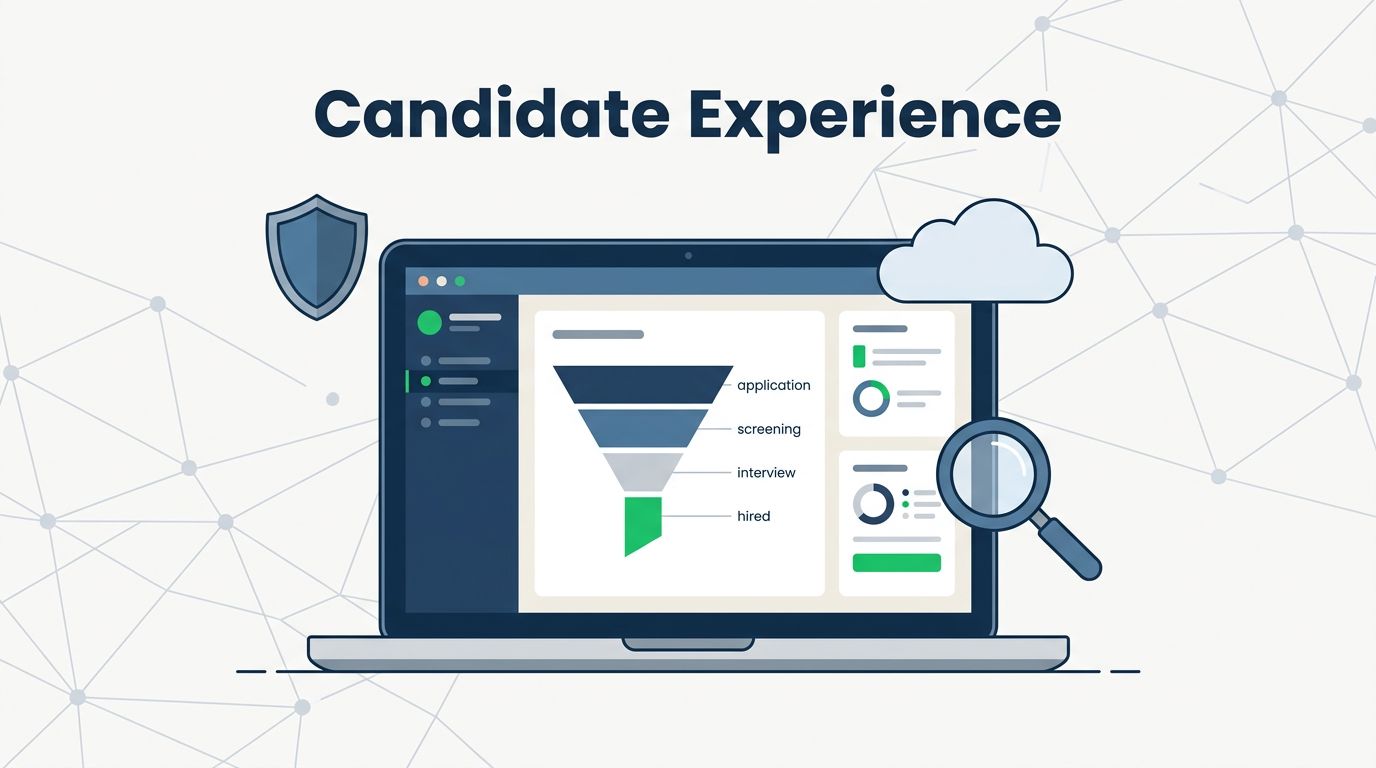
Start by measuring the full hiring funnel
Security hiring breaks down when teams only track the final outcome. By then, the real friction is hidden. A candidate might leave after the second interview, during a technical test, or while waiting on clearance details.
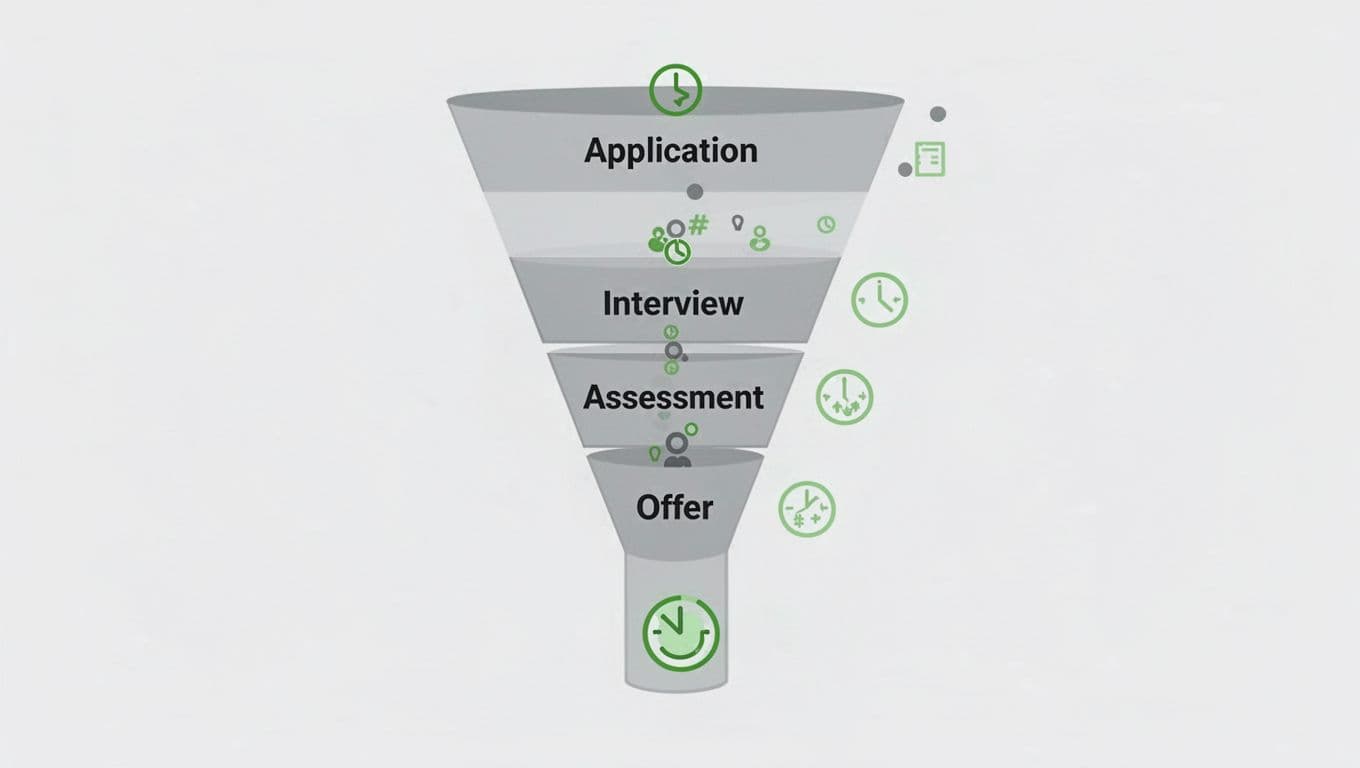
Track each stage with the right metric, then compare the numbers across roles and seniority levels.
| Metric | What it shows | Why it matters in security hiring |
|---|---|---|
| Candidate NPS | Likelihood to recommend your process | Shows overall sentiment |
| CSAT | Satisfaction with a specific stage | Useful after interviews or assessments |
| Application completion rate | Form friction | Reveals if your job flow is too long |
| Response time | Speed of recruiter or manager follow-up | Slow replies push scarce candidates away |
| Time in stage | Delay by step | Flags bottlenecks in interview loops |
| Assessment completion rate | Drop-off during tests | Shows whether the task feels fair and relevant |
| Interview-to-offer drop-off | Candidates lost after interviews | Highlights poor fit, slow decisions, or weak process design |
| Offer acceptance rate | Final hiring pull | Shows market competitiveness and trust |
| Rejection feedback sentiment | Tone and clarity of closure | Shows whether candidates feel respected |
| Onboarding handoff rate | Whether hiring info reaches onboarding | Prevents a rough first week |
A useful benchmark list is also available in this candidate experience metrics guide. Use it as a check against your own scorecard.
If the final survey is your only data point, you’re measuring the smoke, not the fire.
Ask for feedback while the process is still fresh
The best time to measure is right after each stage. Waiting two weeks turns sharp feedback into fuzzy memory. Short surveys, sent within 24 hours, usually get better response rates and cleaner answers.
Keep the survey simple. Measure both the number and the comment. Candidate NPS works well for the big picture. CSAT works well after a single stage, such as a panel interview or a skills test.
Use questions like these:
- “How clear were the next steps after this stage?”
- “How fair and relevant did the technical assessment feel?”
- “How satisfied were you with the speed of communication?”
- “Did the process respect your time?”
- “How likely are you to recommend our hiring process to another security professional?”
That mix gives you both signal and context. If the score drops, the comment usually tells you why.
For a practical look at how hiring teams combine numbers and feedback, see Datapeople’s candidate experience overview. It’s a useful model when you want both data and plain-language insight.

Read the numbers in the context of security work
Security hiring has its own friction points. Long interview loops are common. So are technical deep dives, case studies, background checks, and confidentiality rules. Those steps can be necessary, but they still create drop-off.
That is why segmenting your data matters. A senior cloud security architect will react differently than a SOC analyst. A candidate waiting on clearance updates will judge silence more harshly than someone in a simpler hiring path.
Focus on the reason behind the metric:
- A low application completion rate often means the job post asks for too much too soon.
- A low assessment completion rate often means the task feels unclear or too long.
- A long time in stage often means the hiring team is not aligned.
- A weak offer acceptance rate often means salary, pace, or trust broke down.
- Negative rejection feedback sentiment often means the process felt cold, even if the candidate was strong.
Measure ethically, too. Tell candidates what you collect and why. Keep survey answers separate from hiring decisions when possible. Share results in aggregate, not by name. That builds trust and gives you cleaner feedback.
Use a simple framework your team can repeat
A good measurement system does not need to be complex. It needs to be consistent.

Use this four-step model:
- Measure at every key stage, including application, interview, assessment, offer, rejection, and onboarding handoff.
- Set one owner for each metric, so response time and follow-up do not get lost.
- Review results monthly, and compare them by role family, level, and location.
- Fix one bottleneck at a time, then measure again before changing the next step.
That approach works because it keeps the process manageable. It also helps hiring managers see that candidate experience is a business issue, not just an HR score.
If you want help pressure-testing your security hiring process, Book a Discovery Call with Bud Consulting.
When talent is scarce, every delay sends a message. The teams that win top security candidates are the ones that measure the journey, not just the hire. They know that candidate experience is part of the value proposition, especially when the role is hard to fill and the stakes are high.