table of contents
Filling a cybersecurity role is hard. Proving that the hire will perform, stay, and protect the business is harder. In 2026, that matters more than ever, with more than 514,000 U.S. openings and demand still rising for cloud security, AI security, GRC, and identity skills.
The quality of hire cybersecurity teams need goes beyond a polished resume or a fast offer acceptance. Some roles need clearance. Others need the right cert mix, strong incident response judgment, or deep niche skills that are hard to test in one interview.
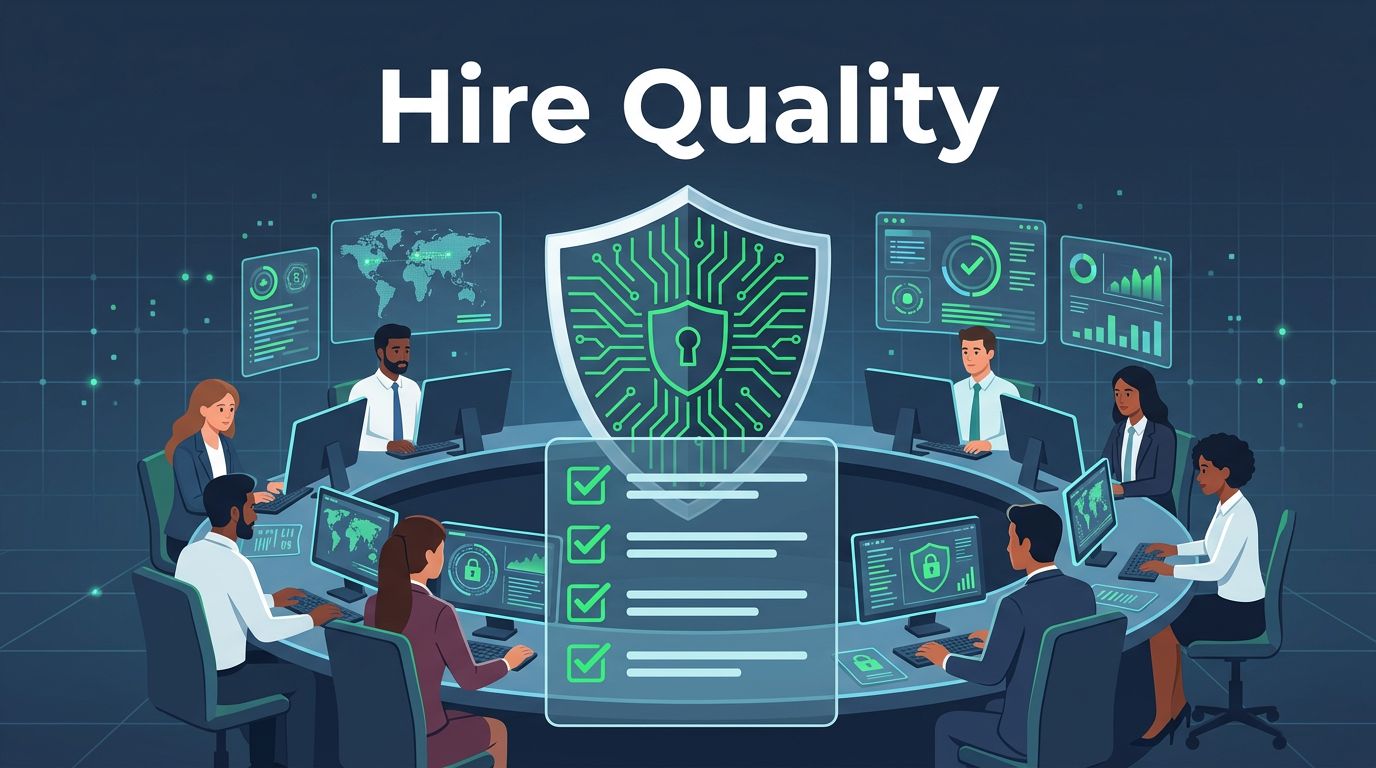
A good scorecard turns that guesswork into a repeatable process. It shows whether a hire can do the work, work with the team, and keep doing it after the first 90 days.
Why cybersecurity hiring needs a different quality lens
Cybersecurity hiring is different from most technical recruiting because the cost of a bad hire is higher. A weak engineer can slow a project. A weak security hire can create risk, miss an incident, or make bad calls under pressure.
The market also keeps shifting. For a current look at where skills are moving, see ISC2’s 2026 cybersecurity hiring analysis. The biggest demand now sits in cloud security, AI security, GRC, and identity work, not just classic SOC or pentest paths.
Clearance is another difference. If a role requires clearance, that is a gate, not a quality signal. A candidate can be excellent and still fail the process for reasons outside their control. Track clearance as a pipeline metric, then track quality of hire after the person starts.
A resume shows experience. Quality of hire shows whether that experience turns into safer decisions.
Certifications also need context. A CISSP, CCSP, GIAC, or OSCP can matter a lot, but only if it matches the job. A cert alone does not prove readiness for incident response, appsec reviews, or cloud design decisions.
Build a 30, 90, 180-day measurement rhythm
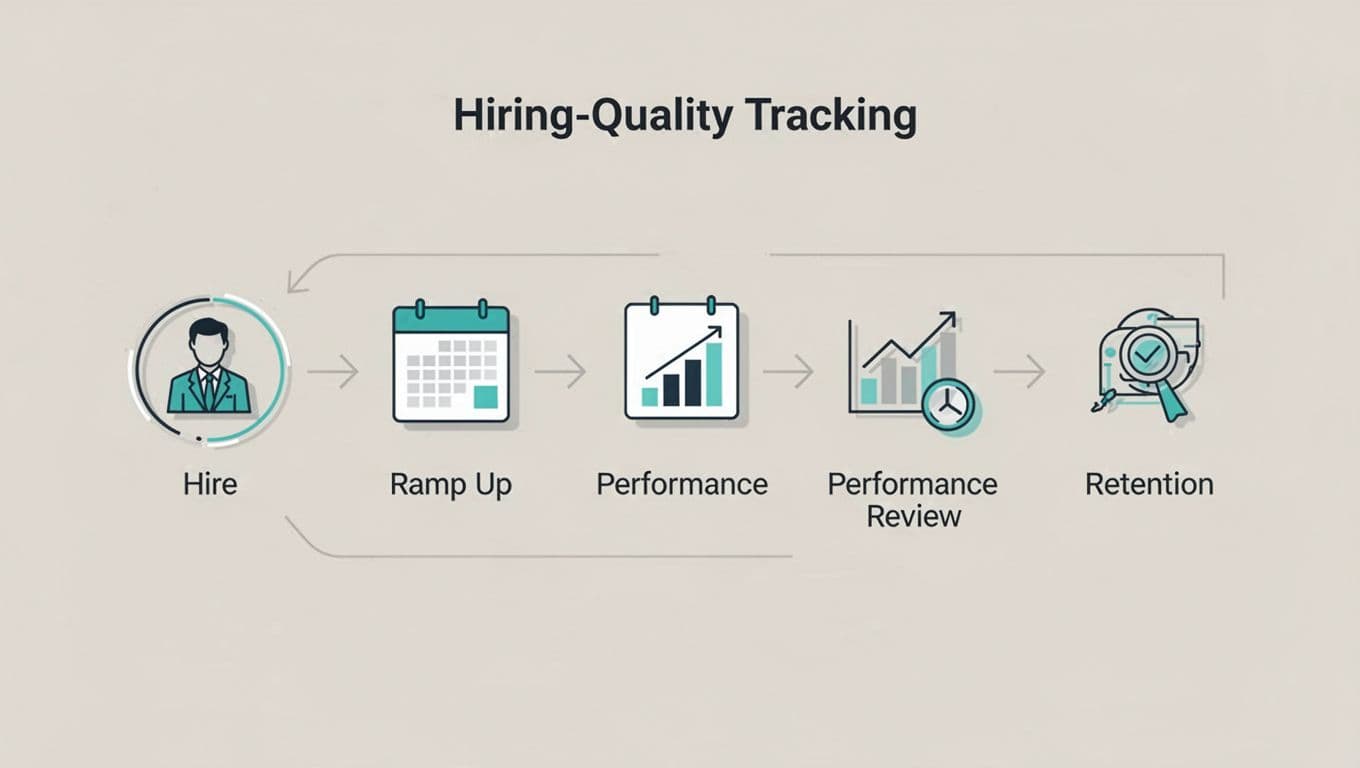
A quality of hire score works best when you measure at set points. Thirty days shows onboarding speed. Ninety days shows early execution. One hundred eighty days shows whether the person is becoming part of the team.
| Timeframe | What to measure | Example evidence |
|---|---|---|
| 30 days | Onboarding speed and access readiness | Policy training, tool access, first task completion |
| 90 days | Independent work and judgment | Drill score, first tickets, handoff quality |
| 180 days | Output and collaboration | Project delivery, peer feedback, remediation closure |
| 12 months | Retention and growth | Stay rate, review outcome, role expansion |
Use those checkpoints to spot patterns. If 90-day performance looks good but 12-month retention drops, the hire may fit the tasks but not the load or culture.
A simple formula helps too:
Quality of Hire = 25% performance outcomes + 20% ramp time + 20% retention + 15% hiring manager satisfaction + 10% team impact + 10% certification relevance
Adjust the weights by role. A government contractor may put more weight on clearance and compliance. A product company may care more about velocity and cross-team work.
What belongs on a cybersecurity scorecard
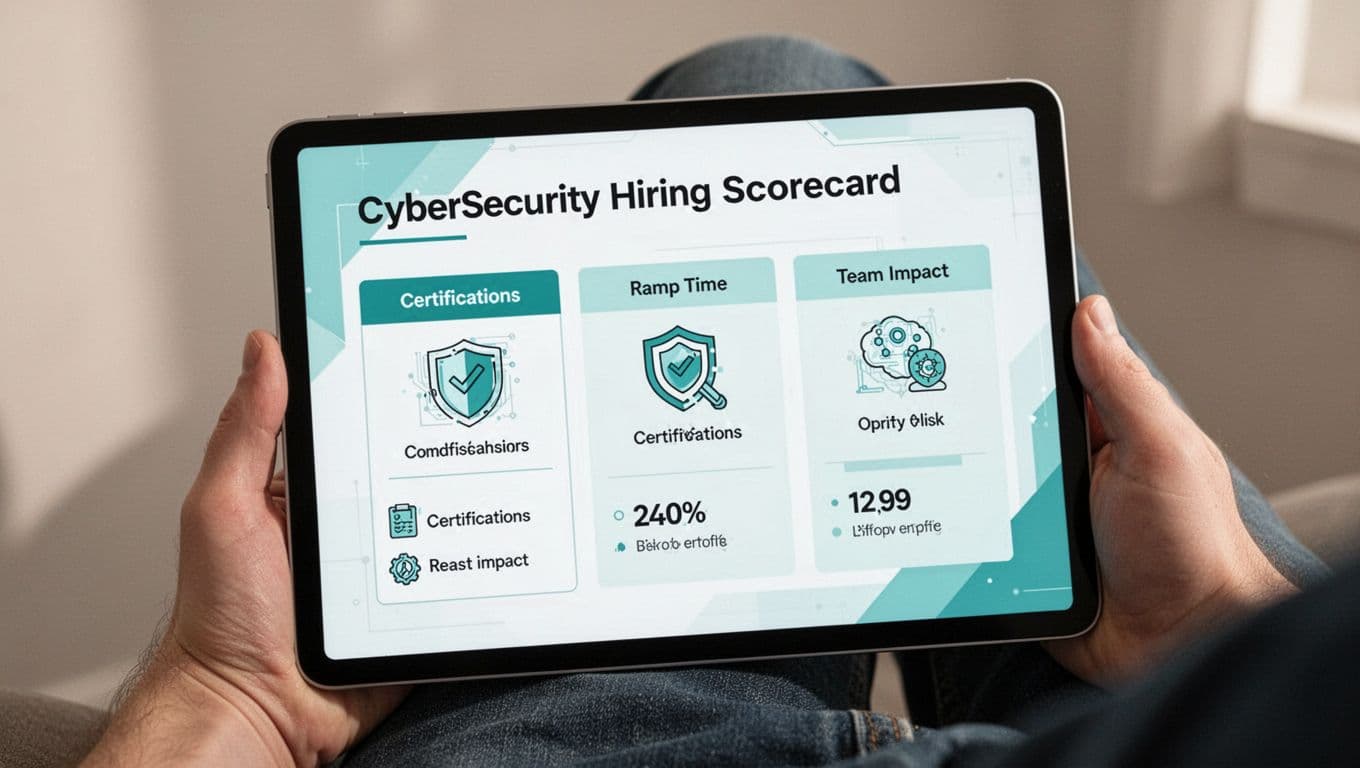
A quality of hire scorecard should reflect the job, not a generic talent template. A cloud security architect, IAM specialist, and incident responder all need different proof points.
| Category | Suggested weight | What good looks like |
|---|---|---|
| Technical fit | 25% | Passes a role-specific scenario or lab |
| Incident response readiness | 20% | Makes calm, sound calls under pressure |
| Ramp time | 20% | Owns work without heavy support |
| Hiring manager satisfaction | 15% | Manager trusts judgment and follow-through |
| Team impact | 10% | Peers want to work with them |
| Certification relevance | 10% | Certs match the role, not the resume |
When a clearance is required, track it separately. The same goes for background checks and other eligibility gates. They matter, but they are not quality measures.
To make the scorecard more useful, watch interview-to-offer quality signals, not just offer rate. These are the signals that often predict better hires:
- Work sample scores line up with early job performance.
- References confirm judgment, communication, and documentation habits.
- Candidates ask about logging, escalation, and ownership, not only salary.
- 12-month retention stays strong by source and recruiter.
If your interview panel keeps liking candidates who fail later, the interview is testing the wrong things. That usually means the process rewards confidence over competence.
For a broader view of how teams tie this metric to business results, see SHRM’s 2026 quality of hire discussion.
Turn the data into hiring decisions

A dashboard only matters if someone uses it. Review quality of hire by role family, source, hiring manager, and recruiter. Then compare results over time. That helps you see which channels bring hires who ramp faster, stay longer, and earn strong reviews.
Track these KPIs in one place:
- Ramp time to first independent task
- 90-day and 180-day manager satisfaction
- First performance review outcome
- Retention at 6 and 12 months
- Certification relevance to the role
- Team impact, based on peer and cross-functional feedback
Those metrics work well for senior cloud security, AppSec, IAM, DevSecOps, and CISO searches, where the wrong hire can slow the whole security program. If you want help building a sharper hiring scorecard for those roles, Book a Discovery Call with Bud Consulting.
The best recruiting teams do not stop at fill rate. They measure whether the hire changes the team for the better.
When you track quality of hire with clear checkpoints, role-based scorecards, and real post-hire outcomes, you stop guessing. That is how cyber recruiting becomes more accurate, and far less expensive in the long run.