table of contents
How to Create Security Playbooks for M&A Integration
M&A deals often fail because security gaps open doors to breaches. You close the deal, but attackers exploit rushed integrations. In 2026, with rising cyber threats and regulations like NIS2, poor security planning costs millions in fines and lost trust.
M&A security playbooks fix this. They guide teams through due diligence, Day 1 stability, and full integration. This article shows you how to build one step by step. You’ll get checklists, examples, and pitfalls to dodge.
Understand M&A Security Phases
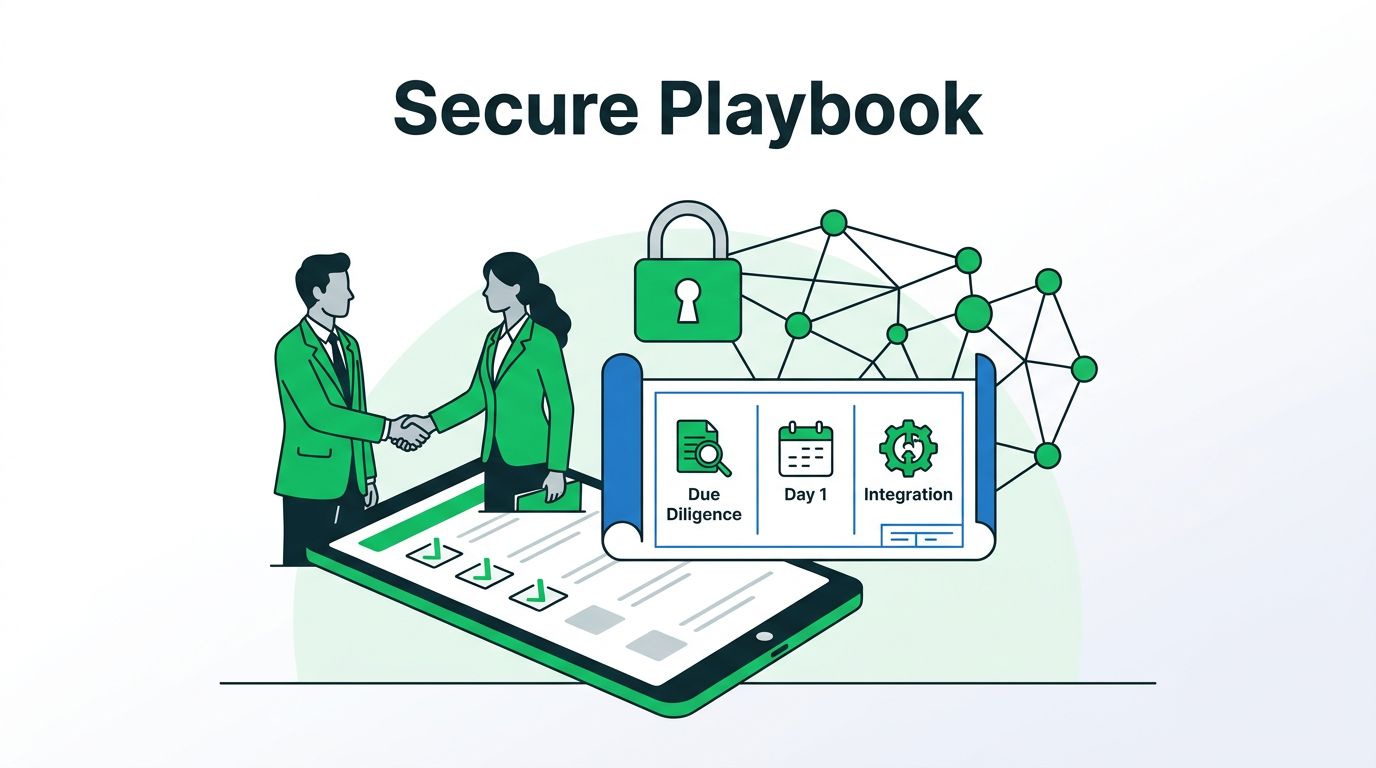
Security work splits into three phases: pre-close, Day 1 readiness, and post-close integration. Each needs clear goals to avoid chaos.
Pre-close focuses on due diligence. You scan the target’s tech stack, breach history, and vendor risks. Check privileged accounts and data flows. Use virtual data rooms with audits for safe reviews.
Day 1 keeps operations running. Secure access, map systems, and set escalation paths. Post-close builds the unified setup over 90-100 days.
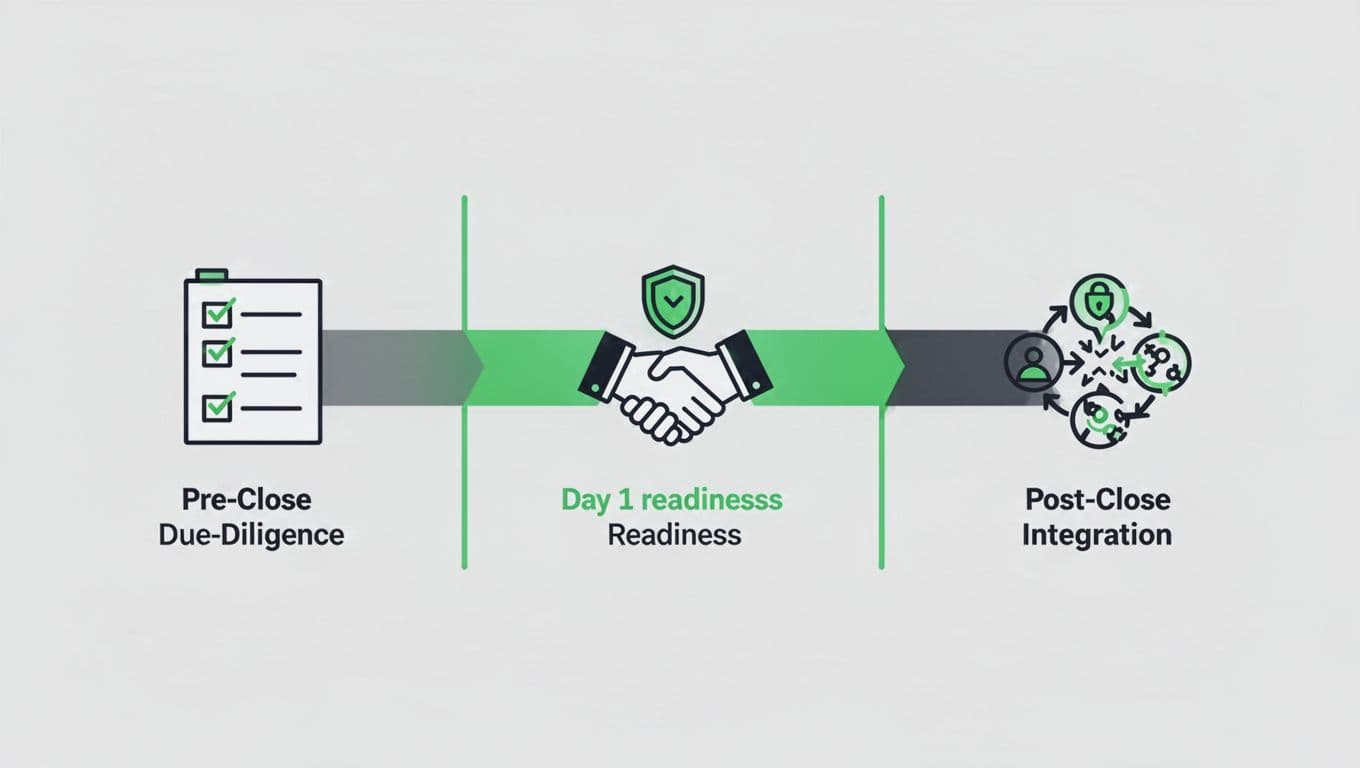
This timeline helps you sequence tasks. For details on Day 1 checklists, see Tyson Martin’s M&A cyber integration plan. Start your playbook by listing phase milestones. Assign timelines like 30, 60, and 90 days. This setup prevents Day 1 surprises, such as unmonitored network links.
Assemble Your Cross-Functional Team
No playbook succeeds without the right people. Pull in security, IT, legal, HR, and business leads early.
Security owns risk assessments. IT handles asset inventories. Legal flags compliance gaps. HR manages joiner-mover-leaver processes. Business leaders prioritize customer impacts.
Meet weekly. Use an Integration Management Office for tracking. Rehearse incidents together.

Teams like this cut integration time by 15-25%, per McKinsey data. Name owners for each task. For example, security audits identities first, then endpoints. Document roles in a RACI matrix: Responsible, Accountable, Consulted, Informed.
Cross-training builds trust. Run tabletop exercises on breach scenarios. This coordination spots handoffs, like IT-to-legal escalations.
Prioritize Risks and Map Assets
List all assets: endpoints, cloud setups, third-party tools. Rate risks by likelihood and impact.
High-impact items top the list, like customer data or admin access. Use a matrix to plot them.

This visual guides decisions. Focus on Day 1 breakers first: access controls, logging, and backups. Track exceptions with thresholds for executive review.
In 2026, prioritize shadow IT and AI tools. Inventory them side-by-side with your stack. For a 90-day framework, check Abnormal AI’s merger cybersecurity plan. Update weekly with progress logs.
Build Playbook Content by Phase
Tailor content to phases with checklists.
Pre-Close Checklist:
- Review cybersecurity policies and incidents.
- Audit vendors and privileged access.
- Classify data; flag regulatory gaps.
Day 1 Readiness:
- Grant least-privilege access.
- Enable logging across systems.
- Define contracting rules and notifications.
| Item | Owner | Deadline |
|---|---|---|
| Access mapping | IT/Security | Close-1 day |
| Escalation paths | Integration Lead | Close-1 day |
| Policy alignment | Legal | Day 1 |
This table ensures quick scans. Post-close, phase migrations: identities first, then email and endpoints. Set TSA exit plans for seller services. Document decisions in a shared log.
For templates, review NACD’s cybersecurity considerations during M&A. Train staff on changes via short sessions.
Test, Track, and Iterate
Playbooks die without testing. Run drills for breaches or access failures. Measure against KPIs: risk closures, synergy capture.
Use tools for automated scans. Weekly reviews flag slippages. Adjust for findings, like unreported shadow IT.
Track in a dashboard: 30/60/90-day views. Escalate thresholds clearly. This keeps momentum.
Dodge Common Pitfalls
Rushed access grants create insider risks. Fix with just-in-time privileges.
Siloed teams miss handoffs. Use matrix reviews across functions.
Ignore culture at your peril. Train on unified policies early.
Overlook vendors; audit them fully. Skipping post-close audits leads to gaps. For PAM checklists, see StrongDM’s M&A guide.
Key Takeaways for M&A Security Playbooks
Strong M&A security playbooks sequence phases, unite teams, and prioritize risks. They turn chaos into control.
Build yours now: map assets, assign owners, test rigorously. You’ll cut breaches and speed value capture.
Need expert help? Book a Discovery Call with Bud Consulting to staff your integration.
(Word count: 982)