table of contents
Your company handles data across borders. Privacy teams face staff shortages and budget cuts in 2026. Yet regulators demand proof of strong controls under GDPR, CCPA, and the EU AI Act.
Hiring a privacy operations lead fixes this gap. This person turns policies into daily operations that hold up to audits. You get compliance without constant firefighting.
Let’s break down the steps. Start by clarifying the role.
Define the Privacy Operations Lead Role
Companies need leads who manage real-world compliance, not just paperwork. In 2026, privacy operations leads oversee data subject requests, risk assessments, and vendor checks. They ensure AI tools meet new rules like the EU AI Act’s high-risk system requirements starting August 2026.
These roles fit multinational setups. For example, Flexionis seeks a director to handle GDPR, CCPA, and AI regs while aligning with business goals. Core duties include:
Data mapping and DPIAs keep personal info flows visible. Incident response plans cut breach response times. Cross-team training embeds privacy in product launches.
Expect hands-on work with tools for automated monitoring. Privacy teams report overload from tech changes and rule updates. A strong lead scales operations so one breach does not sink the year.

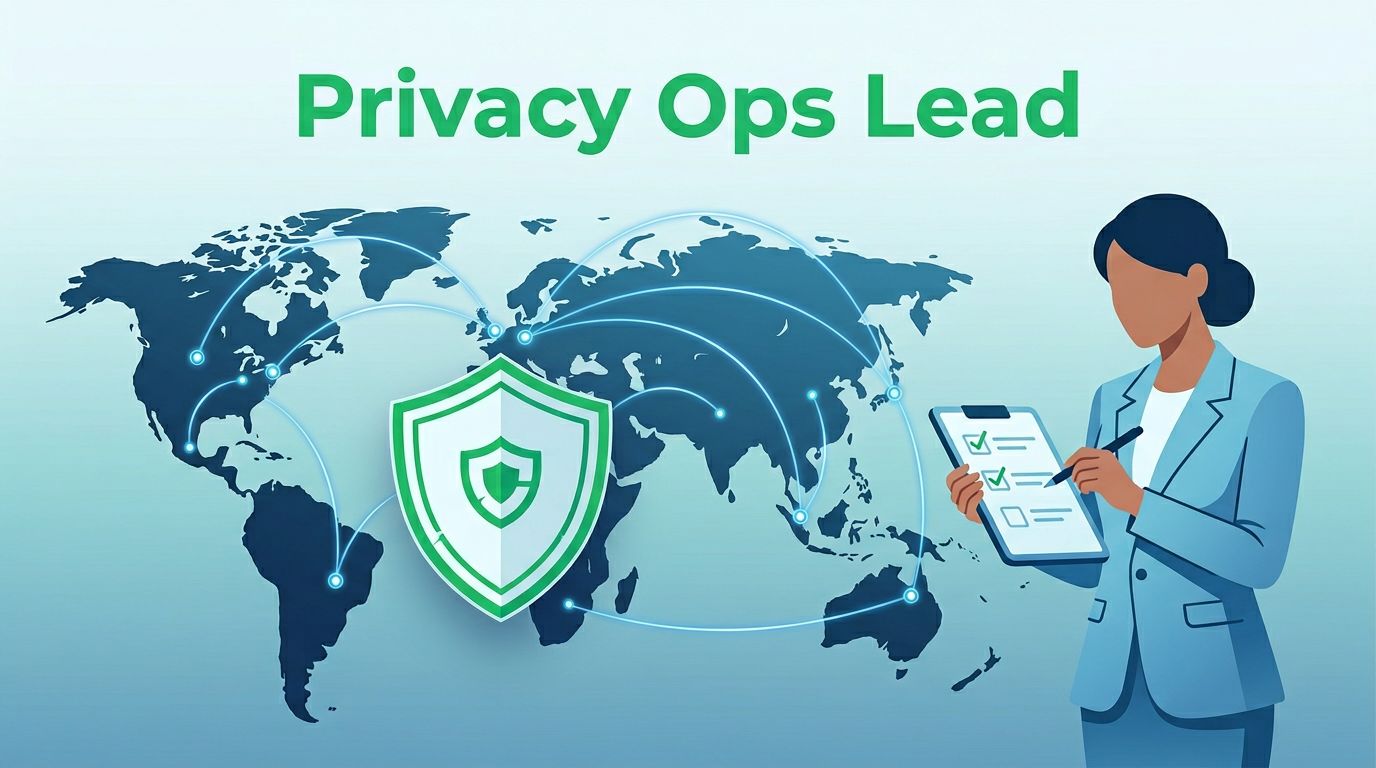
Global maps remind them of varying rules. EU demands strict consent; California focuses on sales opt-outs. Asia adds layers like India’s DPDPA.
Tailor the job description to your risks. List must-haves like experience with SOC 2 audits or third-party reviews.
Align Your Stakeholders Before Starting
Everyone pulls in different directions during hires. Legal wants compliance pros. IT needs tech-savvy operators. HR pushes for quick fills.
Get buy-in first. Schedule a short meeting with key players: CPO, GC, and ops heads. Agree on top pains, like slow DSAR responses or AI risk gaps.
Use a simple agenda. Rank priorities: Does vendor oversight top the list? Or breach simulations?
Shared goals prevent mismatches. One firm defined their framework around transfer risk assessments and escalation matrices. This cut debates later.
Diverse views strengthen the hire. Tech leads spot automation needs. Finance flags budget realities amid 2026 cuts.

Charts on metrics help. Show current gaps, like 68% of teams overwhelmed by tech pace.
Document decisions. This creates a unified pitch for candidates.
Build Your Hiring Scorecard
Scorecards remove bias. They weigh skills against your needs.
Start with categories. Give compliance knowledge 30% weight. Operations execution gets 25%. Leadership 20%. Tech tools 15%. Cultural fit 10%.
Rate on a 1-5 scale. Must-haves score high: Proven GDPR/CCPA work or DPIA leadership.
| Category | Weight | Key Indicators | Score Example |
|---|---|---|---|
| Compliance Expertise | 30% | Handled cross-border audits | 4/5 |
| Operations Skills | 25% | Scaled DSAR processes | 5/5 |
| Leadership | 20% | Led privacy training programs | 3/5 |
| Tech Proficiency | 15% | Used privacy management software | 4/5 |
| Fit | 10% | Aligns with company values | 5/5 |
This table guides reviews. Total scores above 80% advance candidates. Adjust weights based on stakeholder input.
Jobs like CoreWeave’s global lead emphasize scalable programs and audit readiness. Match your scorecard to that.
Positive marks stand out. Tally after each round.
Spot Top Traits in Privacy Operations Leads
Great leads blend strategy and execution. Look for operators who thrive in ambiguity.
They communicate clearly. Complex regs become simple updates for non-experts.
Problem-solvers shine. One lead at a tech firm automated vendor assessments, slashing review times by half.
Seek multinational experience. Knowledge of EU AI Act overlaps with GDPR helps. US pros handle CCPA’s opt-out flows.
Resilience matters. With 26% expecting breaches from understaffing, they stay calm under pressure.
Test for curiosity. Do they track 2026 trends like stricter consent or supplier checks?
Avoid pure policy writers. You need builders of repeatable processes.
Ask These Interview Questions
Interviews reveal fit. Probe with behavior-based questions.
How did you handle a high-volume DSAR surge? Good answers detail triage and automation.
Walk us through a DPIA for an AI project. Listen for risk prioritization and mitigation steps.
Describe a time privacy clashed with product goals. Balance shows maturity.
What metrics track operations success? Aim for response times, audit pass rates.
How do you stay current on regs like the EU AI Act? Sources like EDPB guidelines signal proactivity.

Note-taking keeps focus sharp. Follow up: What changed as a result?
Role-play a breach notification. Speed and accuracy count.
Quick Checklist for Your Hire
Use this before offers:
- Matches scorecard threshold?
- References confirm ops wins?
- Clears background and conflicts check?
- Negotiates realistic salary, given talent shortages?
- Starts with 90-day goals aligned to priorities?
Tick all boxes. Then extend the offer.
Wrapping Up Your Privacy Operations Hire
Strong privacy operations leads deliver evidence-based compliance in 2026’s tough climate. Define clear roles, align teams, and score rigorously.
You avoid breaches and fines. Operations run smooth across regions.
Book a Discovery Call with Bud Consulting if sourcing proves tricky. They specialize in senior security talent. Your program strengthens from day one.