table of contents
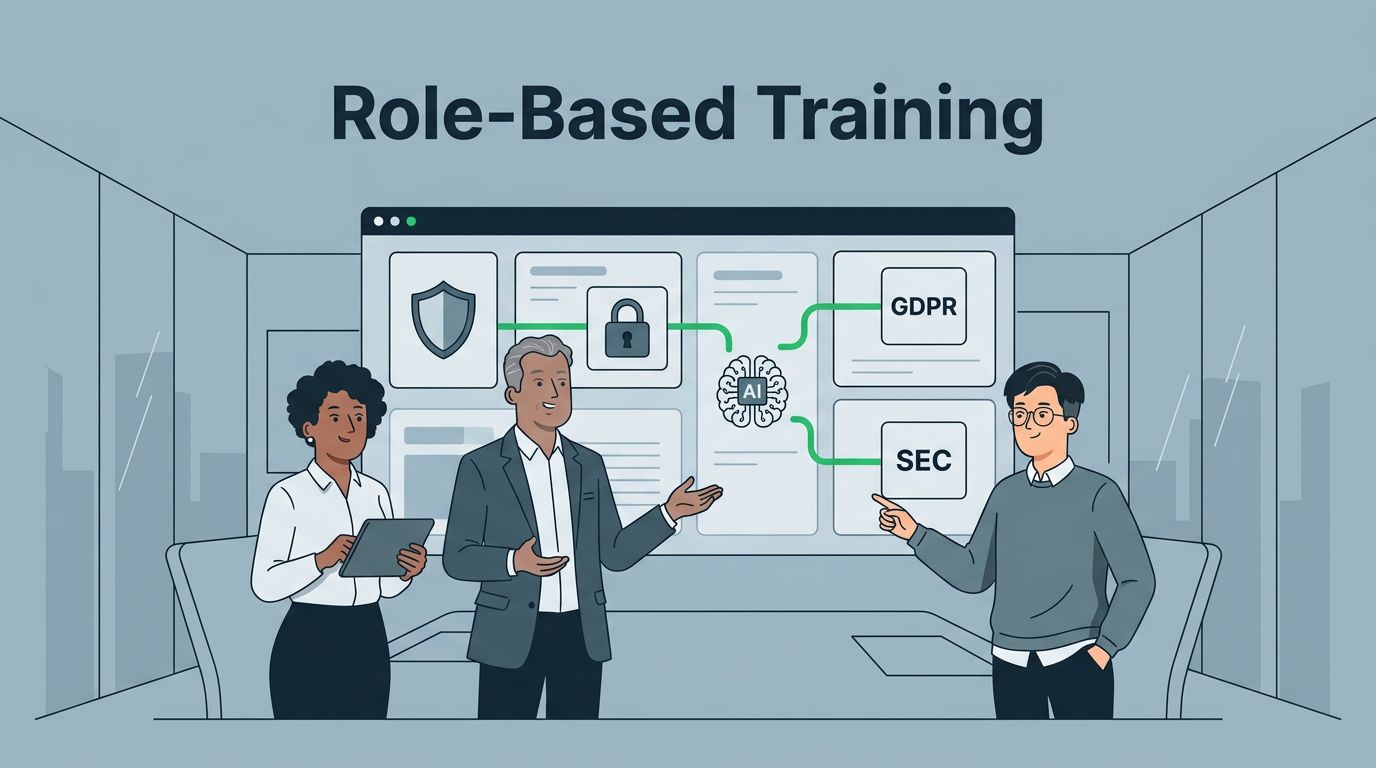
Compliance officers face rising pressure in 2026. New rules from SEC, GDPR, and NIST demand sharp skills in cybersecurity and AI risks. You need training that fits each person’s role and experience, or gaps will lead to fines and breaches.
Generic programs waste time. They ignore what junior staff need versus senior leaders. Role-based plans boost retention and cut risks by 40%. Let’s map out how to build yours.
Why Role-Based Training Fits 2026 Demands
Regulators expect more now. SEC requires quarterly updates for chief officers on cyber threats. GDPR pushes ethical AI use. NIST calls for behavioral training against attacks.
Tailor content to roles because one-size-fits-all fails. Junior officers learn basics like spotting phishing. Seniors handle policy integration. This matches 2026 financial advisor rules, which stress depth by exposure.
Sectors differ too. Finance teams drill crypto monitoring. Healthcare focuses on ransomware drills. Tech builds AI ethics skills. Start with a risk assessment. List obligations by department. Then segment audiences.
Frequency matters. Onboard in 30 days. Refresh yearly. Add triggers like incidents. Mix microlearning and simulations. Track with quizzes over 90% pass rates.
Tailoring Plans to Experience Levels
Match training to career stage. Juniors build foundations. Mid-level officers apply skills. Seniors lead strategy.
Juniors need 20-30 hours upfront. Cover core regs, reporting, and incident basics. Use interactive modules on data privacy.
Mid-level gets 40 hours. Add vendor reviews and risk checks. Practice escalations in VR scenarios.
Seniors focus on oversight. Train on AI governance and cross-team alignment. Quarterly sessions keep them sharp.

This approach cuts training time. AI tools spot gaps and personalize paths. For example, PwC’s compliance curriculum scales by seniority in Luxembourg firms.
Assess current skills first. Survey teams. Review audit findings. Adjust plans yearly.
Building Your Training Matrix
Create a matrix to organize topics. Rows show levels: junior, mid, senior. Columns list skills like regs, risks, cyber.
Here’s a sample for all sectors. Customize for your industry and jurisdiction.
| Skill Area | Junior (20 hrs) | Mid-Level (40 hrs) | Senior (30 hrs quarterly) |
|---|---|---|---|
| Regulations | Core rules (AML, GDPR) | Updates, digital assets | Cross-jurisdiction strategy |
| Risk Assessment | Spot basics | Vendor audits | AI predictive modeling |
| Cybersecurity | Phishing recognition | Ransomware response | Policy integration |
| Reporting | Incident logs | Escalation drills | Board updates |
Use this as a starter. Assign delivery: eLearning for basics, workshops for practice. Automate reminders in your LMS.
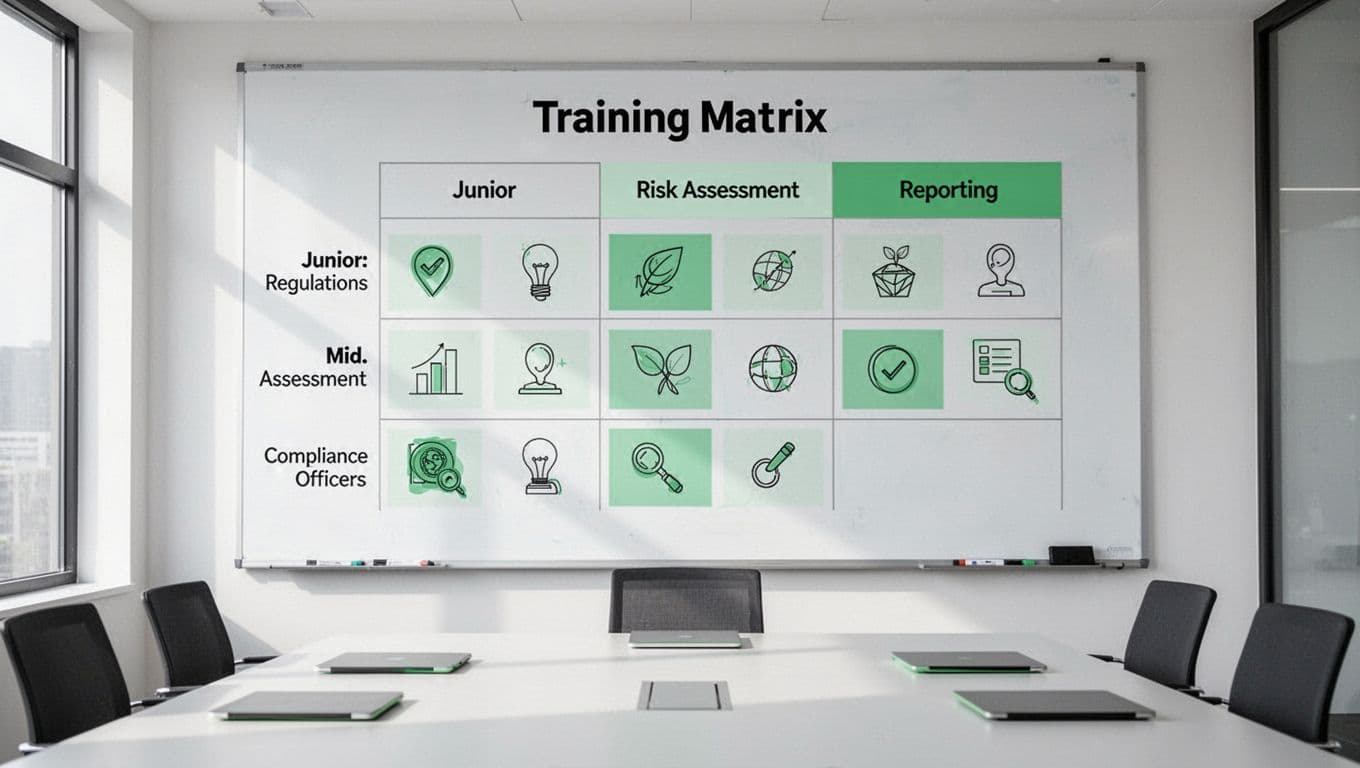
Follow steps from AccountableHQ’s template: Prioritize by risk scores. Set objectives. Stagger rollouts. Escalate overdues to managers.
Test effectiveness. Quiz after modules. Track behavior changes like faster reporting.
Functional Areas and Specialized Training
Focus on hot areas like cybersecurity. It’s key across finance, healthcare, tech.
Finance officers train on blockchain and AML automation. Healthcare needs HIPAA cyber drills. Tech covers ESG data analytics.
Cyber roles demand dual skills. Analyze risks on tools like NIST frameworks. Practice simulations quarterly.

Specialize by function. Risk teams get predictive AI. Reporting pros learn SEC filings. Always tie to your risk profile.
Bud Consulting helps here with cyber talent and culture strategies. Book a Discovery Call with Bud Consulting to assess gaps.
Steps to Roll Out and Track Progress
Launch in phases. Pilot with one team. Gather feedback. Scale up.
- Audit needs: Review regs and incidents.
- Build matrix: Use the sample above.
- Deliver mix: Micro modules daily, workshops monthly.
- Measure: Completion rates, quiz scores, breach drops.
- Update: Yearly for new rules like AI acts.
Use analytics for ROI. Show reduced fines to leaders.
Key Takeaways
Role-based compliance officer training matches skills to needs. It cuts risks and meets 2026 rules.
Build matrices by level and function. Start small, track results, adjust often. Your team stays ahead.
Tailor to your setup. This keeps operations smooth and audits clean.