table of contents
CISOs face flat or modest budget growth in 2026. Yet threats keep rising. You need to pick CTEM investments that deliver real risk cuts without overspending.
Eighty-five percent of organizations boosted cybersecurity budgets this year. Almost nine in ten plan more for 2026. Still, over half of leaders say it’s not enough. Wiz’s 2026 CISO Budget Benchmark shows the pressure. CTEM helps you focus on exposures that matter. It scopes, discovers, prioritizes, validates, and mobilizes fixes in a loop.
This post shows how to rank CTEM tools and processes. You’ll learn criteria, tradeoffs, and a roadmap. Start with quick wins to build momentum.
Understand Your Current Threat Exposure
You can’t prioritize what you don’t see. Map your attack surface first. Include cloud assets, on-prem servers, OT systems, and third-party risks.
Most teams fix only 10% of vulnerabilities. The rest overwhelm them. CTEM starts with discovery. Use existing scanners. Add threat intelligence to spot exploitable paths.
A CISO reviews a dashboard like this one. It flags high-risk assets with priority markers.

Focus on crown jewels, like customer databases or revenue systems. Ask business owners: What fails if hacked? This scopes efforts. It avoids chasing every alert.
In tight budgets, skip full scans yearly. Run continuous but targeted ones. Tools like those from Qualys integrate data for better views. Result? You cut SOC time by 42% on false positives.
Validation comes next. Test if flaws lead to breaches. EPSS scores beat CVSS for exploit odds. Unknown owners mean higher risk. No one patches those assets.
Set Clear Prioritization Criteria
Rank exposures by business impact and fix cost. Not just severity scores.
Build a matrix. One axis: risk to revenue or ops. Other: effort to remediate. High impact, low cost wins first.
Here’s a visual of that matrix in action.

Criteria include:
- Exploit probability from threat intel.
- Path to critical assets.
- Remediation time under 30 days.
Gartner’s CTEM model stresses this. CTEM.org outlines prioritization. Focus on 2-5% of risks causing most damage.
Justify spend with metrics. Show breach cost drops from $4.44 million average. Track fix rates pre- and post-investment. Boards love dashboards tying security to dollars.
Defer low-impact items. Automate patching for them later. First, fund validation tools. They cut noise by 84%.
Common Tradeoffs in CTEM Spending
Budgets force choices. Weigh CTEM against AI tools or staff hires.
This illustration shows scales balancing CTEM elements like exposure mapping against other spends.

Common swaps: AI gets buzz, but CTEM proves ROI faster. Decommission unused tools. Free 10-20% of budget for threat intel.
Staff vs. software? Hire analysts for validation. Tools alone miss context.
Cloud focus pulls funds from OT. Yet factories face rising attacks. Balance both.
Per RH-ISAC’s 2026 report, half expect 1-10% growth. Optimize existing stack. Reuse EDR for initial scoping.
Insurance firms demand CTEM proof. Lower premiums follow. That’s measurable outcome.
Build a Phased Roadmap
Roll out CTEM in stages. Match Gartner’s loop to your cycle.
This timeline maps the phases simply.
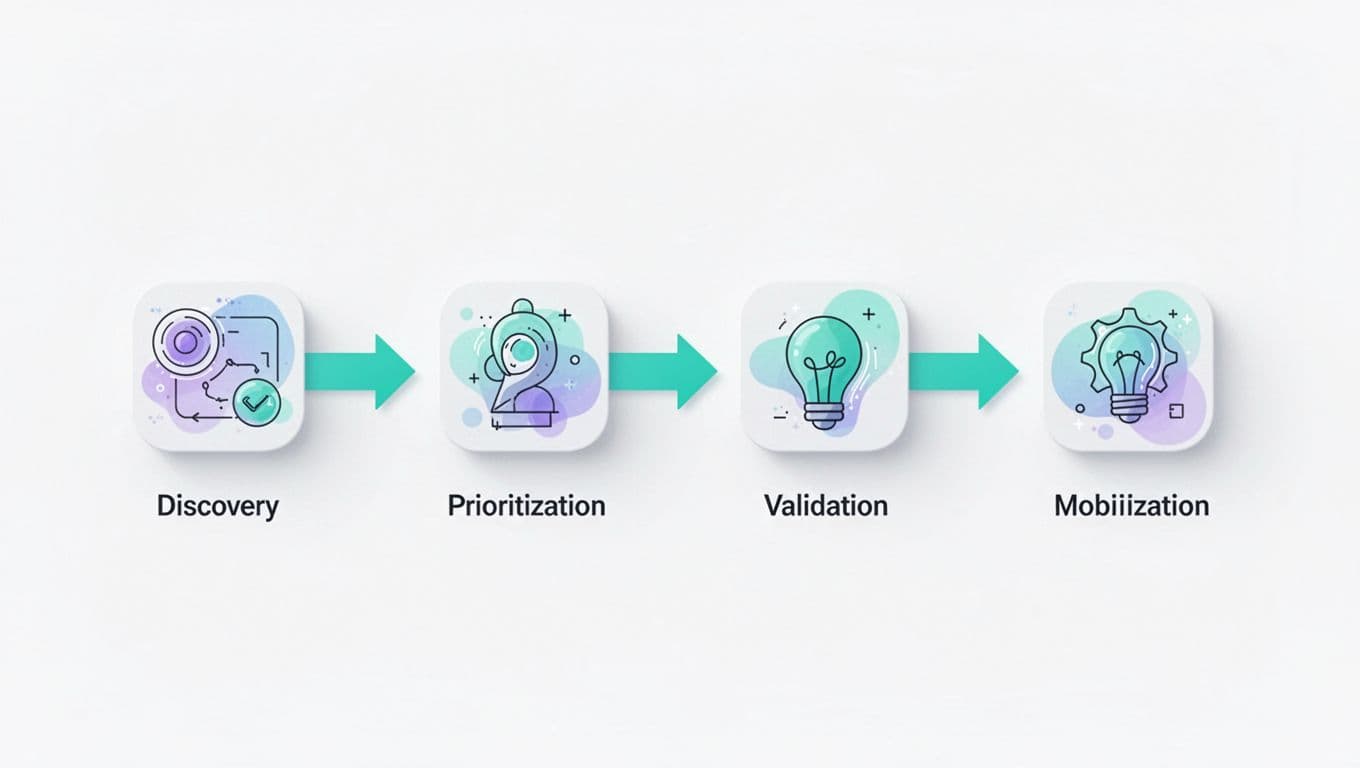
Phase 1: Scope (1-2 months). Pick top assets. Free with stakeholder talks.
Phase 2: Discover (ongoing). Scan gaps. Low-cost add-ons.
Phase 3: Prioritize/Validate (3-6 months). Invest here first. Buy intel feeds.
Phase 4: Mobilize. Automate fixes. Measure 50% faster resolutions.
Budget tip: Start narrow. Prove wins. Scale with savings.
| Stage | Focus | Budget Allocation |
|---|---|---|
| Scope | Business assets | 0% (internal) |
| Discover | Full surface | 20% |
| Prioritize | Risk ranking | 30% |
| Validate | Exploit tests | 30% |
| Mobilize | Fixes and loops | 20% |
The table sets context. Key takeaway: Prioritize validation for max efficiency.
In 2026, Praetorian notes CTEM acceleration. It organizes vuln programs.
Key Takeaways
Tight budgets demand smart CTEM investments. Target validation and intel first. They slash waste and prove value.
You’ve got a matrix, tradeoffs, and roadmap. Use them to fund what cuts real risk.
Boards want outcomes. Show risk drops and cost savings. Then expand.
Book a Discovery Call with Bud Consulting to align your team on this.
(Word count: 982)