table of contents
Your SMB faces rising cyber threats as it grows. Headcount doubles, endpoints multiply, and cloud usage spikes. Yet many owners stick with basic antivirus, leaving gaps that attackers exploit.
Security tool budgets must scale with these changes. In 2026, SMBs worldwide will spend $109 billion on cybersecurity, often 4-20% of IT budgets. This guide shows you how to forecast those budgets by phase, from startup to scaling.
Start by mapping your current stage. Then build a plan that matches risks and resources.
Understand Your SMB Growth Stages
Growth phases change everything for security. A startup with five employees needs different tools than a 50-person team handling customer data.
In the startup phase (1-10 people), focus stays on survival. You have few endpoints, maybe some cloud apps. Basic threats like phishing dominate. Allocate $150-250 per user monthly for essentials.
As you hit the growth phase (11-50 people), endpoints jump to 50+. Cloud servers join the mix. Compliance kicks in if customers demand it. Budgets rise to $200-350 per user. Add monitoring tools.
The scaling phase (50+ people) brings enterprise-like risks. Remote work expands the attack surface. Regulations tighten. Spend $250-500 per user, or 8-15% of IT budget.
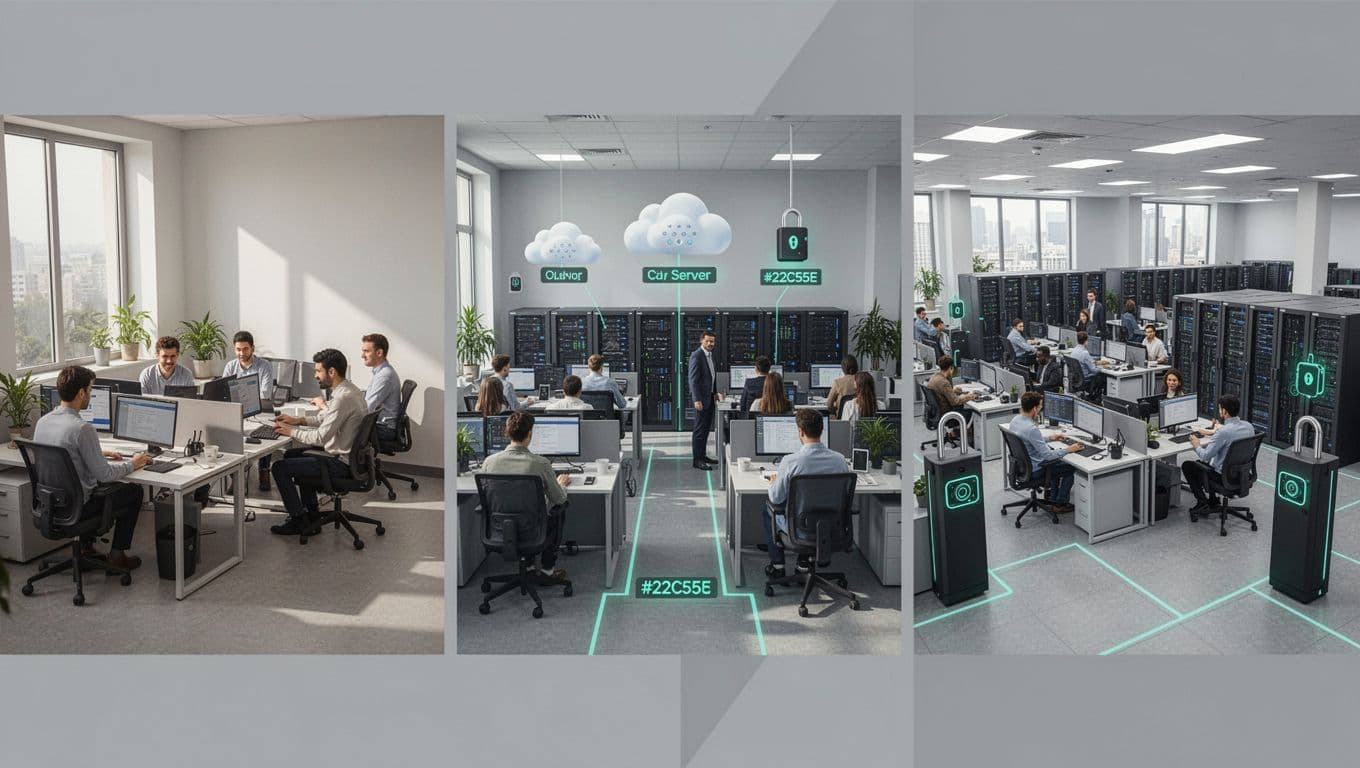
This visual captures how shields strengthen with size. For detailed breakdowns by employee count, check Valydex’s small business cybersecurity guide.
Match your phase to avoid overspending early or gaps later. Next, set budgets that fit.
Set Realistic Security Tool Budgets
Base your security tool budgets on IT spend, not guesses. SMBs typically dedicate 5-15% of IT budgets to cyber, with tools taking 40-50%.
For a $500,000 IT budget, that’s $75,000 on tools. Split it like this: endpoint detection (EDR) at 12%, multi-factor authentication (MFA), backups, and training.
Here’s a sample allocation:
| Category | Budget Share | Example Monthly Cost (50 users) |
|---|---|---|
| Security Tools | 40-50% | $2,000-3,000 |
| Personnel/Training | 25-35% | $1,000-1,500 |
| Managed Services | 20% | $1,000 |
| Compliance/Reserve | 10% | $500 |
This table draws from 2026 trends. Tools lead because they block threats fast. Personnel follows for human errors.

Costs vary by industry. Fintech hits 15%+ of IT; low-risk sectors stay at 5-7%. Adjust for your risk profile. See HackrTech’s cybersecurity budget planning for growing companies for more splits.
Build in 10% growth yearly. Threats evolve, so budgets must too.
Must-Haves vs Nice-to-Haves by Phase
Prioritize tools that stop breaches first. Must-haves protect core assets; nice-to-haves add polish.
Startup phase: Must-haves are MFA, antivirus, and backups ($150/user/month). Skip SIEM; it’s overkill. Nice-to-have: basic email filters.
Growth phase: Add EDR and managed detection ($200-350/user). Customer expectations push endpoint protection. Nice-to-have: vulnerability scanners. Tradeoff: in-house EDR costs time; MSPs handle it for less.
Scaling phase: Zero Trust, SIEM, and penetration tests become must-haves ($250+/user). Compliance like GDPR demands them. Nice-to-have: AI threat hunting.
Outsourcing saves 20-40% via MSSPs. They provide 24/7 monitoring without hiring. In-house suits if you have IT staff; otherwise, partner up.
63% of SMBs raised budgets in 2025 for these shifts. Focus on phases to balance.
In-House Tools or MSP Support?
Decide between building in-house or leaning on MSPs/MSSPs. Each has tradeoffs.
In-house gives control. Buy EDR licenses outright. But it needs experts, who cost $100K+ yearly. Small teams struggle with updates.
MSPs bundle tools and support. Spend 19-40% of budget here for small SMBs. They cover MFA, backups, EDR. Scale easily as headcount grows.
For scaling, MSSPs add advanced response. Global SMB spend hits $109 billion in 2026 partly from this shift.
Pick based on phase. Startups start with MSPs; scaling firms mix both. Check Cyber Unit’s 2026 small business budgeting insights for projections.
A Simple Framework to Prioritize Security Spending
Use this four-step process to forecast budgets yearly.
First, assess risks. Count endpoints, cloud apps, compliance needs.
Second, list must-haves. Rank by impact: MFA tops, then EDR.
Third, allocate funds. Use the pie chart model above.
Fourth, review annually. Adjust for growth or breaches.
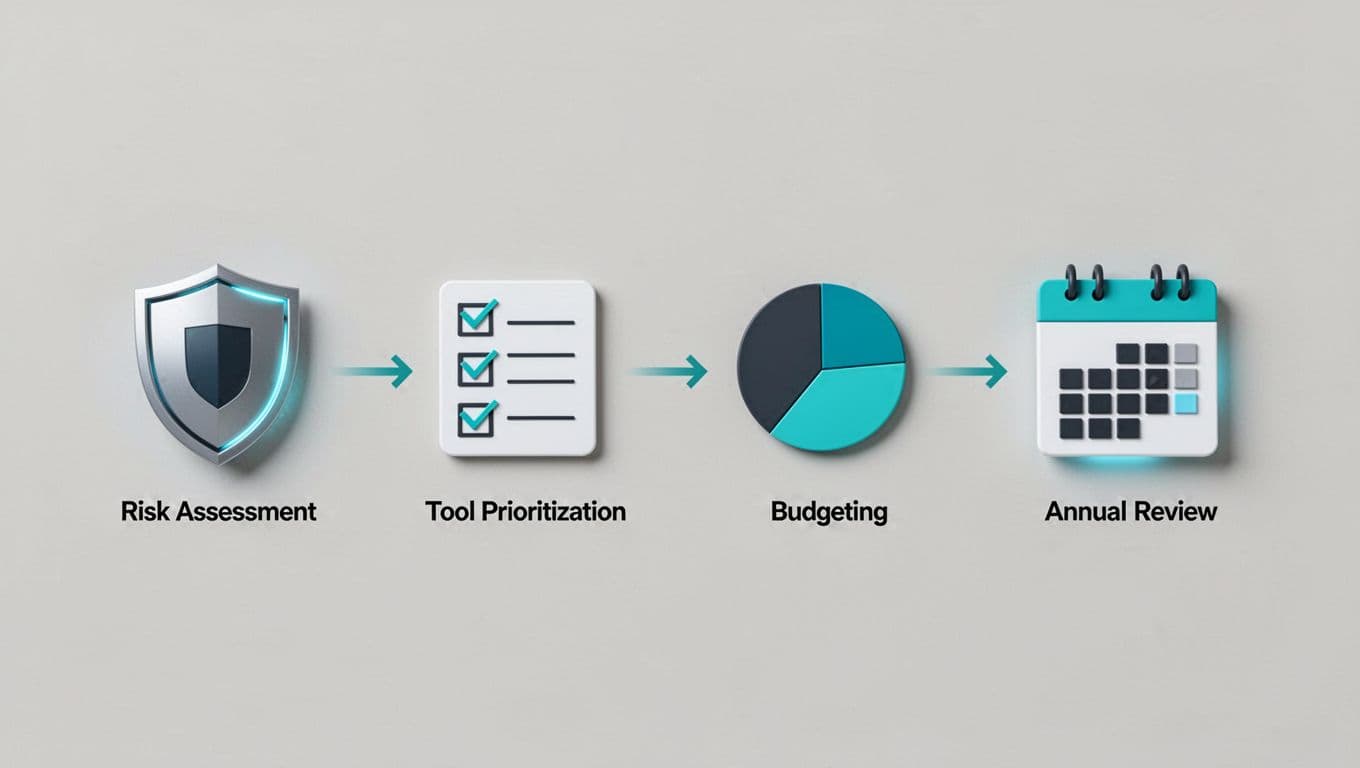
This keeps spending focused. If gaps persist, book a discovery call with Bud Consulting for tailored advice.
Key Takeaways for SMB Security Budgets
Security tool budgets grow with your SMB, from $150 per user in startups to $500+ at scale. Tools take 40-50%, but MSPs stretch dollars further.
Match must-haves to phases and review often. This approach cuts risks without waste.
Your business thrives when security scales smartly. Start planning today.