table of contents
SaaS breaches hit hard in 2026. Attackers stole 2.7 million records through an exposed API in one case alone. Your stack of CRM tools, identity providers, and collaboration apps faces similar risks from shadow IT and weak API connections.
You manage dozens of SaaS apps. Each adds exposures like misconfigured permissions or forgotten service accounts. CTEM for SaaS helps you spot and fix these before they turn into headlines. This guide shows you how to prioritize it effectively.
Start by mapping your stack. Then score risks and build workflows that fit your team.
Why CTEM Matters More for SaaS Than Ever
SaaS stacks grow fast. Teams add collaboration tools like Slack, CRM systems such as Salesforce, and code platforms like GitHub without full visibility. In 2026, third-party risks caused 30% of breaches, per Verizon data.
CTEM cycles through scoping, discovery, prioritization, validation, and mobilization. For SaaS, it focuses on external views: API endpoints, user permissions, and vendor integrations. Unlike servers you control, SaaS exposures hide in vendor updates or shadow apps.
Consider a typical setup. Your identity provider like Okta connects to a ticketing system such as Jira. A weak OAuth scope there exposes customer data. CTEM scans these links continuously, unlike quarterly pen tests.
Adoption lags because teams drown in alerts. Yet platforms with AI automation cut manual work by half. They integrate threat intel to rank real threats, not just CVSS scores.
Gartner outlines the five stages of CTEM, which emphasize business impact over raw vulnerability counts. SaaS teams succeed by starting small: one tenant or app suite first.
You cut breach costs, which average $10 million for US firms. Prioritize CTEM now to stay ahead.
Map Your SaaS Attack Surface
List every SaaS app your team uses. Start with high-impact ones: identity providers, CRM, collaboration tools, code repos, ticketing, and cloud-hosted apps.
Pull data from Okta Workflows or Microsoft Entra ID for user counts and permissions. Check API-connected vendors too. Tools like SaaS security platforms scan for shadow IT, which hides 20-30% of apps.
Build an asset inventory. Note owners, data sensitivity, and integration points. For example, your Salesforce instance links to Zendesk via API. Map those flows.
External attack surface management (ASM) tools reveal public exposures. They find dangling DNS records or open buckets tied to your SaaS domains.
Distinguish from traditional infra. Servers sit in your data center; SaaS lives on vendor clouds. You control configs, not code. Focus on posture: misconfigs, over-permissions, expired certs.
In 2026 trends, ASM pairs with CTEM for hourly scans. This catches changes fast, like a new Slack channel with guest access.
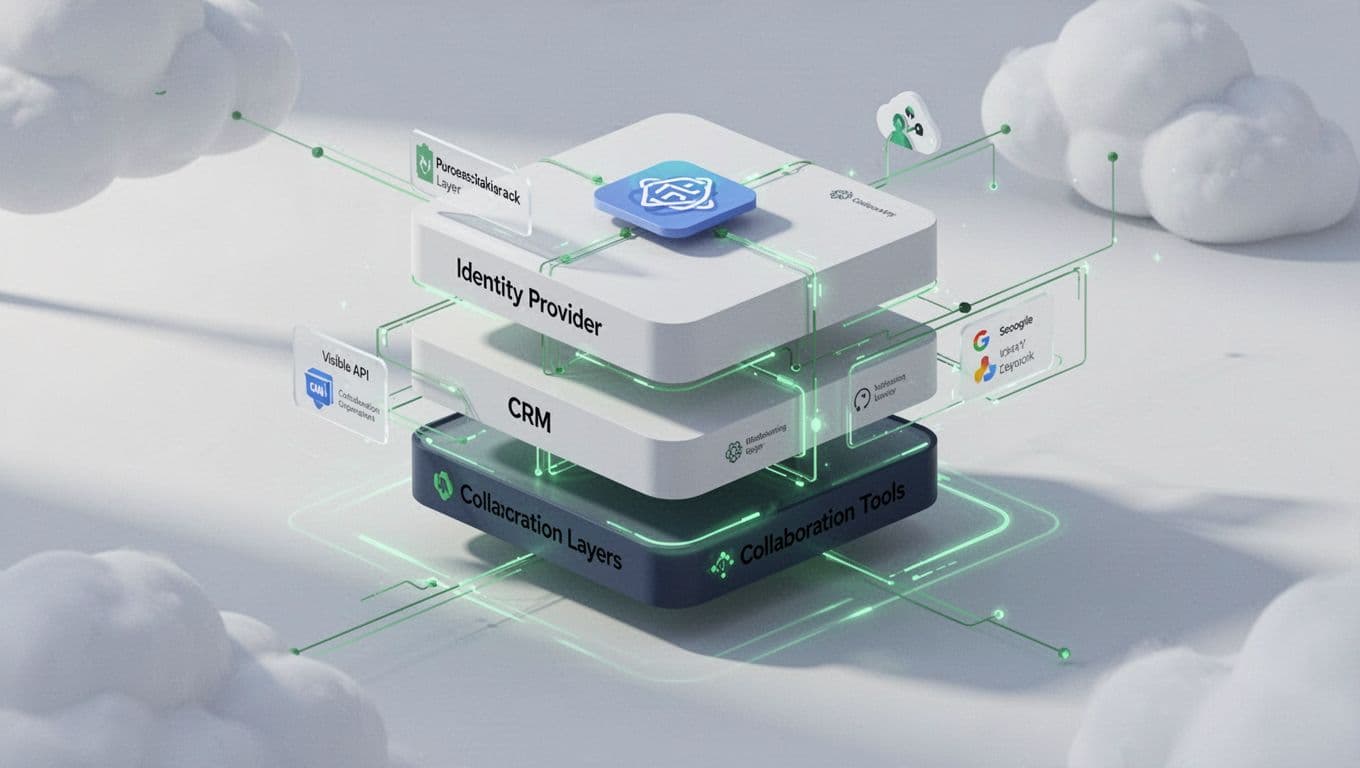
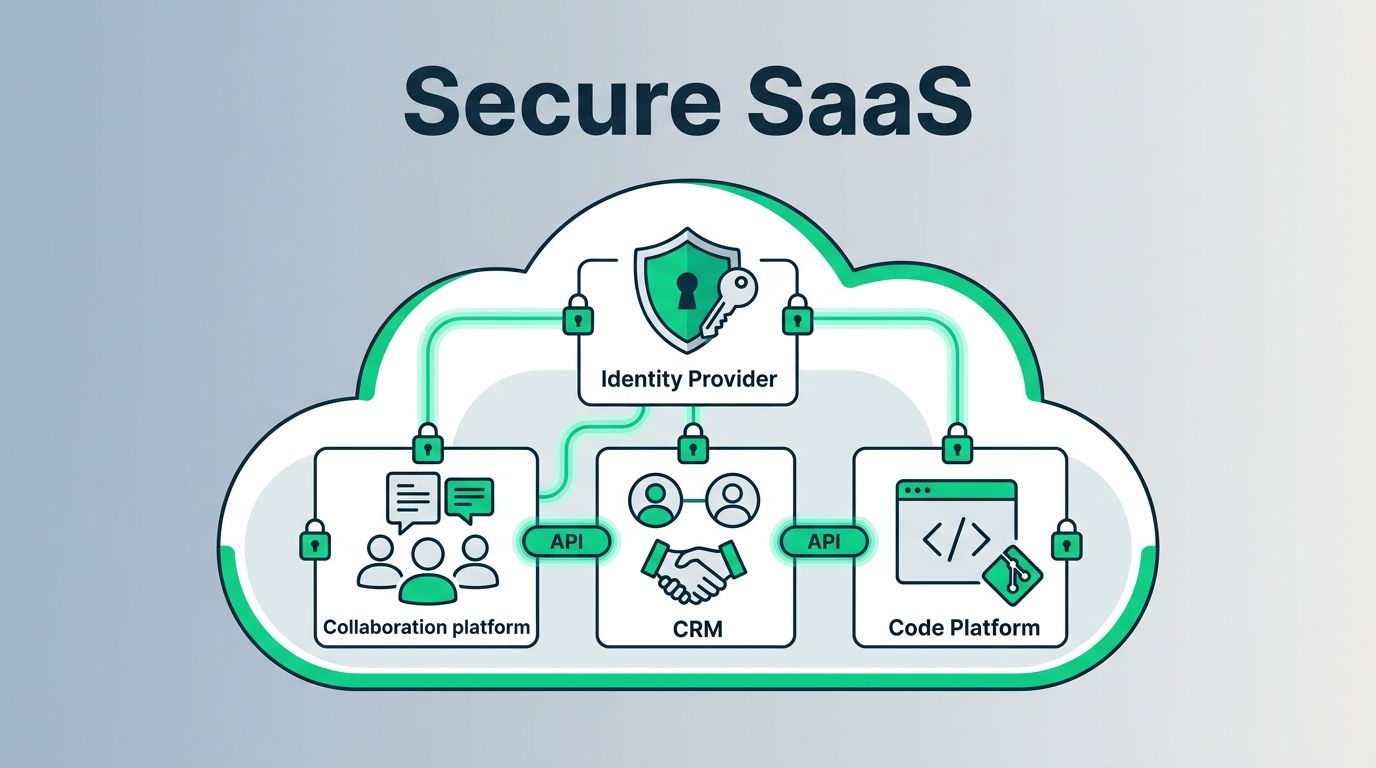
This view shows a layered stack. Identity layers sit at the base, with CRM and tools above, linked by APIs. Green highlights flag security checks.
Repeat quarterly. Teams that do this reduce blind spots by 40%.
Score Risks with Key Metrics
Assign scores to exposures. Use exploit likelihood first, like EPSS scores from CTEM.org prioritization guidance. A high EPSS means active attacks.
Add business impact. Weight by data type: customer PII scores higher than internal docs. Factor user count and blast radius.
Check compensating controls. Does segmentation block lateral moves? Rate reachability: public APIs score worse than internal ones.
Combine into a formula. Risk = (Exploit Likelihood x Business Impact) / Controls Effectiveness. Tools automate this.
For SaaS specifics, score API vulns high if they touch CRM data. Non-human identities, like service accounts, top lists because they lack MFA.
In 2026, AI tools pull threat intel. Ransomware targeting your sector bumps scores.

Dashboards like this heat-map apps. CRM shows red for high risks; ticketing stays yellow.
Review weekly. Adjust for new intel. This beats CVSS, which ignores context 70% of the time.
Key Differences: CTEM for SaaS vs. Traditional Infrastructure
Traditional CTEM scans VMs and endpoints you own. Patches deploy via Ansible. SaaS shifts focus.
You can’t patch vendor code. Instead, validate configs and integrations. Use vendor APIs for posture checks.
Ownership splits. SaaS shared responsibility means you secure access; they secure the platform.
Discovery differs. Infra uses Nmap; SaaS needs tenant logs and API enumerations.
Prioritization weighs vendor SLAs. A Jira zero-day relies on Atlassian’s fix timeline.
Validation tests attack paths. Simulate API abuse on your Okta-Salesforce link.
Mobilization automates tickets to app owners. Slack bots notify for quick fixes.
CTEM vs. vulnerability management highlights this: SaaS starts with posture, not CVEs.
Teams adapt by piloting one stack. Results show 2x faster fixes.
Build a Practical Prioritization Framework
Create tiers: Critical, High, Medium, Low.
Critical: Public APIs with EPSS >0.5, PII access, no controls.
High: Privileged service accounts, shadow IT with user data.
Medium: Expired certs, over-permissions.
Low: Informational findings.
Set SLAs: Critical in 7 days, High in 30.
Use a table for clarity.
| Tier | Criteria Example | SLA | Owner Example |
|---|---|---|---|
| Critical | EPSS>0.5, public API to CRM | 7 days | AppSec lead |
| High | Service account no rotation | 30 days | IT ops |
| Medium | Guest access in Slack | 90 days | Team lead |
| Low | Deprecated config option | Next Q | Vendor mgr |
This table guides decisions. Customize rows for your stack.
Integrate with ITSM like ServiceNow. Auto-triage tickets.
Test the framework quarterly. Track fix rates; aim for 80% on-time.
Set Up Your Prioritization Workflow
Follow the CTEM cycle weekly.
First, scope: Review inventory.
Discover: Run scans.
Prioritize: Score and tier.
Validate: Pentest top 10%.
Mobilize: Assign and track.
Loop back.
Tools chain together: ASM for discovery, platforms for scoring.
For SaaS, add vendor-specific checks. Okta API for risky sign-ins; GitHub for repo secrets.
In 2026, agentic AI handles 50% of this. It suggests fixes like “Rotate this key.”
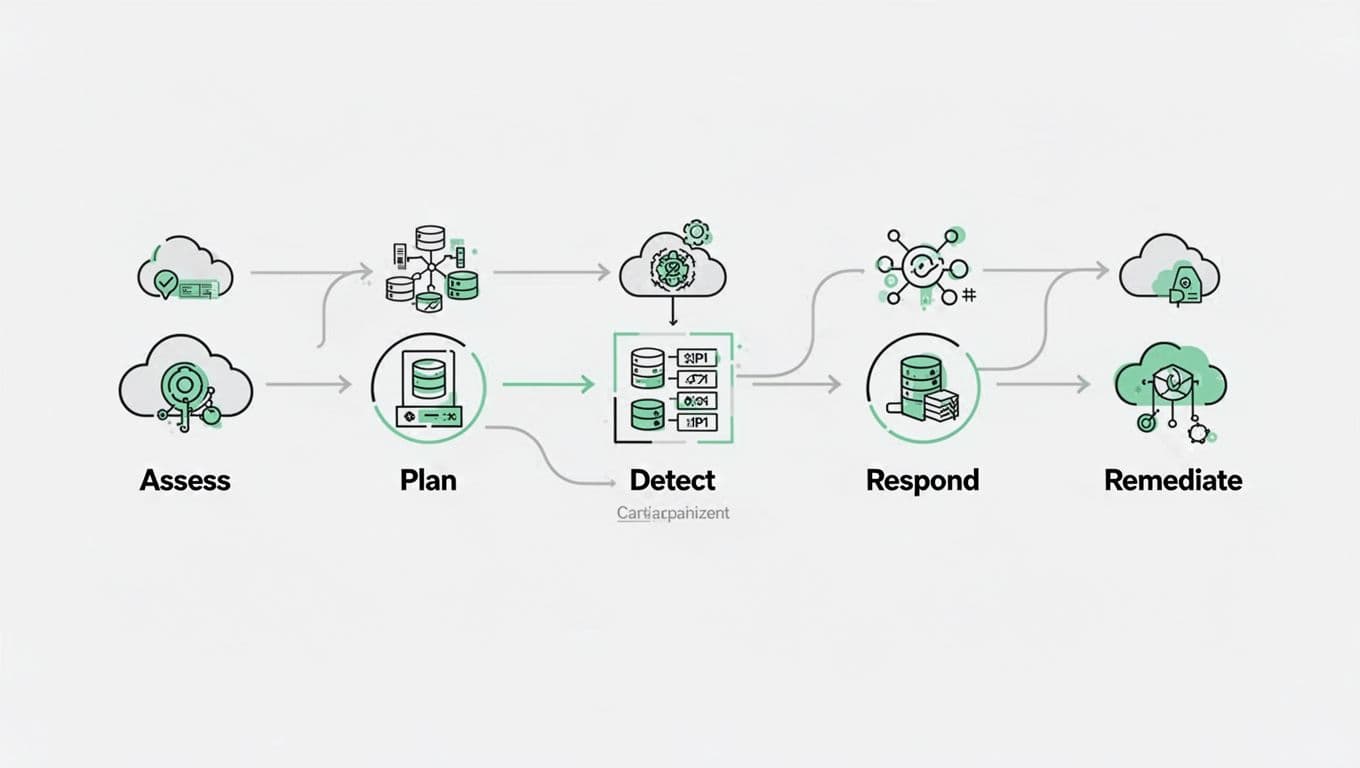
This flowchart maps the process. Arrows connect assess to remediate, with SaaS icons along the path.
Start small. Pilot on collaboration tools.
Scale with dashboards. Share in Slack for buy-in.
Best Practices and Checklists for Teams
Keep it operational.
Inventory checklist:
- List all SaaS with user counts.
- Map APIs and data flows.
- Tag owners.
Scoring best practices:
- Blend EPSS, impact, controls.
- Update threat intel monthly.
- Review top risks bi-weekly.
Validation tips:
- Use PTaaS for APIs, per Cobalt’s SaaS insights.
- Re-test post-fix.
Common pitfalls: Over-scope early. Fix one tenant first. Ignore non-humans. They cause most SaaS breaches.
Automate where possible. Integrate with SIEM.
For complex stacks, book a discovery call with Bud Consulting. They vet CTEM talent.
Track metrics: Mean time to remediate under 14 days.
Conclusion
Prioritize CTEM for SaaS by mapping stacks, scoring smart, and cycling workflows. This cuts exposures in identity, CRM, and APIs where breaches thrive.
SaaS risks evolve hourly. Your framework adapts.
Teams that focus here see fewer incidents. Build yours today.