table of contents
Over 70% of cloud breaches in 2026 start with compromised identities. Attackers grab credentials from overprivileged accounts or stale entitlements, then hop across your hybrid setup. You manage on-prem Active Directory synced to Entra ID, Okta federations, AWS IAM roles, and GCP IAM policies, but gaps let risks chain together.
CTEM workflows fix this. They run continuous cycles of discovery, prioritization, validation, and remediation tailored to hybrid identity sprawl. Security architects and IAM engineers use them to spot non-human identities like service accounts and automate fixes before exploits hit.
This guide breaks down actionable steps. You’ll see how to map attack paths, prioritize risks, and coordinate teams across environments.
Core Components of Hybrid Identity CTEM Workflows
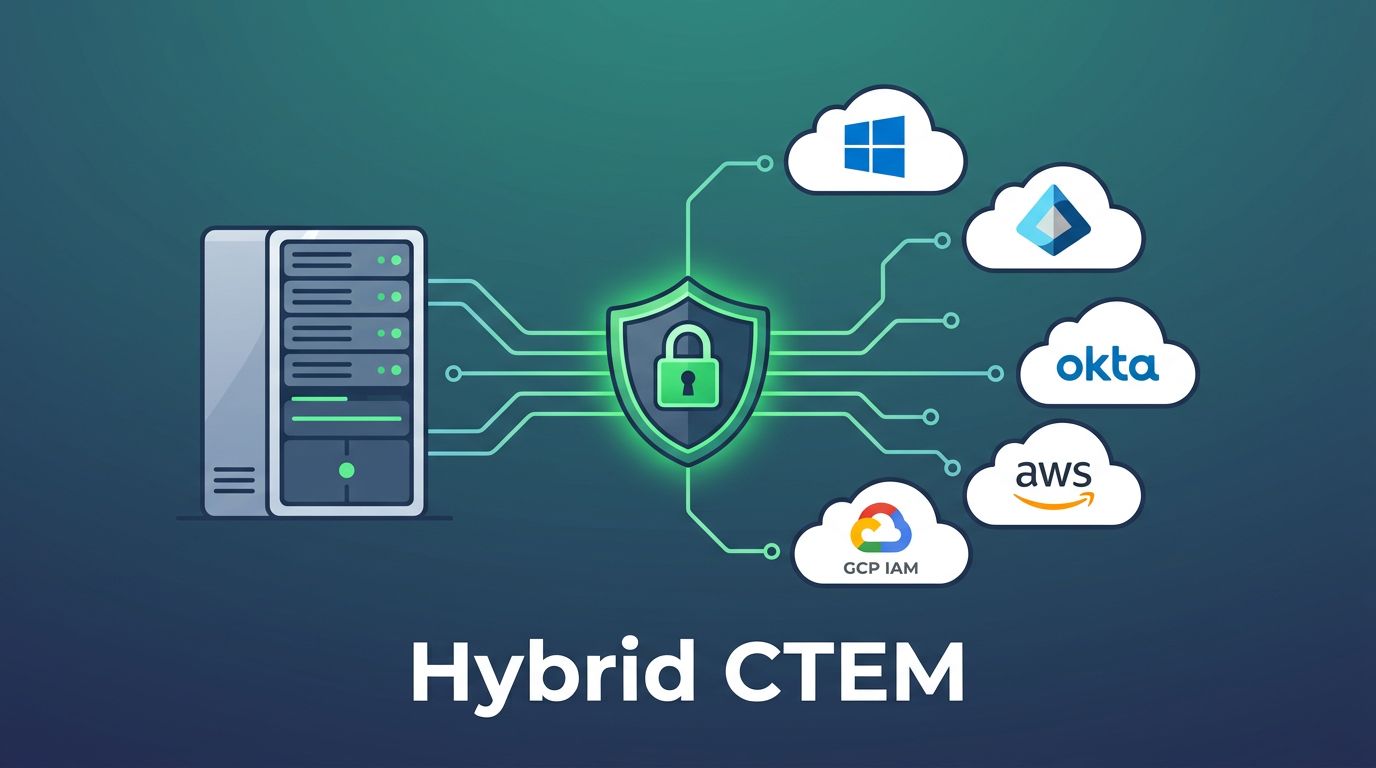
Hybrid cloud identity systems mix on-prem AD with cloud providers. Entra ID handles sync from AD forests. Okta federates access. AWS IAM and GCP IAM control service roles. Privileged access tools like CyberArk or BeyondTrust add just-in-time elevation.
CTEM workflows build on Gartner’s five stages: scope, discover, prioritize, validate, mobilize. In hybrid setups, you start by defining boundaries. Include all directories, IAM policies, and federation trusts. Tools pull data via APIs from Entra ID, Okta Workflows, AWS IAM Access Analyzer, and GCP’s IAM recommender.
Discovery scans for identities. Agents query AD group memberships. Cloud APIs list roles and service accounts. Non-human identities often hide here, like forgotten AWS keys or GCP workload identities. Stale entitlements show up as unused permissions over 90 days old.
Prioritization scores risks by blast radius. A federated Okta app with broad AWS scopes ranks high. Validation simulates paths without disruption. Mobilize triggers tickets in ServiceNow or Jira.
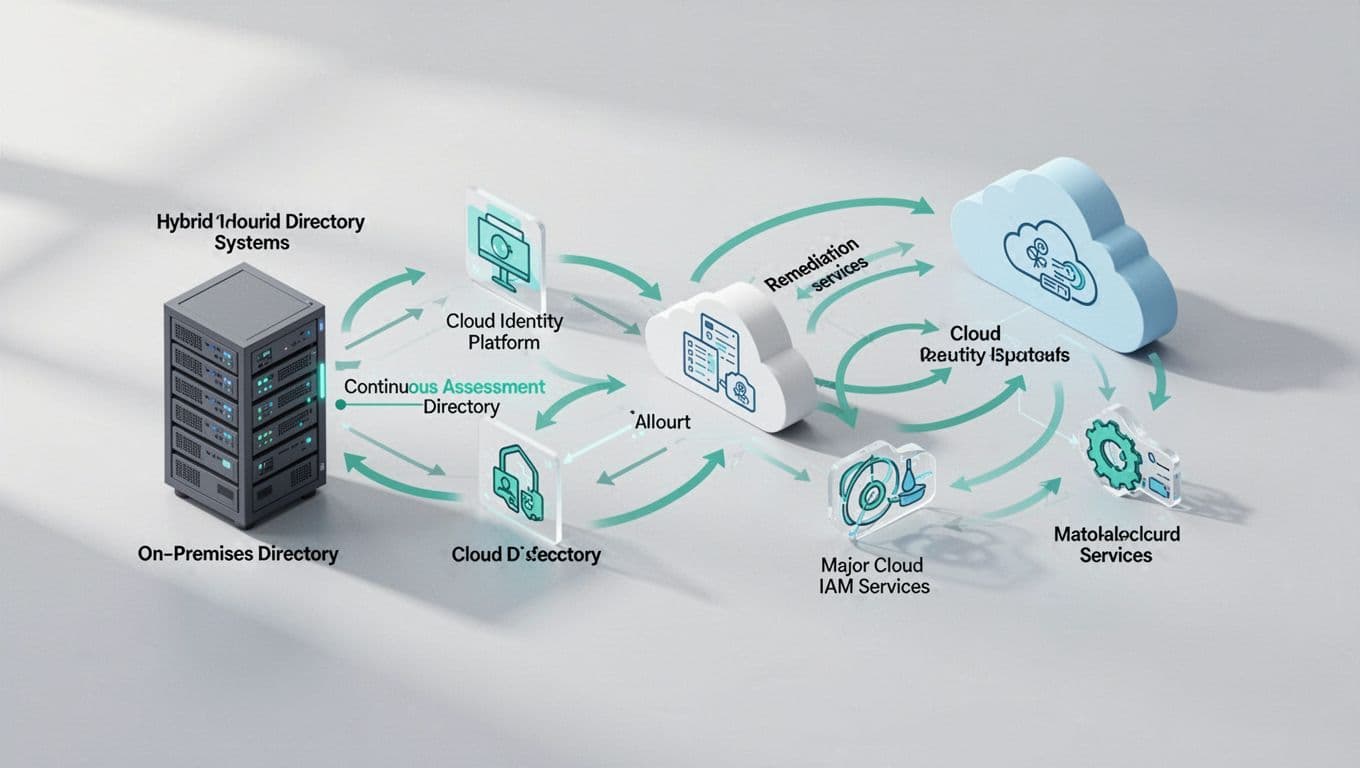
For setup details, check the CTEM getting started guide from the CTEM Organization. It lists access needs for identity pathways, like IdP directories and PAM platforms.
Run scans daily. Integrate with SIEM for alerts. Teams cut exposure by 3x with full coverage.
Mapping Identity Attack Paths Across Environments
Attackers chain privileges in hybrid clouds. A compromised AWS IAM service account escalates via Entra ID federation to on-prem AD domain admin. Paths form from overprovisioned roles, cross-tenant trusts, and stale group memberships.
Use graph-based tools to map these. BloodHound or SpecterOps extensions model Okta as a transit hub. Nodes represent identities; edges show effective permissions. Query for paths from low-priv users to critical assets.
In 2026, focus on non-human risks. Service principals in Entra ID federate to AWS without MFA. GCP IAM bindings grant cluster-admin to expired tokens. Recent trends show AI agents widening seams with quiet trusts.
Steps to map paths:
- Export AD groups and Entra ID roles via PowerShell or Graph API.
- Pull Okta apps and AWS policies with CLI tools.
- Load into a CTEM platform. It builds the graph automatically.
- Filter for high-risk paths, like those under 5 hops.
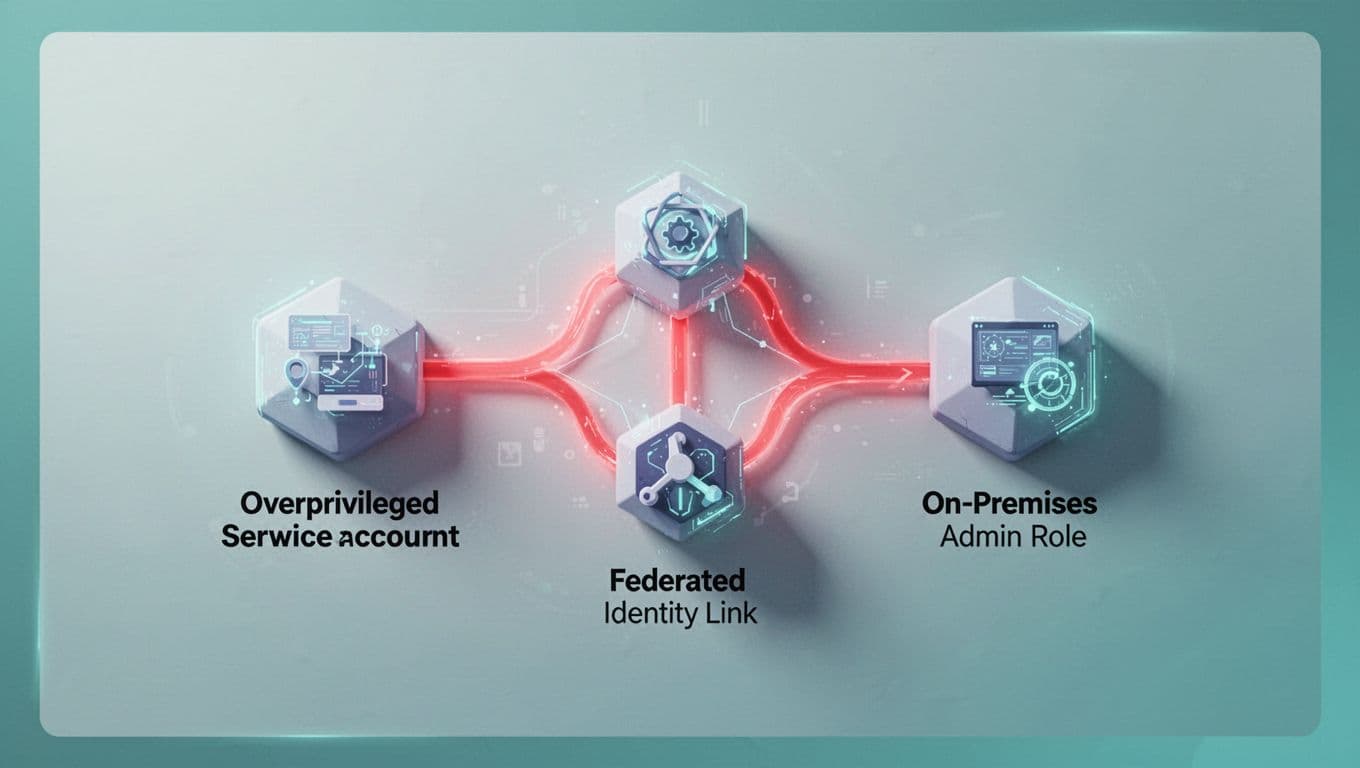
SpecterOps notes attack paths extend beyond directories into Okta and IAM. See their analysis on identity providers. Qualys forecasts scaling risks through design flaws like stale OAuth grants.
Review paths weekly. Block lateral movement with network segments or least-privilege policies.
Prioritizing Risks in Your CTEM Workflow
Not all risks equal threats. Prioritize by exploit likelihood and impact. Stale entitlements top lists; 61% of vulns exploit in 48 hours. Non-human identities amplify this, with machine accounts often overprivileged.
Score with business context. A GCP IAM role tied to production databases scores higher than dev. Factor federation risks, like Entra ID trusts to external Okta tenants.
Dashboards aggregate metrics. Entra Permissions Management detects Okta-originated identities. AWS IAM Access Analyzer flags unused permissions.

Use these criteria:
| Risk Type | Scoring Factors | Example Threshold |
|---|---|---|
| Overprivileged Accounts | Permission count >10, no recent use | Revoke if inactive 90 days |
| Stale Entitlements | Unused groups/roles | Alert if >180 days |
| Non-Human Identities | Ephemeral tokens, federation chains | Block if blast radius >5 assets |
| Federation Risks | Cross-tenant trusts without CA | High if MFA gaps |
Cyscale offers Entra ID risk monitoring across clouds. Only 16% of orgs run full CTEM, but adopters see faster fixes.
Assign owners based on scores. IAM teams handle entitlements; SecOps validates paths.
Continuous Assessment Loops for Hybrid Identities
Assessment runs non-stop. Weekly full scans complement daily API polls. Tools like Microsoft Defender for Identity bridge on-prem AD to Entra ID.
Validate controls. Check MFA enforcement on Okta apps. Audit AWS IAM policies for : allows. Simulate attacks with read-only BloodHound queries.
Handle drift. Permissions change via self-service portals. CTEM detects when a service account gains unexpected scopes.
Integrate EASM for external exposure. Exposed Entra ID federation endpoints invite token theft.
In practice, set up:
- Agents on domain controllers for AD.
- CloudFormation for AWS/GCP hooks.
- Webhooks from Okta to your CTEM platform.
Microsoft’s hybrid scenarios docs cover sync methods like PHS or PTA. Aim for 90% coverage. Track KPIs like mean time to validate.
Automation cuts manual reviews. AI models predict drift based on past changes.
Automating Detection to Remediation in CTEM
Manual tickets slow teams. Automate from alert to fix.
Detection triggers on high-score risks. A stale Entra ID app role alerts via API.
Workflow: CTEM platform posts to ITSM. Playbooks revoke access. For AWS, invoke iam:delete-role-policy. GCP uses IAM deny policies.
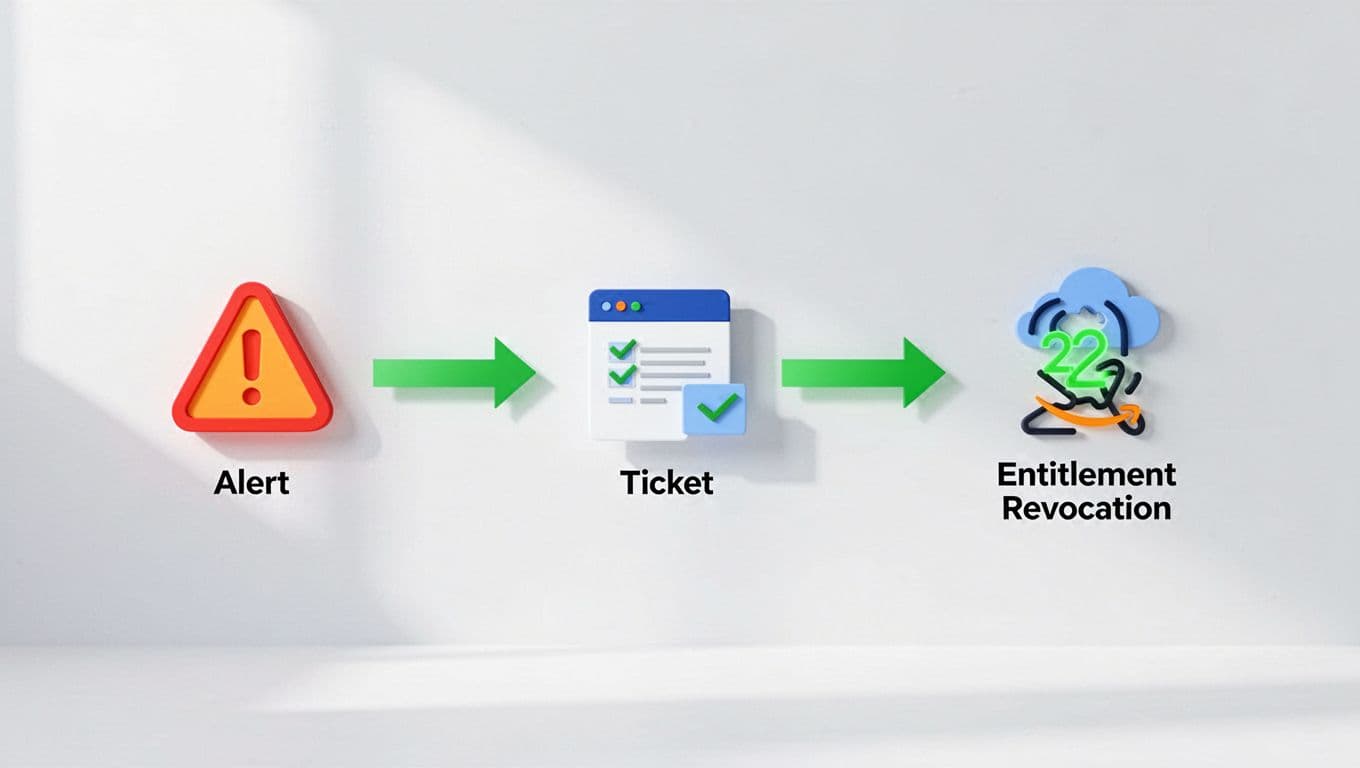
Example playbook for stale entitlement:
- CTEM scan flags unused Okta group.
- API call removes GCP IAM binding.
- Notify owner via Slack.
- Log in audit trail.
Trend Micro pushes auto-remediation. AWS blogs detail Entra PIM with IAM Identity Center for JIT access.
Test automations in staging. Human approval gates high-impact changes. This drops MTTR to hours.
Coordinating Security and IAM Teams Effectively
Silos kill workflows. Security finds paths; IAM remediates. Use shared dashboards in Microsoft Sentinel or Splunk.
Define SLAs: Prioritize P1 risks in 24 hours. Joint war rooms for path reviews.
Onboard with role-based access. IAM engineers get policy edit rights; SecOps views graphs.
Recent breaches like the 149 million credential dump highlight federation flaws. PwC reports identity attacks surging with AI.
Microsoft’s CTEM post unifies views across assets.
Foster culture. Quarterly simulations build skills. Tools like Okta-AWS integration ease multi-IdP management.
Implementation Steps for Your Environment
Start small. Pilot one domain or tenant.
- Inventory identities: AD, Entra, Okta, AWS/GCP.
- Deploy CTEM agentless scanners.
- Baseline risks. Map top paths.
- Automate low-risk remediations.
- Scale with team training.
Budget for tools. Open-source like BloodHound supplements commercial CTEM.
Measure success: Reduce paths by 50%. Automate 70% fixes.
If gaps persist, book a discovery call with Bud Consulting. They vet IAM specialists for hybrid setups.
Expect challenges like API rate limits. Stagger scans.
Key Takeaways for CTEM Success
CTEM workflows shrink hybrid identity risks through cycles of assessment and automation. Focus on attack paths, stale entitlements, and non-human accounts to block 70% of breaches.
Teams that prioritize and automate see 3x better outcomes. Start mapping today; integrate across silos.
Build these habits. Your setup handles multi-cloud sprawl better as a result.