table of contents
Regulated fintechs face constant pressure. You handle payments, lending, or banking services, so one breach can erode customer trust overnight. Security teams must cut risks while keeping products shipping fast.
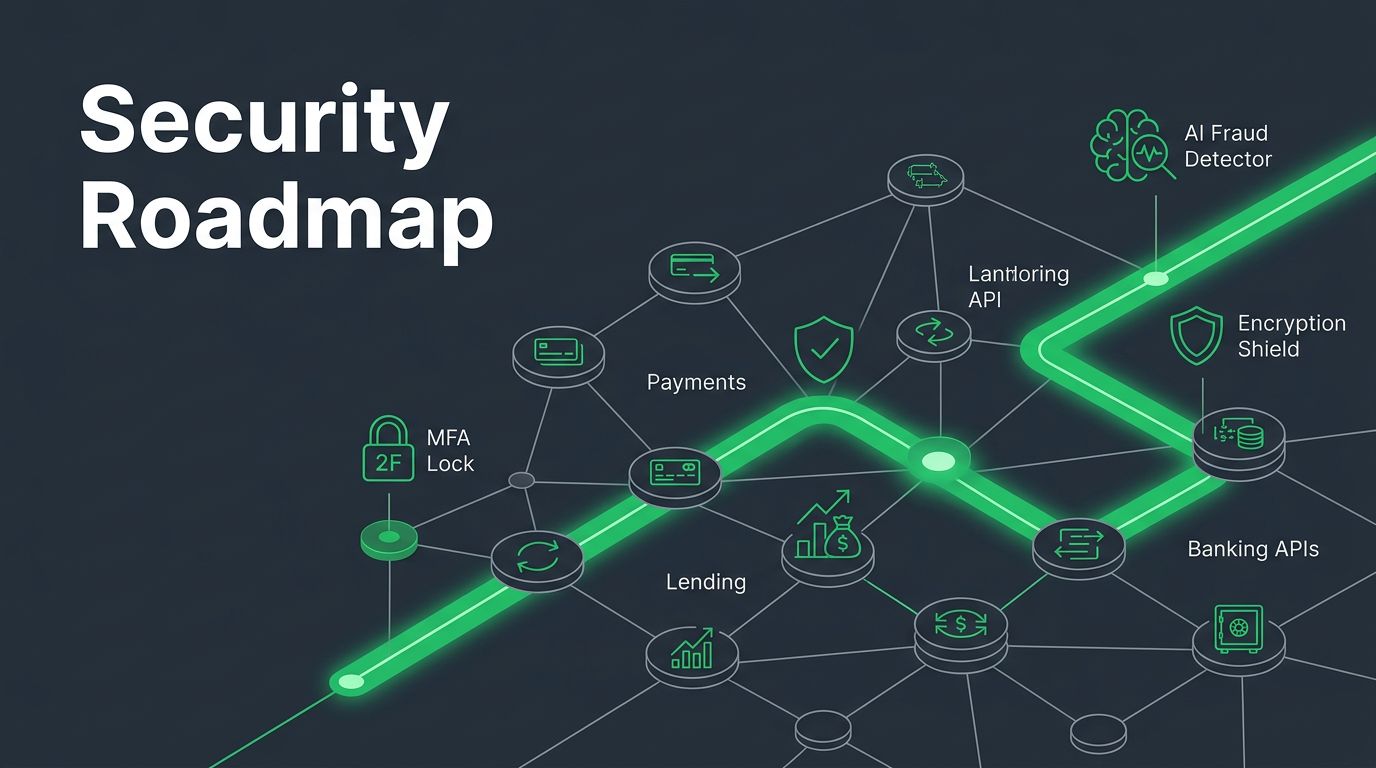
Your roadmap needs to juggle compliance, engineering speed, and growth. It starts with basics like MFA and encryption, then scales to AI fraud detection. This guide gives practical steps tailored to your stage.
Let’s map out how to build a fintech security roadmap that works for banks, neobanks, or BaaS providers.
Assess Your Starting Point
Every solid plan begins with a clear picture of your current setup. Ask yourself: What risks hit hardest right now? For payments firms, it’s API attacks. Lending platforms worry about data leaks during credit checks.
Start with a risk assessment. Map your payment and data flows. Identify crown jewels like customer PII or transaction logs. Use a simple matrix: plot likelihood against impact.

Teams often skip this step. They jump to tools without knowing gaps. Result? Wasted budget on shiny features that don’t fix real problems.
Coordinate with compliance early. They know regs like DORA in the EU or NYDFS in the US. These demand ICT risk frameworks by mid-2026. Document everything. It speeds audits later.
Check staffing too. A solo engineer can’t cover IAM and incident response. Benchmark against peers: early-stage fintechs need 1-2 security pros per 50 engineers.
Actionable checkpoint: Run a 2-week assessment. Score controls on a 1-5 scale. Prioritize top three gaps. This sets your roadmap baseline.
In short, know your gaps before you build. It keeps efforts focused.
Core Table Stakes Controls
No fintech survives without basics. These are your non-negotiables. Regulators expect them for PCI DSS, SOC 2, or GDPR.
First, MFA everywhere. PCI DSS 4.0 mandates it for cardholder data access. Enforce it for admins, devs, and customers. Tools like Okta or Duo make rollout simple.
Next, encryption at rest and in transit. Use AES-256 for data. TLS 1.3 for APIs. Tokenize sensitive fields in lending apps to cut breach impact.

Network segmentation follows. Isolate prod from dev. Least privilege access limits blast radius. For neobanks, segment customer apps from back-office systems.
Logging and monitoring complete the set. Centralize logs in Splunk or ELK. Set alerts for failed logins or odd API calls. This meets SEC incident reporting rules.
These controls take 3-6 months for startups. Larger teams hit them faster with automation. Test quarterly. Regulators check evidence, not promises.
Common pitfall: Treating them as one-off. Refresh policies yearly. Train staff monthly. Basics build trust with partners and customers.
Sample Roadmap Themes by Phase
Roadmaps work best in phases. Tailor to your maturity: seed-stage neobank or Series C lender.
Phase 1 (0-12 months): Foundations. Nail table stakes. Add vulnerability scanning. Integrate with CI/CD for SAST/DAST scans.
Phase 2 (12-24 months): Scale. Build incident response playbooks. Run tabletop exercises for ransomware. Start vendor risk assessments.
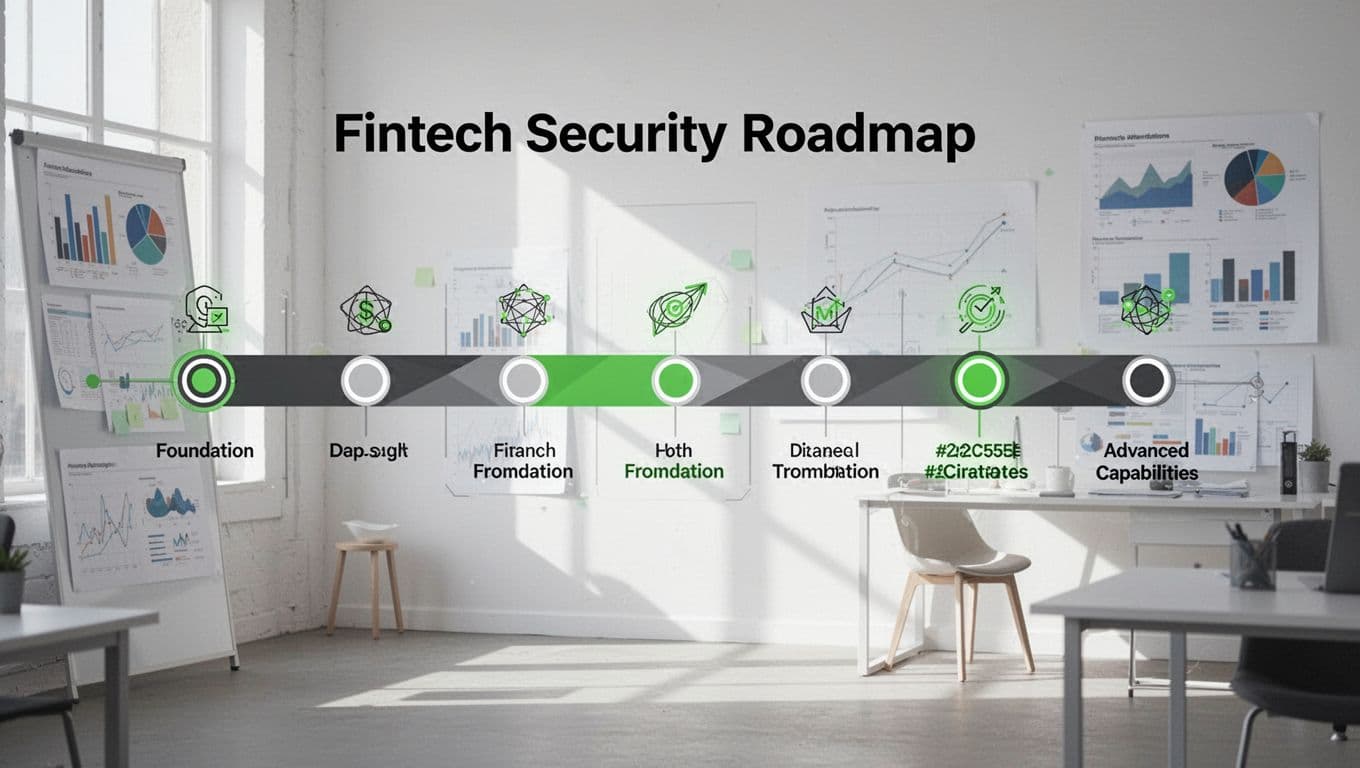
Phase 3 (24+ months): Advanced. Roll out behavioral analytics for fraud. Prep quantum-safe crypto. Automate compliance reporting.
For payments firms, prioritize real-time transaction monitoring first. Lenders focus on KYC/AML tools. BaaS providers emphasize API gateways.
See Fintech Security & Compliance: The Full 2026 Roadmap for sequencing tips. It matches controls to releases.
Milestones matter. Tie to product launches. Q1 2027: MFA at 100%. Q3: First pen test passed.
Adjust for regs. EU teams front-load DORA resilience tests. US firms align with CFPB data rights.
This phased approach balances speed and safety. It shows progress to boards.
Integrating Security with Product Velocity
Security slows ships if you bolt it on late. Bake it into DevSecOps from day one.
Shift left: Scan code pre-commit. Tools like Snyk catch secrets or deps vulns. Gate deploys on failed scans.

API security next. Use OWASP ZAP for dynamic tests. Rate-limit endpoints. Validate inputs to block injections.
For mobile apps in neobanks, root detection and runtime protection stop jailbreak fraud. Follow OWASP Mobile Top 10 guidelines.
Teams resist at first. Show ROI: Fewer prod fires mean faster iterations. One lender cut vulns 70% this way.
Compliance fits too. Automate SOC 2 evidence collection. Link to Jira tickets for audits.
Checkpoint: Measure deploy frequency pre/post. Aim for no regression. Product teams love secure velocity.
Staffing and Maturity for Growth
Your team makes or breaks the roadmap. Early fintechs often understaff security.
Start small: Hire a lead who owns IAM and incidents. Add a DevSecOps engineer next.

Scale by exposure. Payments need fraud specialists. Lending platforms want app sec pros.
Maturity levels guide hires. Level 1: Reactive fixes. Level 3: Proactive hunting. Use frameworks like SigmaHQ for IAM roadmaps.
Common issue: Burnout from generalists. Outsource pen tests. Build culture with training.
For exec roles, partner with firms like Bud Consulting. Book a Discovery Call with Bud Consulting to vet CISOs or cloud architects.
Measure success: MTTR under 4 hours. Coverage at 95%. Right staff accelerates everything.
Prioritizing Initiatives by Stage and Risks
Not all fintechs are equal. Prioritize based on stage, regs, and flows.
Seed-stage: Focus table stakes. PCI for payments. Basics take 80% effort.
Growth-stage: Add runtime protection. Lenders prioritize behavioral biometrics per 2026 RBI rules.
Mature BaaS: Vendor oversight. DORA demands continuous monitoring.
| Factor | Low Priority | High Priority Example |
|---|---|---|
| Stage: Early | Advanced AI | MFA, encryption |
| Regs: US | Quantum crypto | NYDFS cyber rules |
| Flows: Lending | Full pen tests | KYC/AML screening |
| Staff: Small | Custom SIEM | Centralized logging |
This table shows quick wins. High-risk payments firms rate-limit APIs first.
Align with business. Quarterly reviews adjust for new regs like PSD3.
Mistake: Ignoring flows. Map data paths end-to-end. It reveals hidden risks.
Handling Vendor and Third-Party Risks
Partners power fintechs. But they introduce gaps. 2026 regs like DORA mandate oversight.
Inventory vendors. Classify by risk: High for payment processors.
Assess annually. Request SOC 2 Type II. Contract read-only access.
For open banking, secure APIs with mutual TLS. Monitor for anomalies.
See Stripe’s compliance overview for US fintechs. It covers bank partners.
Automate where possible. Tools contract-test integrations.
Checkpoint: 100% high-risk vendors assessed. Reduce supply chain attacks.
Common Mistakes and How to Fix Them
Roadmaps fail on basics. Don’t chase trends over foundations.
Mistake 1: Tool overload. Pick three that fit: scanner, SIEM, IAM.
Fix: Roadmap gates releases on coverage.
Mistake 2: Silos. Security ignores product needs.
Fix: Joint OKRs. Weekly syncs.
Mistake 3: No metrics. “Good enough” stalls progress.
Fix: Track MFA adoption, scan pass rates.
Per 2026 payment security practices, MFA blocks most takeovers. Start there.
Audit readiness slips too. Practice evidence packs quarterly.
These fixes keep teams agile and compliant.
Key Takeaways
Strong fintech security roadmaps balance must-haves with growth. Start with assessments, nail basics, phase in advanced tools.
Tailor to your stage and risks. It cuts breaches, speeds audits, and builds trust.
Teams that integrate early ship safer, faster. Your customers notice.
Focus on people too. Right hires turn plans into reality.