table of contents
Teams catch bugs every day in pull requests. But security flaws slip through because reviews focus on style or speed. You know the cost: breaches from unchecked code hit hard.
A secure code review checklist changes that. It turns random checks into a reliable process. Your team spots risks early, builds better habits, and ships safer software.
This guide gives you practical checklists. You’ll see examples for pull requests and tips to fit your team’s level.
Why Teams Need Structured Secure Code Reviews
Rushed reviews miss vulnerabilities. One overlooked injection flaw can expose user data. Structured checklists fix this.
Teams with checklists find 30% more issues per review. They also finish faster because everyone knows what to check. No debates; just clear steps.

Consider a recent pull request for a user login feature. Reviewers used a basic list. They caught weak password hashing before merge. Without it, attackers could crack accounts.
Start reviews with context. Ask: Does this change handle new inputs? Tools like SAST help, but humans spot business logic gaps. Pair automation with checklists for best results.
OWASP outlines this in their Secure Code Review Cheat Sheet. It stresses checklists for consistency.
Core Elements of a Secure Code Review Checklist
Every checklist needs key parts. Focus on high-risk areas first. Input validation tops the list because poor checks lead to injections.
Build your base around OWASP Top 10 risks. Add team-specific items like API endpoints or cloud configs.
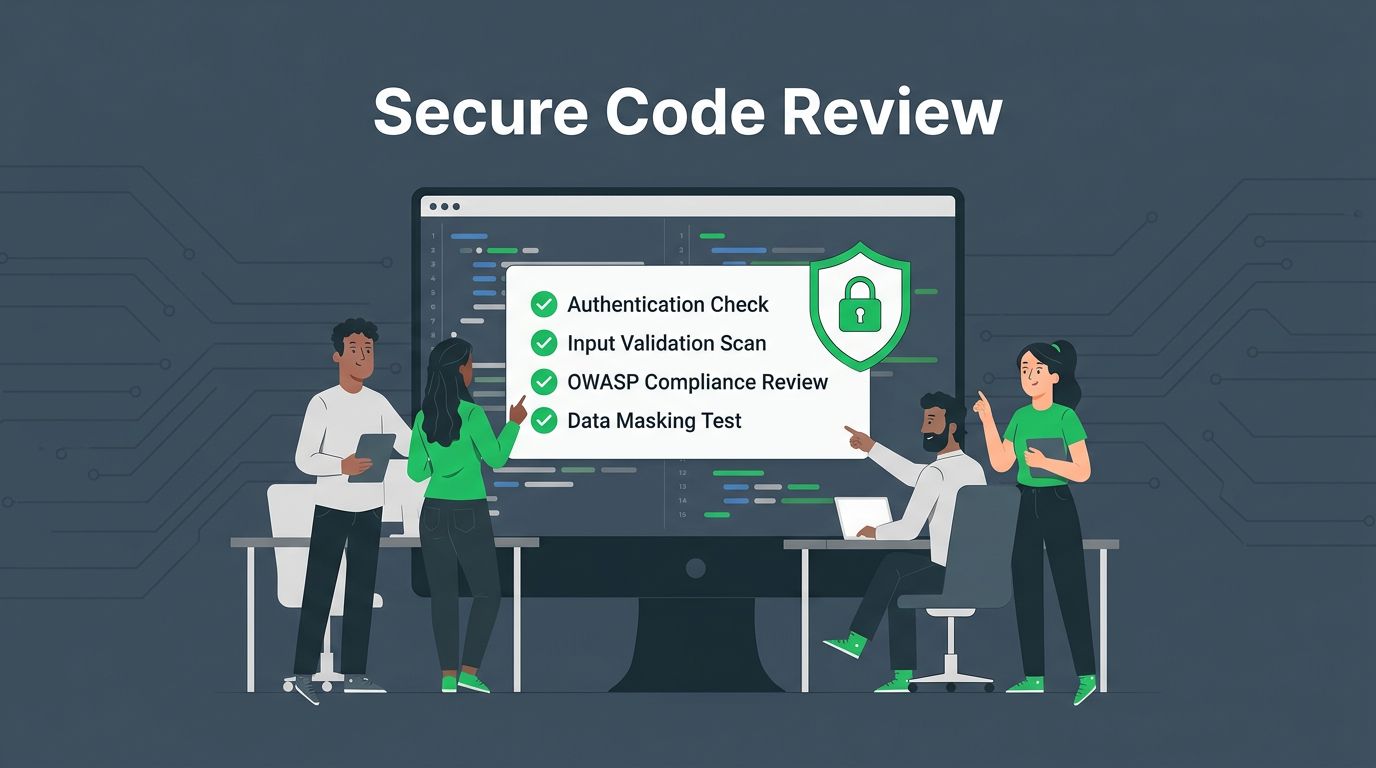
Here’s a starter secure code review checklist:
- Confirm inputs use allowlists, not blocklists.
- Check for SQL injection in queries.
- Verify file uploads reject executables.
- Ensure length limits on all fields.
Use this in every PR. Reviewers mark items as they go.

For example, in a form handler, scan for unescaped outputs. Look for echo $userInput without sanitization. Flag it right away.
Next, cover error handling. Vague messages leak stack traces. Good code returns generic errors.
Track checklist use in your repo. Tools like GitHub Actions can remind reviewers.
Checklist for Authentication and Authorization
Auth bugs cause most breaches. Weak sessions let attackers hijack accounts.
Reviewers must check these in PRs:
- Passwords hash with strong algorithms like bcrypt or Argon2.
- Multi-factor setup follows standards.
- Sessions expire after inactivity.
- Tokens use short lives and secure storage.
Spot issues fast. Does login allow brute force? Add rate limits.
Authorization fails quietly. One endpoint skips role checks; data spills. Always verify:
- Server-side enforcement on every action.
- No client-side only controls.
- Defaults to deny access.
In a recent team review, they found an IDOR flaw. User A accessed User B’s profile via ID swap. Checklist caught it.
Reference the OWASP Code Review Guide for auth examples across languages.
Teams train on this monthly. New devs pair with seniors.
Checklist for Cryptography and Data Protection
Crypto mishandles doom apps. Hardcoded keys top the list.
Your checklist should include:
- No secrets in code or comments.
- Use AES-256 for encryption.
- Rotate keys regularly.
- TLS 1.3 minimum for transit.
Check uploads too. Scan files for malware patterns. Reject suspicious MIME types.
Data at rest needs protection. Does the DB encrypt sensitive fields?
Example: A payment API PR. Reviewers found base64 “encryption.” Switched to proper AES. Saved a breach.
For business logic, probe workflows. Can attackers reorder steps? Test edge cases.
OWASP’s cheat sheet details crypto checks. Follow it to avoid common pitfalls.
Spotting Business Logic and Configuration Risks
Logic flaws hide in plain sight. Checklists expose them.
Key items:
- Workflows resist tampering.
- Rate limits per user, not IP.
- No exposed admin endpoints.
Configs matter. Hardcoded ports invite scans. Use env vars.
Review deploys too. Does Docker ignore sensitive files?
In PRs, flag missing logs. Every auth fail needs a record.
Teams log metrics: issues found per review. Adjust checklists based on trends.
See Singapore’s security guidelines for code reviews for config tips.
Adapting Checklists for Your Team’s Maturity
New teams start simple. Pick five core checks. Veterans add depth.

Beginner level:
- Basic input validation.
- Auth basics.
Mature teams:
- Full OWASP Top 10.
- Custom risks like third-party integrations.
Test adaptations. Run mock reviews. Measure fix rates.
Rotate reviewers. Everyone learns.
Tailor to stack. Java teams check deserialization; Node, prototype pollution.
Integrating Checklists into Workflows
Embed checklists in PR templates. GitHub supports this natively.
Automate reminders. Block merges if unchecked.
Train quarterly. Role-play bad PRs.
Measure success: fewer prod incidents.
For help scaling, Book a Discovery Call with Bud Consulting.
Key Takeaways
Checklists make secure code reviews routine. They catch risks early and build team skills.
Start with OWASP basics. Adapt as you grow. Track results to improve.
Your next PR could prevent a breach. Use these lists today.
(Word count: 1487)