table of contents
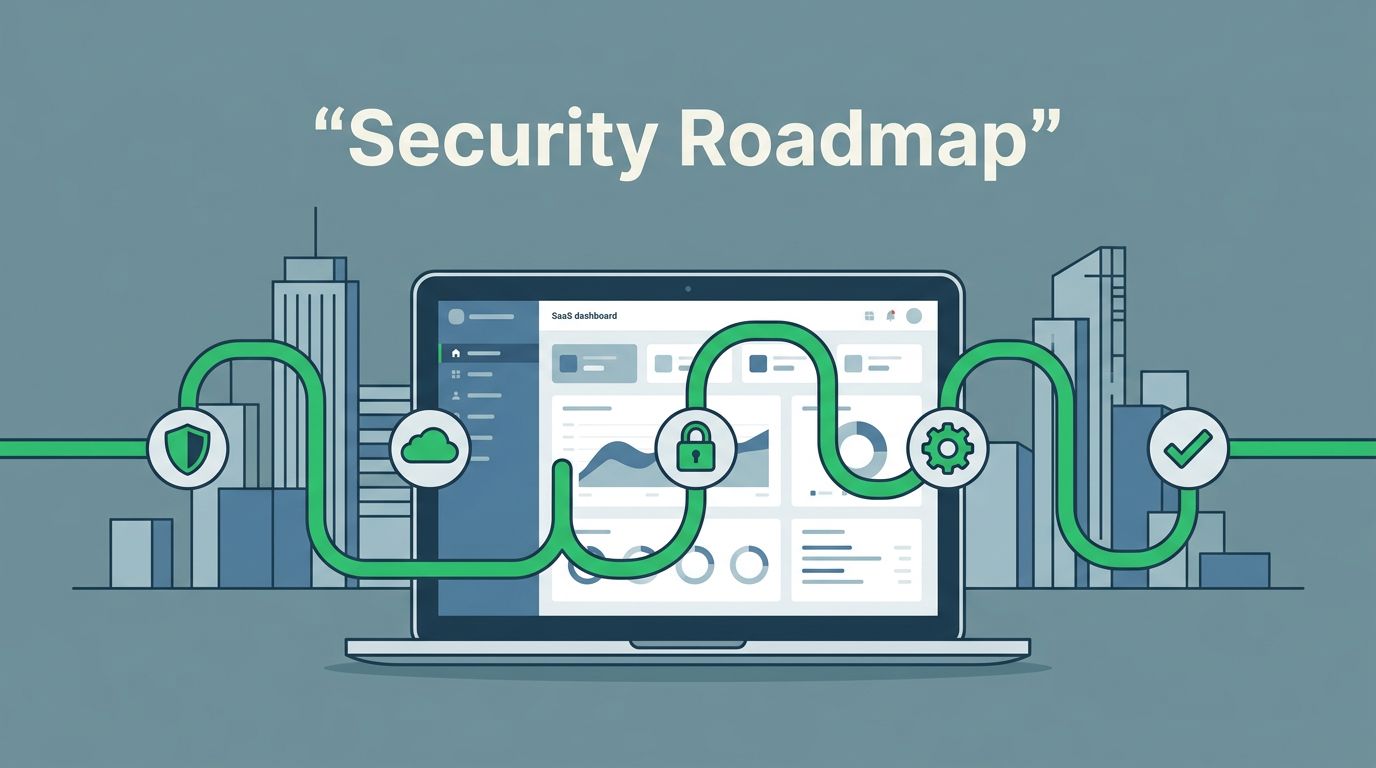
Your customers expect ironclad data protection. Boards demand proof of risk management. Yet mid-stage SaaS teams juggle growth with tight budgets and small security crews. A solid security roadmap fixes that. It turns scattered fixes into planned wins that build trust and cut breaches.
Most mid-stage companies hit 50 to 500 employees and $10M to $100M ARR. They face real threats like weak MFA or shadow IT. In 2026, 46% of SaaS breaches tie to poor access controls. This guide maps practical steps. You get phases from day one to scale, plus tweaks for your setup.
Start with basics that stop bleeds now. Then layer compliance and AI tools. Follow this path to match security to your stage.
Why Mid-Stage SaaS Needs a Tailored Security Roadmap
Mid-stage SaaS companies shift from startup chaos to enterprise scrutiny. Early fixes like basic firewalls won’t cut it anymore. Customers ask for SOC 2 reports. Investors probe breach plans. Without a clear security roadmap, you waste time on low-impact tasks.
Consider your risks. Shadow SaaS apps pop up fast because sales teams grab tools without checks. Overprivileged APIs let vendors roam free. In 2026, 55% of workers use unapproved apps. Breaches cost millions and kill deals. A roadmap prioritizes what matters first.
It also aligns teams. Engineers build fast. Security flags gaps. A shared plan sets expectations. For example, assign owners to MFA rollout in week two. Track progress weekly. This beats reactive fire drills.
Tailor it to your world. Fintech firms chase PCI DSS alongside SOC 2. Health SaaS adds HIPAA. General tools like Slack need Zero-Trust now. Use Gartner’s strategic roadmap for SaaS security for visibility tips on apps and data.
Roadmaps save cash too. Mid-stage budgets stretch thin. Focus on high-ROI controls first. Automate scans over manual audits. Result? Lower insurance premiums and faster sales cycles.
Boards want metrics. Show mean time to detect threats dropping from days to seconds with AI tools. Customers trust audited proofs. Build the roadmap quarterly. Adjust for new regs like the Cyber Resilience Act.
Factors Shaping Your Security Roadmap Priorities
No one-size-fits-all plan works. Your customer base dictates speed. Enterprise deals need SOC 2 Type II in six months. SMBs tolerate basics longer.
Company stage matters. At $20M ARR, nail foundations. Past $50M, prep ISO 27001. Architecture plays in too. Monoliths ease audits. Microservices demand service meshes for Zero-Trust.
Regs guide choices. EU sales? Bake in GDPR data flows. US federal? Hit CMMC. Cloud setups like AWS need IAM fixes first. Multi-cloud adds complexity, so map vendors early.
Customer segments shift focus. B2B analytics tools guard PII. Dev tools scan code. Check contracts for security clauses. They set your scope.
Team size limits scope. Five-person security? Automate with Snyk or Trivy. No full-time CISO? Fractional hires bridge gaps. Bud Consulting sources IAM experts fast.
Prioritize with a matrix. Rate risks by likelihood and impact. High now? MFA everywhere. Medium later? Pen tests. Low? Defer.
Architecture tweaks help. Serverless cuts attack surface but hides logs. Containerize with Falco for runtime checks.
Use these factors to sequence. Foundations stay must-haves. Optimizations wait.
Foundational Controls: First 90 Days
Stop easy wins first. Weak MFA causes half your risks. Roll it out everywhere in weeks one to two. Cover admins, devs, and vendors.
Next, manage secrets. Ditch hard-coded API keys. Use Vault or AWS Secrets Manager. Test backups weekly. Restore one dataset to prove it works.
Enforce least privilege. Audit IAM roles. Revoke unused perms. Tools like Lacework spot over-privs fast.
Monitor logs. Centralize with Splunk or ELK. Set alerts for failed logins. Build a basic incident runbook. Who pages at 2 AM? Test it once.
Scan dependencies. Run npm audit or Snyk daily. Fix critical vulns same day.
Document a one-pager. List risks, controls, and owners. Share with sales for customer asks.

This phase builds trust quick. Customers see action. Boards get updates. For a full 90-day plan, see Cortance’s realistic roadmap for SaaS startups. It matches 2026 basics like MFA and runbooks.
Common pitfall? Skip tests. Backups fail 30% of the time without drills. Do them.
By day 90, you block 80% of common attacks. Costs stay low. Tools run automated.
Key Phases in Your Security Roadmap
Break the roadmap into chunks. First 90 days lock foundations. Next six months add ops. Long-term scales with AI.
90 days focus quick wins. MFA, backups, logs. Measure by coverage rates.
Months four to nine build compliance. Gap assess for SOC 2. Implement controls like change management. Prep evidence.
Year two optimizes. AI threat detection. DevSecOps pipelines. Annual pen tests.
Adjust phases by needs. Reg-heavy? Swap compliance up. Fast growth? Add vendor audits early.
Teams plan best together. Weekly standups track milestones. Tools like Jira map tasks.
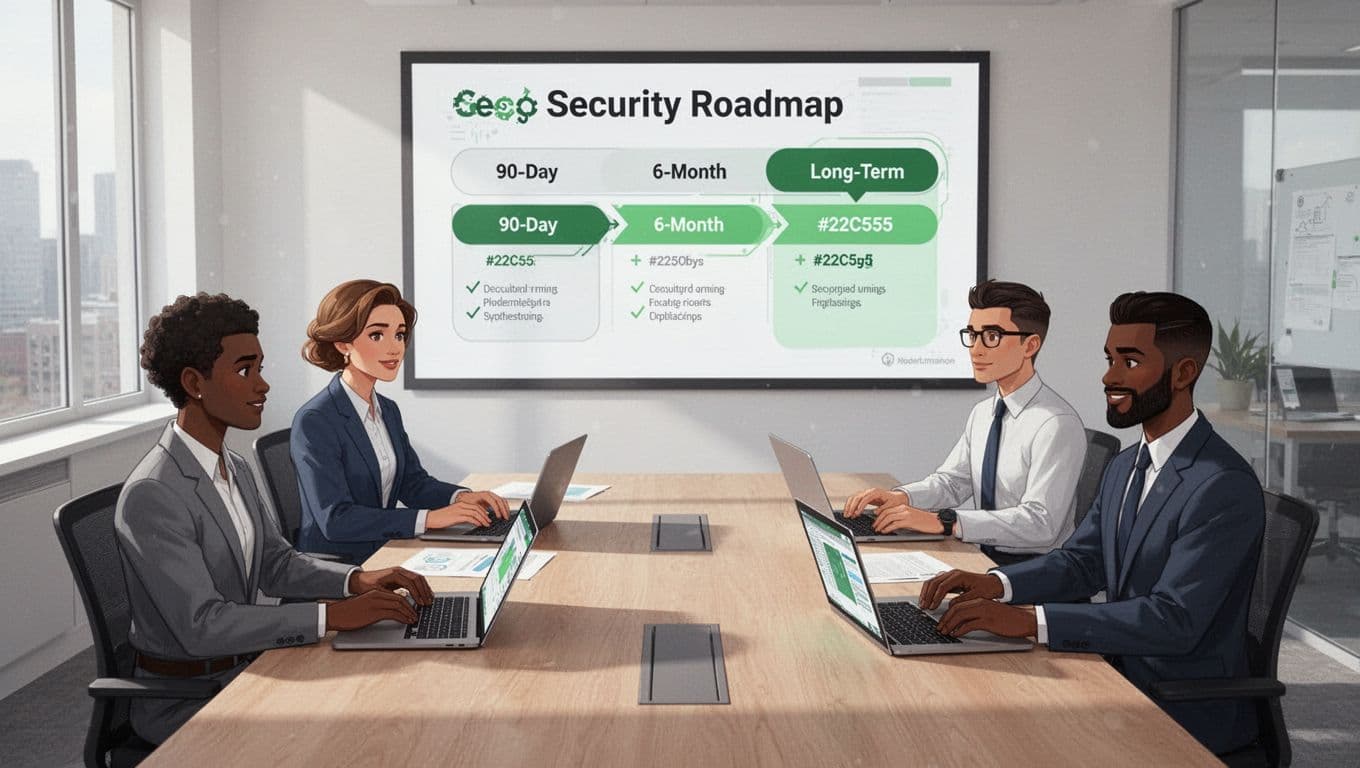
Link phases to metrics. 90 days: 100% MFA. Six months: SOC 2 readiness score over 80%. Long-term: MTTD under 10 minutes.
Revisit every quarter. New threats like AI exploits demand shifts.
This structure scales. Early phases prevent pain. Later ones win deals.
Next 6 Months: Compliance and Secure Operations
Compliance ramps up here. Pick SOC 2 first. It’s table stakes for enterprises. Scope security criteria. Add availability if you promise 99.9% uptime.
Run gap analysis. Tools like Vanta automate 60% of controls. Document policies. Incident response gets a full playbook.
Implement secure SDLC. Add SAST in CI/CD. Block merges on high vulns. OWASP top 10 guides scans.
Vendor review. Inventory 50+ tools? Score risks. Quarterly audits for high ones.
Zero-Trust rollout. Just-in-time access. Tools like Okta enforce it.
For SOC 2 timelines, check Secure.com’s Type II checklist. Phases match: assess, implement, audit.
Train staff. Phishing sims cut clicks 40%. Monthly sessions.
Monitor non-humans. Service accounts need rotation. Bots get scoped tokens.
By month six, audit-ready. Customers sign faster. Costs drop as automation kicks in.
Pitfall: Scope creep. Stick to must-haves. Security only first.
Long-Term Initiatives: Scale and Optimize
Past six months, optimize. AI-driven detection spots anomalies. Platforms like SentinelOne flag odd API calls.
DevSecOps matures. Shift-left testing. GitOps for infra.
Pen tests twice yearly. Bug bounties find edge cases.
ISO 27001 if global. Risk assessments annual.
Cloud best practices. Encrypt at rest and transit. KMS keys rotated.
Board reports quarterly. Metrics like patch compliance over 95%.
Customer expectations rise. Share attestations. Portal for proofs.
In 2026, predictive tools forecast risks from user patterns. Budget 10% of engineering for security.
Hire specialists. Cloud architects fix multi-account sprawl. Book a Discovery Call with Bud Consulting to fill gaps.
This phase differentiates. Low churn. Premium pricing.
Sample Security Roadmap Structure
Visualize phases on one page. Use timelines for clarity.
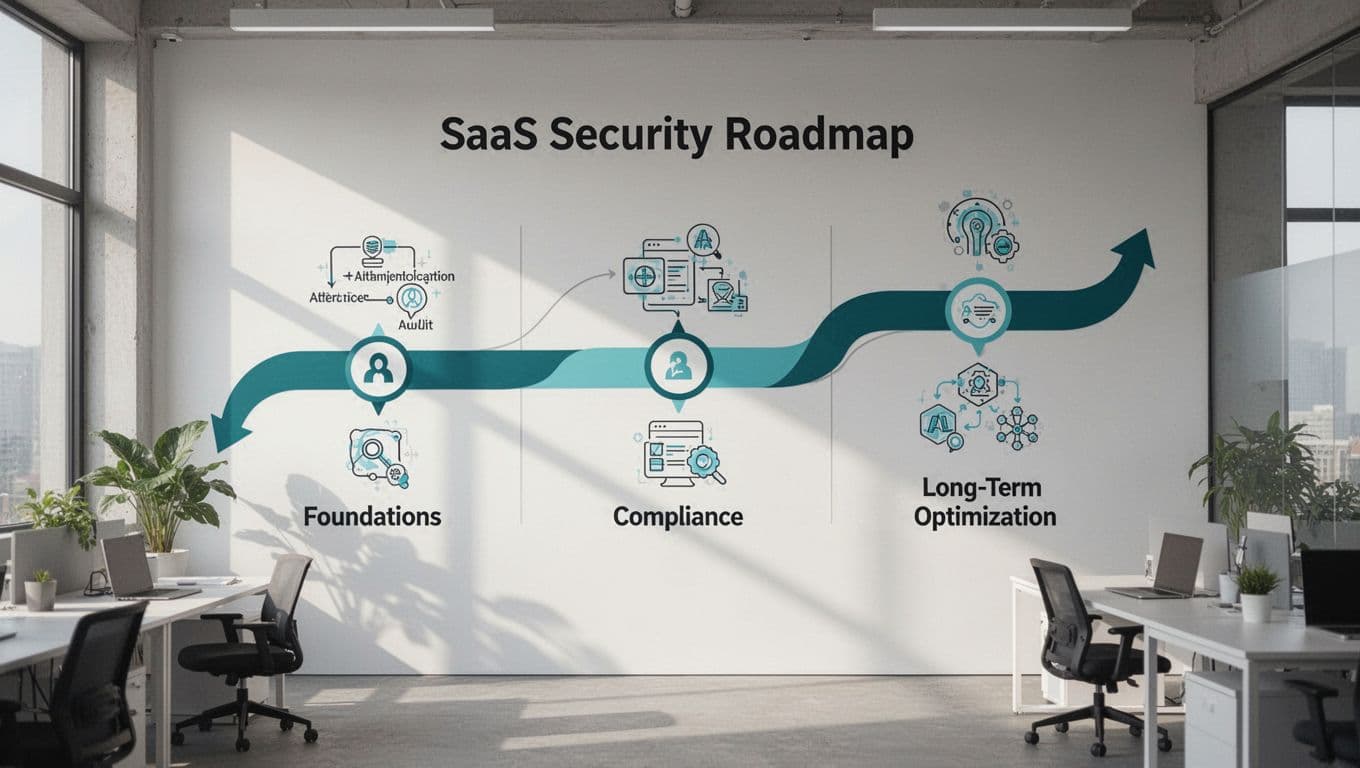
90 Days Checklist:
- MFA 100%.
- Backups tested.
- Logs centralized.
- Secrets managed.
6 Months:
- SOC 2 gaps closed.
- SDLC scans live.
- Vendor inventory.
12+ Months:
- AI monitoring.
- ISO prep.
- Annual audits.
Track in shared doc. Assign owners. Review monthly.
Adapt for your stack. AWS? Focus IAM. Kubernetes? Pod security.
For startup stages, see vCISO Lite’s roadmap. Series B matches mid-stage.
This template starts today. Customize weekly.
Common Mistakes and How to Dodge Them
Skip assessments. Half of firms lack threat models. Run one now.
Overbuy tools. Start with open-source. Scale to paid.
Ignore culture. Security fails without buy-in. Train all hands.
Neglect vendors. 56% breaches from third-parties. Audit them.
No metrics. Track coverage. Aim 90%+.
Fractional CISO overlooks ops. Pair with internal leads.
Underfund. 39% skip pen tests. Budget 7-10% of IT.
Fix by prioritizing. Foundations block most attacks. Review often.
Key Takeaways for Your Security Roadmap
Mid-stage SaaS thrives with phased plans. Nail 90-day basics to stop bleeds. Build compliance next for deals. Scale with AI long-term.
Tailor to customers, regs, and stack. Measure everything. Adjust quarterly.
You cut risks, win trust, and grow steady. Security becomes a strength, not a chore. Start mapping yours today.