table of contents
Mergers create chaos in IT setups. You combine networks, tools, and teams, but security gaps emerge fast. Hackers target these weak spots, as seen in 2026 with 303 cybersecurity M&A deals and rising ransomware hits during integrations.
Your job gets tougher. One company might have solid endpoint detection; the other skips basic patches. Without clear security posture measurement, risks compound. This guide shows you how to define indicators, pull data, and track progress.
You’ll get practical steps to build scorecards and spot issues early. Let’s start with the basics.
Why Measure Security Posture After a Merger
Mergers blend assets from two worlds. Security posture reflects how well defenses hold up overall. It covers people, processes, and tech.
Post-merger, posture drops if you ignore it. Legacy systems from the acquired firm often lag. For instance, unpatched servers or weak access controls invite attacks. Buyers now factor cyber risks into deal values, with energy sector M&A adjusting prices for grid vulnerabilities.
Measure to baseline both environments. Compare current states against targets. This reveals gaps fast. NIST CSF 2.0 helps here; its tiers gauge risk management rigor.
Focus on outcomes, not just tools. A high score means quick threat response. Low scores signal fixes needed. Track changes weekly during integration.
Teams benefit too. Shared metrics align security and IT. You avoid blame games when incidents hit. Start with simple audits. Pull logs from both sides. Score them side by side.
Real data drives decisions. In 2026, boards demand these metrics. They protect deal value and cut fines from breaches.
Key Challenges in Merged IT Environments
Merged setups breed problems. Duplicate tools waste money and confuse teams. One firm uses CrowdStrike; the other sticks with older antivirus. Consolidation takes months.
Asset inventories clash next. The acquired company hides shadow IT, like rogue SaaS apps. You miss them without full scans. Inherited risks follow, such as outdated policies or exposed privileged accounts.
Policies differ too. One enforces MFA everywhere; the other skips it for vendors. Zero trust concepts clash with perimeter defenses. Attackers exploit these seams.
Inconsistent logging leaves blind spots. Incidents go undetected across boundaries. Backup tests vary, so recovery times stretch.
Breaches spike during changes. FBI notes ransomware groups hit pre-merger targets, then spread. Microsoft Security tips outline integration steps to match postures.
Expect resistance. Teams defend old ways. Budgets strain for new tools. Prioritize high-impact fixes first.

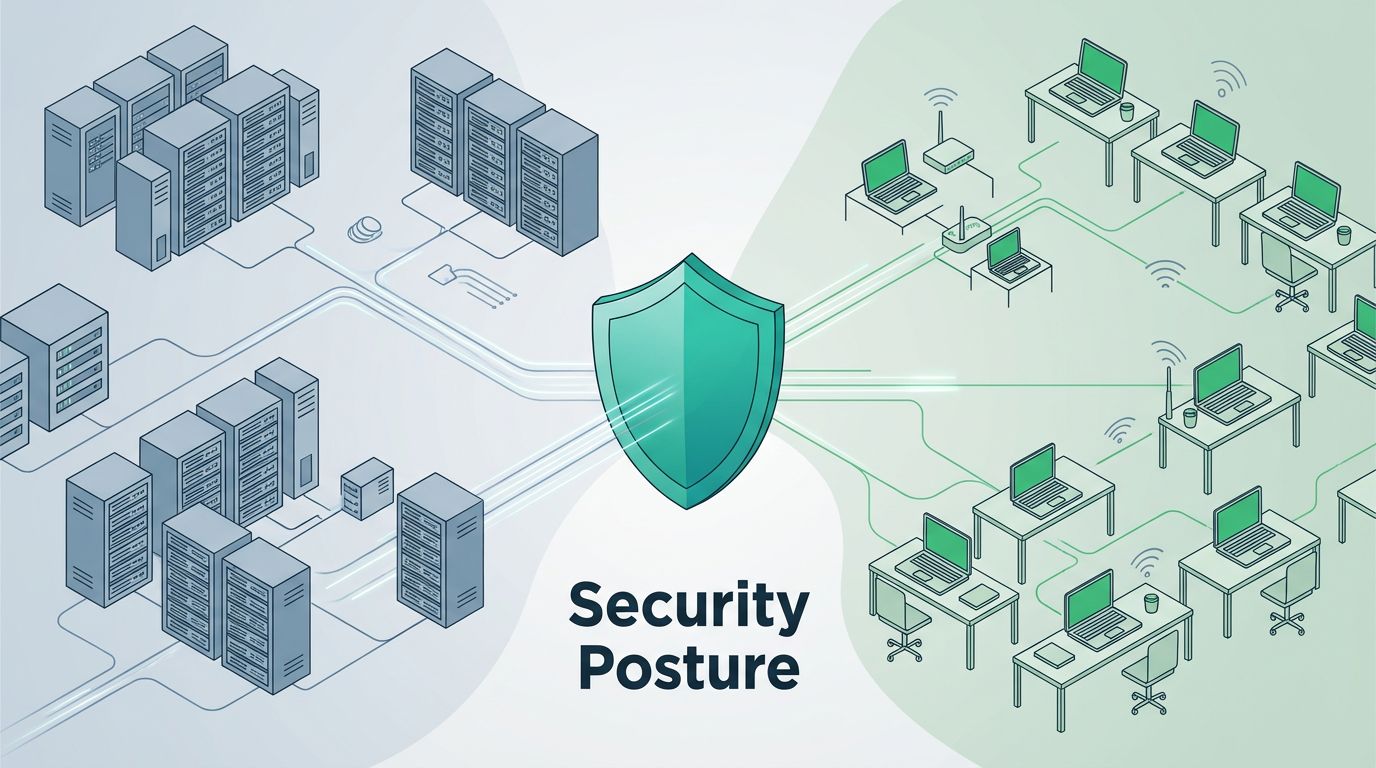
This image captures the overlap. Security pros review diagrams to map risks.
Address challenges head-on. Run joint workshops. Map assets together. You build trust and uncover hidden issues.
Essential KPIs to Track for Posture
Pick KPIs that matter. They must quantify risks across environments. Start with MFA coverage. Calculate enabled users divided by total. Aim for 95% or higher.
Privileged account exposure comes next. Count standing admin rights. Reduce to just-in-time access. Target under 5% of accounts.
EDR deployment measures endpoint protection. Track agents installed on devices. Full coverage means 100%. Gaps show in unmanaged laptops.
Patch SLAs track fix times. Measure days from vulnerability release to patch. Set 30-day max for criticals. Older ones signal drift.
Critical vulnerability aging watches open high-severity issues. Average age over 90 days? Red flag. Use scanners like Qualys.
Logging coverage audits event sources. Ensure 90% of servers and apps send logs to a central SIEM. Gaps hide attacks.
Backup testing verifies restores. Test quarterly; success rate above 95%. Incident response readiness tests playbooks. Time to containment under 4 hours.
These KPIs baseline postures. Compare old and new environments weekly.
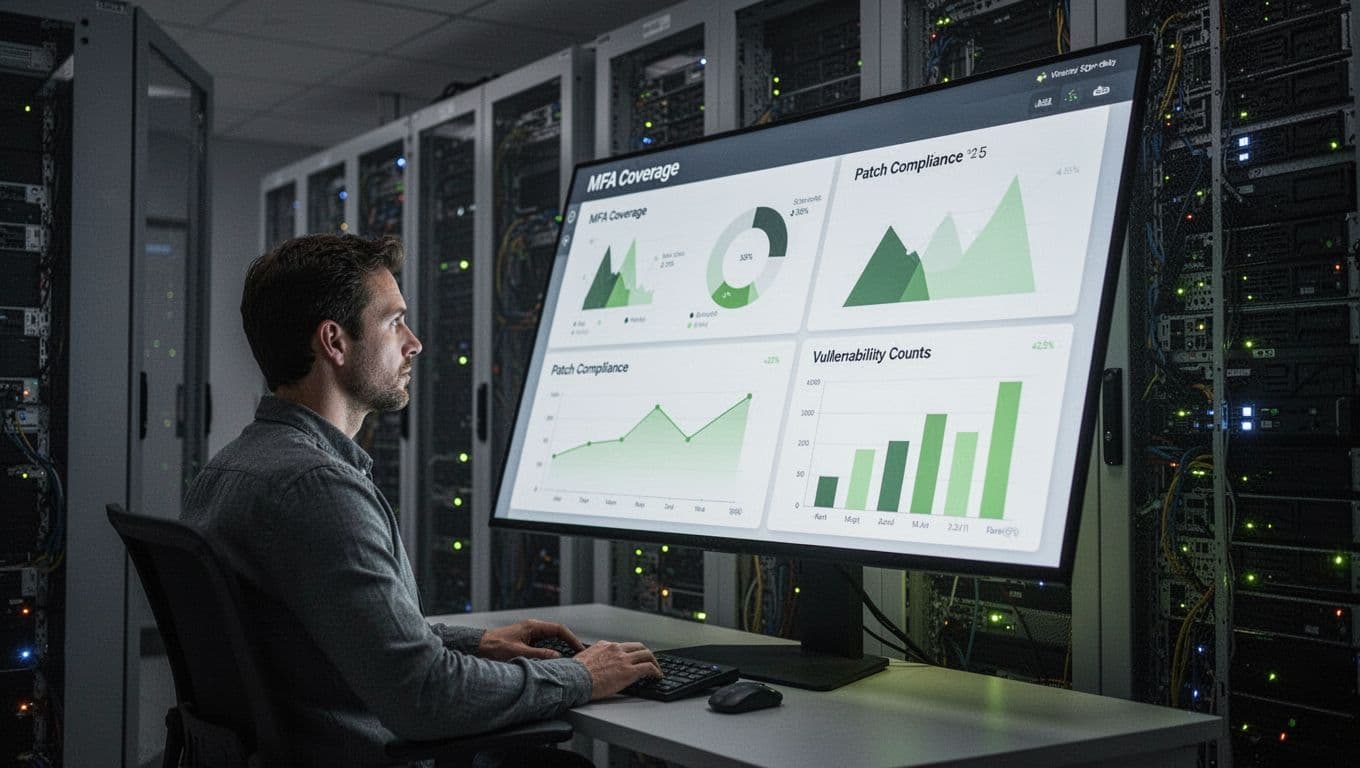
Dashboards like this make KPIs visible. Analysts spot trends at a glance.
Tie KPIs to business impact. High vuln aging correlates with breach odds. Track them in tools like Microsoft Secure Score for hybrid views.
Data Sources Across Merged Environments
Reliable data fuels measurement. Use asset management tools first. ServiceNow or Jira inventories list servers, endpoints, and cloud resources.
Security tools provide metrics. EDR platforms report deployment and detections. Vulnerability scanners output patch status and aging.
Identity systems track MFA and priv accounts. Azure AD or Okta logs coverage. SIEMs aggregate logging data.
Cloud consoles give specifics. AWS Config assesses postures; AWS M&A Lens flags gaps in networks and access.
Pull from both sides. Export CSVs weekly. Normalize formats; “critical” means CVSS 9+ everywhere.
Incident tickets add context. Service desk data shows response times. Backup tools log test results.
Automate where possible. APIs from Tenable or Splunk feed dashboards. Manual audits fill gaps early on.
Challenges arise with silos. Acquired firms block access. Negotiate shared views during due diligence. Centralize in a merger war room.
Verify data quality. Cross-check inventories. Shadow IT needs network scans. Tools like Shodan help spot externals.
Fresh data keeps scores honest. Stale inputs mislead. Schedule pulls and alerts for drops.
Build an Integration Scorecard
Scorecards simplify tracking. Create a table with metrics, baselines, targets, and status.
Columns: KPI, Legacy Env Score, Acq Env Score, Target, Gap, Action Owner, Due Date.
Rows for each KPI. MFA row: 70%, 40%, 95%, -25%, Deploy Okta, SecOps, 30 days.
Color code: Green for on track, yellow for minor gaps, red for critical.
Update weekly. Share via Google Sheets or Tableau. Boards love visuals.
Start simple. Pick 8-10 KPIs. Weight them by risk; priv accounts at 20%.
Include trends. Charts show progress over time. Spikes trigger reviews.
Abnormal AI’s 90-day framework suggests scorecards for SIEM consolidation and policy harmony.
Test it. Run a mock integration. Adjust weights based on your stack.
Teams stay accountable. Owners report blockers. You fix fast.

Scorecards on desks guide daily work. Green indicators motivate progress.
Scale up. Add automation with Power BI. Link to tickets for drill-down.
Leverage NIST CSF 2.0 and CIS Controls
Frameworks ground your efforts. NIST CSF 2.0 profiles current and target postures. Use its Quick-Start Guide for Tiers to rate governance.
Map KPIs to functions. Govern sets policy baselines. Identify uses vuln scans. Protect covers EDR and MFA.
Tiers measure maturity. Tier 1 is ad hoc; Tier 4 adapts fast. Post-merger, aim to lift the lower env to your level.
CIS Controls prioritize actions. Version 8 lists 18 basics like inventory and MFA. CIS Controls list aligns to your KPIs.
Implementation varies. CIS Safeguards detail steps for logging and patches. Score compliance percentages.
Zero trust fits both. Verify explicitly; least privilege cuts priv exposure.
Blend them. NIST for big picture, CIS for tactics. Annual audits validate.
Post-merger, gap analyses shine. Compare profiles pre- and post-integration. Progress shows in scorecards.
Teams adopt easier with mappings. Train on subcategories. You get buy-in.
Tackle Common Pitfalls in Measurement
Overlook people risks. Training lapses vary; measure completion rates.
Tool overlaps drain budgets. Rationalize EDR before full deploys.
Incomplete inventories persist. Run agentless scans monthly.
Policy clashes slow fixes. Harmonize in 90 days; enforce via automation.
Data silos block views. Build unified dashboards early.
Scope creep hits. Stick to top KPIs; expand later.
Resistance builds. Communicate wins; share breach stats from 2026 M&A spikes.
Underestimate time. Integration takes 6-12 months for full posture parity.
VMware’s M&A phases stress cloud audits first.
Monitor continuously. Quarterly reviews catch drift.
Adjust for your stack. Hybrid needs Microsoft Defender assessments for identity gaps.
Stay agile. Threats evolve; update KPIs yearly.
Conclusion
Solid security posture measurement protects merged environments. You baseline KPIs, build scorecards, and use frameworks like NIST CSF 2.0 to track gains.
Focus on data from tools and clouds. Address challenges like duplicates and shadows head-on. Progress shows in unified defenses.
Expect hurdles, but consistent metrics guide you. Your posture strengthens as gaps close.
If integration overwhelms, Book a Discovery Call with Bud Consulting. Experts help close gaps fast.