table of contents
Your mobile devices hold sensitive data. One overlooked gap in management can expose emails, customer records, or trade secrets. In 2026, attacks on MDM platforms like Ivanti EPMM show how attackers target these systems directly.
IT teams manage thousands of phones and tablets. Yet MDM security gaps persist because tools focus more on deployment than defense. Recent breaches prove this point. You need playbooks now to detect issues and fix them fast.
These steps draw from real incidents. They fit zero trust models and compliance needs. Let’s start with the gaps you face.
Spot the Most Common MDM Security Gaps
Devices enter your network daily. Many slip through with weak controls. Over half of organizations run devices with known vulnerabilities, per recent scans.
First, check enrollment flaws. Users join via simple QR codes without device health checks. Attackers enroll rogue devices to pivot inside.
Next, look at policy gaps. Android fragmentation means iOS rules don’t match. Jailbroken devices bypass restrictions. For details on these challenges, see Venn’s analysis of MDM pros and cons.
Patch delays compound risks. Unupdated OS versions leave exploits open. Public Wi-Fi use worsens this; data flows unencrypted.
Supply chain hits add pressure. Hackers compromise MDM vendors first. The Ivanti zero-days in early 2026 let attackers run code remotely.
Business impact hits hard. A single gap costs downtime and fines. Data leaks erode trust. Start audits today to map your exposure.

This image shows protected and vulnerable devices side by side.
Detection starts simple. Run compliance reports weekly. Flag non-compliant devices. Cross-check with Entra ID logs for odd enrollments.
You spot gaps faster with baselines. Compare current posture to standards like NIST. Then prioritize fixes.
Calculate the Real Cost of MDM Breaches
Breaches start small. An unpatched MDM server grants admin access. Attackers wipe data or exfiltrate it silently.
Take the March 2026 cloud incident. Hackers used MDM as entry. They treated it like a core asset, not an IT tool. Read Stuardo Rodriguez’s breakdown on Medium for tactics.
Costs add up quick. Downtime alone runs $10,000 per hour for mid-size firms. Fines under GDPR hit millions. Reputational damage lingers years.
Phishing fuels many gaps. Fake apps steal creds. Malware monitors keystrokes. Unsecured Wi-Fi lets man-in-the-middle attacks thrive.
AI amps threats now. It crafts convincing lures. Traditional MDM misses behavioral signals.
Yet gaps vary by setup. BYOD mixes personal risks with corp data. Corporate fleets face insider threats more.
Quantify your risk. Use breach simulators. Factor in device count and data value. This sets remediation budgets right.
Teams ignore gaps at peril. One compromised phone accesses email. It spreads laterally via Bluetooth.
Focus on high-impact fixes first. Secure MDM consoles next. Least privilege cuts blast radius.
Playbook: Secure Device Enrollment Processes
Weak enrollment invites trouble. Users scan codes without verification. Fix this with a four-step playbook.
Step 1: Pre-enrollment checks. Require device attestation. Block rooted or jailbroken phones. Use certificates for authenticity.
Step 2: Multi-factor during join. Tie to identity provider. Enforce MFA plus device posture.
Step 3: Auto-apply policies. Push encryption, VPN, and app restrictions on day zero.
Step 4: Post-enroll audit. Review logs for anomalies. Quarantine suspects.
Test in pilot groups. Roll out firm-wide after.
Real-time threats like fake apps demand this. MDM blocks sideloading now.
For zero trust alignment, integrate with Microsoft Entra Conditional Access. It verifies signals before access.
Users resist at first. Train them on why. Productivity holds with smooth flows.
Measure success by enrollment failure rates. Aim under 5%.

Enrollment looks secure in this workflow view.
Repeat quarterly. Update for new OS releases.
Playbook: Master Patch Management and Compliance
Patches lag in mobile fleets. Half your devices sit vulnerable months.
Build a playbook around automation.
Step 1: Inventory all devices. Tag by OS, version, patch level.
Step 2: Prioritize critical fixes. Use CVSS scores. Auto-push within 72 hours.
Step 3: Grace periods with nudges. Notify users. Remote wipe after 14 days.
Step 4: Verify compliance. Scan post-patch. Report to leadership.
Nation-state attacks target Intune logs. Detection hides in audits, as Presidio notes.
Compliance ties to zero trust. Block non-compliant access via policies.
Handle fragmentation. Custom profiles for Android variants.
Businesses save millions this way. Fewer exploits mean less response time.
Track metrics like mean time to patch. Target under seven days.
Exceptions need approval. Review monthly.
Playbook: Implement Zero Trust and Conditional Access
Zero trust assumes breach. Apply it to MDM.
Core playbook:
Step 1: Verify every access. Use signals like location, device health.
Step 2: Set granular policies. Block high-risk apps or networks.
Step 3: Integrate identity. Link MDM to Entra ID or Okta.
Step 4: Monitor continuously. Alert on policy blocks.
Microsoft Intune’s zero trust guide details device compliance layers.
Conditional access shines here. Require compliant devices for email.
Test policies in report-only mode first. Tweak based on blocks.
Phishing drops 90% with this. AI threats get caught early.
Scale to contractors too. Uniform rules simplify ops.
Audit logs feed SIEM. Spot patterns fast.
Boost Visibility with Mobile Threat Defense
Blind spots kill defenses. Traditional MDM sees configs, not threats.
Upgrade with integrated detection.
Step 1: Layer on MTD. Add behavioral analytics.
Step 2: Centralize dashboards. Correlate MDM and EDR.
Step 3: Set risk thresholds. Auto-quarantine high scores.
Step 4: Review alerts daily. Tune false positives.

Dashboards like this reveal threats clearly.
Ivanti exploits showed console risks. Treat MDM as attack surface, per Assured’s autopsy.
Wi-Fi risks and malware trigger alerts now.
SIEM integration spots lateral moves.
Teams respond faster. MTTR falls under hours.
Start small. Pilot on exec devices.
Remediation Playbooks for Active Gaps
Gaps exist. Act now with checklists.
Audit playbook:
- Export device reports.
- Flag jailbreaks, old OS.
- Cross-check vendor logs.
Patch playbook: As above, automate.
Integration playbook:
- Link to IdP.
- Enable conditional blocks.
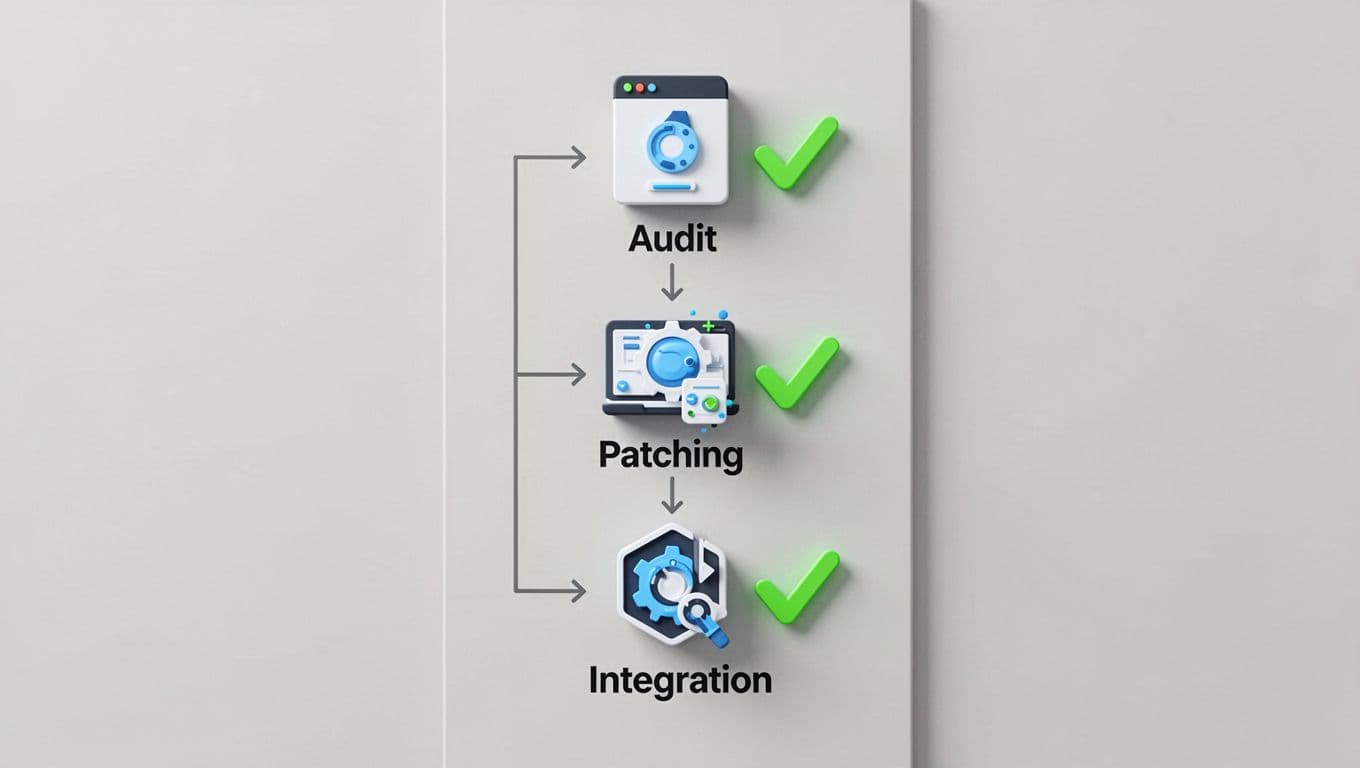
This flowchart maps remediation steps.
Run monthly. Assign owners.
For breaches, isolate console first. Rotate creds.
Security Buzz covers Ivanti persistence.
Document each run. Share lessons.
Incident Response Plays for MDM Compromises
Breaches happen. Respond with structure.
Step 1: Contain. Revoke certs. Block IPs.
Step 2: Investigate. Review audit logs. Hunt IOCs.
Step 3: Eradicate. Wipe affected devices.
Step 4: Recover. Re-enroll securely.
Step 5: Lessons learned. Update playbooks.
tabletop exercises build muscle memory.
CISA lags on advisories sometimes. Rely on private intel.
Test yearly. Involve compliance.
This cuts impact 70%.
Conclusion
MDM security gaps expose your fleet to malware, phishing, and vendor exploits. Playbooks for enrollment, patching, zero trust, and response close them fast.
Focus on automation and audits. Integrate threat defense. Your posture strengthens immediately.
Businesses that act now avoid 2026 headlines. Book a Discovery Call with Bud Consulting to assess your setup.
Strong mobile security starts today. Implement one playbook this week.