table of contents
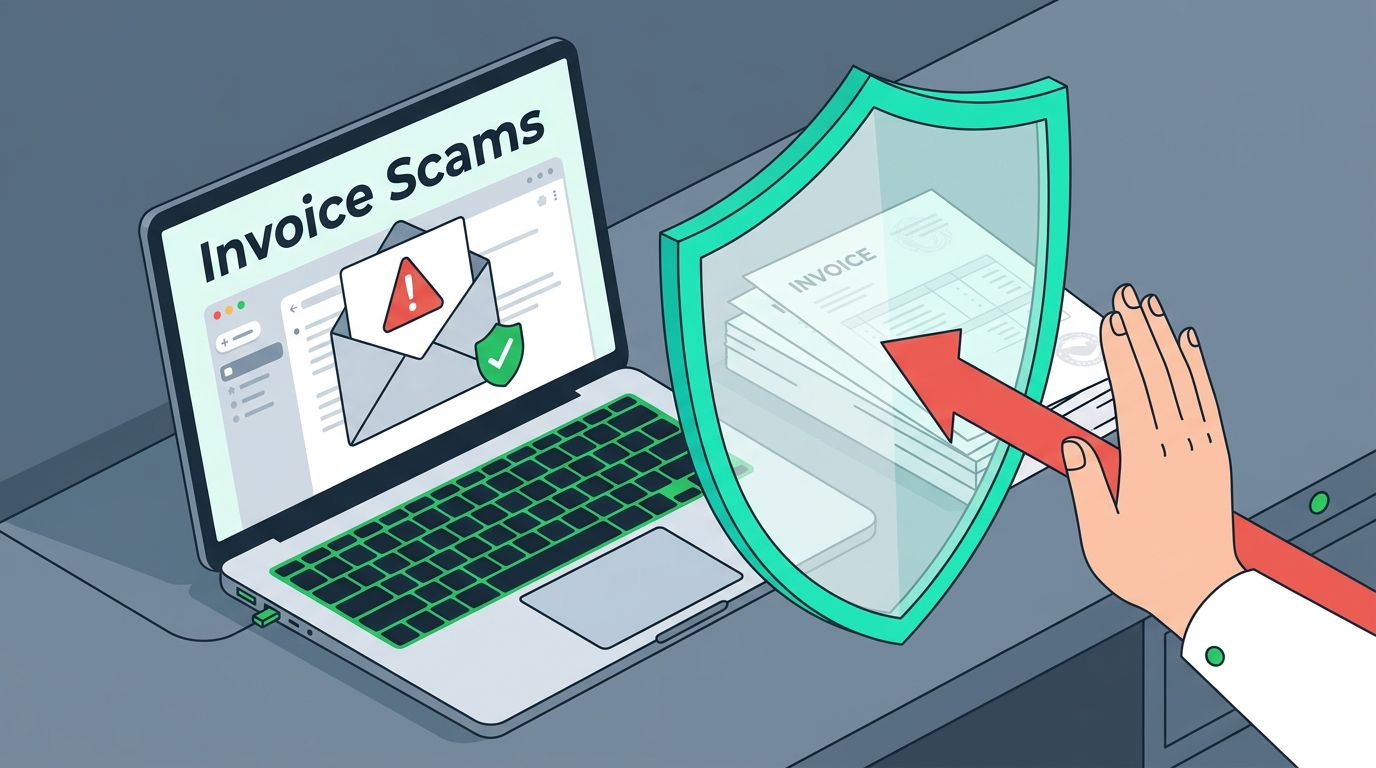
Vendor invoice scams cost businesses up to $1.2 million a year on average. In 2026, 45% of companies face these attacks, often through fake emails that mimic trusted suppliers. Procurement teams process hundreds of invoices weekly, so one slip lets fraudsters drain accounts.
You manage approvals and payments daily. Scammers exploit that trust with urgent requests for bank changes. This article shows how to build a training program that combines people skills and controls to block these threats.
Start with clear risks, then layer in training steps and tools your team can use right away.
Spot Common Vendor Invoice Scams
Scammers target procurement because payments move fast. They spoof emails from real vendors or create fake ones. A typical trick: an email claims “updated bank details” for an overdue invoice. It looks legit, passes email checks, but routes money to thieves.

Look for these red flags. Emails come from slight twists like vendor@acme-corp.co instead of vendor@acme-corp.com. Invoices hit with round numbers, no line items, or odd urgency. One example from recent cases: a “past due invoice” email spoofs the display name of your contact, pushes wire transfer to a new account registered months ago.
Business email compromise ramps up too. Hackers breach vendor emails, watch threads, then slip in payment redirects. Vendor email compromise rose 137% through 2025. AI now crafts deepfake voices or videos for follow-up calls.
Real losses mount quick. A construction firm wired $900,000 after a hacked supplier email. Recovery fails most times; one victim got back just $915 from $150,000 stolen. Check OpenScam examples of vendor invoice spoofing for more patterns.
Teams fall for these because routines skip checks. Busy staff see a familiar name and approve. Training fixes that gap.
Set Up Process Controls First
Training sticks better with rules in place. Start with separation of duties. One person can’t both approve and pay an invoice. Set approval thresholds: anything over $5,000 needs a manager sign-off.
Lock vendor master files tight. Changes to bank details require dual approval and a call-back to the vendor’s known number. Never use email numbers. Automate flags for duplicates; 8.5% of invoices are repeats.
Require call-back verification for all changes. Call the vendor. Confirm details verbally. This stops 90% of redirects.
Build incident reporting. Staff flag suspects to a central log. Review weekly. Pair this with audits: spot-check 10% of payments monthly.
Commerce Bank outlines these in their vendor fraud mitigation guide. They stress audits and employee education together.
Controls alone miss social engineering. That’s where training shines.
Design Core Training Modules
Roll out modules at onboarding and refreshers. New hires get a one-hour session day one. Cover basics: what scams look like, why they work.
Use real examples. Show an email: “Urgent: Update wire info or service stops.” Point out the spoofed domain. Discuss AI tricks like fake voices claiming “IT glitch fixed our details.”
Quarterly refreshers last 30 minutes. Quiz on red flags. Annual deep dives include trends, like 2026’s multi-channel attacks via text and calls.
Make it interactive. Role-play a vendor call. One acts suspicious; others practice hang-up and report.
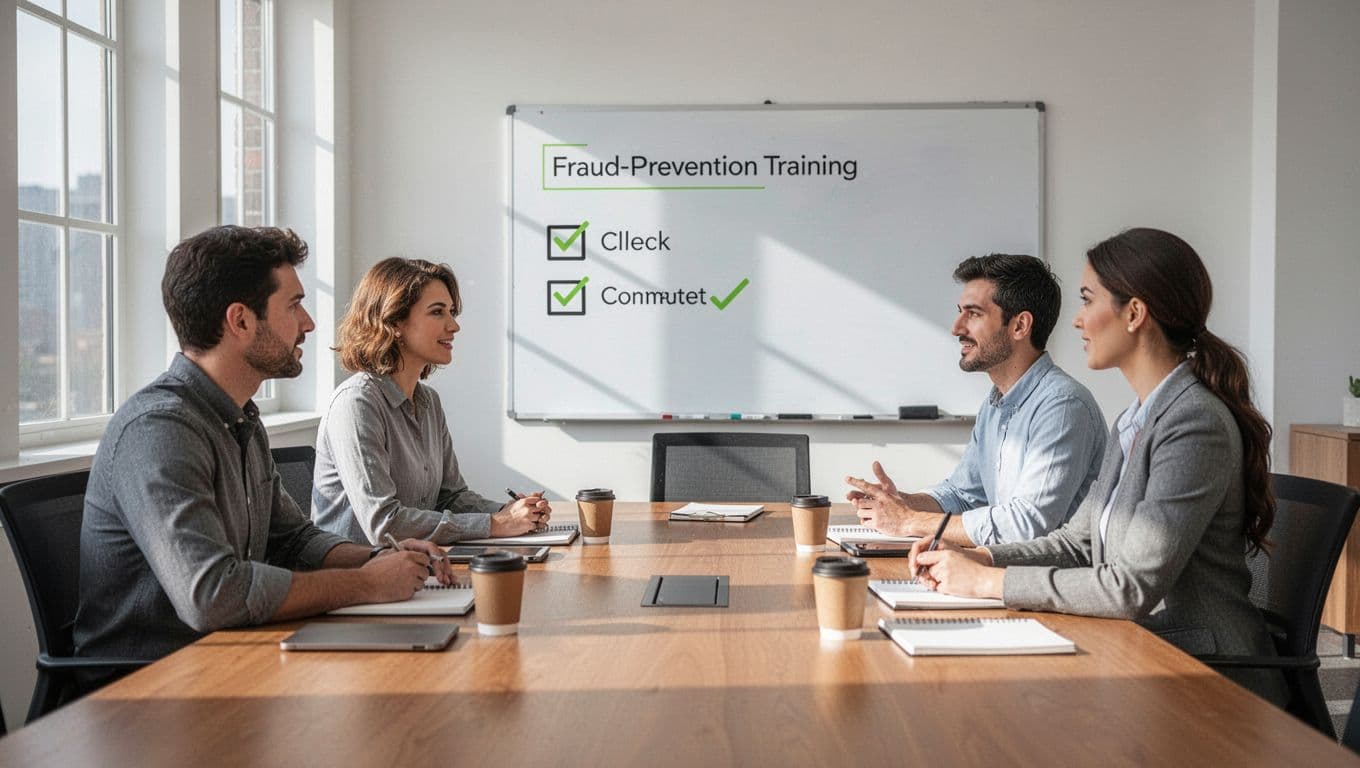
AFP recommends formal vendor onboarding checklists. Verify tax IDs, bank matches. Train on these during sessions.
Track attendance. Tie to performance reviews. This builds habit.
Run Phishing Simulations and Exercises
Theory fades; practice lasts. Launch monthly phishing sims. Send fake invoice emails to 20% of the team. Track clicks, reports.
Follow up fast. Debrief winners: “You called back. Good.” Losers get one-on-one coaching. Tools like KnowBe4 handle this.
Tabletop exercises build team response. Gather AP, procurement, IT. Scenario: email requests bank change mid-quarter. Walk through steps. Who calls? Who approves?
Do these bi-annually. Rotate leaders. Zycus notes in their invoice fraud guide that sims plus audits cut risks.
Metrics matter. Aim for 95% report rate on sims. Adjust based on fails.
Build Response Playbooks
Give teams quick guides. A one-page checklist for suspect invoices.
Here’s a core list:
- Pause. Do not reply or pay.
- Check sender domain and display name.
- Call vendor from records, not email.
- Verify invoice matches PO.
- Escalate to manager and security.

Print these. Laminate for desks. Digital versions in shared drives.
For bank changes, add: require written confirmation via mail, dual sign-off.
Test playbooks in exercises. Update yearly per trends, like IOFM’s 2026 AP Fraud Playbook.
This turns panic into process.
Measure Success and Iterate
Track key metrics. Phishing report rates. False positives from over-caution beat losses. Lost funds incidents: zero is the goal.
Survey staff quarterly: “Do you feel ready?” Audit payments: sample for compliance.
Low scores trigger refreshers. High fraud reports mean tweak sims.
Bud Consulting helps firms like yours build security culture. Book a Discovery Call with Bud Consulting to assess your gaps.
Key Takeaways to Protect Payments
Vendor invoice scams thrive on speed and trust. Controls plus training stop most. Onboard with modules, sim monthly, playbook always handy.
Teams that verify every change save millions. Start one sim this week. Your next invoice might depend on it.
(Word count: 1487)