table of contents
Insider data exfiltration hits hard because it comes from trusted sources. In 2026, companies with solid insider threat programs stop about seven incidents a year and save $8.2 million on average. Yet many teams still react too late to employees downloading thousands of files before quitting, like the Intel case with 18,000 sensitive documents.
You face malicious actors, careless mistakes, or compromised accounts. Without clear playbooks, alerts pile up and responses drag. This guide walks you through building practical detection and response playbooks tailored to your enterprise.
Start by mapping threats to your telemetry. Then define workflows that get SOC, HR, legal, privacy, and IT on the same page fast.
Types of Insider Threats
Insiders steal data in three main ways. Malicious ones act with intent, like a disgruntled employee grabbing files before leaving. Negligent insiders slip up, such as emailing sensitive info by accident. Compromised accounts fall to malware or phishing, where attackers use valid credentials.
Each type needs different detection. Malicious behavior shows patterns like bulk downloads from unusual systems. Negligence often ties to one-off errors in email or cloud shares. Compromised cases spike with odd logins or rapid data moves.

Distinguish them early. For example, a sales rep accessing engineering docs signals malice if they never worked there before. Check HR flags like pending resignations. Tools like CISA’s Insider Threat Mitigation Guide outline these categories with real steps.
Focus on patterns over single events. Malicious insiders use multiple devices, as seen in recent breaches. Negligent ones hit DLP rules accidentally. Compromised paths show lateral movement first.
Build your playbook around these. Set baselines for normal activity per role. Deviations trigger triage. This cuts false positives and speeds response.
Common Triggers and Alert Types
Triggers catch exfiltration before damage spreads. Look for bulk file downloads, especially over set thresholds like 100 MB in an hour. Unusual USB inserts or cloud uploads rank high too.
Network alerts flag data to personal email or unapproved sites. Email scans spot attachments with sensitive keywords. Cloud logs reveal mass exports from SharePoint or Salesforce.
In 2026, enterprises watch logins at odd hours or from new IPs. HR data crosses with security for quitting employees downloading files. Coinbase’s breach showed how cloud account compromises leak user info fast.
Set alert tiers. Low: single large download. Medium: repeated access to off-role data. High: data to external domains plus HR red flags.
Prioritize with severity scores. Integrate UEBA tools for anomaly baselines. Test alerts quarterly. This setup stopped incidents in programs saving millions.
Avoid alert fatigue. Tune rules to your environment. For instance, devs need file access; flag if they email it out.
Key Telemetry Sources
Telemetry feeds your playbooks. Endpoint logs track USB use and file copies. Network flows spot outbound transfers. Cloud APIs like Microsoft Purview log access patterns.
Email gateways catch attachments. HR systems flag terminations or discipline. Pull them into a central SIEM for correlation.
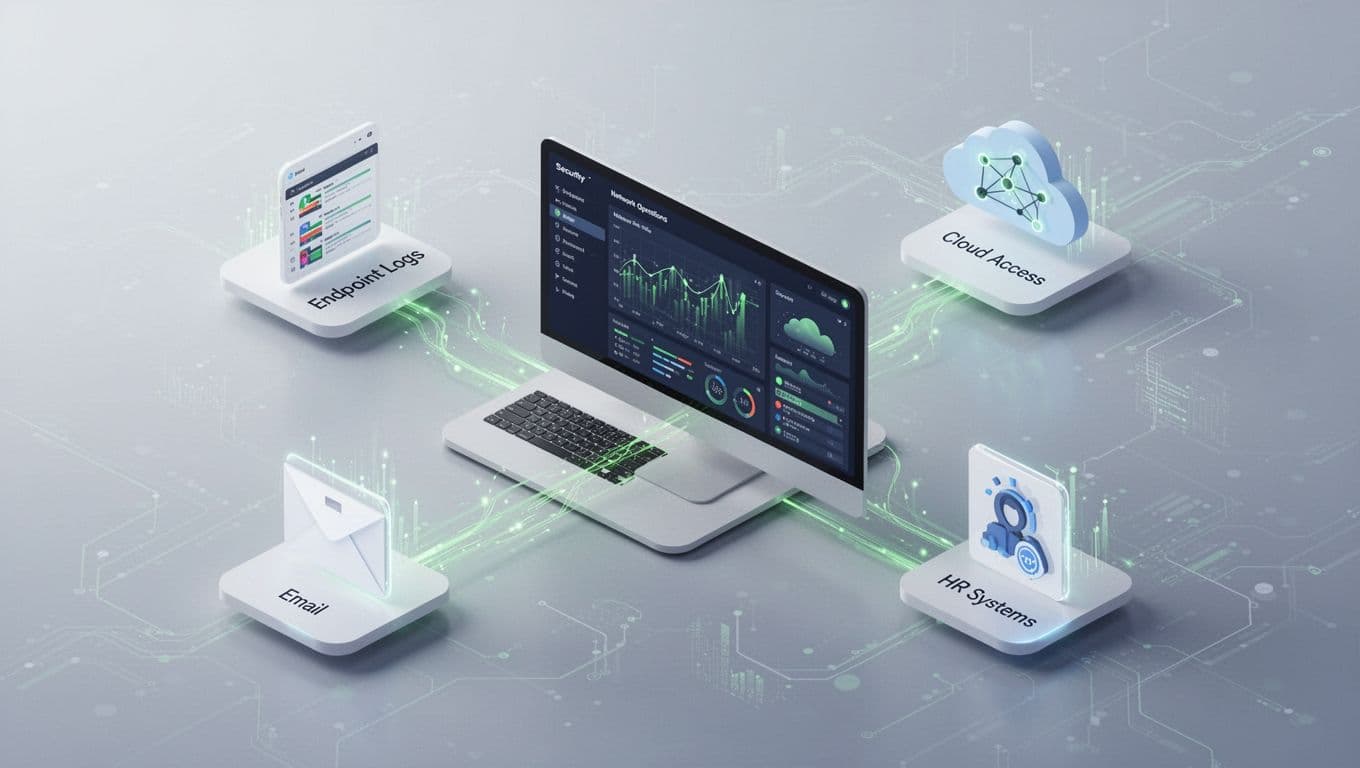
Microsoft’s Insider Risk Management combines these for risk graphs. It pseudonymizes users and scores behaviors over 90 days.
Layer sources. Endpoint DLP blocks copies; network confirms exfil. HR adds context like job changes. In the Intel case, multiple devices evaded single logs.
Normalize data formats. Use SOAR for automated pulls. Review coverage yearly as cloud use grows. Gaps here let insiders slip through.
Building Your Playbook Step by Step
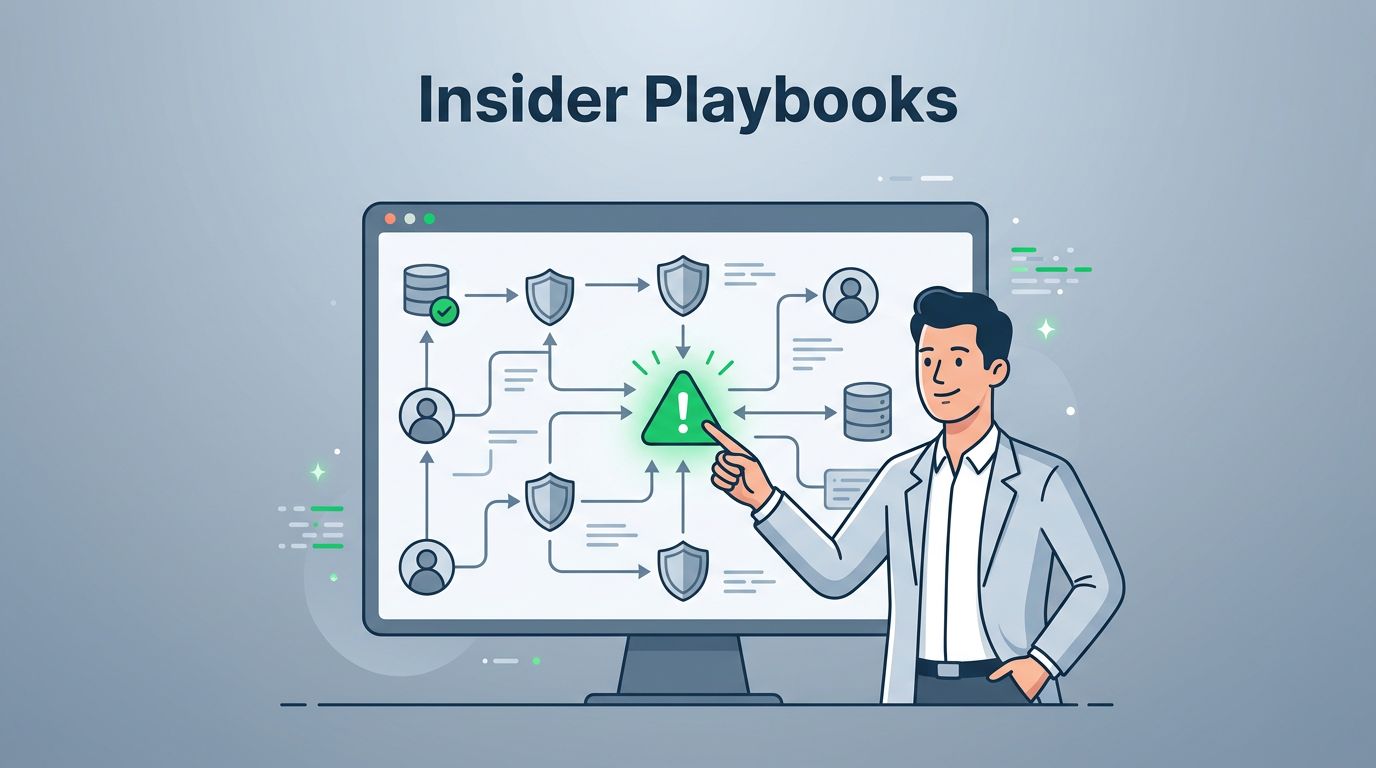
Start with a template. Rippling’s insider threat playbook offers NIST-aligned steps from real incidents.
Step 1: Define scope. Cover malicious, negligent, and compromised cases. Map to your assets like IP or customer data.
Step 2: List triggers. Bulk downloads, odd logins, external shares. Set thresholds based on baselines.
Step 3: Triage process. SOC reviews in 30 minutes. Escalate high risks.

Step 4: Investigation. Pull timelines from telemetry. Check user history.
Step 5: Response actions. Isolate accounts, notify stakeholders.
Step 6: Close loop. Document, update rules, train.
Test with tabletop exercises. Automate low-level tasks via SOAR like Cortex XSOAR’s cloud exfiltration playbook. Iterate after each incident.
Document in shared format. Assign owners per step. This builds muscle memory.
Stakeholder Roles in Response
No playbook works solo. SOC triages alerts first. HR provides context on behavior or exits. Legal advises on evidence and rights. Privacy checks compliance. IT handles isolation.

Meet within hours of escalation. SOC shares telemetry; HR flags risks. Legal ensures chain of custody. Privacy flags PII exposure.
For malicious cases, legal preps suits like Intel’s $250k claim. Negligent? HR handles training. Compromised? IT scans for malware.
Define RACI matrices. Train cross-team quarterly. SECMONS’ insider response playbook details these flows.
Align on comms. Use secure channels. Post-incident, debrief all.
Sample Workflows for Scenarios
Tailor playbooks per type. Malicious: Alert on bulk download + HR exit flag. Triage: Review last 7 days access. Isolate account, image endpoint. Notify legal.
Here’s a simple table for quick reference:
| Scenario | Trigger | Initial Action | Escalate To |
|---|---|---|---|
| Malicious | 500+ files downloaded, resignation pending | Isolate user, block exports | Legal, HR |
| Negligent | Sensitive email to personal account | Quarantine message, warn user | HR, Privacy |
| Compromised | Odd login + rapid cloud export | Rotate creds, scan for malware | IT, SOC |
This caught exfil in 2026 cases. Negligent workflow focuses education; save investigation time.
Compromised adds threat hunting. Run EDR queries for persistence.
Adapt to tools. Palo Alto’s Code42 integration automates file metadata pulls.
Run simulations. Refine based on dwell time metrics.
Modern Controls and Best Practices
Layer DLP across endpoints, email, cloud. Block USB on high-risk machines. Enforce MFA everywhere.
Use UEBA for baselines. Nisos’ 2026 best practices stress continuous monitoring with external intel.
Automate triage. SOAR handles false positives fast.
Review access quarterly. Zero trust limits blast radius.
Train managers on signs like sudden file hoarding. Integrate with IAM for just-in-time access.
Measure success. Track mean time to detect under 24 hours. Programs like this stop seven incidents yearly.
If gaps persist, book a discovery call with Bud Consulting. They help build teams for these playbooks.
Conclusion
Strong playbooks turn insider data exfiltration from crisis to contained event. Focus on distinct threats, rich telemetry, and team roles to act fast.
You now have steps, samples, and controls tuned for 2026 realities. Test them, iterate, and watch savings grow like those $8.2 million programs.
Build yours today. Your SOC will thank you.